Buyer next step
Turn this guide into a sourced PPE shortlist with standards, quantities, and role-based kit notes.
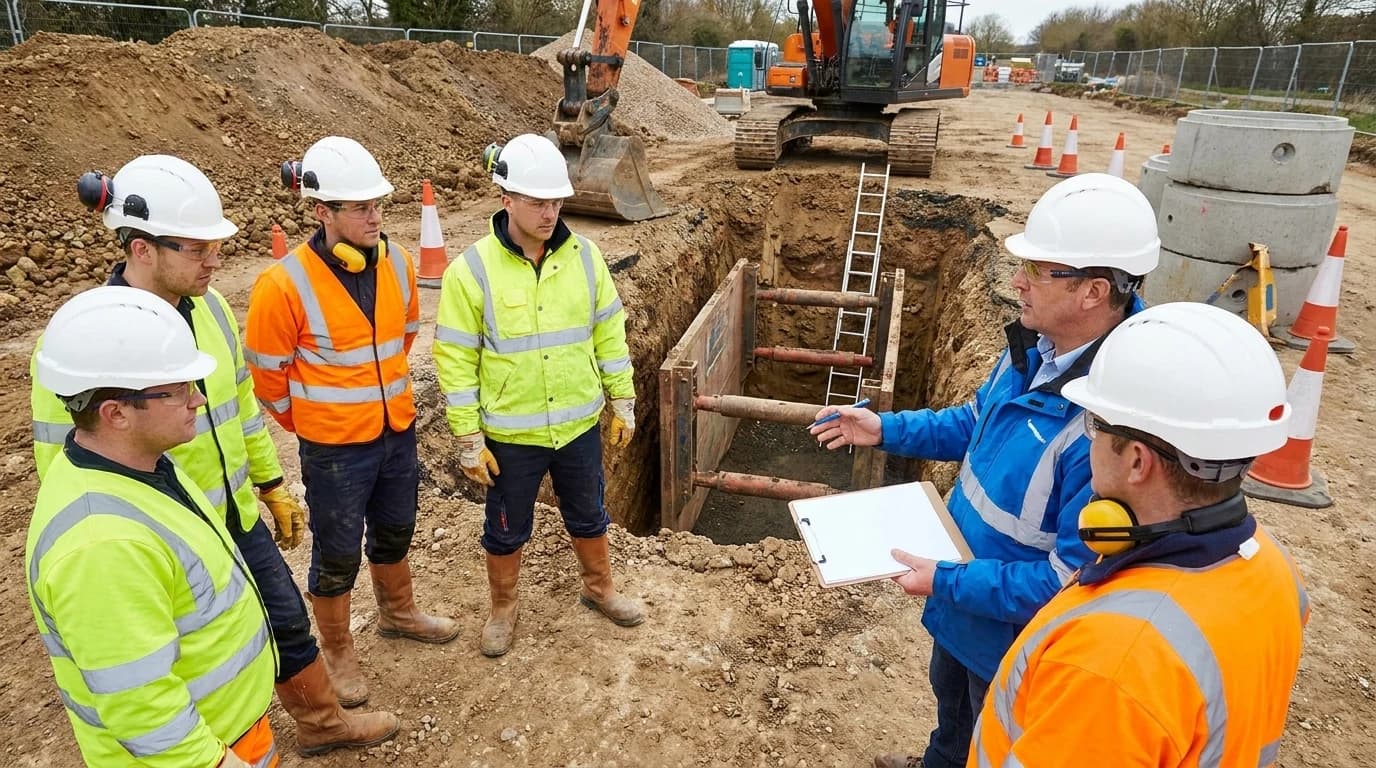
Trenching and excavation work can look routine from the surface, but it is one of the highest-risk construction activities. Workers may be exposed to cave-ins, falling loads, mobile equipment, underground utilities, water accumulation, hazardous atmospheres, access hazards, traffic, dust, and changing weather in the same shift.
PPE does not replace trench protective systems. A hard hat, hi-vis vest, respirator, or pair of boots will not save a worker inside an unprotected trench collapse. The core controls are planning, competent-person inspection, soil evaluation, sloping, benching, shoring, shielding, safe access, spoil placement, traffic control, and emergency response. PPE has to support those controls, not distract from them.
Use this guide as the PPE branch of a trench safety plan. For the broader construction PPE framework, start with the Complete PPE solution for construction sites. For daily field issue control, use the construction PPE checklist. For kit purchasing and crew packaging, use the contractor PPE kit checklist.
Quick Trenching and Excavation PPE Checklist
Use this checklist before a crew enters the excavation area:
- Has a competent person inspected the excavation, protective system, access, spoil piles, water, utilities, atmosphere, and adjacent equipment exposure?
- Is the trench protected by sloping, benching, shoring, shielding, or another engineered protective system where required?
- Is safe access provided, such as ladders, ramps, or stairs positioned for the trench depth and crew movement?
- Are workers wearing head protection for falling objects, bucket movement, overhead loads, and equipment activity?
- Is high-visibility clothing required because of excavators, loaders, dump trucks, traffic, or low-light work?
- Are safety boots selected for mud, water, puncture hazards, uneven ground, toe impact, and slip risk?
- Are gloves matched to pipe handling, shoring components, wet soil, concrete, utilities, or sharp materials?
- Is eye protection selected for dust, chips, wind, mud splash, cutting, or pressurized line exposure?
- Has respiratory protection been reviewed for silica, diesel exhaust, dust, sewer work, contaminated soil, or low-oxygen risk?
- Is hearing protection available around excavators, compactors, saws, breakers, pumps, and trucks?
- Is fall protection or edge protection needed around trench edges, shafts, pits, or adjacent elevated work?
- Are tool lanyards, exclusion zones, and bucket controls used where falling-object exposure exists?
- Is the emergency plan clear, including rescue restrictions, communication, first aid, and how to keep workers from entering an unsafe trench to help?
- Are replacement PPE items available for mud, water, damage, contamination, and long shifts?
If the trench itself is not controlled, stop. PPE should be issued only after the excavation hazards are understood and controlled.
Why Trenching PPE Needs Its Own Checklist
Trenching PPE needs its own checklist because the work area changes constantly. Soil conditions change after rain. Spoil piles move. Trucks back near edges. Workers climb in and out of narrow spaces. Utilities may be exposed. A trench that looked stable in the morning may not be safe later in the day.
NIOSH notes that workers should never work in an unprotected trench and that a trench can collapse or cave in without warning. It also emphasizes that a small amount of soil can weigh enough to fatally crush or suffocate a worker. That is why PPE selection has to sit inside a larger trench safety routine instead of becoming the main safety control.
The PPE checklist should follow the actual trench work:
- utility installation
- sewer and drainage work
- water line repair
- foundation excavation
- road and bridge utility cuts
- trench boxes and shielding work
- pipe laying
- concrete saw cutting around utility trenches
- emergency repair excavation
- municipal and contractor maintenance work
Each task changes the PPE package. A clean utility trench in a controlled jobsite may need a baseline excavation kit. A road utility repair may need stronger hi-vis, hearing protection, traffic-zone controls, and hot-weather planning. A sewer excavation may need atmospheric testing, respiratory review, splash protection, and contamination controls.
OSHA and NIOSH Context for Trenching Work
OSHA addresses trenching and excavation hazards under 29 CFR 1926 Subpart P. OSHA's construction trenching page points to the excavation standards at 1926.651 for specific excavation requirements and 1926.652 for protective systems. Those standards are not PPE standards only; they are the rules behind the excavation system.
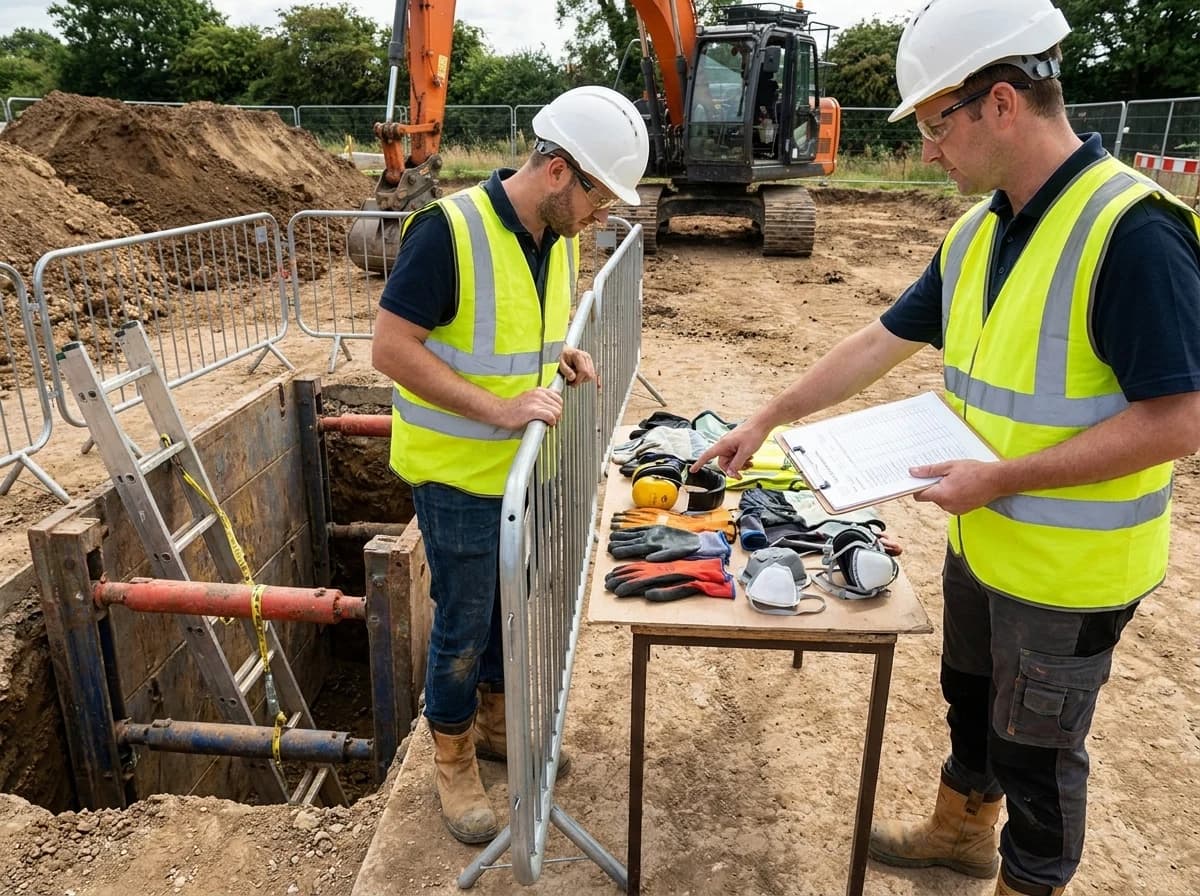
NIOSH's trenching and excavation safety page highlights several practical points that should shape the PPE program:
- never enter an unprotected trench
- use a protective system for trenches that require it
- assign and train a competent person
- evaluate soil stability
- call 811 and identify underground utility lines
- keep spoil piles and heavy equipment away from trench edges
- plan traffic control and emergency response
For PPE buyers, the key lesson is that trench PPE cannot be selected from a generic construction list. The kit should reflect trench depth, soil, protective system, access route, utility exposure, equipment movement, weather, and rescue plan.
Head Protection for Trenching and Excavation
Head protection is usually baseline PPE around excavation work. Workers can be struck by:
- excavator buckets
- falling soil clods, rocks, or debris
- pipe, trench box panels, shoring components, or plates
- tools dropped from the edge
- loads moving near the trench
- overhead work or nearby traffic-control equipment
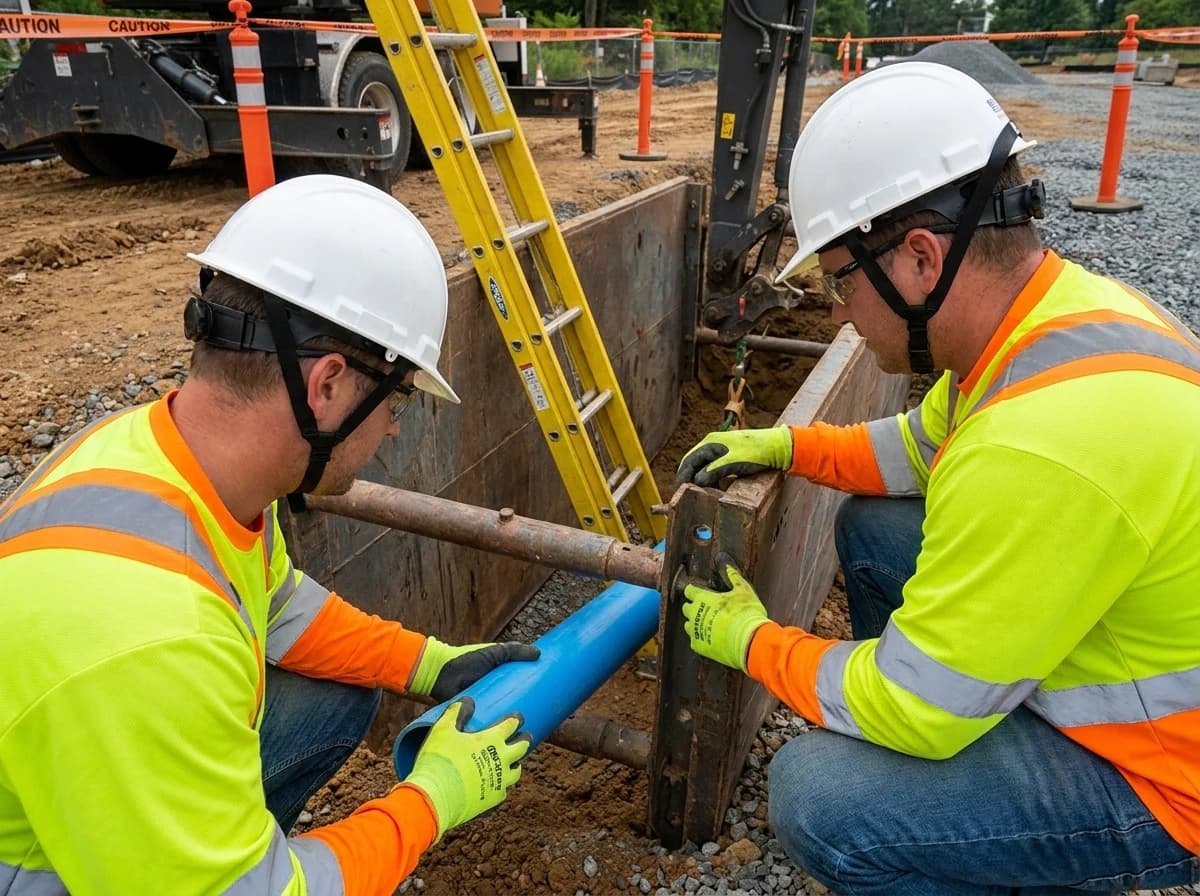
For general excavation support, a compliant hard hat may be enough if the primary exposure is top impact. For tighter trenches, ladder access, utility pits, shaft work, or work where side impact and retention matter, a safety helmet or Type II head protection with a manufacturer-approved chin strap may be the better choice.
Check:
- helmet or hard hat standard and class
- compatibility with earmuffs, face shields, goggles, respirators, and lights
- chin strap needs for climbing or leaning
- replacement rules after impact or damage
- whether low clearance or side impact changes the selection
Use the construction hard hat types guide and the safety helmet vs hard hat comparison for deeper head protection decisions.
High-Visibility Clothing Around Excavators and Traffic
Excavation work often places workers near mobile equipment. That makes visibility a core control.
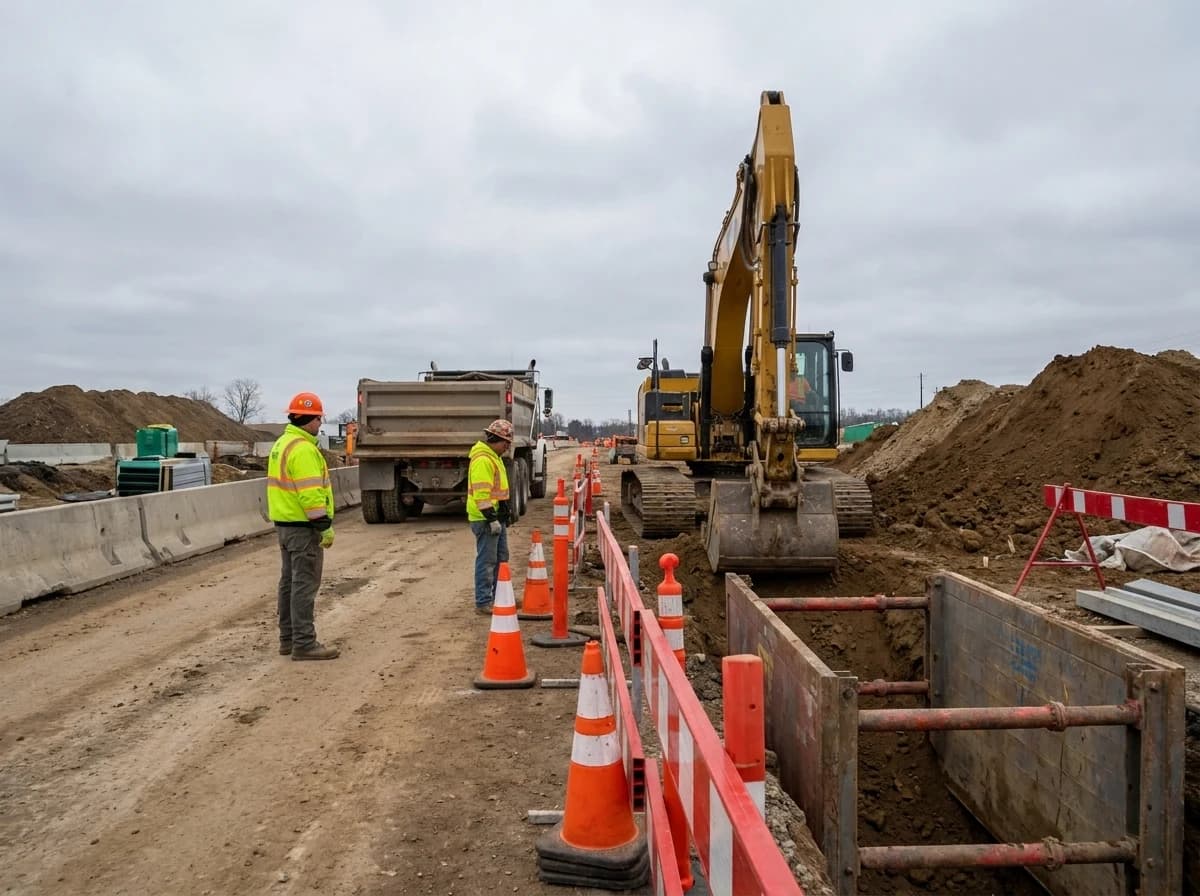
High-visibility clothing should be reviewed when workers are near:
- excavators
- loaders
- dump trucks
- compactors
- road traffic
- utility trucks
- spotters and signal persons
- night or low-light work
- muddy or dusty backgrounds that reduce contrast
In many excavation environments, Class 2 hi-vis may be the baseline. Roadwork, highway utility repair, night work, complex equipment movement, poor weather, and high-speed traffic may justify a stronger garment system.
The garment must remain the visible outer layer. A compliant vest covered by rainwear, a harness, a backpack, or a jacket is not doing the job. For trench work, supervisors should also check whether mud, dust, or concrete slurry is reducing the garment's visibility before the shift ends.
Use the high-visibility clothing for construction guide for Class 2 vs Class 3 and EN ISO 20471 decisions.
Footwear for Mud, Water, Edges, and Puncture Hazards
Footwear is one of the most important PPE decisions in excavation work. Workers may move across loose soil, aggregate, wet slopes, trench plates, ladders, ramps, utility crossings, road shoulders, and muddy spoil areas.
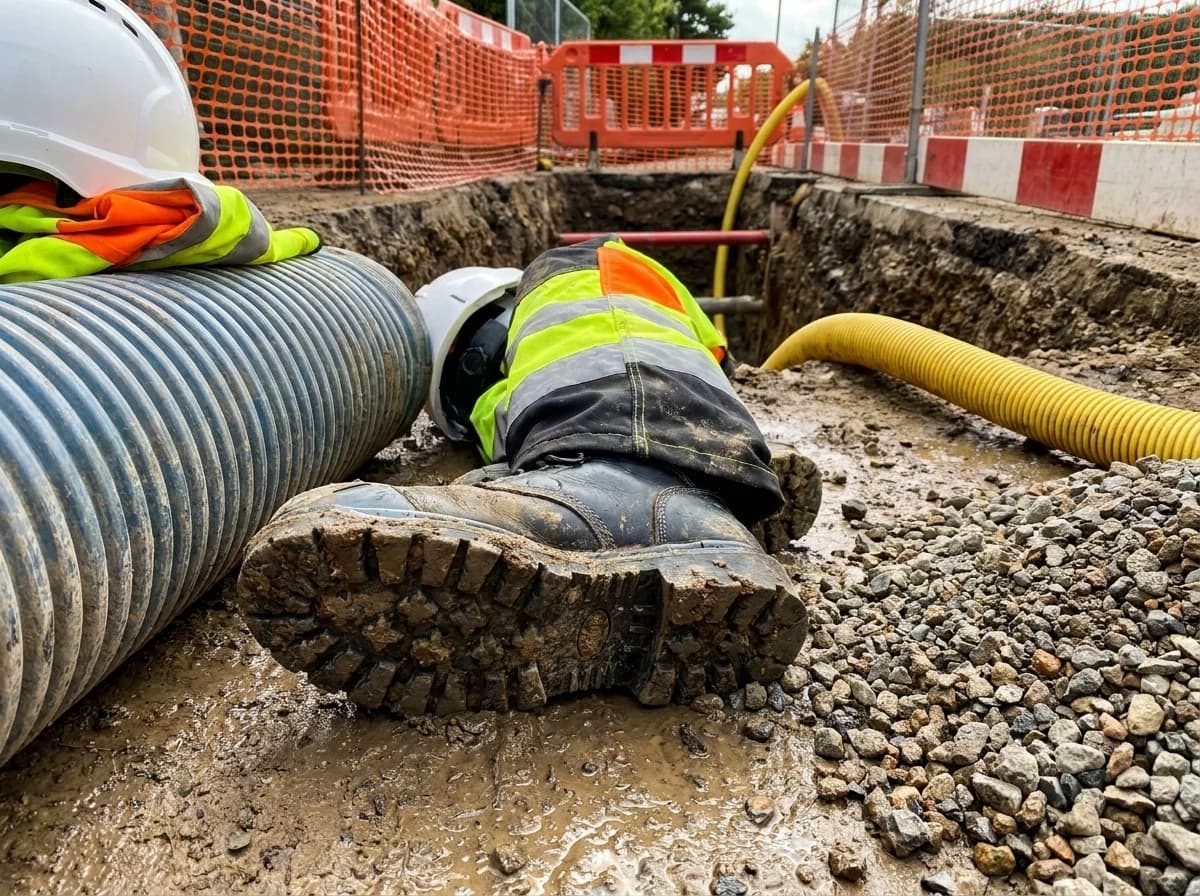
Good trenching footwear should address:
- toe impact from pipe, plates, tools, and materials
- puncture hazards from rebar, stakes, nails, scrap, and debris
- slip resistance on mud, wet clay, trench plates, ladders, and ramps
- ankle stability on uneven ground
- water resistance or waterproofing where the trench is wet
- electrical hazard or antistatic needs where utilities are involved
- chemical or contamination exposure where soil or water is suspect
For many crews, a lace-up safety boot with toe protection, puncture resistance, and strong slip resistance is the baseline. For wet utility work, safety rain boots or waterproof safety boots may be needed, but they should still provide stable traction and toe protection.
Use the construction safety footwear guide for ASTM F2413, EN ISO 20345, toe caps, puncture resistance, slip resistance, and waterproof footwear choices.
Gloves for Pipe, Shoring, Utilities, and Wet Soil
Excavation gloves should match the hand hazard, not just the job title.
Common glove needs include:
- grip gloves for pipe handling and wet materials
- cut-resistant gloves for metal edges, plates, tools, and rebar
- impact gloves for pinch and crush exposure
- chemical-resistant gloves for contaminated soil, sewer work, or wet concrete
- thermal gloves for cold, wet trench work
- disposable inner gloves for contamination control where needed
Avoid gloves that are so bulky workers cannot handle pins, couplers, trench box hardware, hand tools, radios, or test equipment safely. Also avoid gloves that become slick when wet or packed with mud.
For a deeper selection process, use the construction gloves selection guide.
Eye and Face Protection for Dust, Chips, and Splash
Eye hazards in trenching and excavation include wind-blown dust, flying chips, pressurized mud or water, utility splash, saw cutting, grinding, pipe cutting, and debris from equipment movement.
Use safety glasses with side protection for general impact and particles. Use sealed goggles when dust, splash, or fine debris can get around ordinary glasses. Add a face shield over primary eye protection where there is face-level debris, splash, or cutting exposure.
Do not rely on a face shield by itself for impact or dust. The shield protects the face, but the eyes still need primary protection where the hazard can pass around or under the shield.
Use the eye and face protection for construction sites guide for glasses, goggles, face shields, and welding or cutting protection.
Respiratory Protection and Atmospheric Hazards
Respiratory hazards in trenching and excavation can come from dust, silica, diesel exhaust, sewer gases, contaminated soil, coatings, concrete cutting, or low-oxygen atmospheres in confined or poorly ventilated spaces.
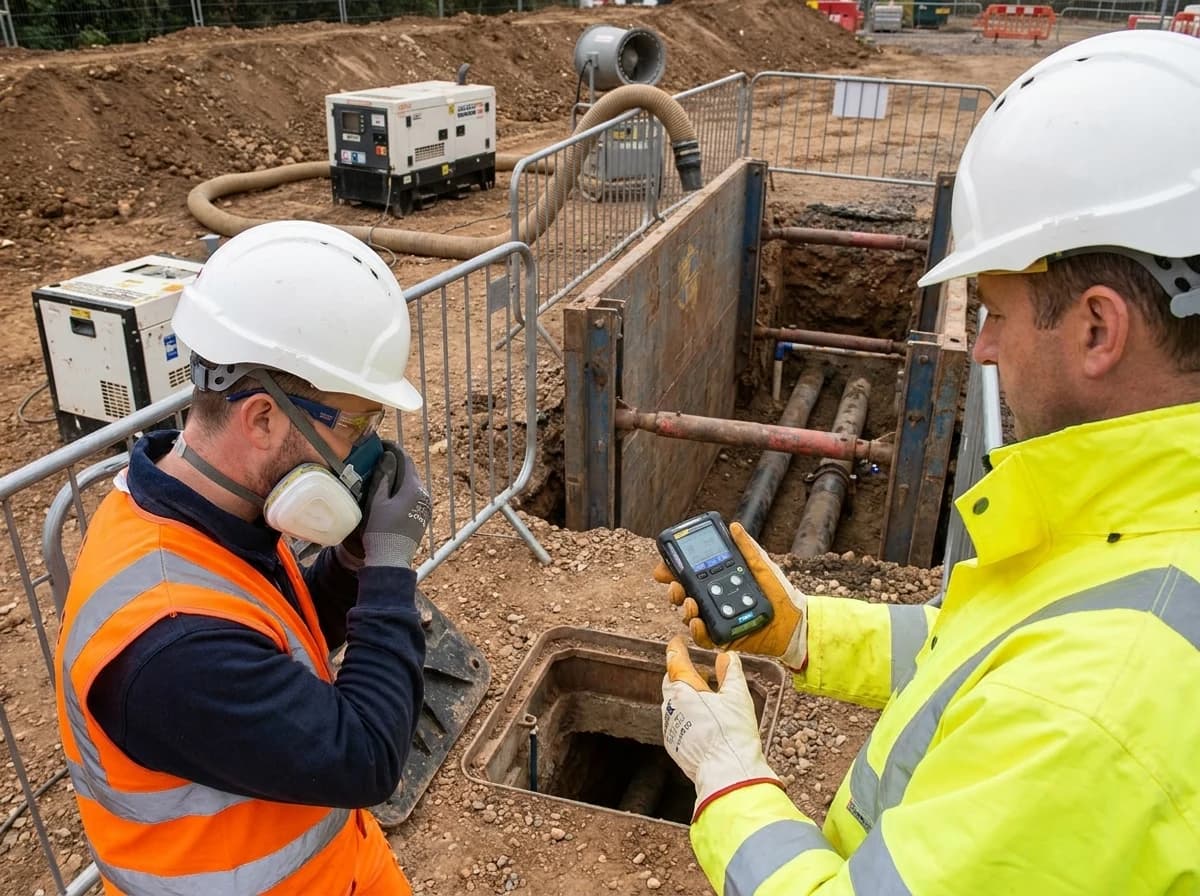
Before issuing respirators, answer these questions:
- Is the hazard dust, silica, vapor, gas, fume, sewer atmosphere, or unknown?
- Is the trench or pit deep, enclosed, or poorly ventilated?
- Is atmospheric testing required?
- Are engineering controls such as water suppression, ventilation, or isolation in use?
- Is a NIOSH-approved respirator selected for the actual hazard?
- Does required respirator use trigger medical evaluation, fit testing, training, and a written program?
- Are filters, cartridges, storage, and replacement quantities planned?
For many ordinary dust tasks, a disposable filtering facepiece may be enough only if the hazard and exposure allow it. For silica cutting, sewer work, contaminated soil, coatings, or unknown atmospheres, the decision needs a stronger safety review.
Use the construction respiratory protection guide before turning respiratory PPE into a bulk order.
Hearing Protection Around Excavation Equipment
Excavation crews often work near high-noise equipment:
- excavators
- compactors
- concrete saws
- breakers
- pumps
- compressors
- dump trucks
- plate compactors
- generators
Hearing protection should be available at the point of exposure, not locked in a trailer. The choice should consider noise level, task duration, communication, helmet compatibility, and whether workers need to hear alarms or spotter instructions.
Common options include foam earplugs, reusable plugs, earmuffs, helmet-mounted muffs, and communication headsets. For equipment-heavy work, the best option is often the one that workers can wear correctly while still communicating safely.
Use the hearing protection for construction workers guide for NRR/SNR, OSHA noise rules, and fit considerations.
Fall Protection, Access, and Edge Controls
Trenching can create fall hazards around open edges, shafts, pits, crossings, plates, and adjacent structures. The PPE question should be connected to access and edge protection.
Check:
- Is safe access provided for entry and exit?
- Are ladders, ramps, or stairs positioned correctly for the trench depth and travel distance?
- Are workers crossing only at controlled crossing points?
- Are trench edges protected where workers could fall?
- Are workers exposed to falling into shafts, pits, or openings?
- Is personal fall arrest needed for adjacent elevated work or shaft access?
- Is rescue planning realistic if a worker falls or becomes trapped?
Do not use fall protection as a substitute for trench protective systems. Fall PPE addresses fall exposure. It does not protect a worker from a cave-in.
Use the fall protection PPE for construction sites page for harnesses, lanyards, SRLs, anchors, and rescue planning.
Task-Based Trenching PPE Matrix
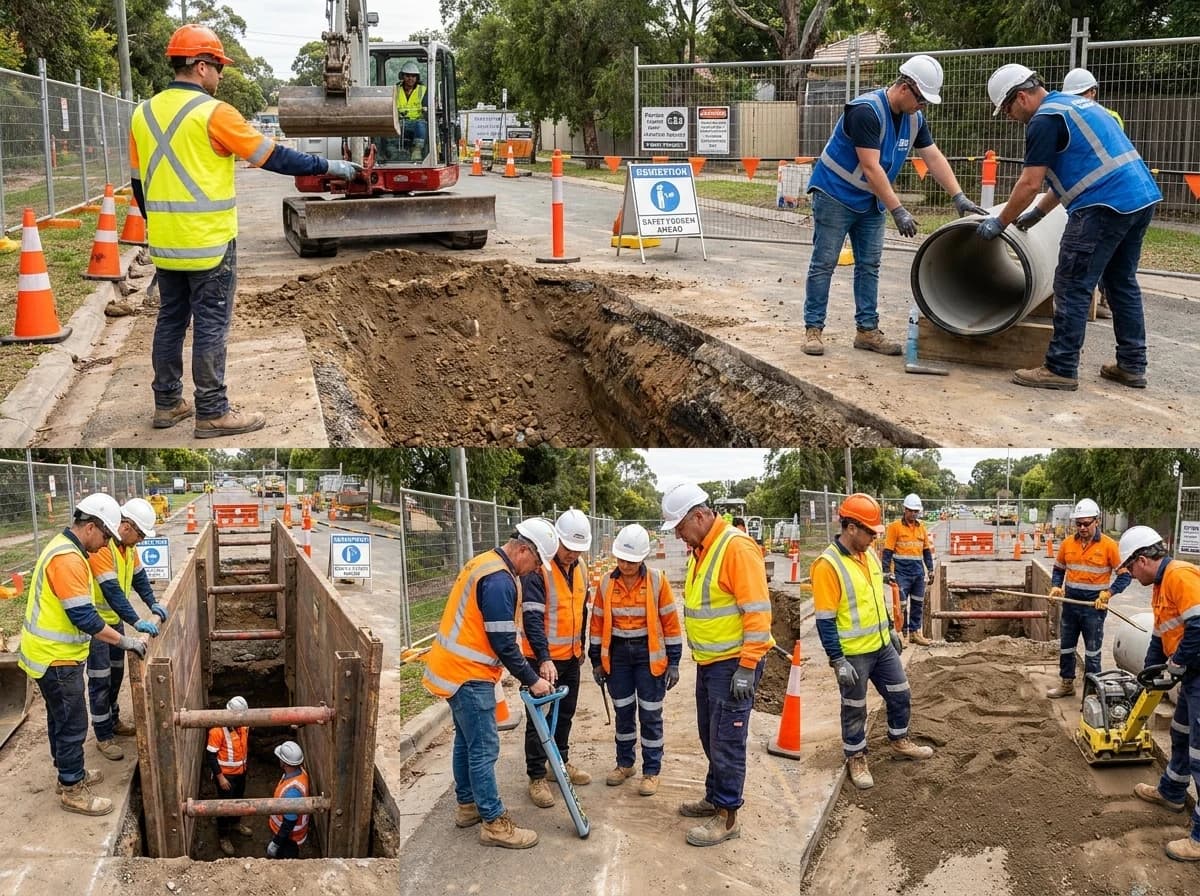
Different trenching tasks need different PPE add-ons.
| Task | Main hazards | PPE focus |
|---|---|---|
| Utility trenching | Cave-in, utilities, equipment, mud, traffic | Helmet, hi-vis, safety boots, gloves, eye protection, utility-specific review |
| Pipe laying | Pinch points, heavy materials, wet surfaces, access | Impact or grip gloves, toe protection, slip-resistant boots, helmet, hi-vis |
| Sewer or drainage work | Contamination, gases, water, splash, confined atmosphere | Atmospheric review, respiratory decision, goggles, chemical gloves, waterproof footwear |
| Roadside excavation | Traffic, equipment, dust, heat, noise | Class 2 or Class 3 hi-vis, hearing protection, eye protection, footwear, heat controls |
| Concrete cutting near trenches | Silica, flying debris, noise, slurry | Respirator review, sealed eyewear, face shield, hearing protection, gloves, boots |
| Trench box installation | Crush points, suspended loads, bucket movement | Helmet, hi-vis, impact gloves, safety boots, exclusion zones, communication |
| Emergency utility repair | Time pressure, unknown utilities, water, night work | Strong supervision, lighting, hi-vis, waterproof PPE, respiratory and electrical review |
This matrix should be used with the competent person's trench plan. PPE is the worker-level layer, not the trench safety system itself.
Procurement Checklist for Trenching PPE Kits
When ordering trenching and excavation PPE in bulk, specify kits by crew type instead of one generic bundle.
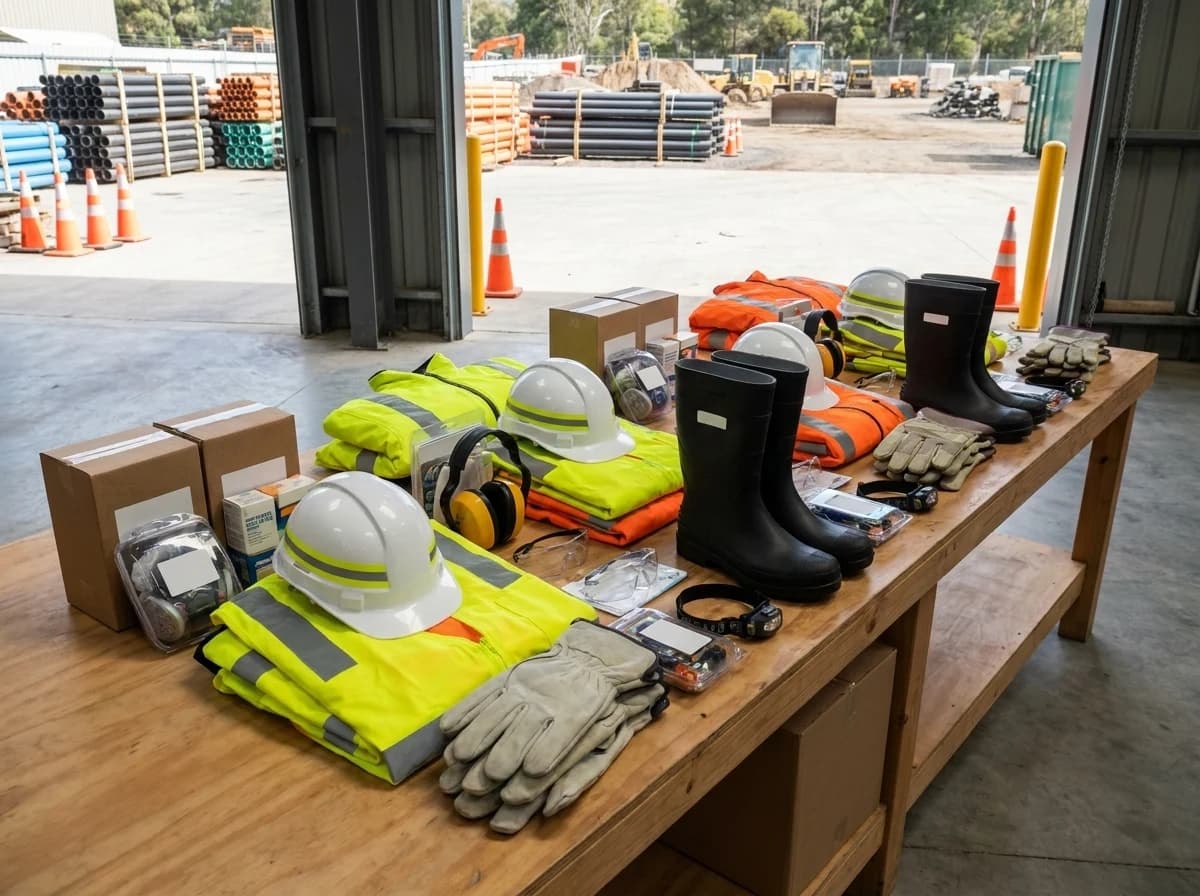
Useful kit types include:
- baseline excavation crew kit
- road utility repair kit
- sewer and drainage kit
- pipe crew kit
- trench box installation kit
- equipment operator support kit
- visitor or inspector kit
- wet weather refill kit
- hot-weather excavation kit
Each kit should define:
- required PPE categories
- size range
- standards and documentation
- replacement stock
- packaging by crew or worker
- storage and contamination control
- issue rules for visitors and subcontractors
- when task-specific PPE must be added
For procurement format, use the contractor PPE kit checklist. For large multi-category orders, use the bulk construction PPE procurement guide.
Common Trenching PPE Mistakes
Avoid these common mistakes:
- treating PPE as the main control for trench collapse
- issuing generic construction PPE without reviewing trench depth, soil, access, utilities, and equipment
- using ordinary boots in wet, muddy, or puncture-heavy excavation work
- failing to keep hi-vis visible under rainwear or mud
- relying on safety glasses where sealed goggles are needed
- adding respirators without hazard identification, fit, filters, and program controls
- ignoring hearing protection around compactors, saws, pumps, and trucks
- allowing workers near trench edges without edge, access, and equipment controls
- storing replacement PPE too far from the excavation area
- sending visitors into trench zones with only a hard hat and vest
The safest trench PPE plan is the one that keeps the hierarchy clear: control the trench first, then equip the worker for the remaining task hazards.
Frequently Asked Questions
What PPE is required for trenching and excavation?
Common trenching PPE includes head protection, high-visibility clothing, safety boots, gloves, eye protection, and hearing protection where equipment noise exists. Respiratory protection, face protection, fall protection, chemical gloves, waterproof boots, or contamination controls may be needed depending on the trench, task, soil, utility, atmosphere, and equipment exposure.
Does PPE protect workers from trench collapse?
No. PPE does not protect a worker from a cave-in. Trench collapse prevention depends on competent-person inspection, protective systems, safe access, spoil control, equipment control, and emergency planning. PPE only addresses remaining worker-level hazards such as impact, visibility, slips, cuts, dust, noise, and splash.
What boots are best for trench work?
Choose safety boots based on the ground and task. Many trench crews need toe protection, puncture resistance, strong slip resistance, ankle stability, and water resistance. Wet utility work may require waterproof safety boots, while road excavation may need boots that handle aggregate, mud, and pavement.
Do trench workers need respirators?
Sometimes. Respirators may be needed for silica dust, contaminated soil, sewer gases, coatings, diesel exhaust, or other airborne hazards. Required respirator use should be managed under a respiratory protection program and based on the actual hazard, not issued automatically as a generic kit item.
Do workers need high-vis clothing for excavation work?
Often yes. Excavation crews commonly work around excavators, loaders, dump trucks, traffic, and spotters. High-visibility clothing should match the traffic and equipment exposure and remain visible as the outermost layer.
Who should decide trench PPE requirements?
The employer's safety program, competent person, and site supervisor should work from the trench hazard assessment. Procurement should then buy PPE that matches those requirements, including sizes, documentation, replacement stock, and task-specific add-ons.
Build a Trench-Ready PPE Kit
A trench-ready PPE kit should help workers stay visible, stable, protected from impact, protected from dust and splash where needed, and able to replace damaged gear during the shift. It should never create the impression that a worker can enter an unsafe trench because they are wearing PPE.
Start with the trench plan, then build the kit:
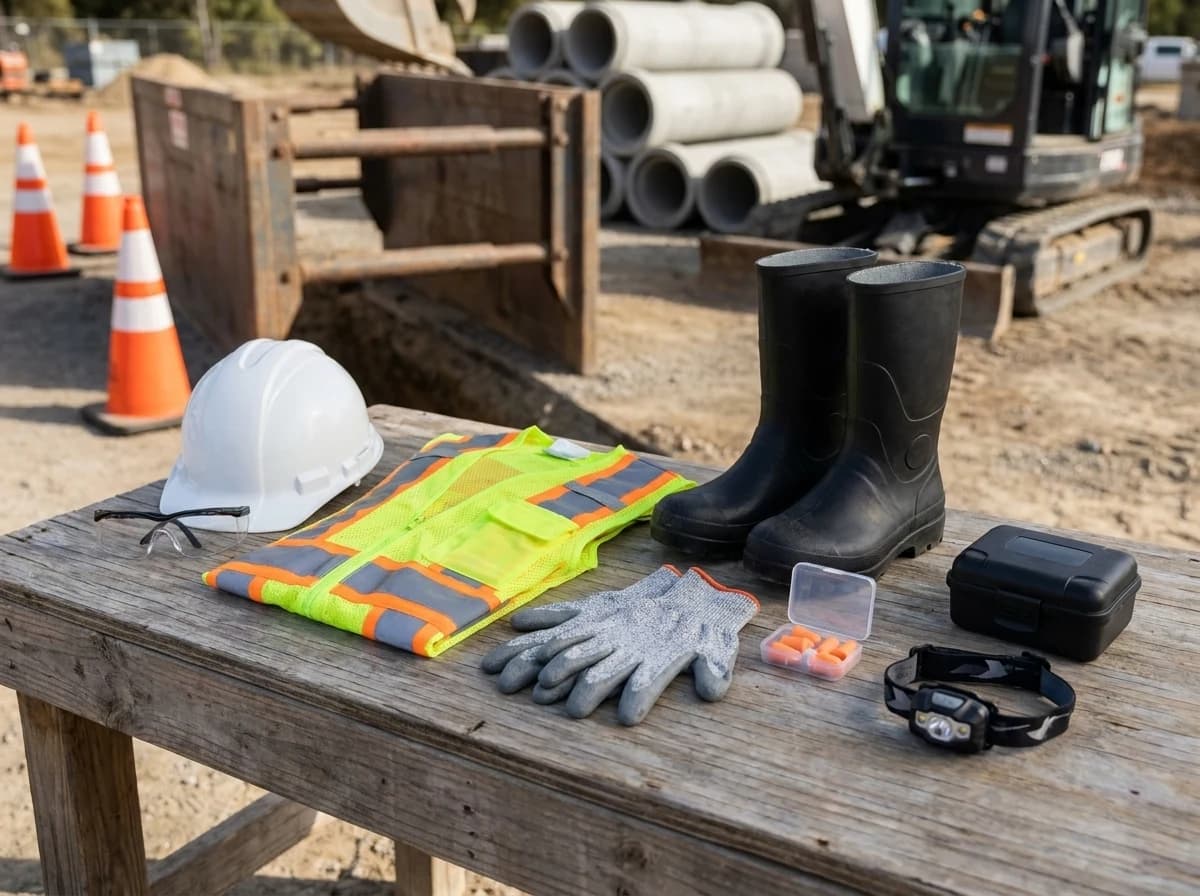
- helmet or hard hat matched to impact and retention exposure
- hi-vis garment matched to traffic and equipment exposure
- safety boots matched to mud, water, puncture, slip, and toe hazards
- gloves matched to pipe, shoring, tools, and contamination
- eye protection matched to dust, debris, and splash
- hearing protection for equipment noise
- respiratory protection only where the hazard and program require it
- fall protection where trench edges, shafts, pits, or adjacent elevated work require it
- replacement stock and contaminated-PPE handling
For help turning this into a quote, use the contractor PPE kit checklist or contact Laifappe with your crew type, trench work scope, country or standard requirements, and expected worker count.
Related Guides on Laifappe.com
- Complete PPE solution for construction sites
- Construction PPE checklist
- Contractor PPE kit checklist
- Heavy equipment operator PPE checklist
- Construction safety footwear guide
- High-visibility clothing for construction workers
- Construction gloves selection guide
- Eye and face protection for construction sites
- Respiratory protection for construction dust and fumes
- Hearing protection for construction workers
- Fall protection PPE for construction sites
- How to buy construction PPE in bulk
Sources: OSHA Trenching and Excavation construction resources, OSHA 29 CFR 1926 Subpart P, OSHA 29 CFR 1926.651, OSHA 29 CFR 1926.652, NIOSH Trenching and Excavation Safety updated January 30, 2026, OSHA 29 CFR 1926.95 PPE, OSHA 29 CFR 1926.102 eye and face protection, OSHA 29 CFR 1926.103 respiratory protection, OSHA 29 CFR 1926.52 noise, and relevant ANSI/ISEA, ASTM, NIOSH, and EN PPE standards.
Related PPE
Source the PPE covered in this guide
Move from research to a buyer shortlist with the matching solution page, category paths, selected PPE options, and RFQ next steps.
Related Tools
Turn this guide into a faster PPE shortlist
Use the matching tools to check footwear sizing, decode certification labels, or estimate order quantities before you move from research to purchasing.
Safety Footwear Label Decoder
Decode ASTM F2413 and EN ISO 20345 markings such as S3, SRC, HRO, EH, and PR in seconds.
Decode labelsPPE Quantity Calculator
Estimate monthly usage, replacement cycles, and budget needs before you place a bulk PPE order.
Plan quantitiesSafety Boot Size Guide
Convert US, EU, UK, CN, and JP sizing and check width fittings before you lock in footwear specs.
Check sizing