Buyer next step
Turn this guide into a sourced PPE shortlist with standards, quantities, and role-based kit notes.
Planning tools
Use these tools before moving from this guide into quantities, sizing, labels, or RFQ planning.
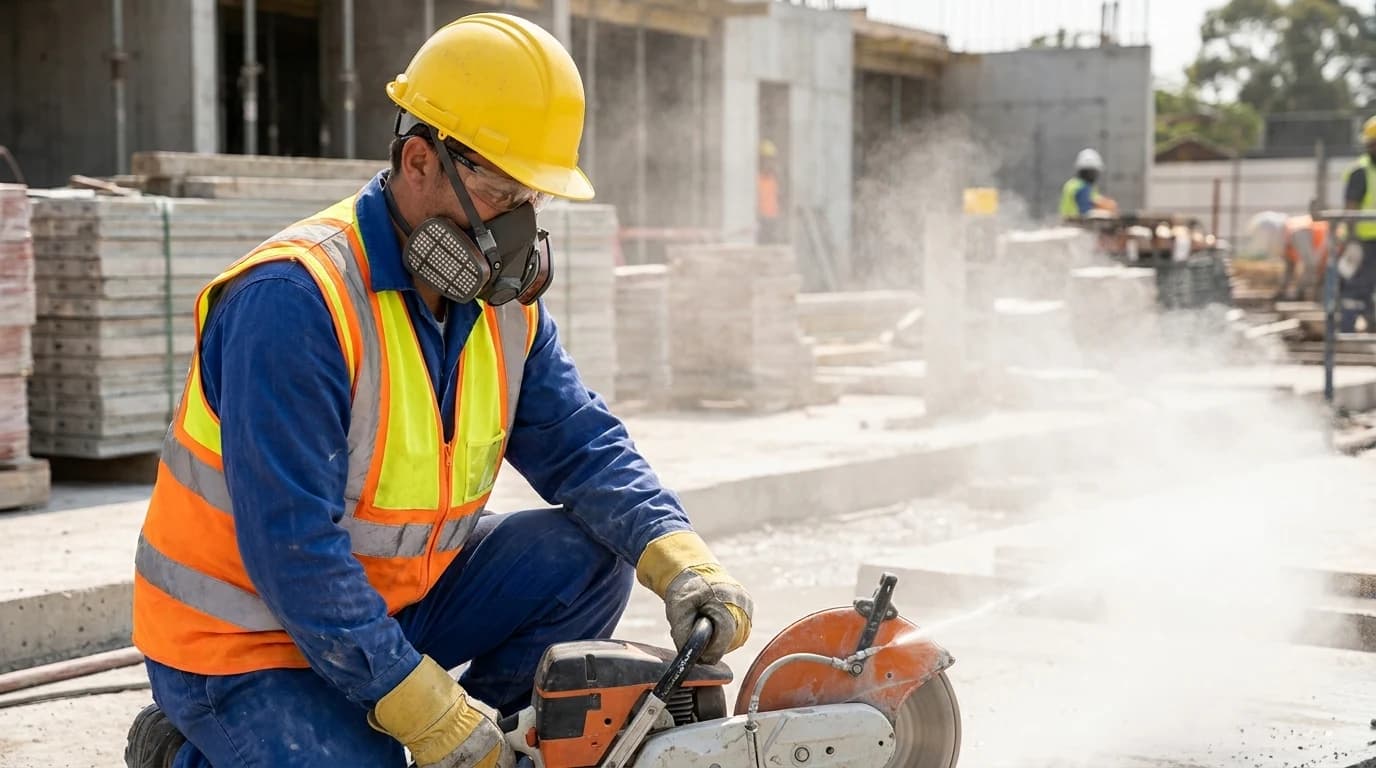
Construction dust respirator selection starts with the airborne hazard, not the mask name. For concrete dust, silica dust, demolition dust, grinding, and cutting, the buyer needs to compare N95, P100, and reusable half-face respirators against the task, controls, duration, fit, and OSHA requirements. N95 respirators may fit some lower-exposure dust tasks, while P100 filters or reusable half-face respirators are often better for heavier or recurring silica tasks.
Silica dust, demolition dust, wood dust, gypsum dust, welding fumes, coating vapors, asbestos, lead, and mixed renovation dust can require different controls. The wrong respirator may look protective and still fail the task.
Use this article for category-level respiratory PPE selection. For the full construction PPE structure, use the Complete PPE solution for construction sites. For compliance across all PPE categories, use OSHA PPE requirements for construction. For site execution, use the construction PPE checklist. For purchasing workflow, use the bulk construction PPE procurement guide. For silica-heavy demolition, concrete cutting, grinding, and dusty cleanup, pair this guide with the demolition and concrete cutting PPE checklist and PPE for demolition and concrete cutting work.
For drilling, crushing, screening, haul-road dust, and quarry silica exposure outside construction, use the mining and quarrying PPE solution to coordinate respiratory protection with head, eye, hearing, hand, foot, and visibility requirements.
Quick Answer: Construction Dust Respirator, N95, P100 Or Half-Face?
For construction dust, the right respirator depends on the task, exposure level, work controls, fit, and whether OSHA requires respiratory protection. N95 can be a starting point for some lower-exposure non-oil dust tasks. P100 provides higher particulate filtration and is often used for heavier dust or recurring silica work. Reusable half-face respirators make more sense when crews need replaceable filters, better fit control, cleaning, storage, and repeat use.
| Buyer question | Short answer | RFQ note |
|---|---|---|
| Is N95 enough for construction dust? | Sometimes, for lower-exposure dust where the task and controls support it. | Ask for NIOSH approval, model, sizes, and fit-test support where required. |
| Is P100 better than N95 for concrete dust? | P100 has higher particulate filtration, but it still must match the task, exposure, and facepiece. | Specify filter class, facepiece type, replacement schedule, and compatible eye PPE. |
| When should I buy half-face respirators? | Use them for repeated high-dust work, silica-heavy tasks, or crews needing replaceable filters. | Include facepiece sizes, filters, cleaning wipes, storage bags, and spare parts. |
| Does P100 protect against paint fumes? | Not by itself. Vapors need the correct vapor or combination cartridge. | Ask suppliers to name the cartridge type and change-out logic. |
| What should a bulk respirator order include? | Respirators, filters/cartridges, fit-test support, cleaning, storage, training, and replacement stock. | Use a structured RFQ instead of buying masks by unit price only. |
Use the Construction PPE RFQ Template to request respirator models, filter classes, cartridge types, NIOSH or EN approval details, facepiece sizes, fit-test support, and replacement parts in one supplier-ready format.
Quick Respirator Selection Table
| Task or hazard | Likely starting point | When to escalate | RFQ / compliance note |
|---|---|---|---|
| General non-oil construction dust | NIOSH-approved N95 or equivalent level where exposure supports it | Longer duration, poor seal, heavy dust, or exposure data showing more protection is needed | If required, include fit testing, facial-hair policy, training, and spare stock. |
| Concrete cutting, drilling, grinding, masonry, silica cleanup | Review OSHA silica Table 1 or exposure assessment first | Use reusable half-face respirator with P100 filters where heavier or recurring silica exposure requires stronger protection | Do not buy respirators before defining water/dust collection controls and filter replacement. |
| Demolition or renovation with unknown dust | Identify contaminants before selecting PPE | Asbestos, lead, mold, or mixed hazardous dust may require a specialized program | Never treat unknown demolition dust as ordinary nuisance dust. |
| Welding fumes, coatings, solvents, adhesives | Hazard-specific filter or cartridge selection | P100 alone does not protect against organic vapors unless paired with the correct cartridge | Ask suppliers to specify cartridge type, change-out logic, and compatibility with eye/face PPE. |
| Repeated high-dust tasks across crews | Reusable half-face or full-face program | PAPR may be needed for long-duration work, heat, comfort, or special fit needs | Plan facepiece sizes, cleaning, storage, replacement parts, and worker training. |
Why Construction Respiratory Protection Is Easy To Get Wrong
Respiratory protection fails when teams treat every airborne hazard as "dust." That shortcut creates several common errors:
- using a nuisance dust mask where a NIOSH-approved respirator is needed
- using N95s for heavy silica tasks without checking exposure and work controls
- buying respirators without medical evaluation, fit testing, or training when they are required
- ignoring oil mist when choosing N, R, or P filters
- using particulate filters for organic vapors from coatings or solvents
- waiting until dust is visible before issuing protection
- buying one respirator model for every worker and every face shape
- failing to replace filters or cartridges before performance drops
- treating asbestos, lead, or unknown demolition dust like ordinary construction dust
The professional approach starts with the airborne hazard, not the mask type.
What OSHA Requires For Construction Respirators
Construction respiratory protection sits mainly on three OSHA layers:
- 29 CFR 1926.103 makes OSHA's respiratory protection requirements apply to construction.
- 29 CFR 1910.134 sets the core respiratory protection program requirements.
- 29 CFR 1926.1153 sets construction-specific requirements for respirable crystalline silica.
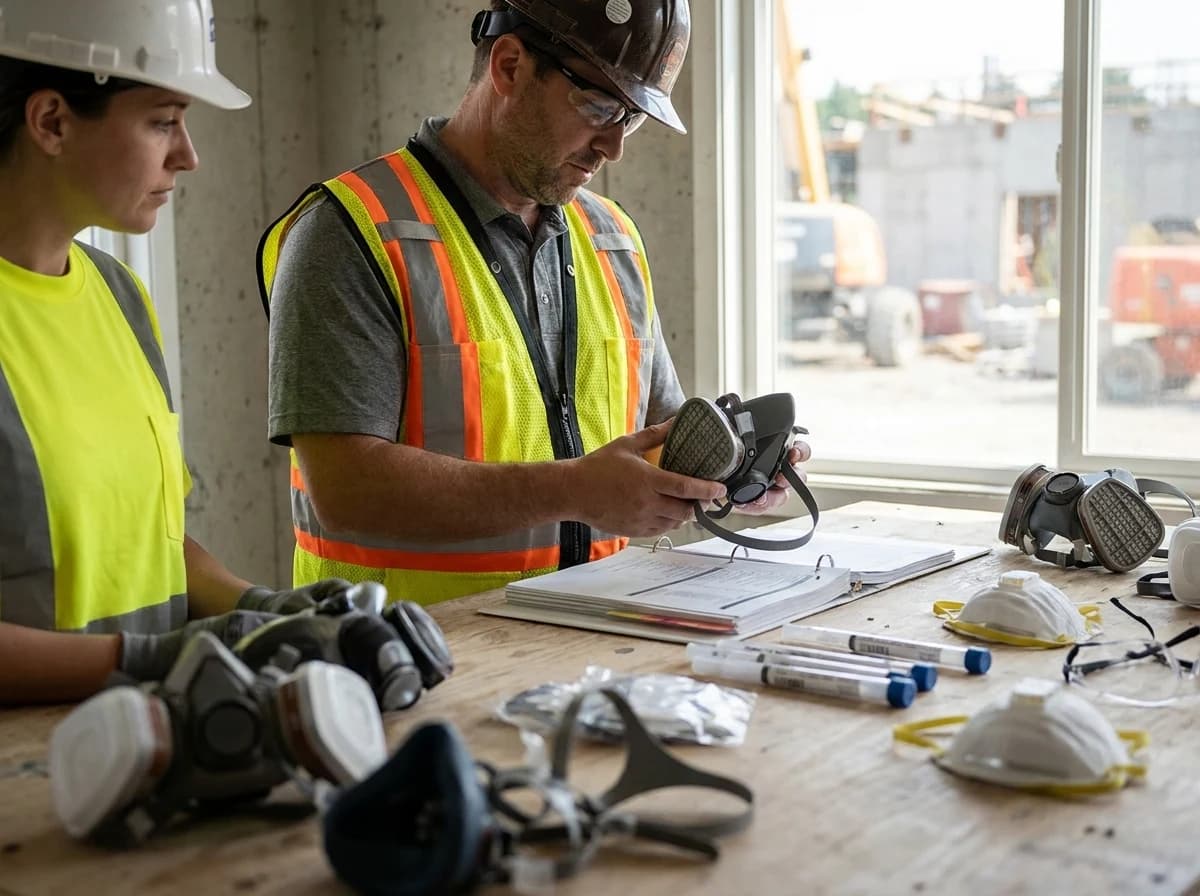
Under 29 CFR 1910.134, whenever respirators are necessary to protect employee health or are required by the employer, the employer must establish and implement a written respiratory protection program with worksite-specific procedures.
A required respiratory protection program normally includes:
- respirator selection based on the hazard
- medical evaluation before required respirator use
- fit testing for tight-fitting respirators
- procedures for proper use
- maintenance, cleaning, and storage
- breathing air quality where supplied-air systems are used
- training
- program evaluation
For construction silica, 29 CFR 1926.1153 includes a PEL of 50 micrograms per cubic meter of air as an 8-hour TWA and an action level of 25 micrograms per cubic meter as an 8-hour TWA. The standard also includes Table 1, which lists specified exposure control methods for common construction tasks involving materials that contain crystalline silica.
Respirators are not meant to be the first control. OSHA expects employers to use feasible engineering and work practice controls, such as water delivery, dust collection, ventilation, and task controls. Respirators become necessary when those controls are required by Table 1, when exposure assessment shows they are needed, or when other task-specific standards require them.
The Main Airborne Hazards On Construction Sites
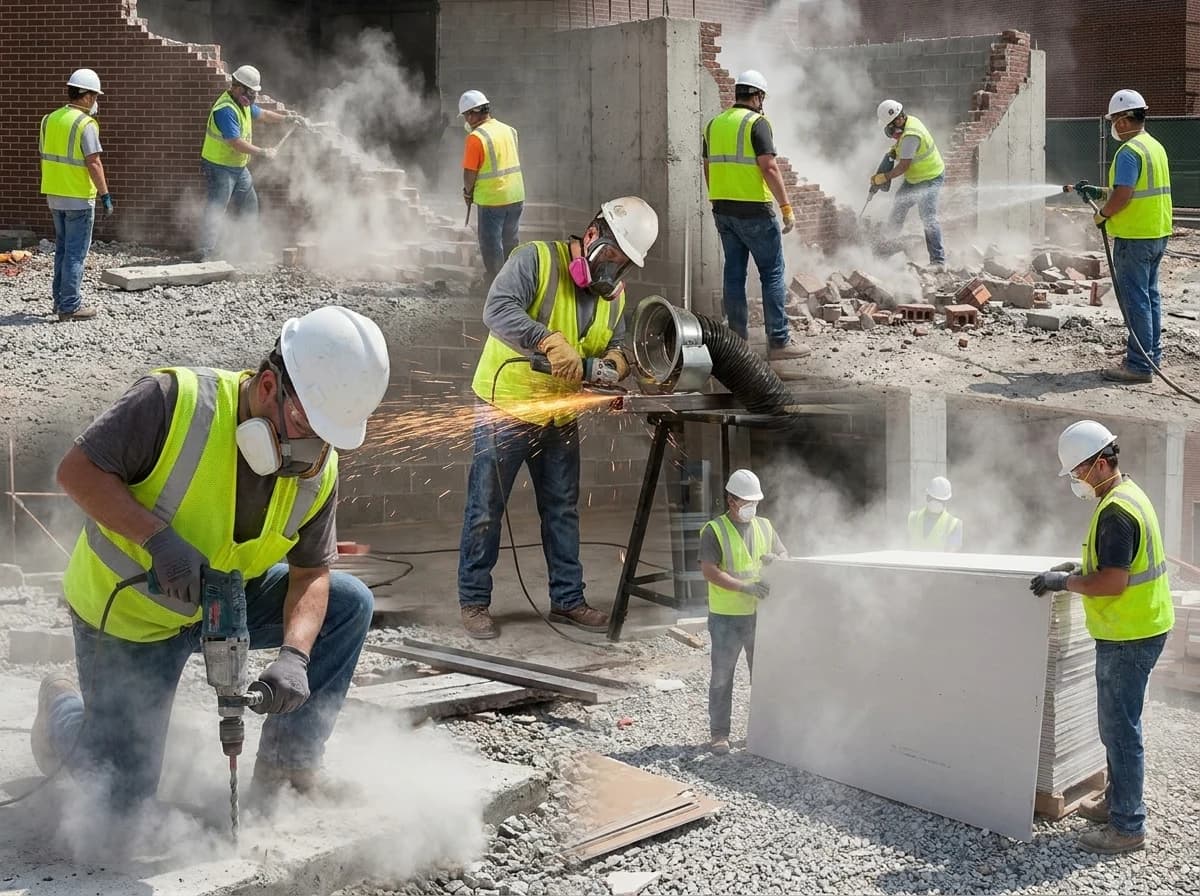
Before choosing a respirator, identify what the worker is breathing.
| Hazard | Common construction source | Why it matters |
|---|---|---|
| Respirable crystalline silica | Concrete cutting, drilling, grinding, masonry, brick, mortar, stone | Fine particles can reach deep lung tissue and are regulated under OSHA's silica standard |
| General dust | Cleanup, sweeping, drywall, wood cutting, insulation debris | May irritate airways and can be mixed with more serious contaminants |
| Welding fumes | Welding, cutting, brazing, hot work | Metal fumes may require specific filters and ventilation controls |
| Organic vapors | Paints, coatings, sealants, adhesives, solvents | Particulate filters alone do not protect against vapor exposure |
| Asbestos | Renovation, demolition, older buildings, pipe insulation, flooring | Requires a specialized regulated program and should not be treated as ordinary dust |
| Lead dust and fumes | Paint removal, torch cutting, renovation of older structures | Requires exposure assessment and specific controls |
| Mold and biological particles | Water-damaged renovation, remediation, enclosed spaces | May require respirator selection beyond ordinary dust filtering |
| Diesel particulate | Equipment operation in enclosed or poorly ventilated areas | Requires exposure control and ventilation planning |
The same worker may face multiple airborne hazards in one day. A concrete cutter may need silica protection, eye and face protection, hearing protection, gloves, and footwear changes. A demolition worker may face silica, asbestos, lead, biological particles, and heavy debris risk in the same project.
N95, P100, Half-Face, Full-Face, And PAPR: What Each One Does
Respirator names can be confusing because some describe filter efficiency, some describe facepiece design, and some describe powered airflow.
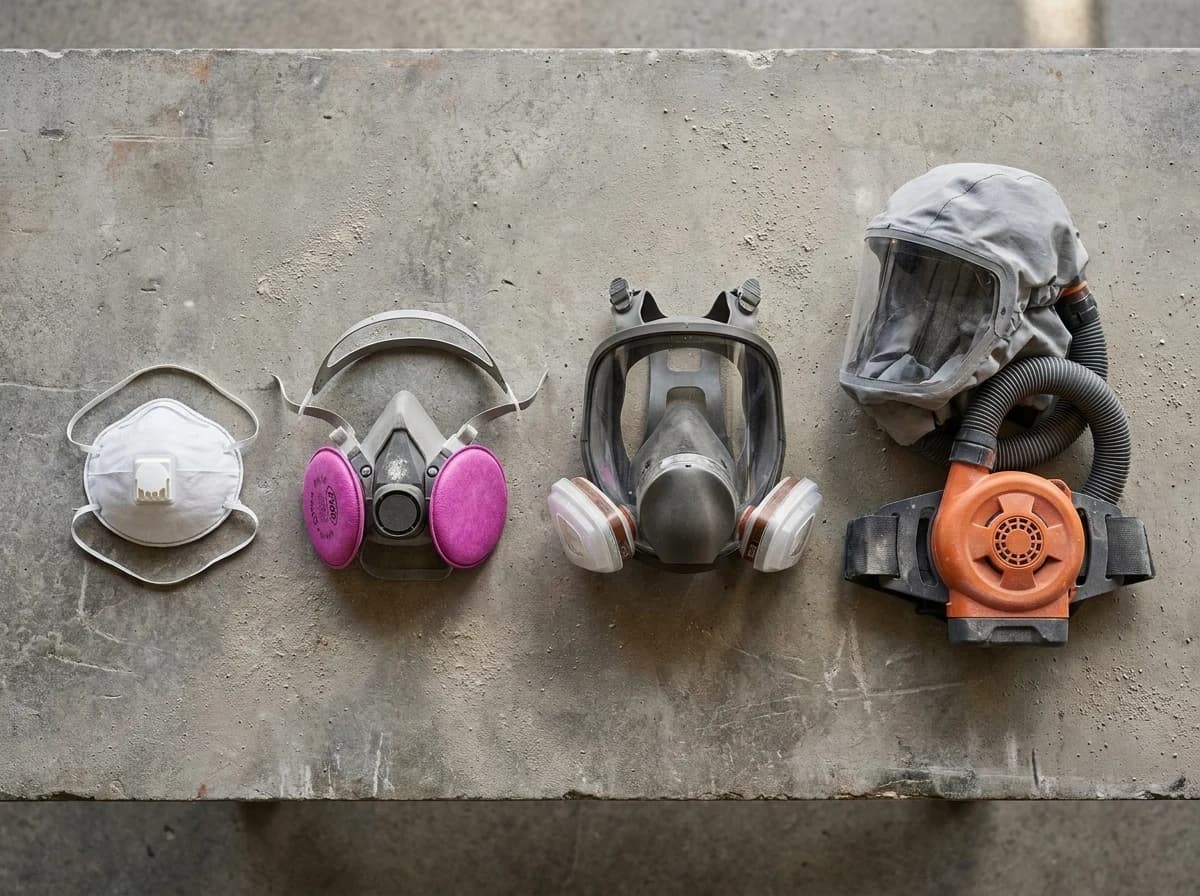
N95 filtering facepiece respirators
An N95 filters at least 95% of airborne particles under NIOSH test conditions and is not resistant to oil. It is often used for general construction dust and some silica tasks when exposure level and OSHA requirements allow it.
Best fit:
- lower-exposure dust tasks
- short-duration work where a disposable respirator is appropriate
- tasks where Table 1 or exposure assessment supports that level of protection
Main risk:
- poor seal, facial hair interference, and using N95s where higher protection is required
P100 filters
P100 filters provide at least 99.97% filtration efficiency and are oil proof. They are commonly used with reusable half-face or full-face respirators for higher particulate exposure.
Best fit:
- heavier dust tasks
- silica exposure where higher protection is needed
- tasks with possible oil mist
- reusable respirator programs
Main risk:
- treating P100 as protection against vapors unless the cartridge also covers the vapor hazard
Half-face elastomeric respirators
Reusable half-face respirators use replaceable filters or cartridges. They usually provide a higher assigned protection factor than filtering facepiece respirators when correctly selected, fit tested, and maintained.
Best fit:
- recurring silica tasks
- demolition and grinding work where disposable respirators wear out quickly
- tasks requiring particulate filters, vapor cartridges, or combination cartridges
Main risk:
- poor cleaning, wrong cartridge, and one-size purchasing
Full-face respirators
Full-face respirators protect the eyes and face seal area while providing respiratory protection. They can be useful when airborne hazard and eye irritation overlap.
Best fit:
- heavy dust and splash risk
- some chemical or vapor tasks where eye exposure matters
- work where goggles plus half-face respirator fit poorly
Main risk:
- heat, comfort, communication, and lens maintenance problems
Powered air-purifying respirators
PAPRs use a blower to pull air through filters or cartridges and supply filtered air to the wearer. They can reduce breathing resistance and may be useful for long-duration work or workers who cannot tolerate negative-pressure respirators.
Best fit:
- long-duration high-dust work
- heavy demolition or abrasive tasks
- worker comfort problems with negative-pressure respirators
- certain tight-fitting respirator fit challenges, depending on the PAPR type
Main risk:
- higher cost, battery management, cleaning, and task-specific selection
N, R, And P Filters: Why Oil Matters
NIOSH particulate filters are grouped by oil resistance:
| Filter series | Oil resistance | Common construction meaning |
|---|---|---|
| N-series | Not resistant to oil | Suitable for many non-oil dusts such as silica when no oil mist is present |
| R-series | Some oil resistance | Limited-use option where oil mist may be present |
| P-series | Oil proof | Preferred where oil mist or unknown aerosol mix may be present |
For mineral dusts such as silica, N, R, or P filters can work if there is no oil mist issue and the respirator has enough protection for the exposure. NIOSH notes that oil mist sources in construction can include percussion drills. That means buyers should not assume N95 is always the right construction dust answer.
Filter efficiency and oil resistance are only part of selection. Assigned protection factor, facepiece type, fit, exposure level, and task duration also matter.
OSHA Silica Table 1 And Respirator Selection
OSHA's construction silica standard gives employers two main compliance paths:
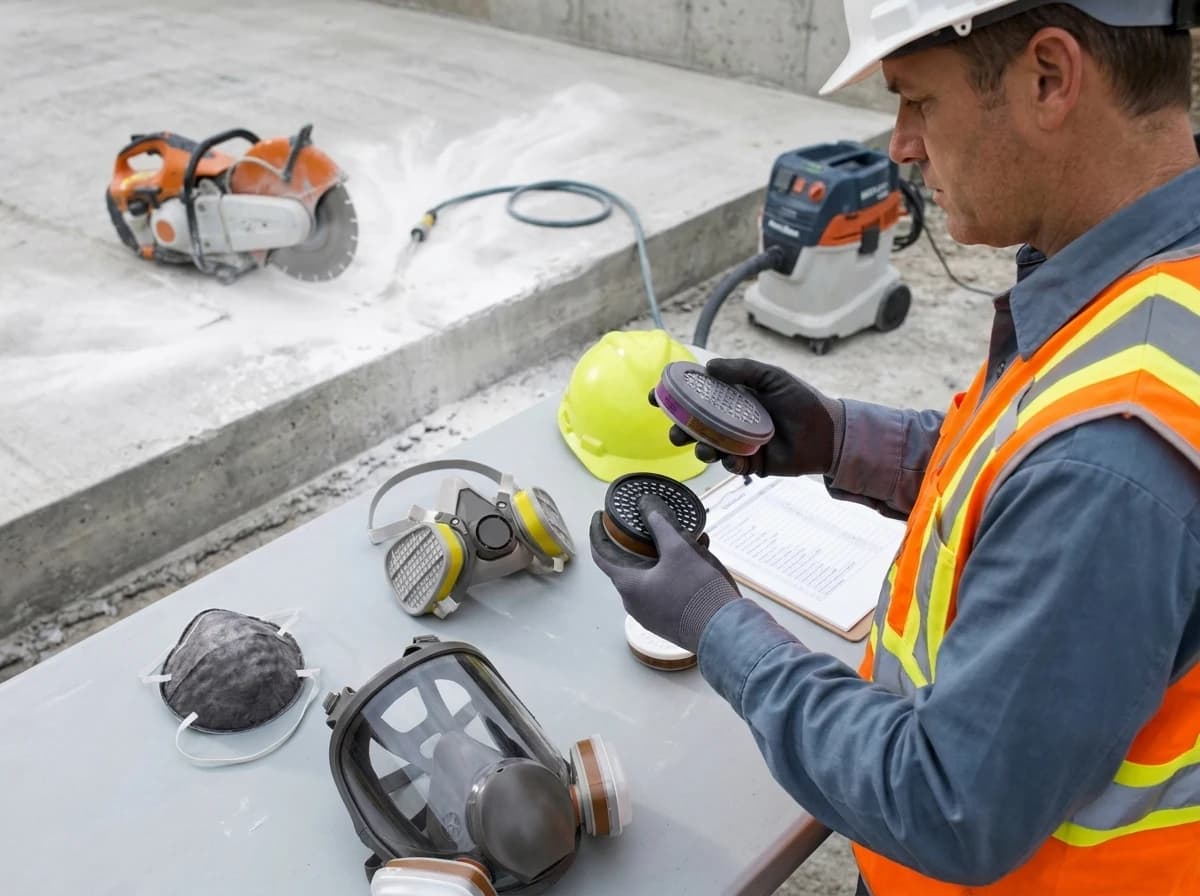
- follow Table 1 specified exposure control methods for listed tasks
- or assess worker exposure and comply based on measured or objective data
Table 1 matters because it connects the task, control method, task duration, and whether respiratory protection is required. Some tasks require no respirator if the listed controls are used for a limited duration. Other tasks require respirators depending on whether the work is indoors, outdoors, or longer than four hours per shift.
Common silica-generating tasks include:
- stationary masonry saws
- handheld power saws
- walk-behind saws
- rig-mounted core saws or drills
- handheld drills
- jackhammers and chipping tools
- grinders for mortar removal
- grinders for other concrete or masonry tasks
- crushing machines
- heavy equipment and utility vehicles disturbing silica-containing material
Do not use Table 1 casually. The control method has to match the task. If the table requires water delivery or dust collection, the system has to be used correctly. If the table requires a respirator for the task duration or environment, the respirator has to be selected and used under the respiratory protection program.
Respirator Selection By Construction Task
The table below is a practical selection starting point. It is not a substitute for exposure assessment, Table 1 review, or a competent respiratory protection program.
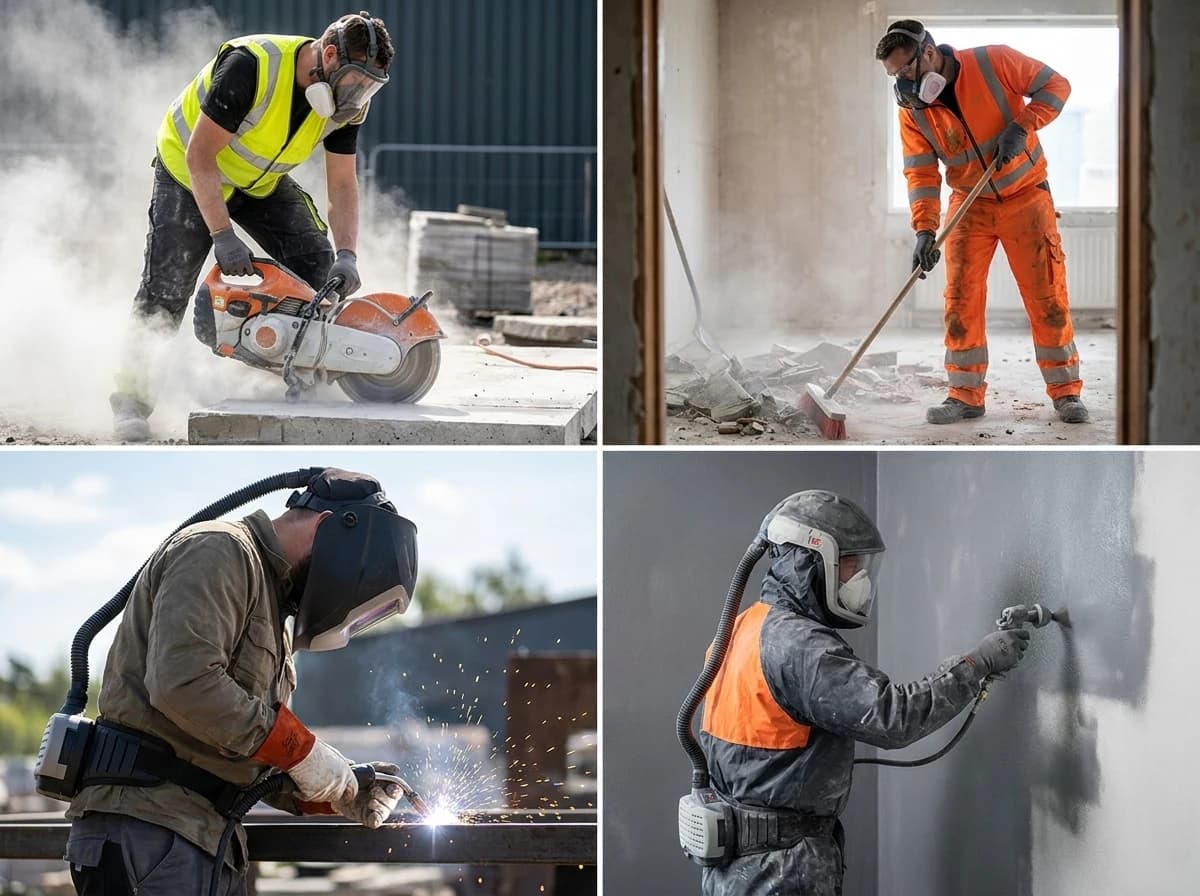
| Construction task | Common airborne hazard | Respiratory PPE direction |
|---|---|---|
| Dry sweeping and cleanup | mixed nuisance dust, silica if concrete/masonry dust is present | Avoid dry sweeping where possible; use wet methods or HEPA vacuum; choose respirator by exposure |
| Concrete cutting | respirable crystalline silica | Use water or dust collection controls; respirator choice depends on Table 1 or exposure assessment |
| Masonry drilling | silica dust | N95 may be enough for some controlled tasks; heavier exposure may need half-face P100 |
| Mortar grinding | high silica dust | Often needs stronger controls and higher-level respiratory protection |
| Demolition | mixed dust, silica, asbestos/lead risk in older structures | Do not assume ordinary dust protection; identify contaminants first |
| Drywall sanding | fine dust | Disposable respirator or reusable particulate filter may be used based on exposure and work conditions |
| Wood cutting | wood dust | Particulate respirator where ventilation and controls are not enough |
| Welding and cutting | metal fumes, gases depending on process | Filter/cartridge choice depends on fume and gas hazard; ventilation is critical |
| Painting and coating | organic vapors and particulates | Particulate-only filters are not enough for vapor exposure; use proper vapor cartridges where required |
| Asphalt or roadwork | dust, fumes, heat, traffic exposure | Respiratory PPE depends on material, operation, and exposure assessment |
For tasks that also generate eye, face, and noise hazards, use the eye and face protection guide and hearing protection guide together with this page.
Fit Testing, Medical Evaluation, And Training
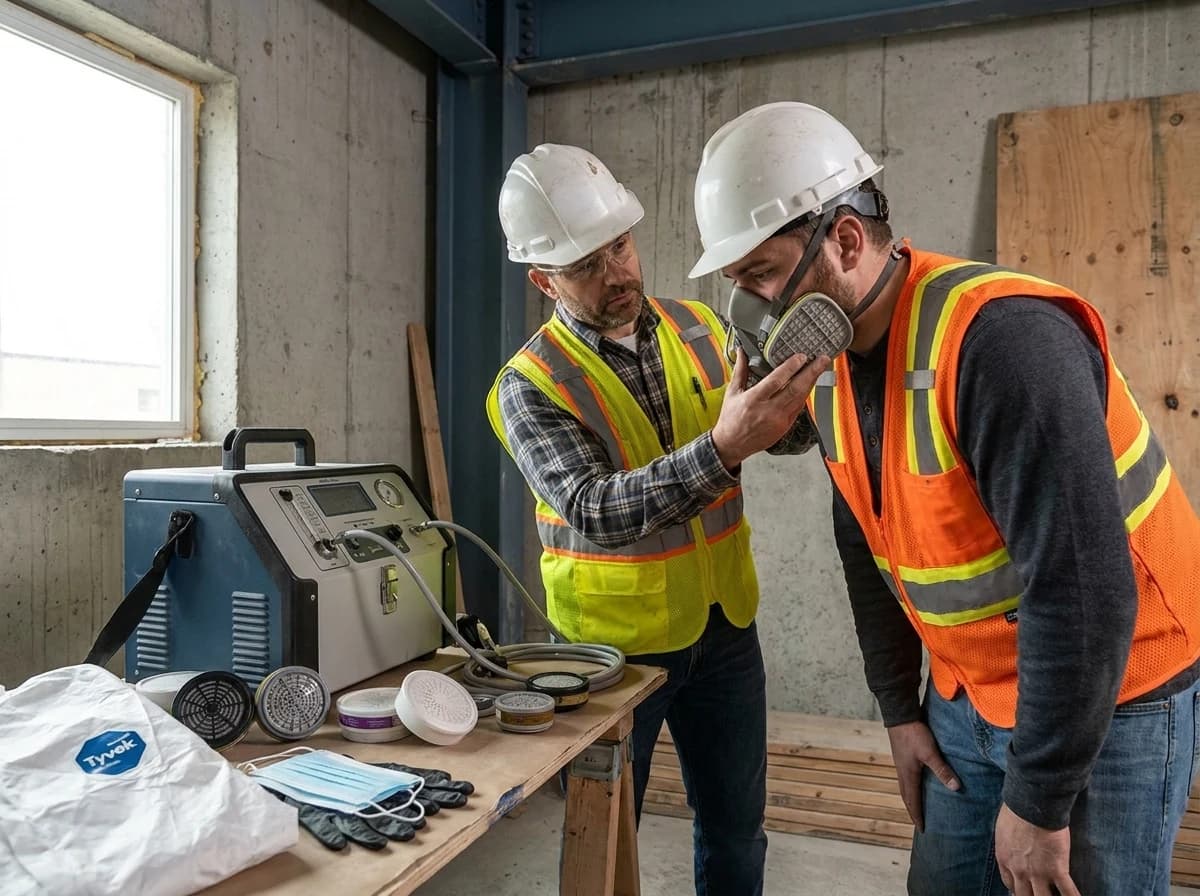
The moment respirators are required, procurement becomes program management. Under OSHA's respiratory protection standard, required respirator use typically triggers medical evaluation, fit testing for tight-fitting respirators, training, and written program procedures.
Medical evaluation
Workers must be medically evaluated before required respirator use because respirators can add breathing resistance, heat burden, and physiological stress.
Fit testing
Tight-fitting respirators need fit testing before use and at required intervals. This includes filtering facepiece respirators such as N95s when they are required by the employer or OSHA, and elastomeric half-face or full-face respirators.
Fit testing matters because facial shape, facial hair, model design, and size affect the seal. One model may fit one worker and fail another.
User seal checks
Workers also need to perform seal checks every time they put on a tight-fitting respirator. A passed fit test does not help if the respirator is worn incorrectly during the task.
Training
Training should cover:
- why the respirator is needed
- what it does and does not protect against
- how to put it on and remove it
- how to check the seal
- when filters or cartridges need replacement
- how to clean, store, and inspect reusable respirators
- why facial hair can break the seal
Compatibility With Other Construction PPE
Respirators can conflict with the rest of the PPE system.
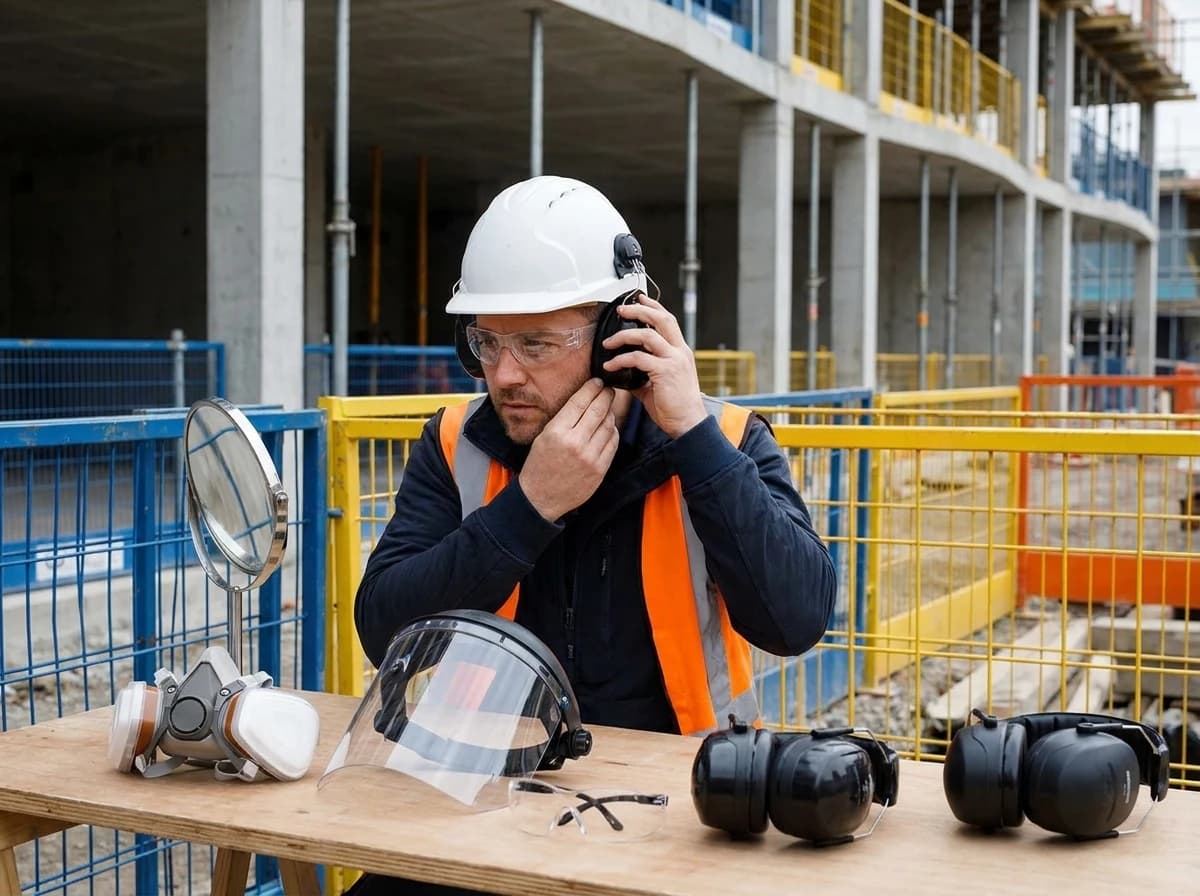
| PPE combination | What can go wrong | What to check |
|---|---|---|
| Respirator + safety glasses | fogging or frame interference | anti-fog eyewear and fit trial |
| Respirator + goggles | seal pressure and discomfort | compatible goggle profile |
| Respirator + face shield | headgear conflicts or reduced movement | full PPE task trial |
| Respirator + hard hat | straps and suspension interference | headgear fit and stability |
| Respirator + hearing protection | earmuff seal or strap conflict | earplugs or compatible muffs |
| Respirator + gloves | workers cannot adjust straps or cartridges easily | dexterity and contamination checks |
| Respirator + fall harness | straps and chest hardware can interfere during movement | full system fit check |
Respirator choice should be tested as part of the full worker kit, not by itself on a clean desk.
When the respirator straps, hard hat suspension, earmuffs, and goggles all meet at the same worker's head, head protection selection becomes part of respiratory PPE performance. Use the types of hard hats for construction guide to check helmet class, shell style, and accessory compatibility before issuing the full kit.
Filter And Cartridge Replacement Planning
Respiratory PPE is not a one-time purchase. Filters load with dust. Cartridges saturate. Facepieces need cleaning. Straps stretch. Valves get dirty. Storage bags disappear.
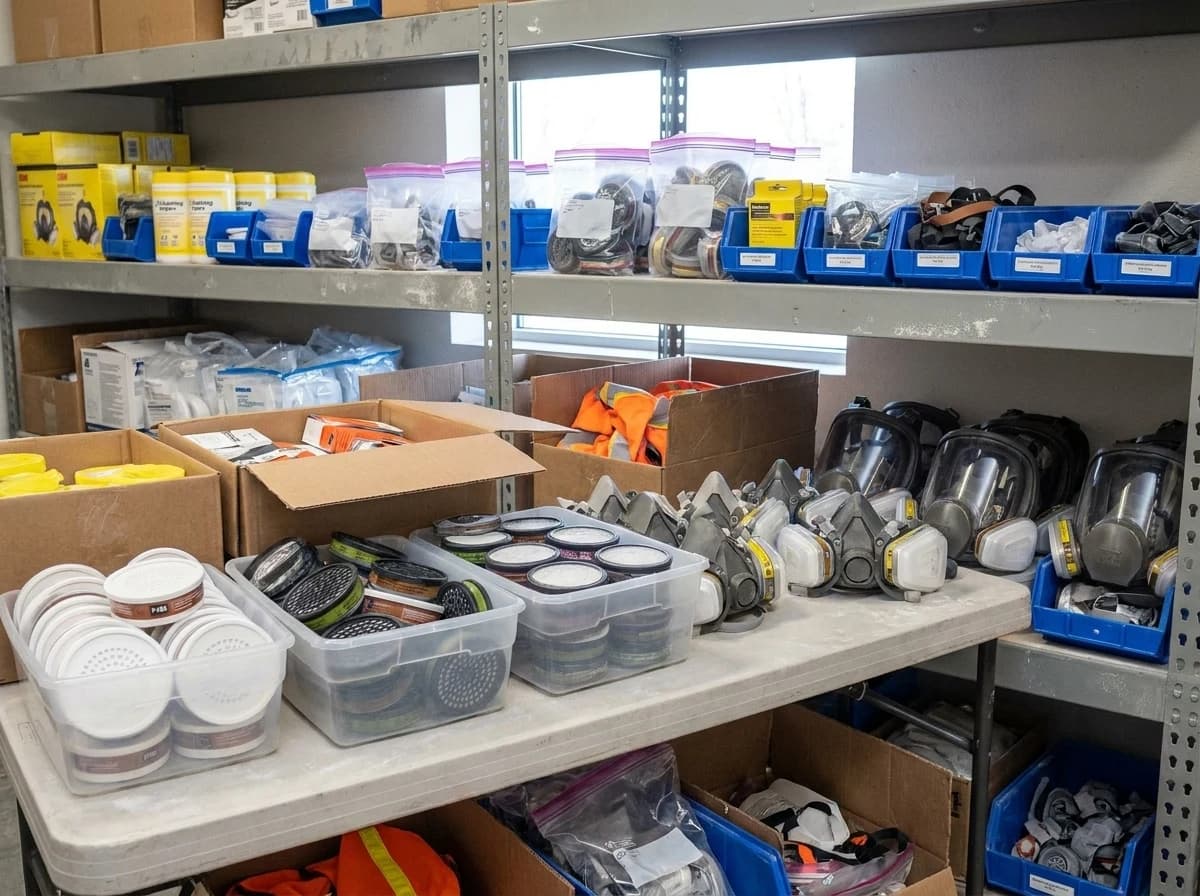
Replacement planning should cover:
- disposable respirator consumption by worker and shift
- filter replacement frequency by dust loading and breathing resistance
- cartridge change schedules for vapor exposure
- spare inhalation and exhalation valves where supported by the model
- replacement straps and facepiece parts
- cleaning supplies
- storage bags or boxes
- fit-test supplies
- medically cleared and fit-tested worker lists
For particulate filters, a practical replacement trigger is increased breathing resistance, damage, contamination, or manufacturer instructions. For chemical cartridges, do not wait until the worker smells or tastes the contaminant. Use a cartridge change schedule based on exposure conditions and manufacturer guidance.
For bulk purchasing logic, use the bulk construction PPE procurement guide.
Common Buying Mistakes In Construction Respiratory PPE
Buying "dust masks" instead of approved respirators
If the task requires a respirator, buy NIOSH-approved respirators for US work or the appropriate certified products for the target market. A loose nuisance mask is not the same thing as respiratory protection.
Treating N95 as the answer for every dust
N95 can be appropriate for some construction dust tasks, but not all. Heavy silica tasks, oil mist, asbestos, lead, and vapor hazards can require a different level or type of protection.
Forgetting the program requirement
Required respirator use usually means medical evaluation, fit testing, training, maintenance, and written procedures. Buying respirators without the program creates compliance risk.
Ignoring facial hair
Tight-fitting respirators require a seal. Facial hair that interferes with the sealing surface can prevent the respirator from protecting the worker.
Using particulate filters for vapors
P100 is a particulate filter, not a universal chemical cartridge. Paints, coatings, adhesives, and solvents may require organic vapor or combination cartridges.
Waiting until dust is visible
Respirable particles can be too small to see. A task can create hazardous exposure even when the dust cloud does not look dramatic.
Bulk Purchasing Checklist For Construction Respirators
Use this checklist before placing a respiratory PPE order:
- Identify the airborne hazard by task.
- Confirm whether silica Table 1 applies.
- Decide whether exposure assessment or objective data is needed.
- Confirm whether respirators are required or voluntary.
- Select respirator type by hazard, exposure level, and assigned protection factor.
- Confirm NIOSH, CE/EN, or other required certification.
- Plan medical evaluations where required.
- Plan fit testing for tight-fitting respirators.
- Stock more than one model or size where fit may vary.
- Define filter or cartridge replacement rules.
- Buy cleaning and storage supplies for reusable respirators.
- Test compatibility with eye, face, hearing, head, and hand PPE.
- Train workers before exposure.
- Keep replacement stock at the point of use.
This checklist is especially important for concrete cutting, drilling, grinding, demolition, renovation, and coating work.
Frequently Asked Questions
What respirator should be used for concrete dust?
For concrete dust, start by reviewing silica exposure, OSHA Table 1 controls, task duration, and whether water delivery or dust collection is being used. Some controlled lower-exposure tasks may use an N95, while heavier or recurring concrete dust work may need a reusable half-face respirator with P100 filters.
What respirator is best for construction dust?
There is no single best respirator for all construction dust. For some lower-exposure dust tasks, a NIOSH-approved N95 may be appropriate. For heavier silica dust or repeated exposure, a reusable half-face respirator with P100 filters may be more suitable. The right choice depends on the hazard, exposure level, controls, fit, and OSHA requirements.
Is an N95 enough for silica dust?
Sometimes, but not always. OSHA's silica standard and Table 1 requirements must be reviewed by task, duration, and control method. Some tasks require no respirator when controls are used correctly, while others require respiratory protection depending on conditions and duration.
Does OSHA require fit testing for N95 respirators in construction?
If an N95 is required by OSHA or required by the employer as respiratory protection, it is a tight-fitting respirator and fit testing is generally required under OSHA's respiratory protection standard.
What is better for concrete dust, N95 or P100?
P100 provides higher filtration efficiency than N95 and may be preferred for heavier dust or reusable respirator programs. But selection still depends on exposure level, fit, work duration, and whether other contaminants such as oil mist or vapors are present.
Can a P100 filter protect against paint fumes?
No, not by itself. P100 filters particulates. Paints, coatings, adhesives, and solvents can create organic vapor exposure that requires the correct vapor cartridge or combination cartridge.
Are respirators enough for silica compliance?
No. OSHA expects engineering and work practice controls such as water delivery, dust collection, ventilation, and Table 1 methods where applicable. Respirators are part of the control system, not a substitute for controlling dust at the source.
Build Respiratory Protection Into The Construction PPE System
Respiratory protection should be planned with the rest of the worker's PPE. Dust and fumes often appear together with eye hazards, hearing exposure, hand contamination, fall exposure, and visibility needs. A respirator that cannot fit with goggles, earmuffs, gloves, or a face shield will not work well on the actual job.
Start with the Complete PPE solution for construction sites for the full category structure. Use the OSHA PPE requirements for construction guide for compliance context. Use the construction PPE checklist for field checks. Use the bulk construction PPE procurement guide when the respirator decision needs to become a repeatable purchasing and replacement plan.
For procurement, use the Construction PPE RFQ Template to specify respirator type, filter or cartridge class, approval basis, facepiece size, replacement stock, cleaning supplies, storage, and supplier documents. Use the PPE Quantity Calculator to estimate disposable respirators and replacement filters, then use the AI Quote Generator or request a respirator quote.
- View the construction PPE solution page
- Read the OSHA construction PPE compliance guide
- Download the RFQ template
- Request a bulk PPE quote
Related Guides On Laifappe.com
- Complete PPE solution for construction sites
- OSHA PPE requirements for construction
- Construction PPE checklist
- PPE for demolition and concrete cutting work
- How to buy construction PPE in bulk
- Types of hard hats for construction
- Hearing protection for construction workers
- Eye and face protection for construction sites
- Construction gloves selection guide
Sources: OSHA 29 CFR 1926.103, OSHA 29 CFR 1910.134, OSHA 29 CFR 1926.1153, OSHA respiratory protection standards, OSHA respirable crystalline silica construction guidance, NIOSH respirator guidance for dust in construction, and NIOSH respirator selection and approval guidance.
Related PPE
Source the PPE covered in this guide
Move from research to a buyer shortlist with the matching solution page, category paths, selected PPE options, and RFQ next steps.