
Buyer next step
Turn this guide into a sourced PPE shortlist with standards, quantities, and role-based kit notes.
Planning tools
Use these tools before moving from this guide into quantities, sizing, labels, or RFQ planning.
Construction eye and face protection should start with the task: safety glasses for routine flying-particle exposure, goggles where dust or splash can enter around the lenses, face shields where the face is exposed to debris or splash, and welding eye protection where radiant energy is present. The wrong choice is often not "no PPE"; it is the right-looking PPE used for the wrong hazard.
Eye and face injuries on construction sites are common, fast, and often preventable. A worker can go from routine grinding, cutting, drilling, fastening, mixing, or chemical handling to a serious eye injury in seconds.
One reason this keeps happening is that many sites simplify eye protection too far. They issue one pair of safety glasses to everyone and assume the problem is solved. It is not. Safety glasses that work for general site movement may be inadequate for heavy dust, liquid splash, sealant application, demolition debris, or welding. A face shield may protect the face and still leave the eyes exposed if it is worn alone. Goggles may control dust better than glasses, but can create fogging and compatibility problems if they are the wrong type for the task.
That is why eye and face protection should be selected by hazard and operation, not by habit. Use this guide when you need to choose the right construction eye PPE for flying particles, dust, splash, grinding, welding, cutting, and face-level impact. For the wider site-wide PPE structure, use Complete PPE Solution for Construction Sites. For the regulation-first view, use OSHA PPE Requirements for Construction. For faster field checks, use Construction PPE Checklist.
For task-specific branches, connect this guide to PPE for road and bridge construction when cutting, grinding, dust, and traffic exposure overlap; to PPE for scaffolding and elevated platforms when overhead debris and helmet-mounted accessories matter; and to PPE for electrical installation on construction sites when safety glasses, goggles, or arc-rated face protection must work with electrical PPE.
Quick Answer: Construction Safety Glasses, Goggles Or Face Shield?
Use construction safety glasses with side protection for routine impact and flying particles. Use construction goggles when fine dust, splash, wet work, or debris entry around the lens is the real problem. Use a face shield over primary eye protection when the face also needs coverage from chips, grinding debris, splash, or high-debris work.
| Jobsite question | Short answer | Buying note |
|---|---|---|
| Are safety glasses enough for construction? | Often, for routine impact tasks when side protection and fit are adequate. | Check side shields, anti-fog performance, lens clarity, and hard-hat compatibility. |
| When are construction goggles better? | Use goggles when dust, splash, or fine particles can get around ordinary glasses. | Separate dust-control goggles from splash-capable goggles in the RFQ. |
| Can a face shield replace safety glasses? | Not for impact-heavy tasks. A shield usually adds face coverage over safety glasses or goggles. | Specify face shield plus primary eye protection where debris can reach the eyes. |
| What about welding eye protection? | Use the correct filter shade or welding helmet for the hot-work operation. | Do not treat tinted safety glasses as welding protection. |
Use the Construction PPE RFQ Template to request safety glasses, goggles, face shields, welding eye protection, anti-fog options, side protection, replacement lenses, and task-specific compliance documents.
Why Construction Eye and Face Protection Is Often Misselected
Construction eye and face hazards come from several directions at once:
- flying chips from grinding, drilling, cutting, and fastening
- dust from concrete, masonry, drywall, and demolition
- chemical splash from cleaners, adhesives, sealants, fuels, and wet materials
- sparks and radiant energy from welding, cutting, and brazing
- face-level strike hazards in demolition, chipping, and powered-tool work
- poor fit around the nose, temples, hard hat, or prescription eyewear
That overlap is what makes selection harder than it looks. The correct question is not only "does this worker have safety glasses?" The correct questions are:
- what is the actual eye or face hazard on this task
- does the protector control particles, dust, splash, or radiant energy well enough
- does it fit the worker and the rest of the PPE without gaps or constant shifting
- can the worker still see clearly enough to do the task safely
A protector that slips when the worker bends over is a failure. A goggle that fogs so badly it gets lifted off the face is a failure. A face shield used without primary eye protection in a debris task is a failure. This category is easy to underbuy, but it is also easy to overgeneralize.
What OSHA Requires for Construction Eye and Face Protection
OSHA's construction rule is direct on this topic. Under 29 CFR 1926.102, the employer must ensure that each affected employee uses appropriate eye or face protection when exposed to hazards from flying particles, molten metal, liquid chemicals, acids or caustic liquids, chemical gases or vapors, or potentially injurious light radiation.
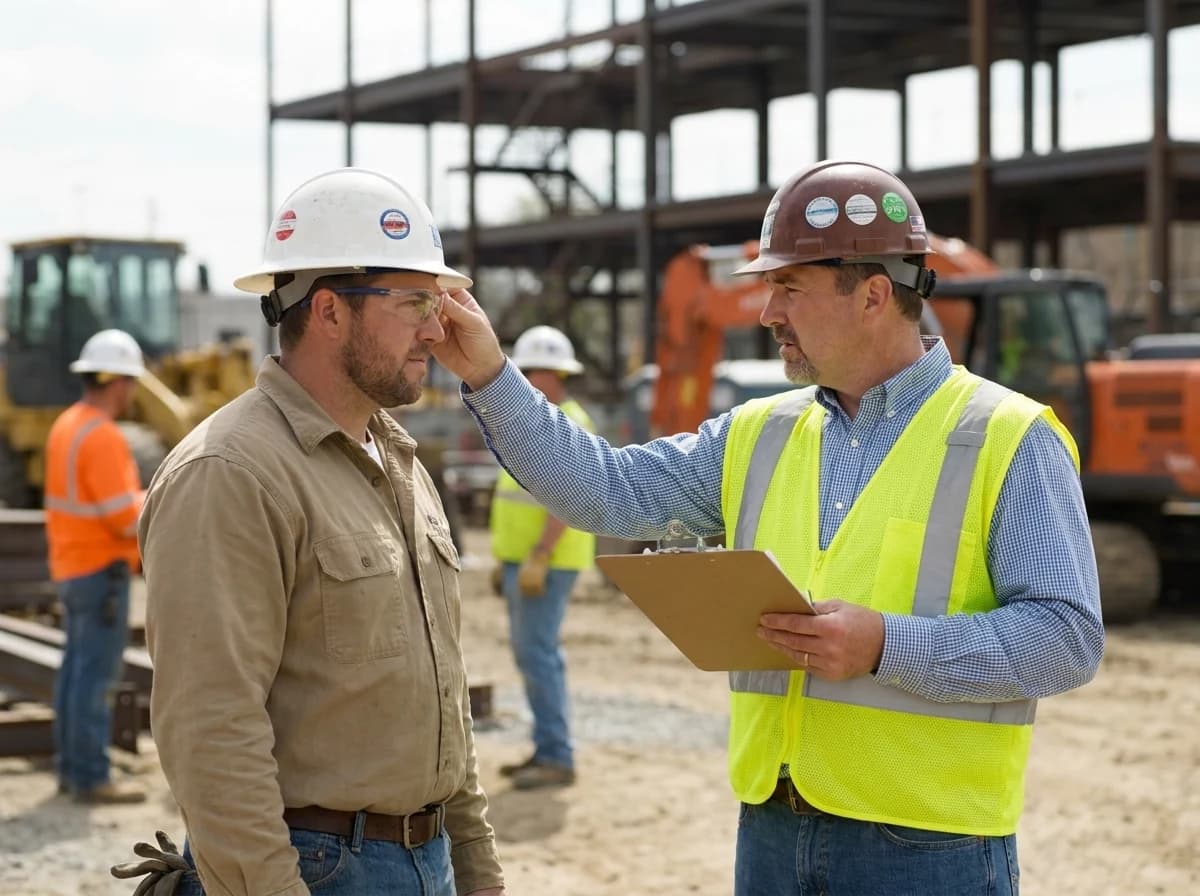
The most important construction points are:
- 29 CFR 1926.102(a)(1) requires appropriate eye or face protection when the hazard exists.
- 29 CFR 1926.102(a)(2) requires eye protection with side protection where there is a hazard from flying objects.
- 29 CFR 1926.102(a)(3) requires a worker who wears prescription lenses to use protection that incorporates the prescription or can be worn over it without disturbing lens position.
- 29 CFR 1926.102(a)(5) says protectors must be adequate for the hazard, reasonably comfortable, fit snugly, be durable, and be cleanable.
- 29 CFR 1926.102(b) ties construction eye and face PPE to ANSI consensus standards, including ANSI/ISEA Z87.1-2010, ANSI Z87.1-2003, and ANSI Z87.1-1989 (R-1998), or devices shown to be at least as effective.
This sits inside the wider PPE rules in 29 CFR 1926.95, including the explicit fit requirement that took effect on January 13, 2025. For eyewear, fit problems are not theoretical:
- loose glasses can shift during grinding or drilling
- badly fitting goggles can gap around the face and let dust or splash in
- oversized eye PPE can interfere with respirators, hard hats, or hearing protection
- poor compatibility with prescription glasses causes workers to remove protection or wear it incorrectly
For welding and cutting, 29 CFR 1926.102(c) points employers to OSHA's filter-lens shade table. For laser use in construction, 29 CFR 1926.54 adds separate rules, including ant-laser eye protection where workers can be exposed above the threshold in the standard.
The professional way to read OSHA here is simple: construction eye PPE compliance is not about issuing glasses at orientation and moving on. It is about matching the protector to the task, the hazard, the fit, and the worker's other equipment.
The Main Eye and Face Hazards on Construction Sites
Before choosing equipment, identify the dominant exposure.
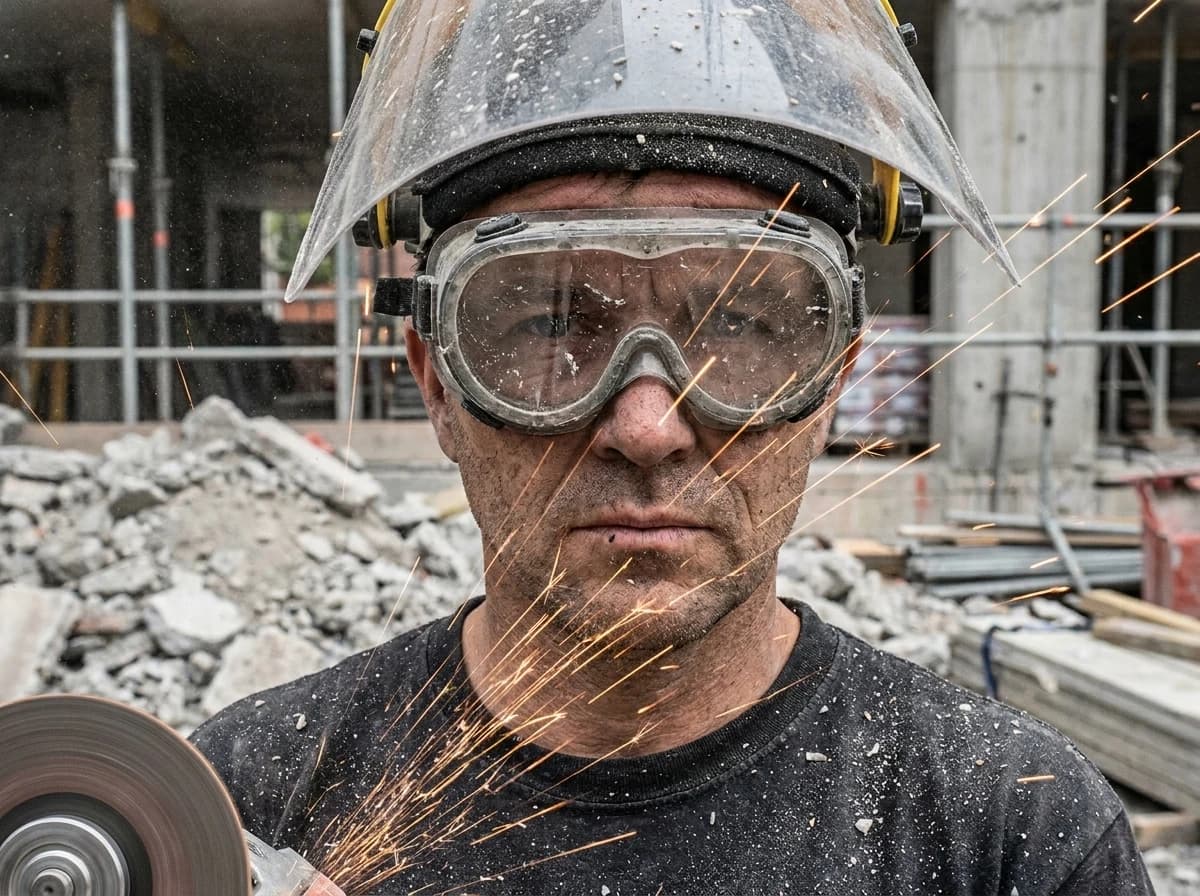
Flying particles and chips
This is the most common construction eye hazard. Grinding, chipping, drilling, cutting, fastening, hammering, and demolition all create debris that can strike from the front or side.
What matters:
- impact protection matched to the task
- side protection when flying-object hazard exists
- stable fit that does not move during bending or overhead work
Dust and fine particles
Concrete, masonry, drywall, cutting, sanding, sweeping, and demolition can create airborne dust that gets around ordinary glasses, especially from below or the side.
What matters:
- whether safety glasses are enough or whether a goggle is needed
- dust entry around the brow, temples, and cheeks
- compatibility with respirators in dust-heavy work
Chemical splash and liquid contact
Adhesives, sealants, cleaning chemicals, fuels, wet concrete additives, acids, caustics, and other liquids create a different problem from ordinary debris. The issue is not only impact. It is splash entry and contamination.
What matters:
- splash-resistant design
- seal around the eye area
- compatibility with face shields where full-face splash or spray is possible
Hot work and radiant energy
Welding, cutting, brazing, and related hot work expose the eye and face to sparks, glare, ultraviolet radiation, infrared radiation, and hot particles.
What matters:
- filter lenses or welding hoods matched to the operation
- side protection when surrounding flying-particle risk still exists
- whether the worker also needs safety glasses or goggles under the hood
Face-level strike and debris exposure
Some tasks create enough face exposure that safety glasses alone are not enough. Demolition, heavy chipping, high-debris grinding, and some cutting operations can expose the nose, cheeks, mouth, and skin around the eyes.
What matters:
- whether a face shield is needed in addition to primary eye protection
- chin and cheek coverage
- whether the shield interferes with hard hats, hearing PPE, or respirators
Laser exposure
Not every construction site needs laser-specific eye PPE, but layout, survey, and specialty operations can create it. OSHA's construction laser rule covers this separately.
What matters:
- whether the laser exposure can exceed the threshold in
1926.54 - whether the eyewear is selected for the specific laser hazard, not just treated like ordinary tinted glasses
Safety Glasses, Goggles, Face Shields, and Welding Helmets: What Each One Actually Does
Many selection mistakes happen because these devices get treated as interchangeable. They are not.
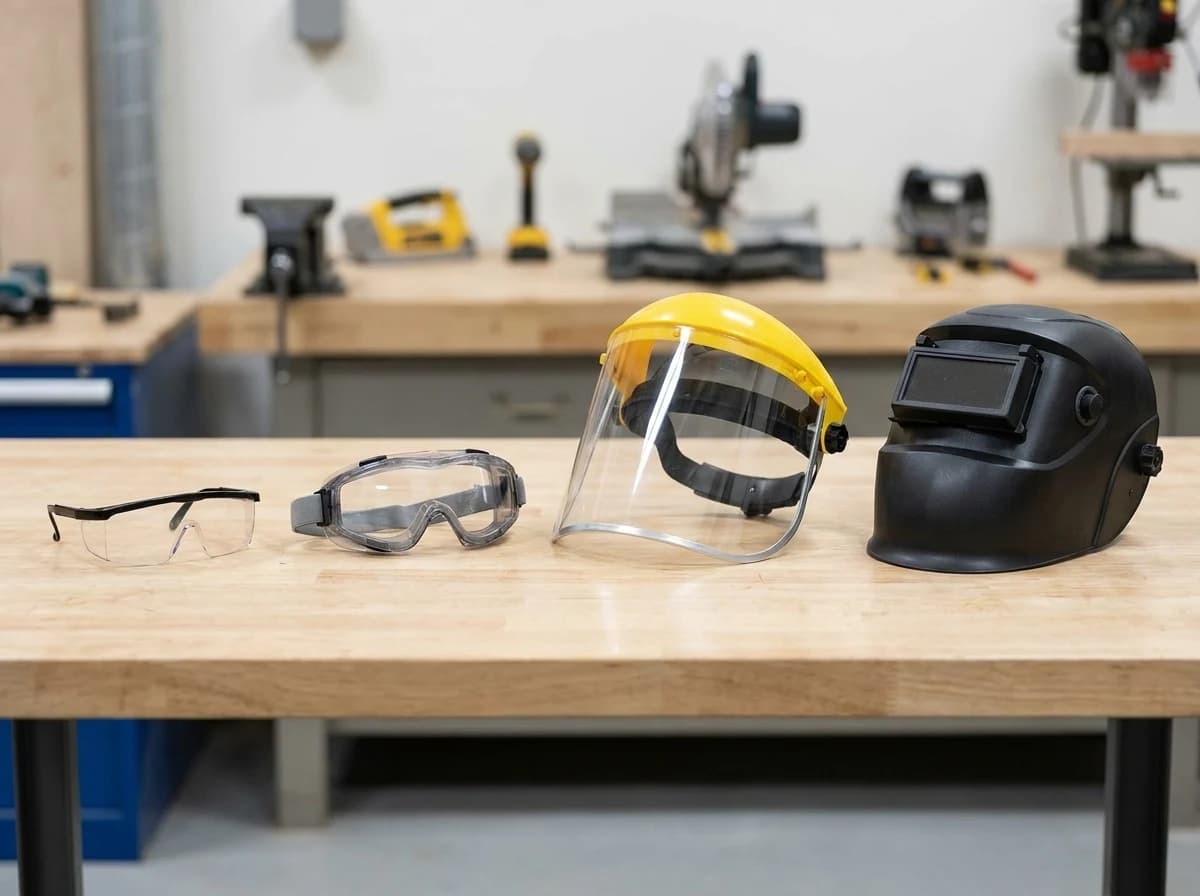
Safety glasses
Safety glasses are the baseline option for many general construction tasks. They are often appropriate for:
- general movement around active work areas
- light drilling, fastening, and cutting
- carpentry and general labor
- tasks with moderate flying-particle exposure
They work best when the site needs:
- reliable impact protection
- side protection for flying-object hazards
- better airflow and lower fogging than sealed goggles
- easier compatibility with hard hats and hearing PPE
They work poorly when the hazard is heavy dust, liquid splash, or full-face debris.
Goggles
Goggles are often the better choice when the hazard can get around ordinary glasses.
They are commonly needed for:
- heavy dust
- splash hazards
- wet cutting or mixing
- some demolition and chemical work
- tasks where debris can enter from below, above, or the side
They work best when the site needs:
- tighter coverage around the eyes
- better control of splash or fine particles
- more stable sealing than ordinary spectacles
They create problems when:
- the wrong goggle type is chosen for the environment
- fogging makes workers pull them off the face
- they do not fit with a respirator or prescription eyewear
In practice, buyers usually need to separate two common goggle problems:
- dust-entry control: the job is dry, dirty, and particle-heavy, so the main question is whether dust is still getting around ordinary glasses
- splash control: the job involves liquids, chemicals, wet cutting, or spray, so the main question is whether the protector can keep liquid out of the eye area
That distinction matters because the site may not need the exact same goggle setup for both conditions. A worker mixing or applying chemicals is not solving the same problem as a worker doing dusty demolition, even if both end up in goggles.
Face shields
Face shields add protection for the face, but they should not be treated as a stand-alone answer for impact hazards. OSHA training material is explicit on this point: face shields are used with goggles or safety spectacles when impact hazards still exist, not instead of them. OSHA's PPE assessment material states that face shields do not protect employees from impact hazards by themselves and should be used in combination with goggles or safety spectacles where impact risk is present.
Face shields are commonly used for:
- heavy grinding or chipping
- demolition debris
- splash tasks with broader face exposure
- operations where the face, not just the eyes, needs coverage
Welding helmets and filter-lens equipment
Welding hoods, helmets, and filter-lens devices are chosen for radiant energy and hot-work hazards, not just general impact. Construction teams should not treat tinted safety glasses as a substitute for the proper welding shade and hood selection.
Where surrounding flying-particle hazards still exist, the worker may also need primary eye protection under the hood. OSHA's welding fact sheet notes that workers using a welding helmet with filter lenses may still need glasses with side shields or goggles where there is a risk from slag chips, grinding fragments, or similar debris.
What To Choose by Construction Task
This is the part most site managers and buyers actually need.
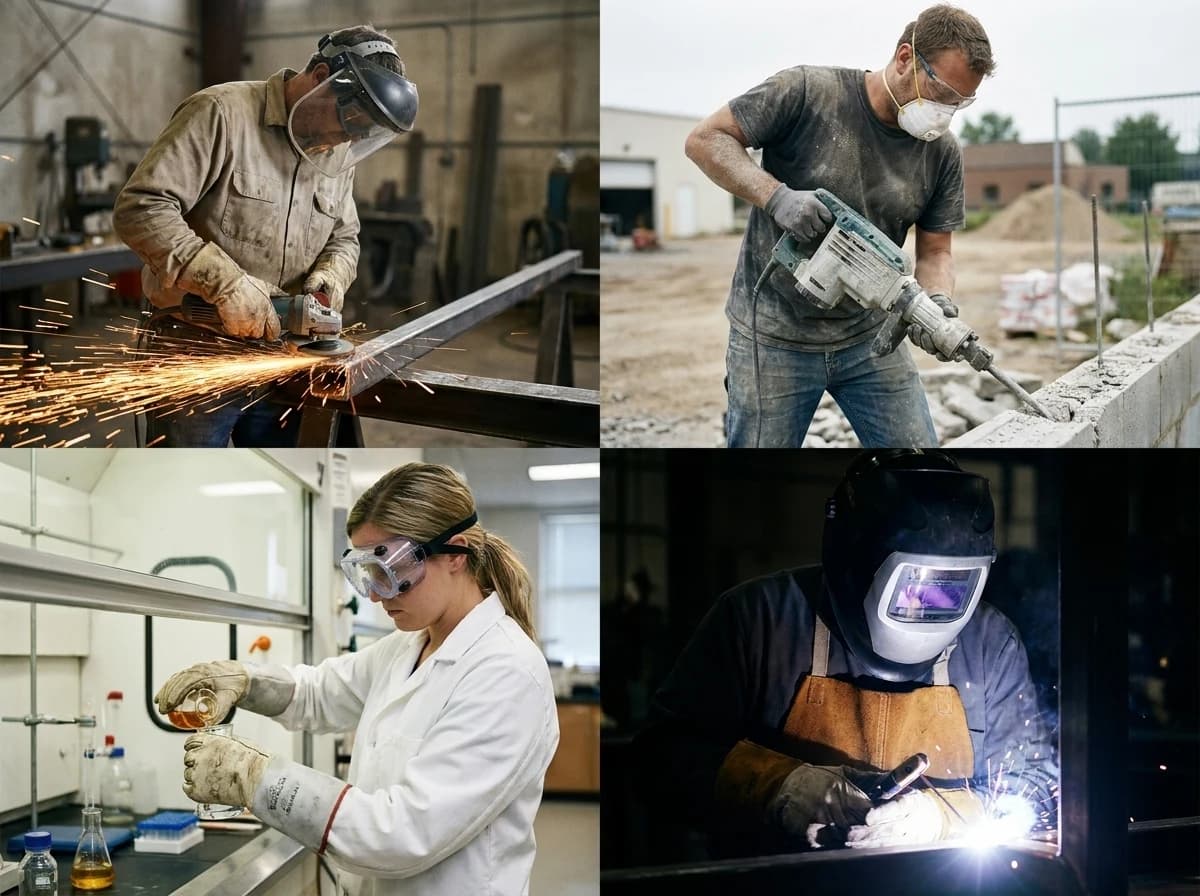
| Construction task | Main eye or face hazard | PPE direction to start with | What to check before buying | Common selection mistake |
|---|---|---|---|---|
| General site movement and light task support | incidental flying particles | safety glasses with side protection | comfort, anti-slip fit, clear visibility, hard-hat compatibility | issuing ordinary eyewear or glasses without side protection |
| Grinding, chipping, and abrasive cutting | high-speed particles, sparks, face-level debris | safety glasses plus face shield for heavier debris tasks | side protection, lens clarity, face coverage, stability during movement | wearing a face shield alone |
| Concrete cutting, masonry, drywall, and dusty demolition | dust, chips, fine particles | glasses for lighter exposure, goggles when dust entry becomes the issue | dust entry around cheeks and brow, fogging, respirator compatibility | assuming ordinary glasses are enough for heavy dust |
| Sealants, cleaners, fuels, adhesives, and liquid chemicals | splash, irritation, contamination | splash-capable goggles, sometimes with face shield for broader splash risk | seal, liquid control, compatibility with respirator or hard hat | using open glasses where splash can enter from the side or below |
| Welding, cutting, and brazing | radiant energy, sparks, hot particles | welding helmet or goggles with proper filter shade, plus primary eye protection where debris remains | minimum shade, task-specific hood selection, side protection under the hood when needed | using the wrong shade or lifting the hood without primary eye protection |
| Demolition and high-debris removal | mixed chips, face strike, dust | primary eye protection plus face shield when face exposure is high | impact control, shield coverage, replacement frequency, dust control | relying on one light pair of glasses for all demolition work |
| Nail gun and fastening work | ricochet, flying fasteners, chips | safety glasses with side protection | stable fit, lens clarity, worker compliance | treating fastening work as too routine to require eyewear |
| Laser layout or specialty laser tasks | direct or reflected laser exposure | laser-specific eye protection where required under the laser rule | actual laser hazard, wavelength-specific protection, trained operators | using ordinary tinted eyewear as if it were laser protection |
General drilling, fastening, and carpentry
For a large share of routine construction work, safety glasses with side protection are the correct starting point. The key is not to overcomplicate light-to-moderate debris work while still keeping side-entry hazards covered.
This is usually the place to prioritize:
- side protection
- stable fit
- clear optics through the full shift
- enough comfort that workers do not remove the glasses
Grinding and chipping
This is where many sites move too slowly from "glasses" to "glasses plus shield." OSHA's construction standard requires protection appropriate to the hazard. Once the task starts throwing more aggressive chips or face-level debris, face coverage usually has to increase.
The practical questions are:
- are chips only hitting the eye area, or is the full face exposed
- is the debris light and occasional, or frequent and forceful
- does the worker lean into the tool, increasing direct exposure
For heavier grinding and chipping, a face shield commonly belongs over primary eye protection, not in place of it.
Concrete, masonry, and dust-heavy work
This category is often misjudged because teams focus on impact and forget entry gaps. Glasses may be acceptable for lighter dust and chips, but some tasks create enough airborne particulate that goggles become the better answer.
The real selection issue is often not "do we have eye PPE?" but "is dust still getting around it?"
Good buying questions include:
- is the task mainly chips, mainly dust, or both
- do workers complain about dust entry from below
- does the chosen eye PPE work with half-mask respirators if they are also required
- will fogging cause the worker to lift or remove the protector
Chemical handling and liquid splash
This is where open glasses are commonly oversold. If the risk is splash, seal and entry control matter much more than a general "safety glasses" label.
The professional selection questions are:
- can liquid enter from the side, below, or around the nose
- is the hazard a small splash or a broader spray pattern
- does the face also need coverage
In these tasks, goggles are often the primary eye protector, and a face shield may be added when the face exposure is broader than the eye area alone.
Welding, cutting, and brazing
For hot work, selection has to move from general impact thinking into radiant-energy thinking. OSHA's construction standard includes a minimum filter-lens shade table for welding and related operations.
Examples from 29 CFR 1926.102(c):
- soldering: shade
2 - torch brazing: shade
3or4 - light cutting up to
1 inch: shade3or4 - medium cutting
1 inchto6 inches: shade4or5 - heavy cutting over
6 inches: shade5or6 - gas welding light, up to
1/8 inch: shade4or5 - gas welding medium,
1/8 inchto1/2 inch: shade5or6 - gas welding heavy, over
1/2 inch: shade6or8
The standard also says more dense shades may be used to suit the individual's needs. OSHA's PPE assessment guidance recommends starting with a shade that is too dark and then moving lighter until the worker can see the zone sufficiently without dropping below the minimum protective shade.
For a workshop-wide buying path, use the metal fabrication and welding PPE solution. It separates welding helmets and filter lenses from grinding face shields and primary eyewear, then connects those choices to hot-work clothing, gloves, respiratory protection, hearing protection, footwear, and a quote-ready workshop specification.
Laser layout and specialty laser work
Most construction eye PPE decisions do not involve lasers, but when they do, the site should stop treating the issue like ordinary tinted eyewear. Under 29 CFR 1926.54, only qualified and trained employees should operate laser equipment, and workers exposed above the rule's threshold must be provided with ant-laser eye protection.
This is a narrower topic, but it matters on sites using layout and specialty laser systems.
How To Read the Standard and Product Requirements Without Overcomplicating It
Construction buyers do not need to memorize every technical code on the market. They do need to get a few basics right.
Start with obvious product-level signals
Before getting lost in catalog language, check the simple things first:
- does the protector meet the construction eye standard path under OSHA and ANSI Z87
- does it include side protection where flying-object hazard exists
- can it work over prescription lenses if the worker needs that
- does the frame or goggle actually stay stable during the task
On real jobsite purchases, that often matters more than a long marketing description.
Start with the OSHA rule, not with the shelf label
The first step is to identify what OSHA is actually asking the employer to control:
- flying objects mean side protection matters
- splash and liquid exposure push selection toward goggles and sometimes shields
- radiant energy means filter-lens selection, not ordinary tinted lenses
- poor fit is still a selection failure
Then confirm the device category fits the hazard
The most common category mistakes are:
- safety glasses used where goggles are needed
- face shields used alone for impact-heavy tasks
- ordinary tinted eyewear used for hot work
- one site-wide default product pushed into tasks with very different exposures
Read the marking and setup like a buyer, not like a catalog editor
For most construction teams, the practical product-reading questions are:
- is this just basic safety eyewear, or is it marked for higher-impact use
- are side shields built in, detachable, or missing
- is it a normal spectacle frame, an over-the-glasses setup, or a goggle
- is the product being sold as if it solves splash, dust, impact, and hot work all at once without showing how
That is where the ANSI Z87 marking still helps. It tells the buyer the device is in the occupational eye-protection standard family. From there, the buyer still has to confirm the configuration matches the task:
- side protection for flying objects
- goggle-style control where dust or splash entry is the real problem
- correct welding filter selection where radiant energy is the issue
- over-the-glasses or prescription-compatible fit where normal frames are not enough
The point is not to memorize every marking variant. The point is to stop treating any product with "safety" in the title as if it solves every construction eye hazard.
Do not ignore prescription eyewear
OSHA's construction rule is explicit here. If a worker wears prescription lenses, the eye protector must either incorporate the prescription or fit over it without disturbing proper lens position. That means procurement teams should not treat prescription wearers as an exception to be solved informally in the field.
Remember that cleanability and visibility matter
The construction rule also requires protectors to be cleanable and reasonably comfortable. That sounds basic, but it affects real performance:
- scratched lenses reduce visibility
- dirty goggles create glare and worker rejection
- cheap anti-fog performance can lead to constant removal in warm work
The right lens on paper can still be the wrong purchase if crews cannot wear it through the task.
Face Shield Use: The Point Many Sites Get Wrong
Do You Need Safety Glasses or Goggles Under a Face Shield? Yes.
Yes—when flying chips, fragments, dust, or splash can reach the eyes, use primary eye protection under the face shield. Choose safety glasses with side protection for routine impact, or goggles when dust or splash can enter around ordinary glasses.
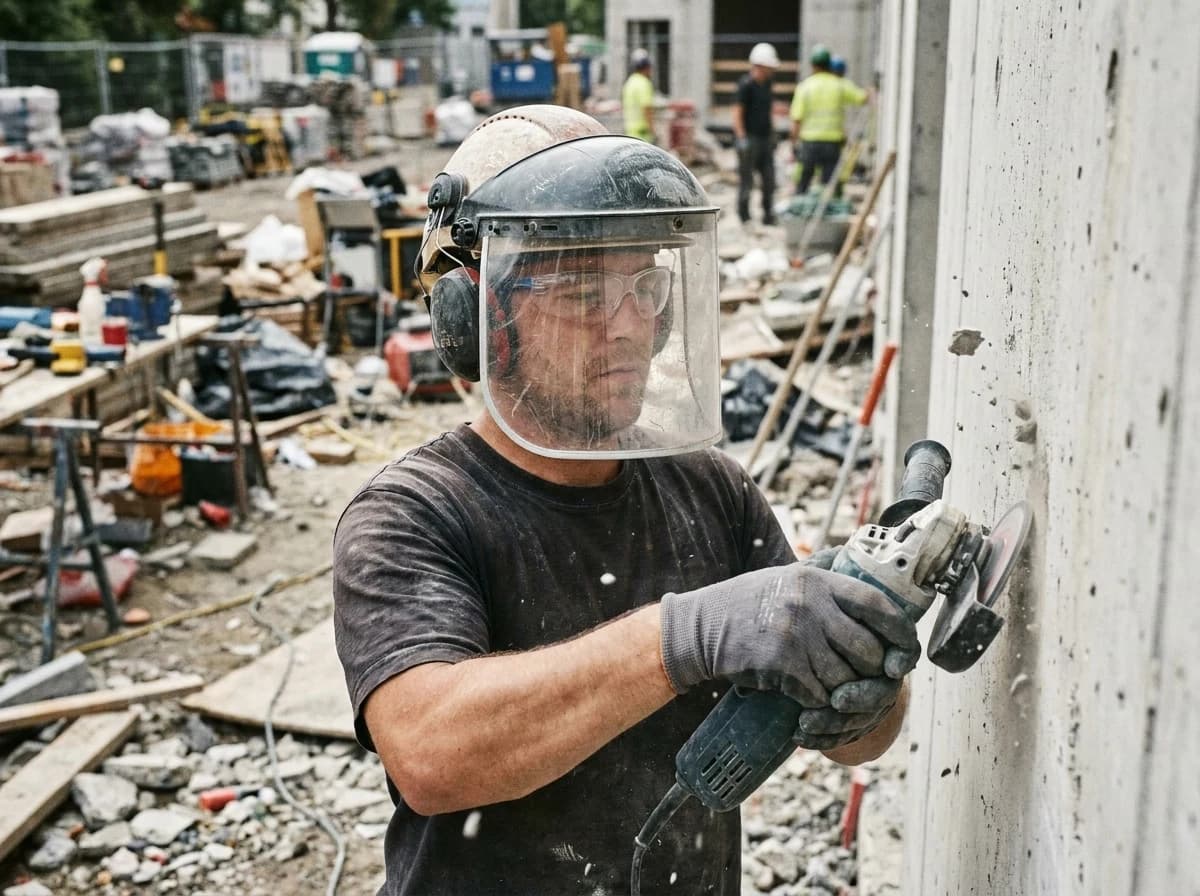
OSHA's PPE assessment material says face shields do not protect workers from impact hazards by themselves and should be used in combination with goggles or safety spectacles when impact hazards are present.
That makes the hierarchy clearer:
- safety glasses protect the eyes in many routine impact tasks
- goggles improve sealing against dust or splash
- face shields add face coverage, but often belong over the eye protector rather than instead of it
This is one of the easiest ways for a site to think it is protected while still leaving the eye exposed.
Fit, Fogging, Compatibility, and Worker Compliance
Construction eye PPE can fail without ever being struck if the worker refuses to wear it correctly.
Common reasons eye and face PPE gets lifted, pushed up, or removed:
- temples pinch or slide off sweaty skin
- the nose fit is poor and the glasses ride down
- goggles fog under real work conditions
- the protector conflicts with a respirator seal
- the shield or frame hits the hard hat or hearing PPE
- over-the-glasses fit for prescription wearers is awkward or unstable
That is why fit and compatibility matter just as much as the nominal protection category. A protector that works alone but fails with the rest of the PPE system is not really working.
For site managers and buyers, this means:
- stock more than one size or frame style where needed
- test eye PPE with hard hats, hearing PPE, and respirators, not by itself
- include prescription-wearer fit in trials and procurement
- treat worker complaints about fogging or shifting as selection data, not just behavior problems
If the eye or face protector mounts to the helmet, check the helmet type first. The types of hard hats for construction guide explains Type I vs Type II, Class G/E/C, full-brim and cap-style shells, and accessory compatibility.
Common Buying Mistakes in Construction Eye and Face Protection
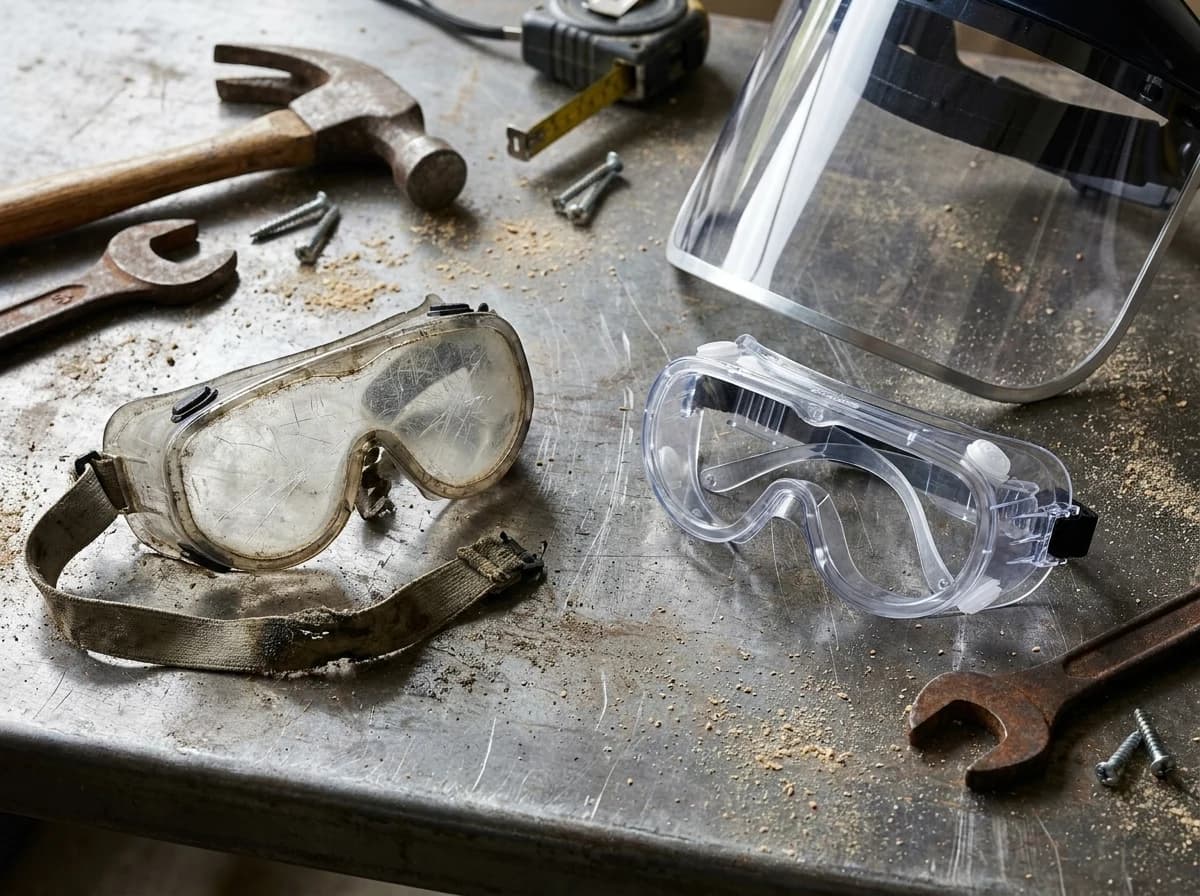
Buying one pair of glasses for every task
This is the biggest mistake. It makes ordering easier and usually makes protection weaker.
Ignoring side protection
OSHA's construction rule specifically requires side protection when there is a hazard from flying objects. Sites still miss this constantly in drilling, cutting, chipping, and fastening work.
Using a face shield by itself
This creates a false sense of protection. For impact-heavy tasks, shields often supplement the eye protector. They do not automatically replace it.
Treating all dusty work the same
Some dust exposures are manageable with good glasses. Others call for goggles because particles are entering from the side or below. The category has to match the actual entry problem.
Missing the prescription eyewear issue
If the protector does not work over prescription lenses, some workers will improvise. That is not a small detail. It is a real selection and compliance problem.
Choosing the wrong hot-work shade
Welding and cutting eye protection is not just "dark lens" selection. Minimum shades vary by operation, and the wrong choice can still leave the eye underprotected.
A Practical Supervisor Check Before the Task Starts
Before work begins, a useful eye and face PPE check is short:
- What is the actual eye or face hazard on this task: particles, dust, splash, radiant energy, or face strike?
- Is the worker in glasses, goggles, shield, or welding PPE that actually matches that hazard?
- If there is flying-object risk, is side protection present?
- If there is splash or heavy dust, is the eye area sealed well enough?
- If there is a face shield, is primary eye protection also in place where needed?
- Can the worker still see clearly and keep the protector on through the whole task?
That kind of check is more useful than a generic reminder to "wear your safety glasses."
When Eye and Face PPE Should Be Replaced
Eye and face PPE is not permanent. Replace it when you see:
- scratched or hazed lenses that reduce visibility
- cracked lenses or frames
- loose side shields, headbands, or face-shield attachments
- damaged seals on goggles
- fogging or contamination that cleaning no longer solves
- warped shields or hoods
- any sign that the protector no longer fits or stays in place correctly
This is especially important for:
- site-issued glasses that get heavily scratched in dusty trades
- goggles used with chemicals or wet work
- shields and hoods used around grinding and hot work
The professional point is simple: a dirty, scratched, or unstable protector may still be "present" on the worker, but it is no longer doing the job it was selected to do.
Product and Category Path for Eye and Face PPE
For product browsing, start with Eye Protection, then split the buying path by task: Safety Glasses for side-protected routine impact work, Safety Goggles for dust or splash entry control, and Face Shields when broader face coverage is needed over primary eye protection.
Common shortlist paths:
- EN166F anti-fog safety glasses for clear-lens impact protection and side coverage.
- Anti-fog transparent safety goggles for sealed eye coverage in dust or splash-prone work.
- Clear PC full face shield for face-level debris or splash tasks when worn with primary eye protection.
- Flip-up welding helmet for welding and cutting workflows that need filter-lens protection.
For the full construction kit context, use Complete PPE Solution for Construction Sites. For high-dust cutting, grinding, and demolition tasks, use PPE for Demolition and Concrete Cutting Work. To turn this into a buying request, use Request eye and face PPE options.
Which Related Pages To Use Next
Most site teams do not stop at eye protection alone. The next useful page depends on the next decision:
- Use Complete PPE Solution for Construction Sites when you need the full site-wide PPE structure.
- Use OSHA PPE Requirements for Construction when you need the compliance and documentation side.
- Use Construction PPE Checklist when you need a faster field routine before work starts.
- Use Construction Gloves: How to Choose the Right Hand Protection when the same task combines eye hazards with sharp handling, wet materials, or hot work.
- Use Hearing Protection for Construction Workers when eye PPE has to work with earmuffs, earplugs, communication headsets, or noisy grinding and cutting work.
- Use Respiratory Protection for Construction Dust and Fumes when goggles, face shields, or welding PPE need to work with respirators.
- Use Safety Footwear Guide for Construction Workers when footing, debris, and struck-by hazards are part of the same work zone.
- Use PPE for Road and Bridge Construction Projects when eyewear is part of concrete cutting, bridge work, paving, traffic-zone, or night-work PPE.
- Use PPE for Scaffolding and Elevated Platforms when eye protection must work with helmets, chin straps, tool tethering, and overhead debris controls.
- Use PPE for Electrical Installation on Construction Sites when eye and face PPE must be compatible with Class E head protection, insulating gloves, and arc-rated systems.
- Use How to Buy Construction PPE in Bulk when eyewear needs to be planned with sizing, replacement stock, and repeat ordering.
FAQ
What eye and face protection is required on construction sites?
Construction workers need appropriate eye or face protection when exposed to flying particles, dust, splash, molten metal, chemical hazards, injurious light, or radiant energy. The exact PPE depends on the task: safety glasses, goggles, face shields, welding helmets, or a combination.
Are safety glasses or goggles better for construction dust?
Safety glasses can work for lighter particle exposure if dust is not getting around the lenses. Goggles are usually better when fine dust, concrete dust, masonry dust, drywall dust, or windy debris reaches the eye from the sides, below, or above.
Do construction workers always need safety glasses?
Not in a blanket sense, but they do need appropriate eye or face protection whenever the task exposes them to the hazards named in OSHA's construction rule. On many active sites, that means safety glasses are the baseline for a large share of work, but some tasks need goggles, face shields, or welding protection instead.
When is eye protection required on a job site?
Eye protection is required when the task or work area exposes the worker to eye hazards such as flying particles, dust, chips, sparks, chemical splash, molten metal, injurious light, or radiant energy. The right answer is not "only when welding" or "only when drilling." A jobsite should select eye protection from the actual hazard: ordinary impact, side impact, fine dust, splash, grinding, cutting, welding, or laser work.
What type of eye protection should be used when dust is present?
For light nuisance dust, safety glasses with side protection may be enough if particles are not getting around the lenses. For heavier dust, concrete cutting, masonry work, sweeping, windy debris, or fine particles that reach the eye from the sides, sealed goggles are usually the better choice. A face shield can add face coverage for chips or fragments, but it does not replace primary eye protection where dust or impact hazards can reach the eyes.
When are goggles better than safety glasses on a construction site?
Goggles are usually the better choice when dust, splash, or fine particles are getting around ordinary glasses. The issue is not whether goggles are "stronger." It is whether the hazard can enter through the gaps that glasses leave open.
Can a face shield replace safety glasses?
Not as a general rule for impact-heavy work. OSHA training material says face shields do not protect against impact hazards by themselves and should be used in combination with goggles or safety spectacles when impact hazards are present.
What does OSHA say about prescription eyewear?
OSHA's construction rule says workers who wear prescription lenses must use protection that incorporates the prescription or can be worn over prescription lenses without disturbing the proper position of either set of lenses.
How do you choose the right eye protection for welding?
Start with the actual welding, cutting, or brazing operation and use OSHA's filter-lens shade table as the minimum guide. Then check whether the worker also needs side protection, glasses, or goggles under the hood because of flying particles or surrounding grinding work.
Related Guides on Laifappe.com
- Complete PPE Solution for Construction Sites
- OSHA PPE Requirements for Construction
- Construction PPE Checklist
- Types of Hard Hats for Construction
- Hearing Protection for Construction Workers
- Respiratory Protection for Construction Dust and Fumes
- Construction Gloves: How to Choose the Right Hand Protection
- Safety Footwear Guide for Construction Workers
- PPE for Demolition and Concrete Cutting Work
- PPE for Road and Bridge Construction Projects
- PPE for Scaffolding and Elevated Platforms
- PPE for Electrical Installation on Construction Sites
- How to Buy Construction PPE in Bulk
Related PPE
Source the PPE covered in this guide
Move from research to a buyer shortlist with the matching solution page, category paths, selected PPE options, and RFQ next steps.