Buyer next step
Turn this guide into a sourced PPE shortlist with standards, quantities, and role-based kit notes.
Planning tools
Use these tools before moving from this guide into quantities, sizing, labels, or RFQ planning.
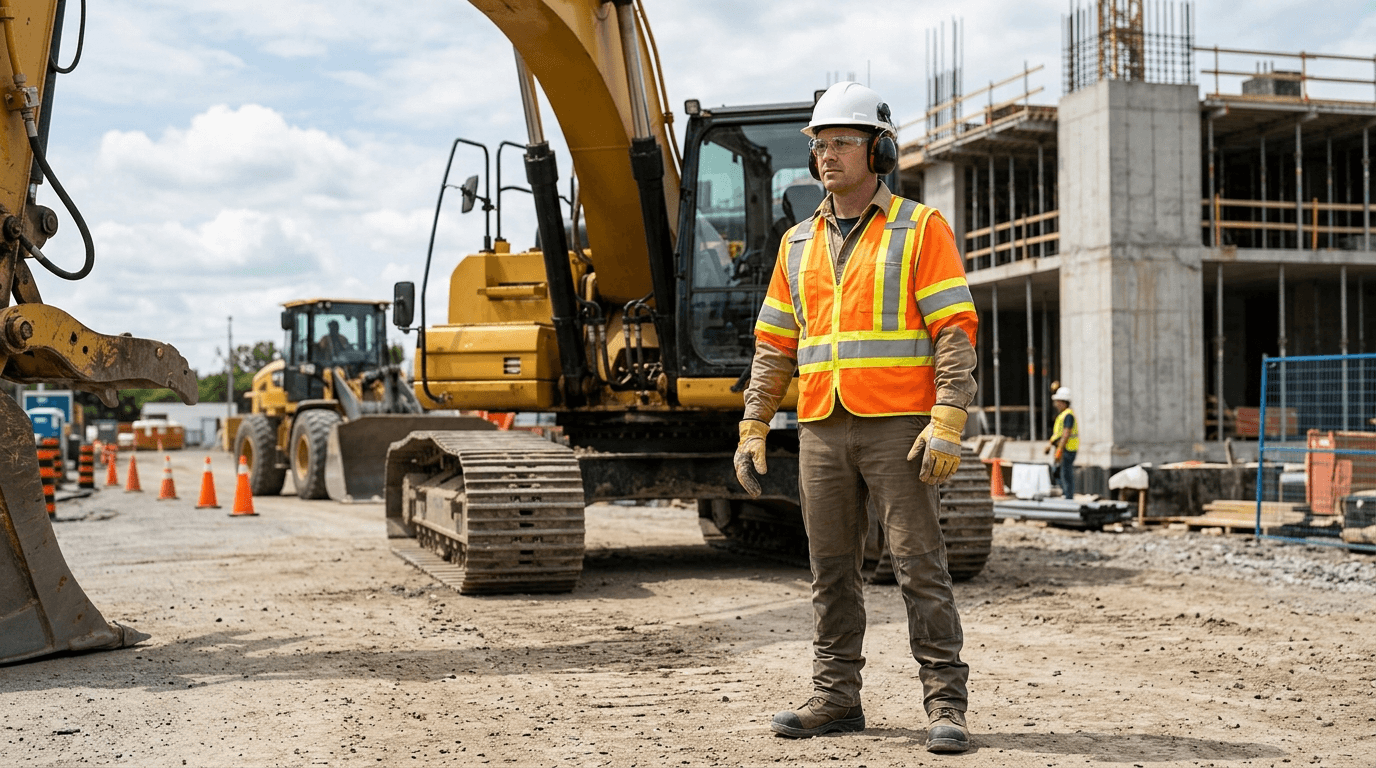
Heavy equipment operators are not protected by the cab for the entire shift. The risk changes when the operator climbs in or out, checks attachments, walks around blind spots, fuels the machine, talks with a spotter, crosses a truck route, opens the cab in a dusty area, or supports demolition and roadwork.
That is why a useful heavy equipment operator PPE checklist should cover both in-cab exposure and outside-cab tasks. A helmet, vest, boots, gloves, hearing protection, and eye protection may not all be worn every minute inside a protected cab, but they must be available, fitted, clean, and ready when the operator leaves the machine or works in a higher-exposure zone.
For the full solution-page version, use PPE for Heavy Equipment Operators on Construction Sites. For the wider construction PPE structure, start with the complete PPE solution for construction sites. For related work zones, use PPE for road and bridge construction projects and the demolition and concrete cutting PPE checklist.
Operator PPE Kit Shortcut
For procurement, build operator PPE around the moments when the worker leaves the protected cab or moves into a higher-exposure zone.
| Operator situation | PPE kit notes | Procurement check |
|---|---|---|
| Enclosed cab, normal operation | Seat belt and cab controls are primary; keep glasses, earplugs, gloves, hi-vis, and helmet available before exit. | Store PPE in a clean cab kit so it is reachable before walk-around checks. |
| Walk-around inspection and refueling | Hi-vis, safety footwear, gloves, eye protection, and head protection usually move from optional to required. | Specify grip gloves, anti-slip footwear, and replacement eyewear for field service tasks. |
| Roadwork, bridge work, and truck routes | Visibility and communication control the kit. | Connect the order to road and bridge PPE and specify Class 2 or Class 3 hi-vis by exposure. |
| Demolition, breaking, crushing, or dusty open-cab work | Dust, noise, eye impact, and vibration increase quickly. | Add respirator review, sealed eyewear, hearing protection, and impact or cut gloves. |
Use this role kit with the complete construction PPE solution when you are turning operator requirements into a bulk quote.
Quick Heavy Equipment Operator PPE Checklist
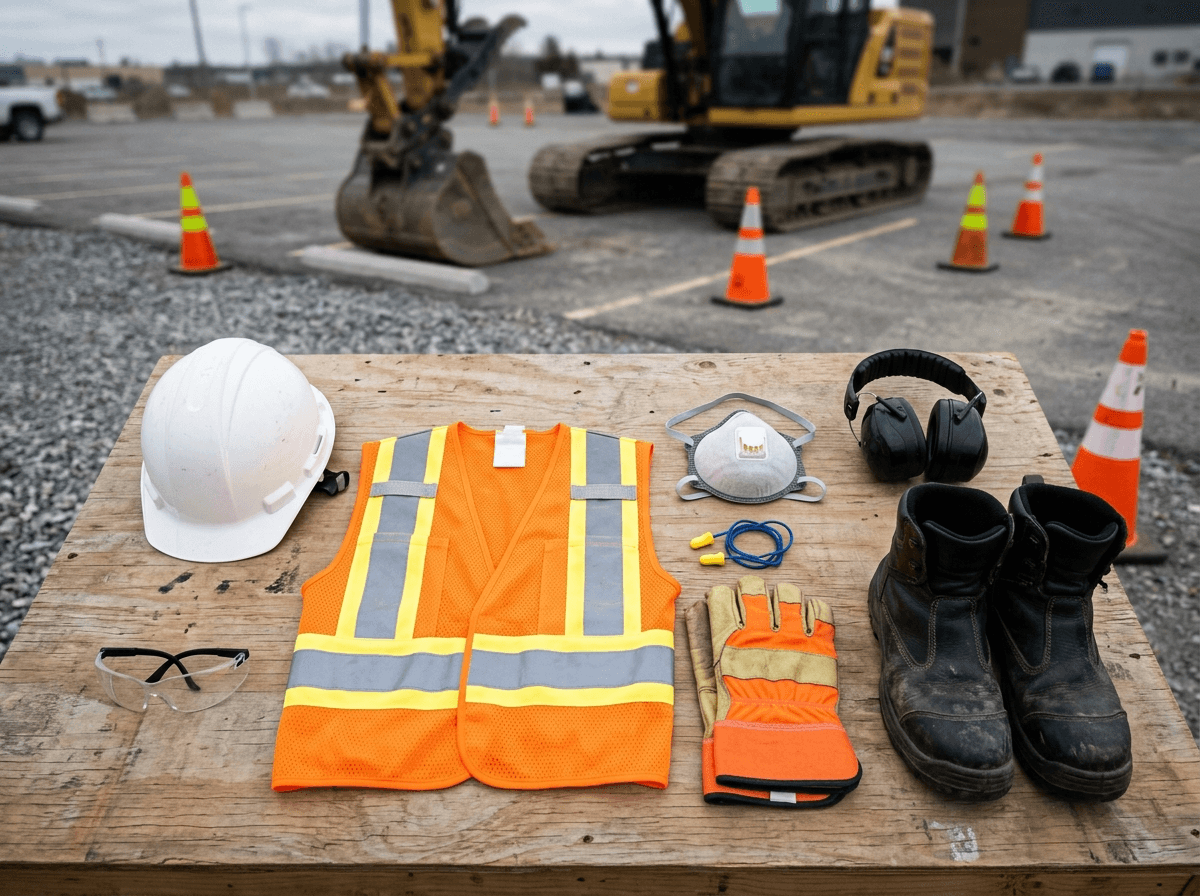
Use this short checklist before operators start work:
- Is the machine inspected, maintained, and suitable for the task before PPE is treated as the main control?
- Does the cab have working seat belt, clean safety glass, mirrors, cameras, alarms, lights, wipers, and visibility aids?
- Does the operator have high-visibility clothing before leaving the cab or working near moving traffic?
- Is hearing protection available for engine, hydraulic, compactor, paver, breaker, crushing, and demolition noise?
- Are safety boots suitable for machine steps, pedals, mud, asphalt, gravel, rebar, bridge decks, and oily service areas?
- Are safety glasses or sealed goggles available for dust, flying particles, wind, open-cab work, and walk-around checks?
- Is a safety helmet or hard hat available immediately when the operator leaves the protected cab?
- Are gloves selected for inspection, refueling, hydraulic checks, tie-downs, debris, pins, chains, and attachment changes?
- Has respiratory protection been reviewed for silica dust, sweeping, concrete cutting, demolition, tunnel work, or open-cab dusty operation?
- Is the operator visible to spotters, truck drivers, crane crews, pavers, rollers, loaders, and ground workers?
- Are radio, hand-signal, and exclusion-zone rules compatible with hearing protection and visibility gear?
- Are spare earplugs, glasses, gloves, and hi-vis garments stored where operators can replace damaged PPE during the shift?
- Are visitors, relief operators, and subcontracted operators covered by the same PPE issue process?
- Has the supervisor checked whether the task belongs to a higher-risk page such as roadwork, demolition, electrical work, scaffolding, or steel erection?
If any answer is unclear, the issue is not only PPE. The work plan, equipment control, traffic plan, or exposure assessment needs to be clarified before the operator starts.
Why Equipment Operators Need A Separate PPE Checklist
Generic construction PPE checklists usually focus on workers walking the site. Equipment operators have a different exposure pattern.
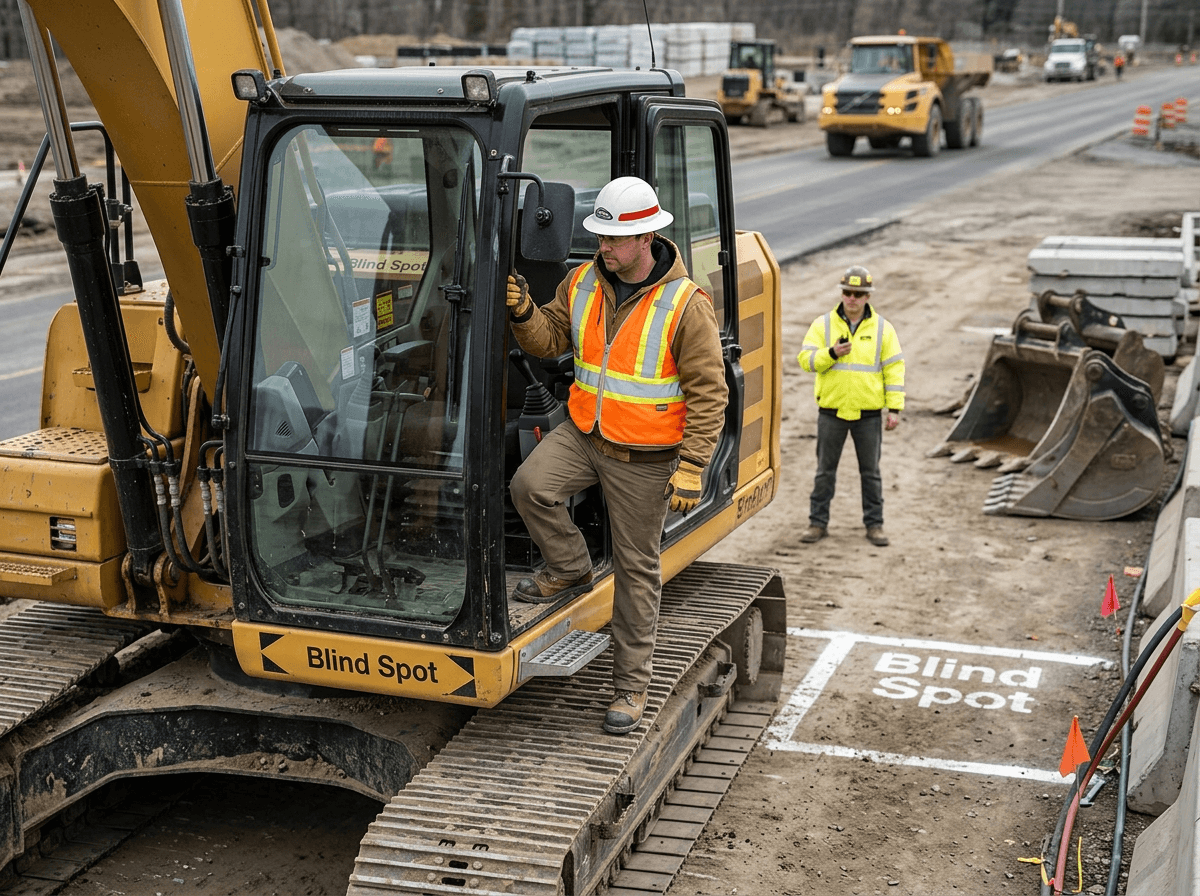
They may spend part of the shift inside an enclosed cab, but then step into one of the most dangerous zones on the project: around moving machines, blind spots, reversing trucks, swinging attachments, dropped material, dust, noise, and uneven ground. The transition between cab and ground is where many PPE gaps appear.
Common operator situations include:
- climbing down from an excavator or loader onto muddy or uneven ground
- checking a bucket, blade, breaker, forks, quick coupler, track, tire, hydraulic line, or attachment pin
- walking through haul roads, dump zones, paving lanes, bridge approaches, and laydown yards
- coordinating with spotters, riggers, truck drivers, traffic controllers, and ground crews
- opening cab windows because of heat, communication, fogged glass, or dust control problems
- working near concrete cutting, demolition debris, crushing, drilling, or sweeping
- entering a night shift or low-visibility site where the cab is visible but the operator on foot is not
OSHA's construction PPE rule at 29 CFR 1926.95 requires PPE to be provided, used, maintained, and selected to properly fit each affected employee when hazards make it necessary. For equipment operation, that means the checklist has to follow the operator's real tasks, not only the job title.
The right approach is simple: build an operator PPE kit around the points where exposure changes.
In-Cab PPE And Controls Checklist
The cab is not only a seat. It is part of the safety system. PPE should not be used to excuse poor equipment condition, broken glass, missing alarms, or weak visibility controls.
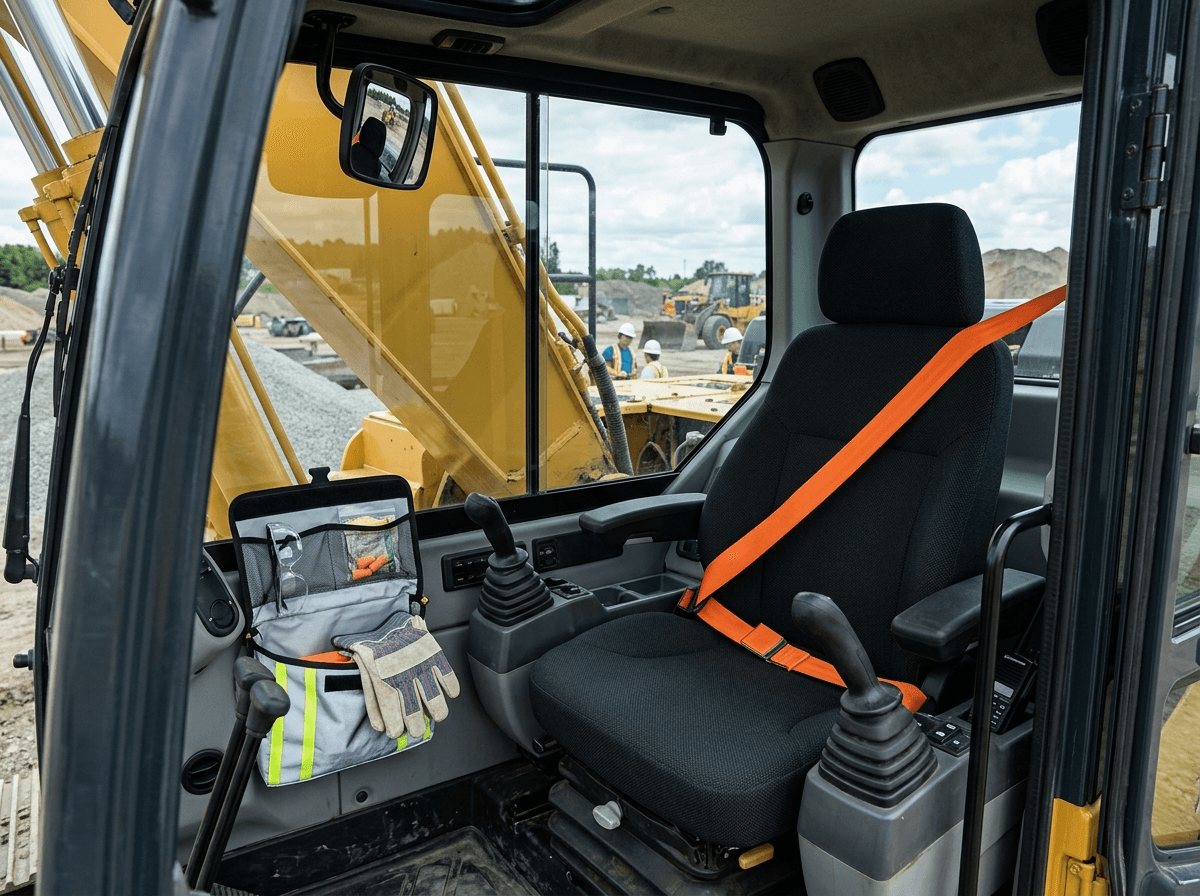
Before operation, check:
- Is the seat belt present, working, and used?
- Is the cab glass clean, intact, and free from visibility distortion?
- Are mirrors, cameras, lights, alarms, wipers, and defrosters working?
- Is the cab sealed enough for dust conditions, or will open-cab operation change eye and respiratory exposure?
- Are cab steps, handholds, pedals, and floor surfaces clean enough to reduce slip risk?
- Is PPE stored where the operator can reach it before leaving the cab?
- Are loose items controlled so they do not interfere with pedals, levers, or emergency exit?
- Are radios or communication devices compatible with hearing protection?
- Are HVAC, heat, cold, glare, and fogging issues controlled so operators do not remove PPE or open windows unnecessarily?
OSHA's equipment rules at 29 CFR 1926.600 include requirements for construction equipment condition, cab glass, power-line clearance, equipment blocking, parking, and other machine controls. PPE should support those controls, not replace them.
For a procurement program, treat the cab as a PPE storage point. A compact cab kit can include:
- disposable earplugs in a sealed case
- clear safety glasses or anti-fog goggles
- high-visibility vest or jacket
- work gloves
- helmet or hard hat hook
- spare respirator or filters where the site respiratory plan requires them
- wipes or storage bags to keep eyewear and respirators usable
Outside-Cab PPE Checklist
The operator becomes a ground worker the moment they step out of the cab. This is the part many checklists miss.
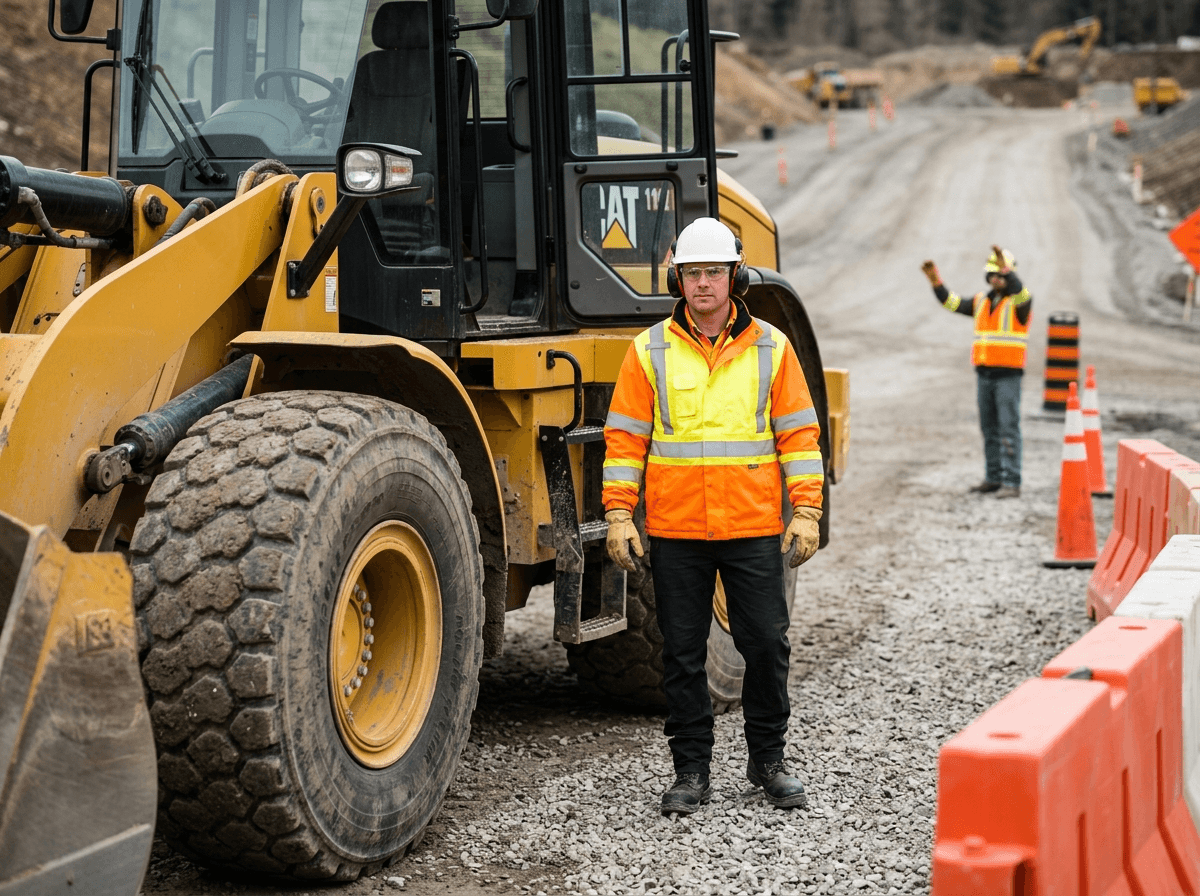
Use this outside-cab baseline:
| PPE item | Why it matters outside the cab | Selection notes |
|---|---|---|
| High-visibility clothing | Operators on foot must be seen by other operators, truck drivers, spotters, and traffic | Use the high-visibility clothing guide for Class 2 vs Class 3 decisions |
| Safety helmet or hard hat | Protects against overhead work, dropped tools, falling material, and machine-area hazards | Consider chin straps where climbing, leaning, wind, or height exposure exists |
| Eye protection | Protects during inspection, dust, wind, flying particles, hydraulic checks, and open-cab work | Use safety glasses for basic tasks and sealed goggles for dust or demolition |
| Hearing protection | Protects around engines, compactors, pavers, saws, breakers, crushers, and other equipment | Use the construction hearing protection guide for NRR/SNR and communication tradeoffs |
| Safety boots | Protect feet during climbing, walking, inspection, service work, and uneven ground movement | Use the construction safety footwear guide for toe, puncture, slip, and ankle support |
| Work gloves | Protect hands during walk-around checks, chains, pins, sharp edges, debris, and maintenance | Use the construction gloves selection guide for task-based glove selection |
| Respiratory protection | Needed where dust, silica, fumes, smoke, or poor ventilation cannot be controlled another way | Use the construction respiratory protection guide before choosing masks or respirators |
The practical rule: if the operator exits into an active construction zone, the PPE expectation should be the same as for any worker in that zone.
Mounting And Dismounting PPE Checklist
Mounting and dismounting are short tasks, but they create frequent injuries. Operators climb down in mud, rain, dust, oil, darkness, fatigue, or a hurry. A boot that is acceptable on flat ground may fail on worn metal steps.
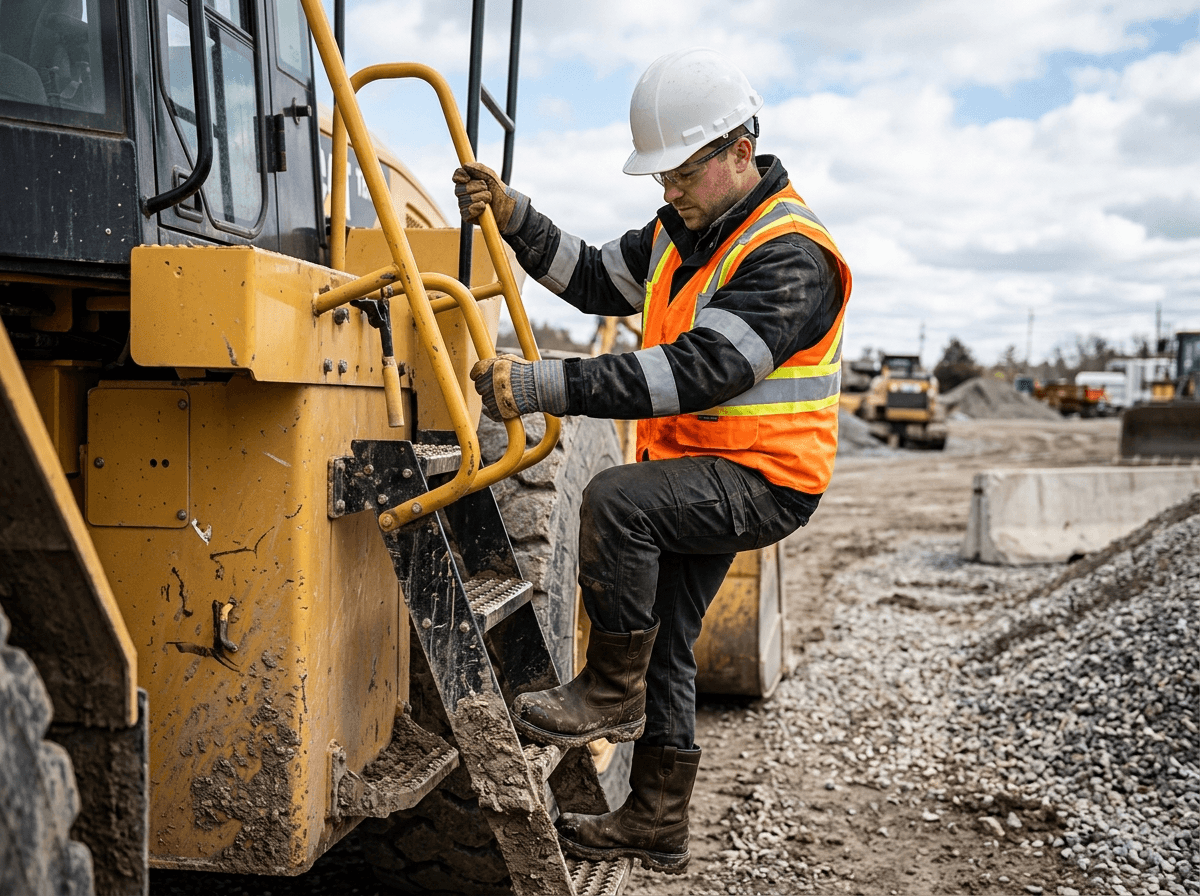
Check:
- Are boots slip-resistant on wet steel, mud, oil residue, asphalt, and concrete slurry?
- Does the outsole give stable traction on ladders, steps, pedals, decks, and gravel?
- Does the boot have enough ankle support for uneven ground after the operator exits?
- Are steps and handholds clean, intact, and visible?
- Are gloves available when handholds are cold, wet, oily, sharp, or contaminated?
- Does the operator maintain three points of contact instead of jumping down?
- Is the helmet or hard hat available before the operator walks away from the machine?
- Is hi-vis clothing visible when the operator exits near haul roads or traffic?
Do not solve a step problem with PPE alone. Worn steps, damaged handholds, mud accumulation, poor lighting, and rushed entry/exit need equipment and supervision controls.
Walk-Around Inspection PPE Checklist
Daily walk-around inspections expose operators to hazards that are different from driving:
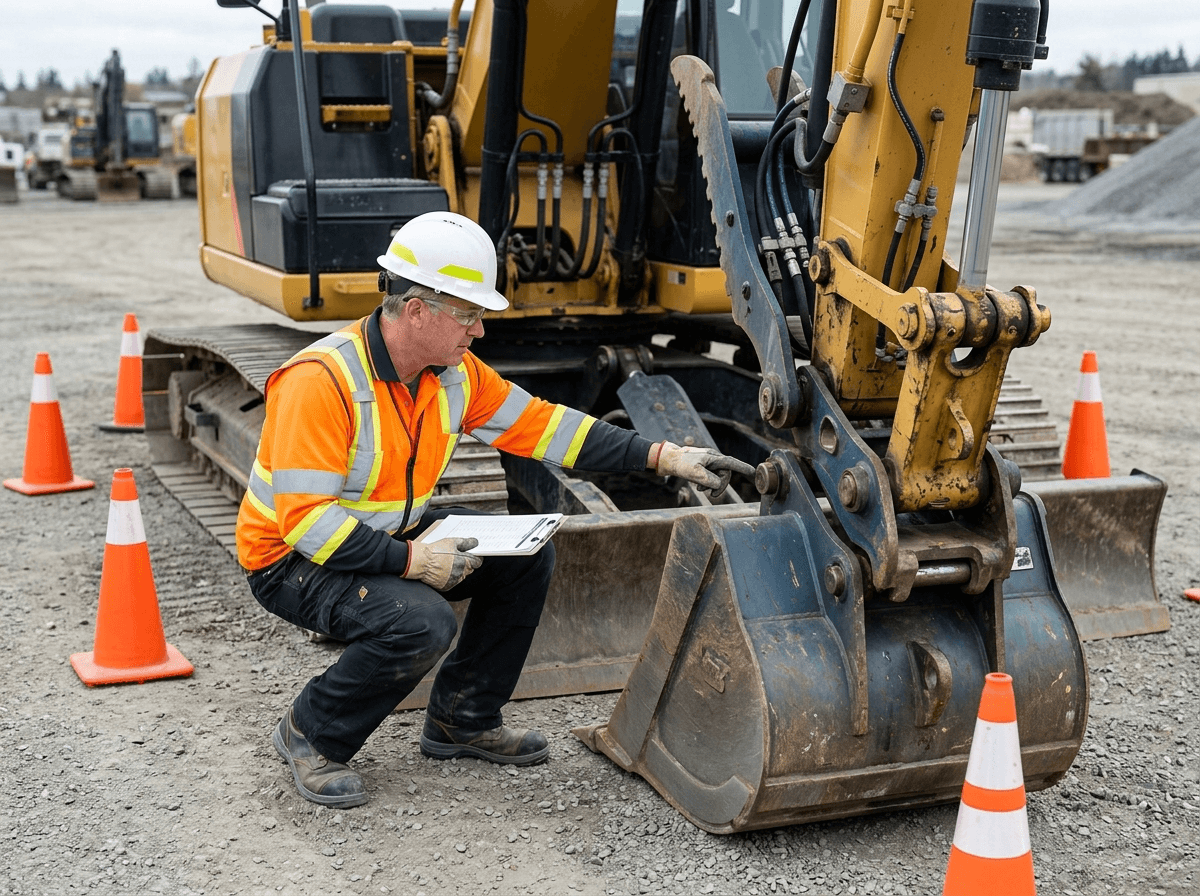
- sharp edges
- hot engine parts
- hydraulic oil and pressurized lines
- battery hazards
- damaged guards
- suspended attachments
- track and tire hazards
- broken glass
- concrete dust, mud, and fuel spills
- pinch points around buckets, blades, forks, outriggers, and couplers
Use this PPE set for inspection:
- Safety glasses for dust, splash, broken material, and low-level flying particles.
- Sealed goggles where dust, wind, hydraulic fluid, or concrete debris may bypass glasses.
- Gloves matched to the inspection: grip gloves, cut-resistant gloves, oil-resistant gloves, or heat-resistant gloves.
- Safety boots with toe protection, slip resistance, and puncture resistance where debris or rebar is present.
- Safety helmet or hard hat when outside the cab on active sites.
- Hi-vis clothing where the operator may be near other machines, trucks, cranes, or traffic.
Inspection PPE should be kept clean. Dirty goggles, oil-soaked gloves, or worn-out boots can make operators skip the check or perform it poorly.
Hearing Protection Checklist For Equipment Operators
Equipment operators are often exposed to noise from more than their own machine. A loader operator may hear crushers, saws, breakers, pavers, compactors, trucks, generators, and backup alarms throughout the shift.
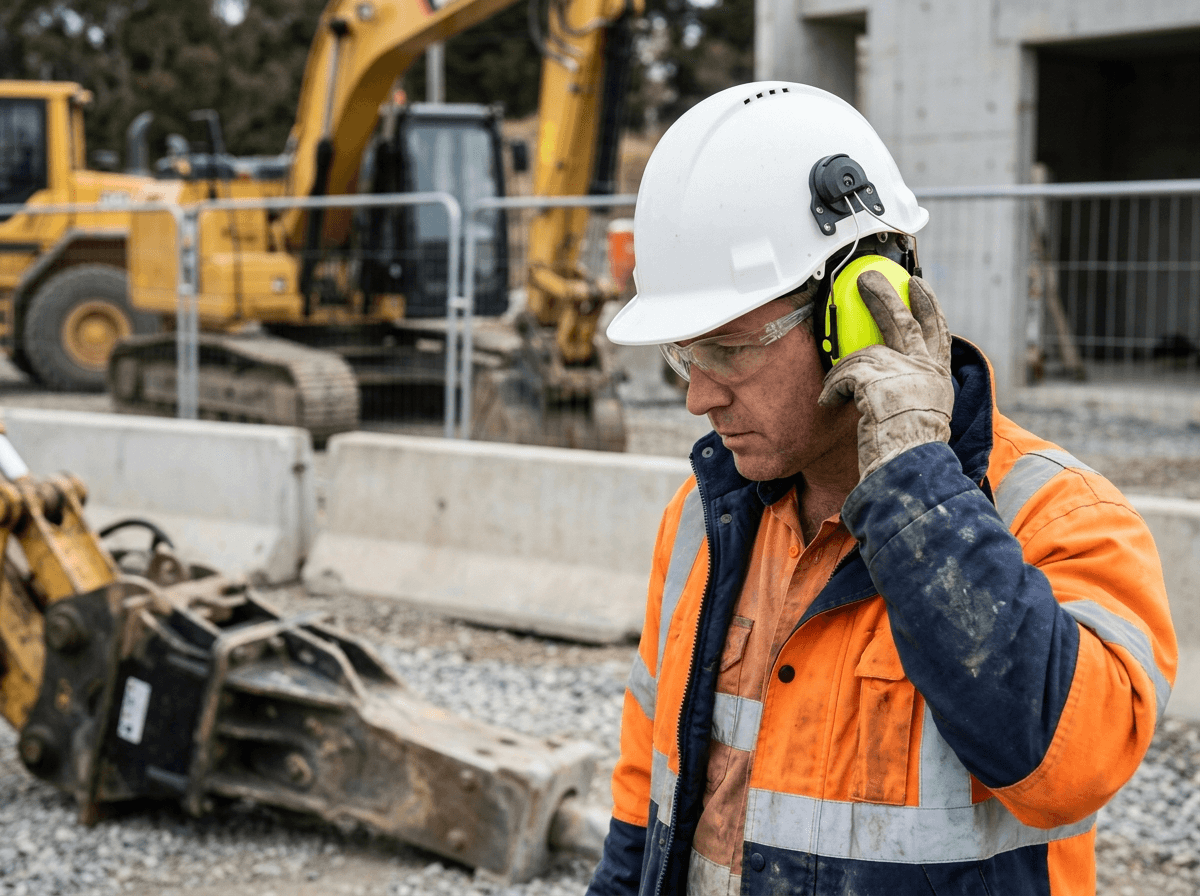
OSHA's construction noise standard, 29 CFR 1926.52, requires protection when sound levels exceed the listed limits, and requires feasible engineering or administrative controls before relying on PPE where applicable. PPE must reduce exposure within the allowed limits when controls are not enough.
Check:
- Has the site assessed the noise level for the task and shift duration?
- Is the operator exposed to continuous noise, impulse noise, or both?
- Do earplugs fit correctly, or do workers need individually fitted options?
- Are earmuffs compatible with helmets, hard hats, face shields, eyewear, and radios?
- Does the operator still need to hear alarms, spotters, radios, horns, and emergency instructions?
- Is dual protection needed for very high-noise tasks such as breakers, crushing, drilling, or concrete cutting?
- Are disposable earplugs replaced often enough to stay clean?
- Are earmuff cushions inspected for cracks, compression, or poor seal?
For buying details, use the construction hearing protection guide. For equipment-heavy road projects, connect this with PPE for road and bridge construction projects.
High-Visibility Checklist Around Heavy Equipment
Visibility is one of the most important PPE categories for equipment operators because the operator may become a pedestrian in a machine zone.
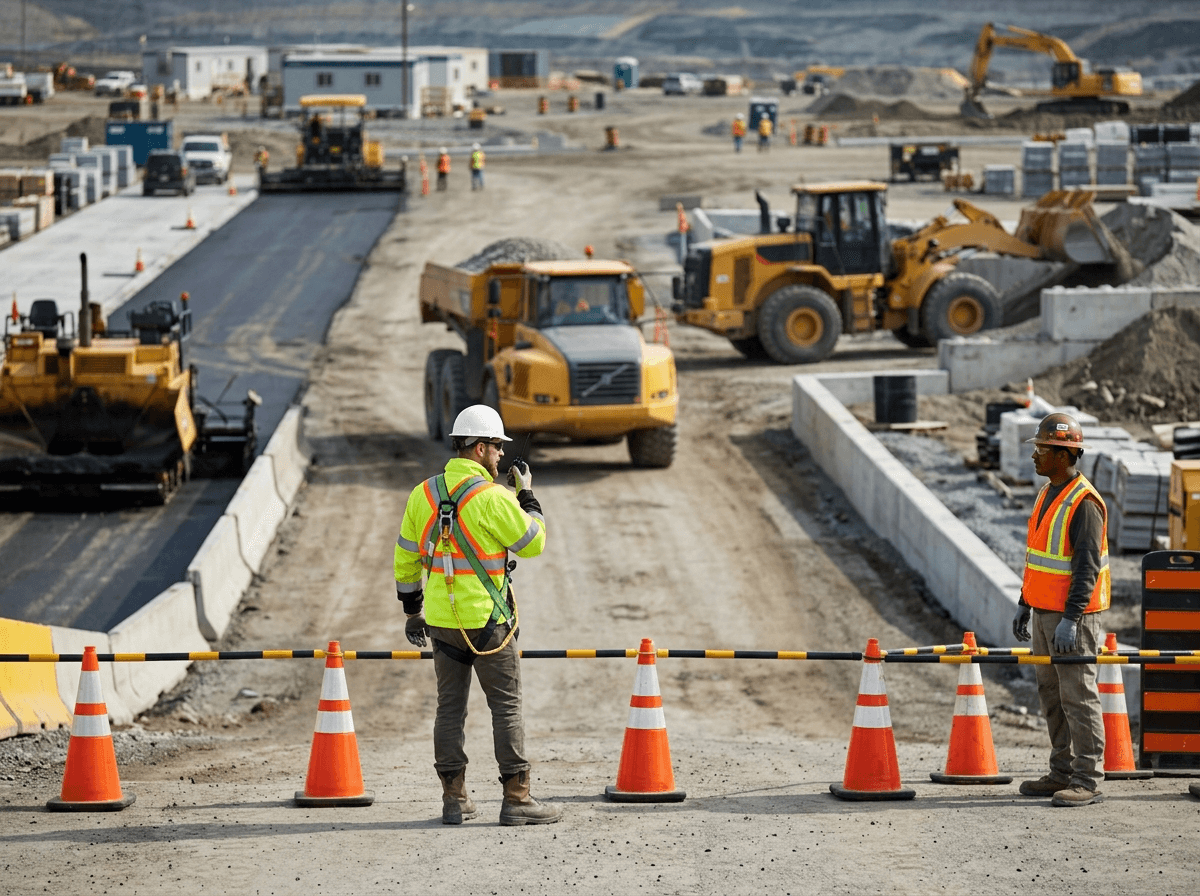
The OSHA construction struck-by eTool notes that struck-by hazards include vehicles, falling or flying objects, and heavy equipment exposure. It also highlights the role of heavy equipment in many construction struck-by fatalities. That makes visibility planning more than a vest purchase.
Use this checklist:
- Does every operator have hi-vis clothing before entering haul roads, traffic zones, laydown yards, dump areas, bridge approaches, or low-light work zones?
- Is the garment visible from the front, back, and side when the operator bends, climbs, or wears a jacket?
- Does the class match the exposure: general site, roadway exposure, night work, high-speed traffic, or flagging?
- Is the color visible against the actual background: concrete, steel, dust, vegetation, asphalt, machinery, or night lighting?
- Does reflective material remain visible after dirt, mud, washing, or wear?
- Is rainwear, winter clothing, and thermal outerwear also high-vis?
- Are replacement garments available for faded, torn, oil-soaked, or contaminated items?
For detailed class and garment selection, use High-Visibility Clothing for Construction Workers. For heavy equipment working beside traffic, use PPE for road and bridge construction projects.
Eye And Face Protection Checklist
Eye protection for operators is often underestimated because the cab seems protective. That changes during open-cab operation, walk-around checks, demolition, road dust, and attachment maintenance.
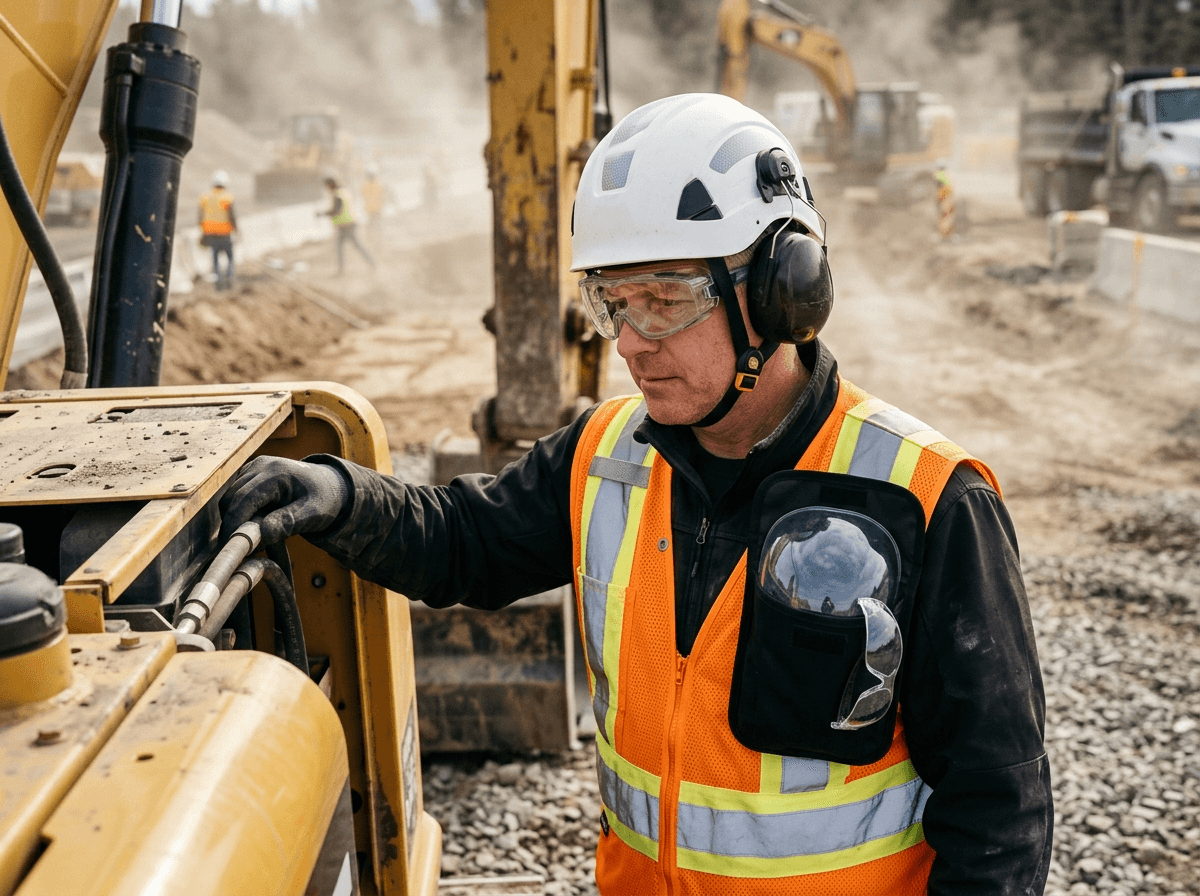
Check:
- Are safety glasses available for basic inspection and site movement?
- Are sealed goggles available for dust clouds, wind, concrete debris, demolition, grinding, and open-cab work?
- Is anti-fog performance suitable for operators moving between warm cabs and outdoor air?
- Do goggles fit with respirators, hearing protection, helmets, and face shields?
- Is tinted or shaded eyewear used only where it does not reduce visibility inside shaded structures, tunnels, or night work?
- Are face shields used where flying particles, splash, or cutting debris require face coverage in addition to glasses or goggles?
- Are eyewear lenses replaced when scratched, cloudy, or contaminated?
Use the construction eye and face protection guide when choosing between glasses, goggles, face shields, welding lenses, and prescription safety eyewear.
Footwear Checklist For Operators
Operator footwear has to work on both machine and ground. The boot must support climbing, pedals, walking, inspection, uneven ground, and sometimes demolition debris.
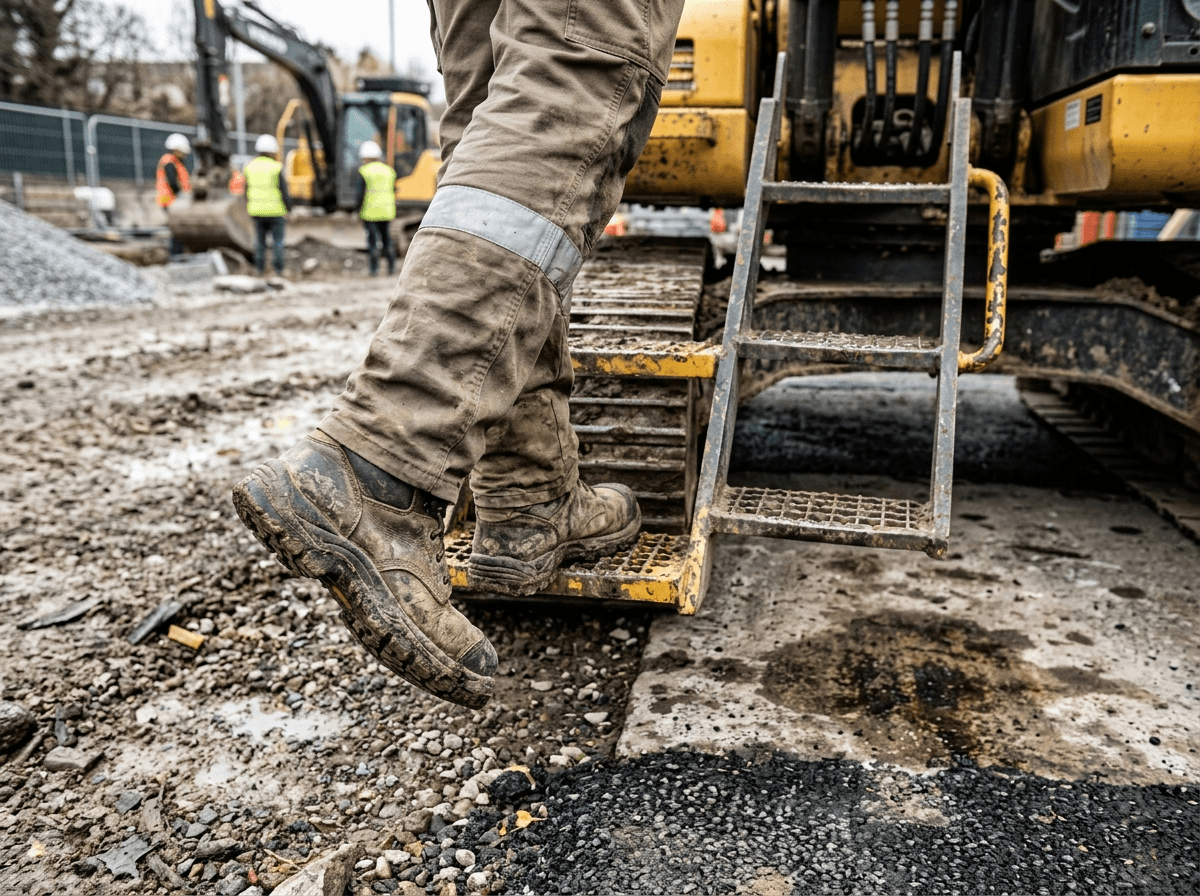
Check these footwear requirements:
- toe protection for dropped tools, pins, chains, parts, and material
- slip resistance on wet steps, mud, asphalt, concrete slurry, oil, and gravel
- puncture protection where rebar, nails, scrap, or demolition debris are present
- outsole grip that works on metal steps, pedals, ladders, bridge decks, and loose aggregate
- ankle support for uneven terrain and long walking routes
- waterproofing or water resistance where rain, slurry, mud, or washing is common
- electrical hazard or dielectric requirements where electrical work is part of the exposure
- heat resistance where asphalt, hot equipment, or welding support is relevant
- fit that remains stable over long shifts without causing workers to leave boots unlaced
For deeper selection, use the construction safety footwear guide. For demolition or concrete cutting, connect footwear selection with the demolition PPE checklist.
Gloves Checklist For Operators
Operators do not need the same glove for every task. Driving, checking a machine, changing attachments, handling chains, cleaning debris, and fueling all create different hand exposures.
Match gloves to task:
| Task | Main hazard | Glove direction |
|---|---|---|
| Daily inspection | Sharp edges, dirt, oil, light abrasion | General work glove or nitrile-coated grip glove |
| Attachment checks | Pinch points, pins, chains, couplers, sharp edges | Cut-resistant glove with good grip |
| Demolition debris | Rebar, broken concrete, metal fragments | Cut-resistant or impact glove |
| Fueling and greasing | Oil, fuel, grease, contamination | Oil-resistant glove matched to the chemical exposure |
| Hot components | Exhaust, engine parts, hydraulic components | Heat-resistant glove where contact is possible |
| Cold or wet work | Reduced grip, numb hands, slower reaction | Thermal or waterproof grip glove |
Avoid one-glove purchasing if operators cover multiple tasks. A low-cost grip glove may be fine for clean inspection but weak for rebar, demolition debris, or attachment work.
For more detail, use the construction gloves selection guide.
Respiratory Protection Checklist For Dusty Equipment Work
Respiratory protection for equipment operators depends on the task and exposure. The fact that a worker is inside a cab does not automatically remove dust risk, especially with open windows, damaged seals, dusty cleanup, demolition, concrete cutting, tunnel work, or poor ventilation.
Check:
- Is the airborne hazard known: silica dust, nuisance dust, diesel exhaust, welding fume, asphalt fume, mold, coating dust, or mixed contaminants?
- Are engineering controls in place first, such as water suppression, dust collection, ventilation, isolation, or cab filtration?
- Is the cab sealed and maintained enough for the dust environment?
- Does the operator leave the cab during dusty cleanup, sweeping, debris loading, or demolition support?
- Is a disposable respirator enough, or is a reusable half-face or full-face respirator required?
- Are filters or cartridges matched to the hazard?
- Are fit testing, medical evaluation, training, cleaning, and storage covered where a respirator program is required?
- Are spare filters, seal-check procedures, and replacement rules clear?
Use the construction respiratory protection guide before purchasing respirators for operators. For concrete dust and demolition, use the demolition and concrete cutting PPE checklist.
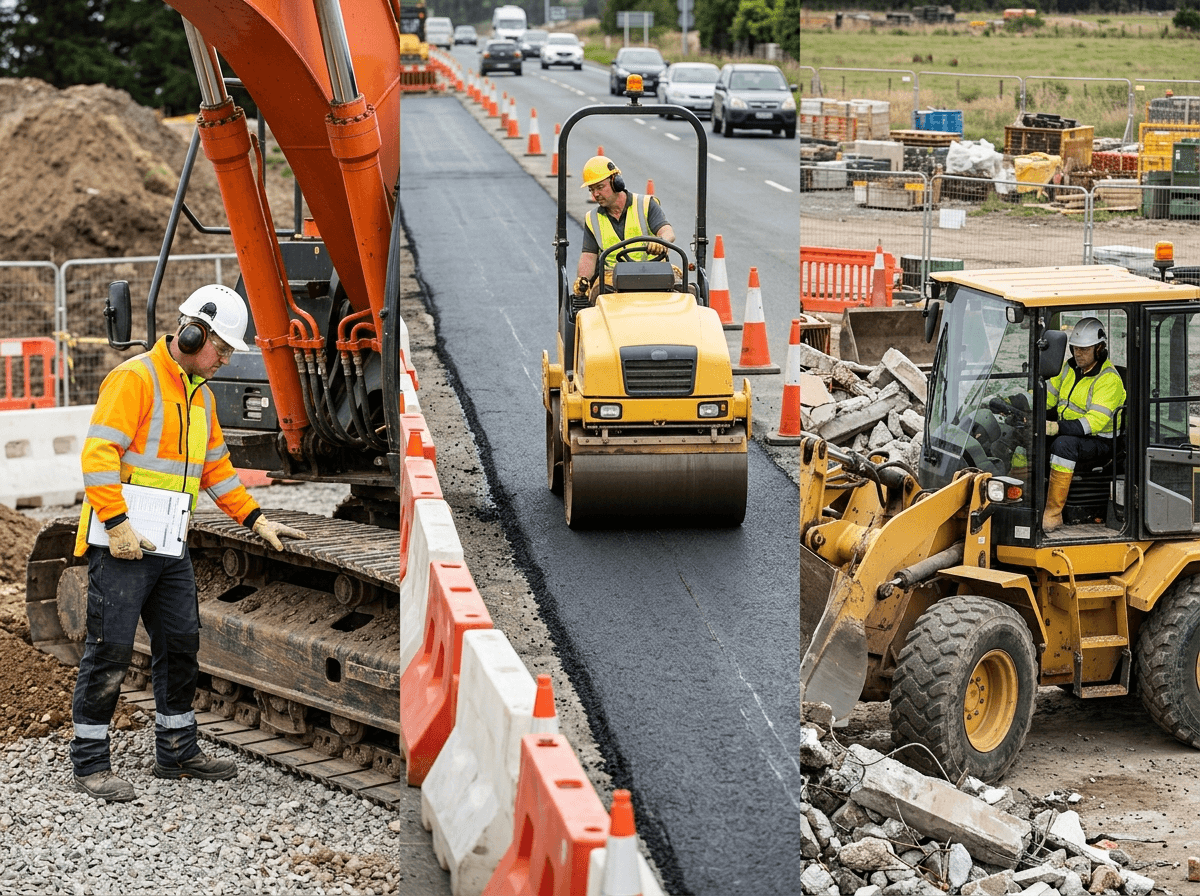
Task-Based Operator PPE Matrix
Use this matrix to turn the checklist into field decisions:
| Operator task | Baseline PPE | Add when exposure increases |
|---|---|---|
| Enclosed-cab operation | Seat belt, hearing protection if required, clean cab PPE storage | Eye protection if windows open; respirator review if dust enters cab |
| Open-cab operation | Hi-vis clothing, hearing protection, safety glasses, safety boots | Sealed goggles and respiratory protection review for dust or silica |
| Mounting and dismounting | Slip-resistant safety boots, gloves if handholds are wet or oily | Helmet and hi-vis before walking into active zones |
| Walk-around inspection | Safety glasses, gloves, boots, hi-vis, helmet | Goggles, oil-resistant gloves, or chemical-splash protection where needed |
| Roadwork and bridge work | Hi-vis clothing, hearing protection, boots, eye protection | Class 3 hi-vis, fall protection, rainwear, and night-work visibility |
| Demolition and concrete breaking | Goggles, hearing protection, gloves, boots, helmet, hi-vis | Respiratory protection assessment and cut/impact gloves |
| Fueling and greasing | Gloves, safety glasses, boots, hi-vis | Chemical-splash eye protection and spill-response controls |
| Crane support or telehandler zones | Helmet, hi-vis, safety glasses, boots, gloves | Chin strap, radio-compatible hearing protection, and exclusion-zone controls |
| Night or low-visibility work | Hi-vis clothing, clear eye protection, boots, hearing protection | Class 3 apparel, reflective outerwear, lights, and traffic-control review |
This matrix is not a substitute for a hazard assessment. It is a practical way to keep the same operator from being under-protected when the task changes.
Road And Bridge Operator PPE Add-Ons
Road and bridge projects intensify visibility, traffic, hearing, and footwear requirements. Operators may work around dump trucks, pavers, rollers, compactors, barriers, public traffic, bridge edges, asphalt heat, dust, and night lighting.
Add these checks:
- Is the operator wearing the correct hi-vis class for roadway exposure?
- Does rainwear or winter clothing maintain the same visibility level as the vest?
- Can the operator hear radios and warning signals while wearing hearing protection?
- Are boots suitable for asphalt, wet bridge decks, slopes, embankments, and compacted aggregate?
- Is eye protection selected for wind, dust, glare, and low-light work?
- Is fall protection required around bridge edges, openings, or elevated work?
- Are spotter and equipment exclusion zones visible and enforced?
Use PPE for road and bridge construction projects for the full work-zone solution. Use High-Visibility Clothing for Construction Workers for hi-vis class selection.
Demolition Equipment Operator PPE Add-Ons
Demolition equipment operators face dust, fragments, rebar, unstable debris, high noise, and reduced visibility. A loader or excavator cab may protect against some impact exposure, but the operator still leaves the machine for inspection, attachment checks, communication, and emergency movement.
Add these checks:
- Are sealed goggles available when dust or fragments bypass standard safety glasses?
- Does hearing protection cover breakers, crushers, saws, drills, loaders, and impact attachments?
- Are gloves strong enough for rebar, broken concrete, sharp metal, pins, and chains?
- Do boots include puncture resistance where nails, rebar, and scrap are present?
- Is respiratory protection selected from the silica or dust exposure control plan?
- Is hi-vis clothing still visible in dust clouds and around loaders or dumpers?
- Are exclusion zones clear enough to keep ground workers out of machine swing radius and blind spots?
Use the demolition and concrete cutting PPE checklist for task-level demolition checks. For the solution-page view, use PPE for Demolition and Concrete Cutting Work.
Procurement Checklist For Operator PPE Kits
For distributors, contractors, and fleet teams, the buying goal is not to purchase random PPE pieces. The goal is to issue repeatable operator kits that match machines, roles, and sites.
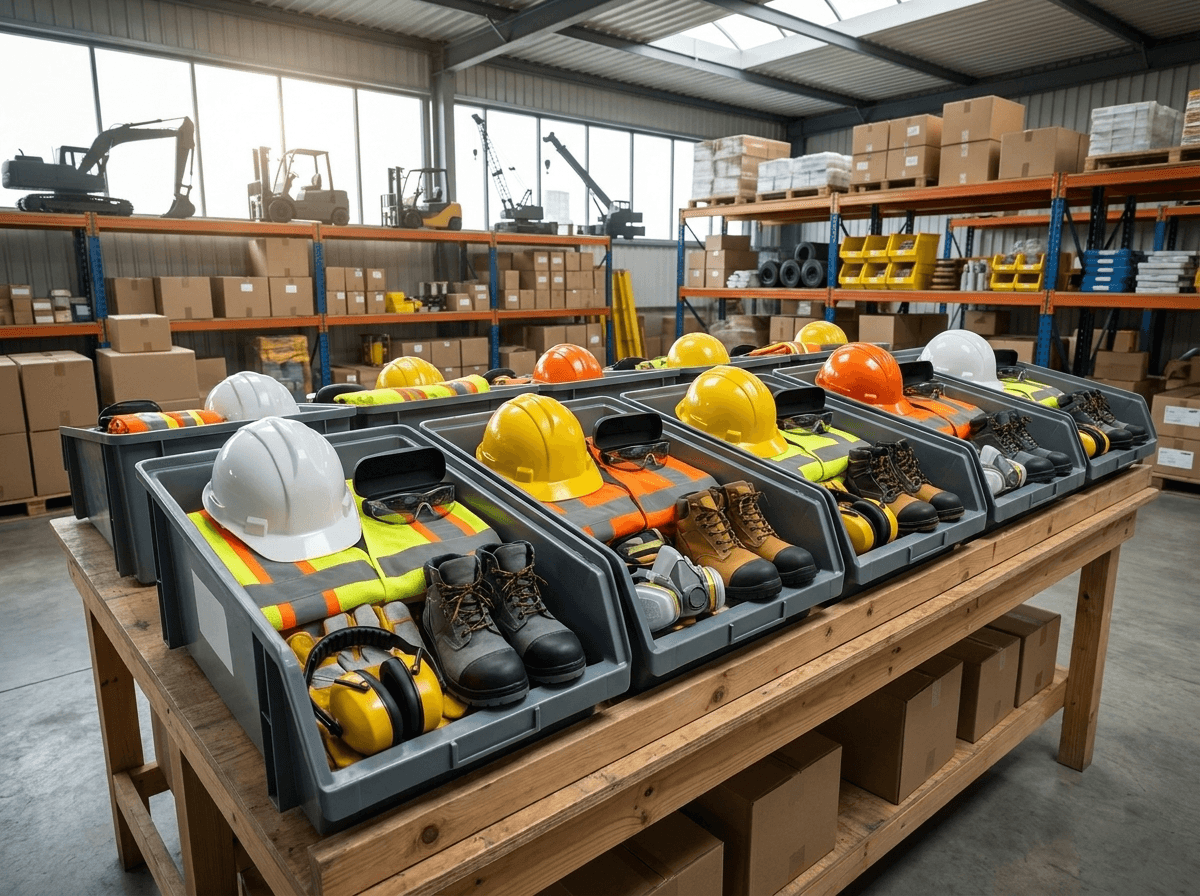
Use this procurement checklist:
- Define operator groups: excavator, loader, dozer, roller, paver, telehandler, crane support, dump truck, skid steer, compact equipment.
- Define work zones: general construction, roadwork, bridge work, demolition, steel erection, tunnel work, night work, maintenance area.
- Build a baseline kit for all operators: hi-vis, hearing protection, safety glasses, gloves, helmet, and footwear requirement.
- Add task modules: demolition dust, roadwork visibility, bridge fall exposure, electrical proximity, asphalt heat, cold weather, rain, and night work.
- Specify sizes and fit, not only product names. OSHA's 2025 PPE fit update makes proper fit a procurement requirement, not a minor detail.
- Decide what stays in the cab, what is worn from the gate, and what is issued only for specific tasks.
- Set replacement quantities for earplugs, eyewear, gloves, respirator filters, and hi-vis garments.
- Package kits by role so supervisors can issue them without rebuilding the list every shift.
- Keep documentation for standards, user instructions, fit, training, and replacement records.
- Review returned or damaged PPE to identify where the site is under-specifying products.
For purchasing workflow, use the bulk construction PPE procurement guide.
Common Mistakes In Heavy Equipment Operator PPE
Avoid these mistakes:
- Treating the cab as full protection and ignoring outside-cab tasks.
- Buying hi-vis vests without considering roadwork class, night work, dirt, rainwear, or winter layers.
- Giving operators earplugs without checking fit, communication, and compatibility with radios.
- Choosing boots only by toe cap while ignoring step traction, puncture exposure, and slip resistance.
- Using basic safety glasses in dusty demolition where sealed goggles are needed.
- Issuing one glove type for inspection, oil, rebar, chains, and hot parts.
- Forgetting relief operators, subcontracted operators, visitors, and maintenance technicians.
- Storing PPE in the cab without keeping it clean, dry, and reachable.
- Using respirators without a proper respiratory protection program where one is required.
- Failing to connect PPE selection with machine maintenance, traffic control, exclusion zones, and spotter rules.
The best operator PPE checklist is not the longest one. It is the one supervisors can actually use before the task changes.
Heavy Equipment Operator PPE FAQ
Do equipment operators need a hard hat inside the cab?
Usually the stronger requirement is outside the cab, especially when the cab is enclosed and protected. But a helmet or hard hat should be available immediately when the operator exits into an active construction zone, lifting area, demolition site, roadwork zone, or overhead hazard area.
Do operators need hearing protection if the cab is enclosed?
Sometimes yes. The answer depends on measured or assessed exposure, task duration, machine type, attachments, surrounding equipment, and whether windows are open. Construction noise requirements are covered by OSHA 1926.52, and hearing protection should be selected from the actual exposure.
What boots are best for equipment operators?
Look for toe protection, slip resistance, stable outsole traction, and enough support for machine steps, pedals, gravel, mud, asphalt, bridge decks, and oily service areas. Add puncture resistance where demolition debris, nails, or rebar are present.
Are safety glasses enough for equipment operators?
They are often enough for basic site movement and light inspection. Use sealed goggles where dust, wind, fragments, concrete debris, or open-cab operation can bypass standard glasses. Add face protection where splash or flying debris affects the face.
Should every operator carry respirators in the cab?
Not automatically. Respirators should follow the site's exposure assessment and respiratory protection program. For silica dust, demolition, concrete cutting, sweeping, tunnel work, or open-cab dusty operation, respiratory protection may be required and should be planned before work starts.
Can Laifappe supply heavy equipment operator PPE kits?
Yes. Laifappe can support operator PPE kits that combine hi-vis clothing, hearing protection, eye protection, gloves, safety helmets, safety footwear, and replacement stock for construction fleets, roadwork crews, demolition contractors, and distributors.
Build A Better Operator PPE Kit
Heavy equipment operator PPE should be simple enough to issue quickly and specific enough to match real exposure. Start with the cab and machine controls, then add PPE for climbing, inspection, ground movement, roadwork, demolition, dust, noise, and visibility.
For a complete operator-kit structure, use PPE for Heavy Equipment Operators on Construction Sites. For the broader construction category, use the complete construction PPE solution. If you are buying for multiple crews, use the bulk construction PPE procurement guide before sending an RFQ.
Related PPE
Source the PPE covered in this guide
Move from research to a buyer shortlist with the matching solution page, category paths, selected PPE options, and RFQ next steps.