
Buyer next step
Turn this guide into a sourced PPE shortlist with standards, quantities, and role-based kit notes.
Planning tools
Use these tools before moving from this guide into quantities, sizing, labels, or RFQ planning.
The fastest way to buy construction PPE in bulk is to build the RFQ from the jobsite scope, not from a generic product list. Start with worker roles, task hazards, PPE categories, target standards, quantities, size ranges, replacement stock, supplier documentation, packaging, and delivery country. Then ask every supplier to quote against the same structure.
If your search is "how do I buy bulk safety equipment for a new construction crew?", start with a baseline site-entry kit, then add task-specific PPE by trade. If your search is "contractor PPE supplier bulk", the real buying question is not only who can ship a large order. It is which supplier can support contractor-ready PPE in repeatable sizes, standards, kit packaging, documents, replacement stock, and approved substitutions across the full project cycle.
When a contractor orders PPE for one worker, a wrong size or missing feature is an inconvenience. When a contractor orders PPE for 200 workers across several trades, the same mistake becomes a site-wide safety gap, a budget problem, and a replacement problem that repeats for the life of the project.
Use this guide when your team needs to buy construction PPE in bulk for a new construction crew, project, jobsite, contractor network, distributor program, or multi-site operation. For the full site-wide PPE structure, start with the Complete PPE solution for construction sites. For legal requirements and inspection exposure, use OSHA PPE requirements for construction. For field execution, use the construction PPE checklist.
Quick Answer: How Do I Buy Bulk Safety Equipment For A New Construction Crew?
Start with the crew and hazard profile, then send suppliers one structured RFQ. For a new construction crew, do not ask for "PPE kit price" first. Ask for a baseline site-entry package, task add-ons, standards, size curves, replacement stock, packaging, documentation, and lead time.
| Buying question | Fast answer | Link or next step |
|---|---|---|
| What is the best bulk PPE kit for contractors? | A modular kit: baseline site PPE plus trade add-ons for roadwork, electrical work, demolition, concrete, scaffolding, and hot work. | Use the contractor PPE kit checklist. |
| How do I compare a contractor PPE supplier for bulk orders? | Compare certification proof, size range, category depth, repeat-order stability, packaging, samples, replacement support, and substitution control before unit price. | Use the contractor PPE supplier bulk checklist. |
| What should go in the first RFQ? | Worker count, roles, delivery country, required standards, PPE categories, sizes, packaging, replacement stock, and document requirements. | Open the Construction PPE RFQ Template. |
| What if the crew size is still changing? | Quote a baseline quantity plus spare sizes and reorder lead time, then separate consumables from durable PPE. | Use the PPE Size & Standards Planning Sheet. |
If you already know the crew size, work type, target market, and delivery country, request a bulk PPE quote with those details.
For buyers comparing more than one supplier, use the Contractor PPE Supplier Bulk Checklist before approving the quote. It gives you a supplier scorecard for certificates, size curves, kit packing, repeat orders, substitutions, samples, and delivery risk.
Bulk Construction PPE RFQ Quick Start
| Step | What to define before asking for price | Why it matters |
|---|---|---|
| 1. Site scope | Project type, worker roles, trades, shift count, delivery country | Prevents one generic kit from being quoted for every crew. |
| 2. PPE categories | Head, eye, hand, foot, hi-vis, respiratory, hearing, fall protection, task add-ons | Keeps the RFQ tied to hazards instead of a loose shopping list. |
| 3. Standards | ANSI, ASTM, NIOSH, OSHA, CE, EN, or buyer-specific requirements | Makes supplier quotes comparable and documentable. |
| 4. Quantities and sizes | Worker count, size curve, replacement stock, spare sizes | Reduces fit problems after shipment, especially for boots, gloves, harnesses, and eyewear. |
| 5. Supplier proof | Certificates, test reports, label photos, packaging, samples, lead time | Filters suppliers before price negotiation starts. |
Downloadable RFQ Pack For Construction PPE Buyers
Use these files before sending supplier inquiries, especially when the order includes multiple roles, standards, or size ranges:
- Construction PPE RFQ Template - send this with the work scope, standards, quantities, packaging needs, and delivery country.
- Construction PPE Checklist PDF - use this as the field checklist behind the purchase list.
- PPE Size & Standards Planning Sheet - build the size curve, standards matrix, and replacement-stock estimate before comparing quotes.
If the scope is still changing, complete the checklist first, then attach the RFQ template when asking suppliers for price, sample, and documentation responses. If you need to turn the scope into a supplier message faster, use the AI Quote Generator or request a bulk PPE quote with your worker count, country, standards, and delivery deadline.
Why Bulk Construction PPE Buying Fails
Bulk buying usually fails for practical reasons, not because the buyer forgot that PPE matters.
Common problems include:
- one generic PPE kit is used for every trade
- size ranges are too narrow for the actual workforce
- standards are listed in the quote but not verified on the product
- fall protection, respirators, and electrical PPE are treated like ordinary accessories
- replacement stock is not planned before work starts
- products arrive in mixed cartons with no worker, trade, or phase labeling
- the purchasing team buys by price while the safety team manages the consequences
That is why PPE procurement should start before the purchase order. A good buying process translates site hazards into a bill of materials, then turns that bill of materials into supplier requirements.
The best results usually come from a simple sequence:
- Map the site by task, trade, and phase.
- Define the baseline PPE required for everyone.
- Add task-specific PPE by exposure.
- Verify standards and documentation.
- Build a size and replacement plan.
- Compare suppliers on repeatability, not just unit price.
- Issue and track PPE in a way supervisors can actually use.
Start With A Site PPE Scope, Not A Product List
Most weak bulk orders start with a shopping list: hard hats, safety glasses, gloves, vests, boots, harnesses. That is too broad. A better procurement file starts with the work.
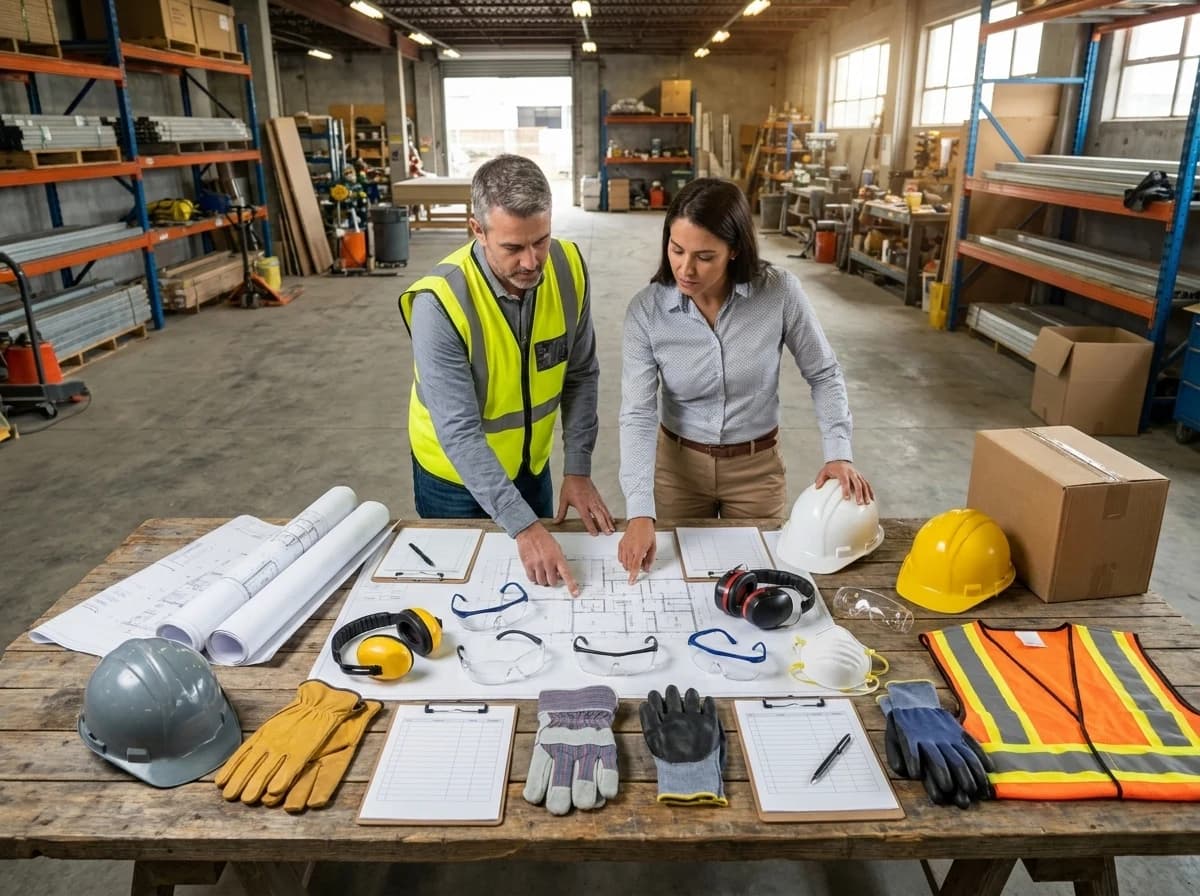
Before asking for a quote, define:
- project type: building, roadwork, plant maintenance, civil work, demolition, renovation, roofing, steel, or utility work
- workforce size by trade and shift
- expected project duration
- climate and weather conditions
- traffic, equipment, and visibility exposure
- fall, electrical, respiratory, splash, cut, impact, and noise hazards
- certification market: OSHA/ANSI/ASTM/NIOSH, CE/EN, or both
- whether PPE will be issued by worker, by crew, by visitor, or by subcontractor
This turns the order into a controlled procurement decision instead of a one-time buy.
| Procurement input | Why it matters | Example decision |
|---|---|---|
| Number of workers by role | Prevents underbuying or overbuying one category | More gloves for masonry crews, more eyewear for grinding crews |
| Project duration | Sets replacement stock and reorder frequency | A 12-month project needs replenishment planning, not one initial shipment |
| Height exposure | Determines fall protection packages | Harness, lanyard, SRL, anchor, rescue planning |
| Wet or cold environment | Changes footwear, gloves, and outerwear | Waterproof boots, thermal gloves, rainwear, anti-fog eyewear |
| Traffic exposure | Changes hi-vis class and color strategy | Class 2 or Class 3 garments, day/night visibility |
| Certification market | Determines acceptable documentation | ANSI/ASTM/NIOSH for US projects, CE/EN for many export markets |
If the site scope is still unclear, use the construction PPE checklist first. It helps separate baseline PPE from task-specific add-ons.
Build The Baseline Construction PPE Package
A baseline package covers the PPE that most workers need before entering an active construction area. It is not the full answer for every trade, but it gives procurement a stable starting point.
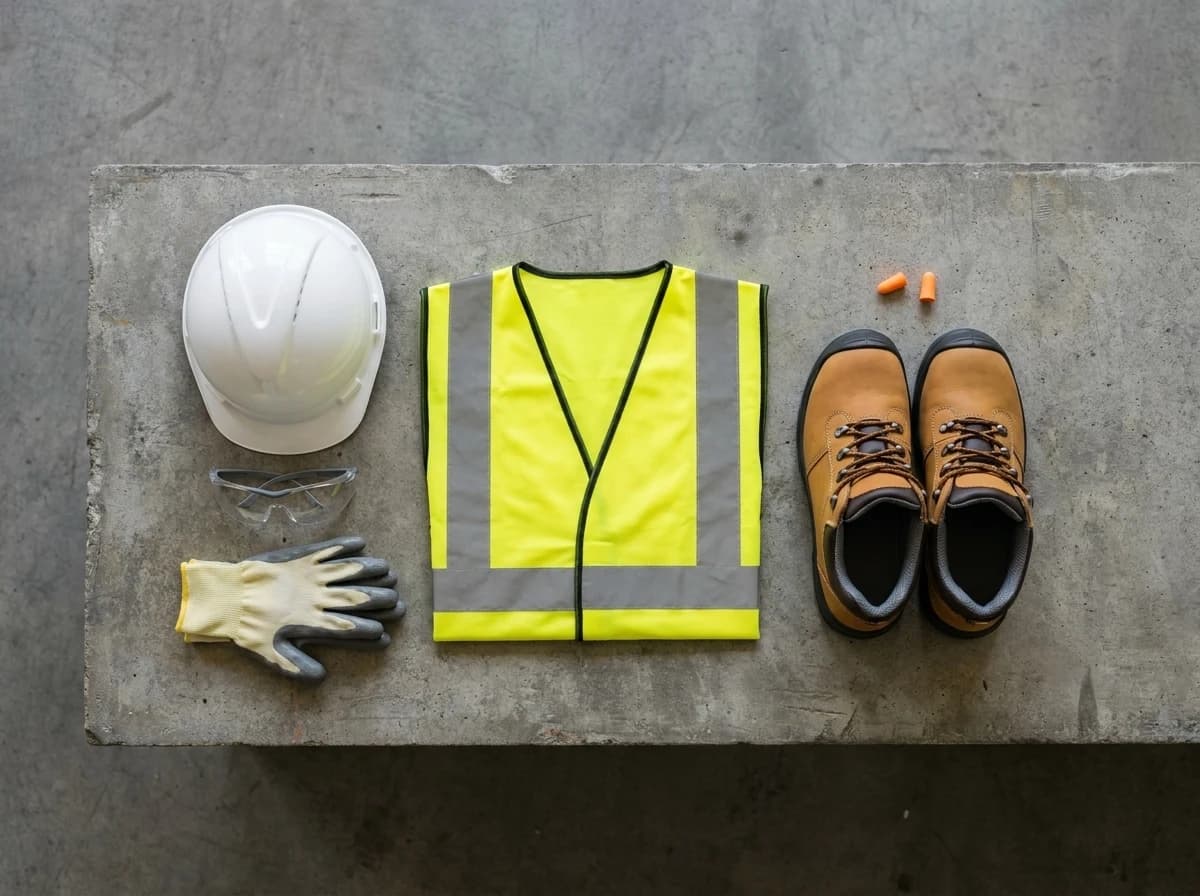
| PPE category | Typical baseline item | Procurement checks |
|---|---|---|
| Head protection | Hard hat or safety helmet | ANSI/ISEA Z89.1 or EN 397, electrical class, suspension, chin strap need |
| Eye protection | Safety glasses with side protection | ANSI Z87.1 or EN 166, anti-fog, anti-scratch, fit with respirators |
| Hand protection | General work gloves | EN 388 or ANSI/ISEA 105 performance level, coating, grip, size range |
| Foot protection | Safety boots or shoes | ASTM F2413 or EN ISO 20345, toe cap, puncture resistance, slip resistance |
| High visibility | Vest, shirt, or jacket | ANSI/ISEA 107 or EN ISO 20471, class, color, reflective layout |
| Hearing protection | Earplugs or earmuffs | NRR or SNR rating, compatibility with helmets and eyewear |
| Respiratory protection | Disposable or reusable respirator where needed | NIOSH or EN certification, fit testing needs, cartridge/filter availability |
Do not use the baseline package as a shortcut for high-risk tasks. It should be the entry layer, not the whole PPE program.
For example, a general laborer moving materials may need baseline PPE plus task-specific gloves. A roofer may need the same baseline layer plus a fall protection system and more suitable footwear. A worker cutting concrete may need the baseline layer plus respiratory protection, face protection, and hearing protection. An electrician may need a different head protection class, insulating gloves, and arc-related PPE.
For head protection specifications in particular, use the Type 1 vs Type 2 hard hats buyer guide before finalizing the impact direction requirement. Use the vented vs non-vented hard hats guide before splitting hot-weather and electrical crews, then use the types of hard hats for construction guide for brim style, chin straps, accessories, inspection, and replacement planning. If the order uses role colors, visitor stock, or color-coded packaging, use the hard hat color codes guide without confusing color with Type or Class. If the buying decision is whether to keep traditional hard hats or upgrade to helmet-style head protection, use the safety helmet vs hard hat comparison guide.
Add Task-Specific PPE By Trade And Exposure
Construction PPE becomes expensive when every worker receives every item. It becomes unsafe when every worker receives the same light-duty kit. The practical middle ground is role-based procurement.
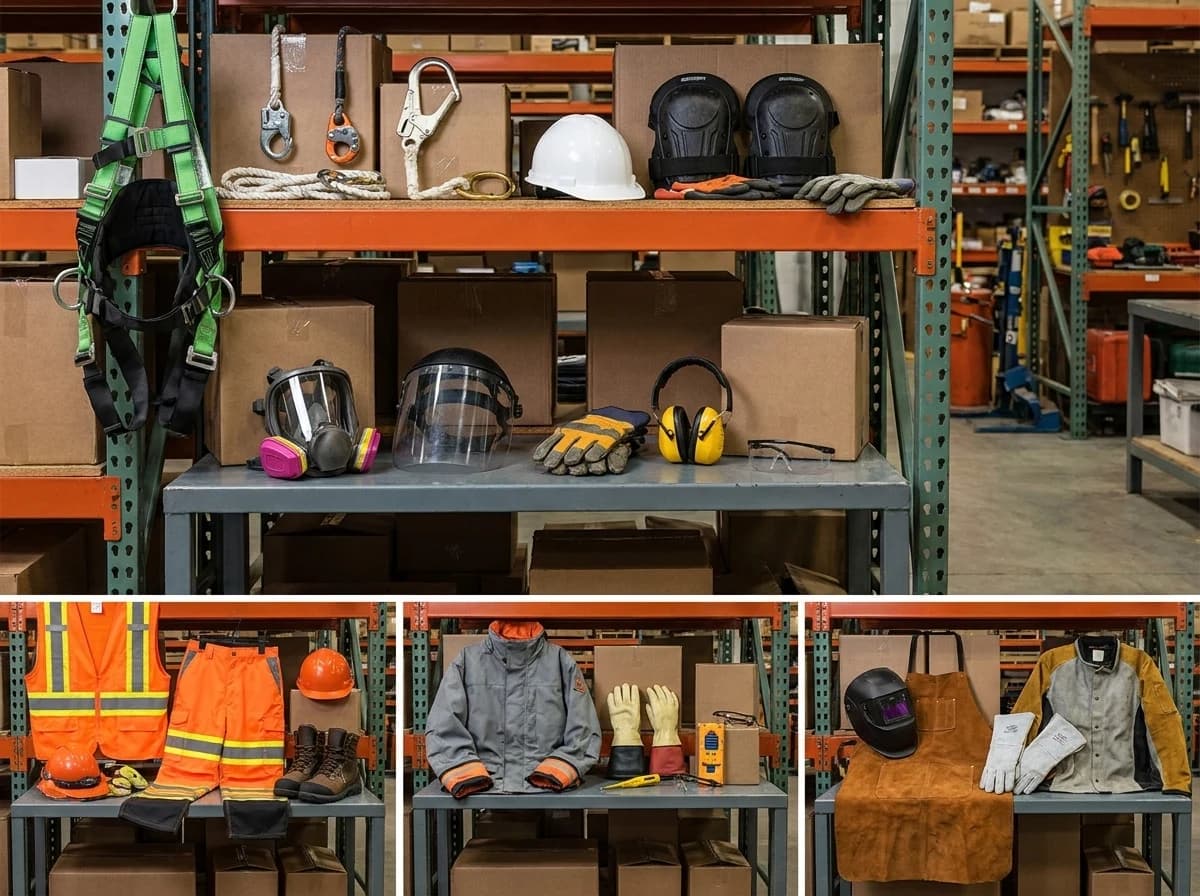
| Trade or task | Add-on PPE to consider | Buying risk to avoid |
|---|---|---|
| Roofing | Harness, lanyard or SRL, anchor connector, traction footwear, helmet with retention | Buying harnesses without a real anchor and connector plan |
| Scaffolding | Fall protection, helmet retention, high-grip gloves, safety footwear with ladder grip where available | Loose gloves or footwear that makes climbing less stable |
| Concrete and masonry | Cut/abrasion gloves, chemical-resistant gloves for wet cement, eye protection, respirator where silica exposure exists | Treating wet cement as normal dirt instead of a skin hazard |
| Grinding and cutting | Safety glasses plus face shield, hearing protection, cut gloves, respiratory protection when dust or fumes are present | Using a face shield as the only eye protection |
| Road and highway work | Class 2 or Class 3 hi-vis, hard hat, eye protection, hearing protection, suitable boots | Under-specifying visibility for night or high-speed traffic work |
| Electrical work | Class E head protection, insulating gloves where required, EH footwear, arc-rated PPE where needed | Treating electrical PPE as ordinary construction PPE |
| Demolition and renovation | Respiratory protection, goggles, cut gloves, hard hat, puncture-resistant footwear, coveralls where needed | Buying dust masks without evaluating actual respiratory exposure |
| Welding and hot work | Welding helmet, welding gloves, flame-resistant clothing, face and respiratory protection where needed | Using standard hi-vis or synthetic clothing near sparks |
Scaffold packages need more than a generic height-work add-on. Use the PPE for scaffolding and elevated platforms solution to define role-based harness, helmet retention, footwear, glove, and tool-tethering requirements before requesting prices.
This is where the Complete PPE solution for construction sites becomes useful. It gives the wider category structure. This procurement guide turns that structure into a buying process.
For roadwork, highway, paving, traffic-control, and bridge deck packages, use the PPE for road and bridge construction projects solution before finalizing crew kits.
Verify Standards Before You Compare Prices
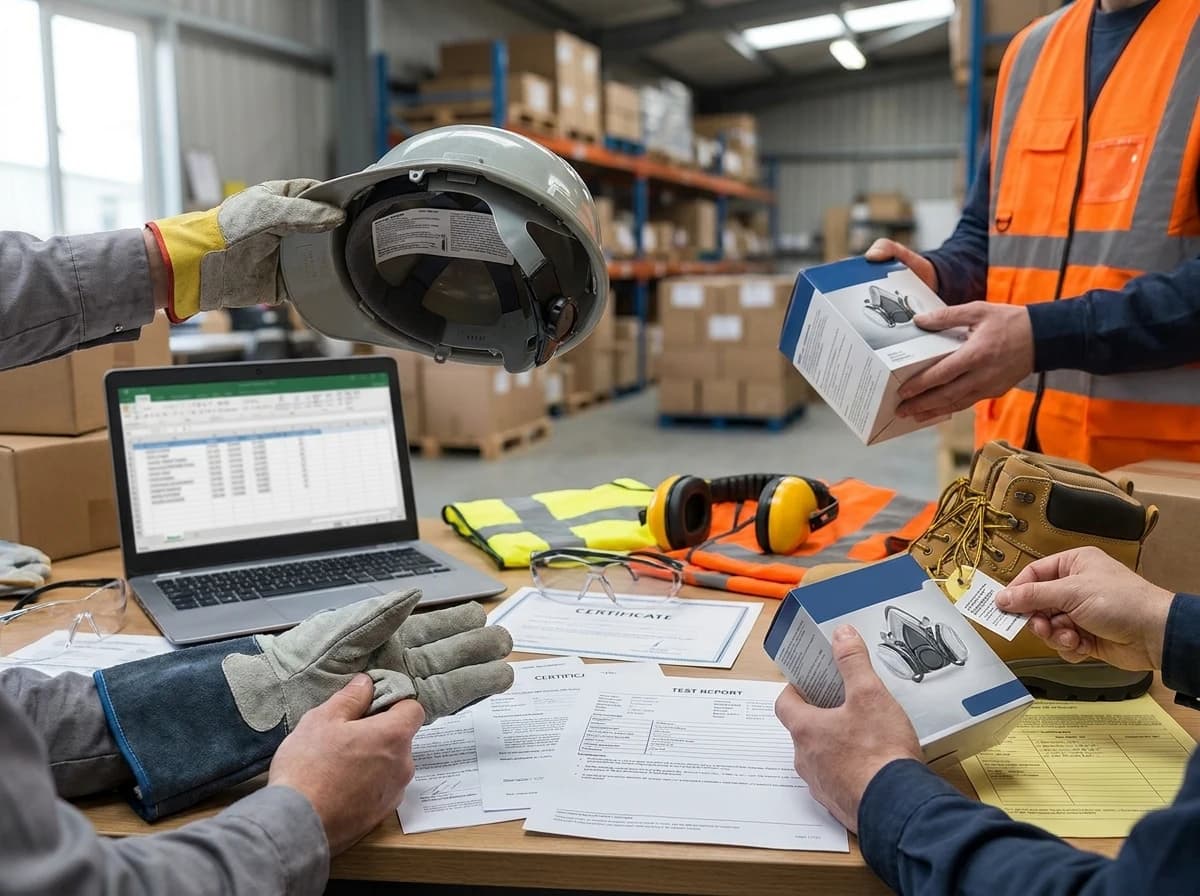
Price comparison only matters after the product meets the required standard. A cheaper item that cannot prove certification is not a saving. It is a compliance and liability risk.
For US construction projects, buyers commonly need to review:
- 29 CFR 1926.95 for general PPE criteria, employer payment, and fit expectations
- ANSI/ISEA Z89.1 for head protection
- ANSI/ISEA Z87.1 for eye and face protection
- ASTM F2413 for protective footwear
- NIOSH approval for respirators
- ANSI/ISEA 107 for high-visibility clothing
- ANSI/ISEA 105 for hand protection performance references
- ANSI/ASSP Z359 family standards for many fall protection components
For international or export projects, buyers may also need:
- CE marking under EU Regulation 2016/425
- EN 397 for industrial helmets
- EN 166 for eye protection
- EN 388 and EN 374 for protective gloves
- EN ISO 20345 for safety footwear
- EN ISO 20471 for high-visibility clothing
- EN 149, EN 140, EN 136, or related EN respiratory standards
- EN 361, EN 354, EN 355, EN 360, and EN 795 for fall protection systems
Do not accept a quote that only says "meets standard" without supporting documents. For bulk orders, ask for:
- product data sheets
- test reports or certificates where applicable
- declarations of conformity for CE-marked PPE
- NIOSH approval numbers for respirators
- user instructions
- marking photos or label examples
- shelf life or service life information
- replacement part availability
For the regulation-first side of this topic, use the OSHA PPE requirements for construction guide.
Account For The 2025 Proper-Fit Requirement
Bulk procurement often creates a fit problem because buyers want fewer SKUs. That may make the purchase order cleaner, but it can make the PPE program weaker.
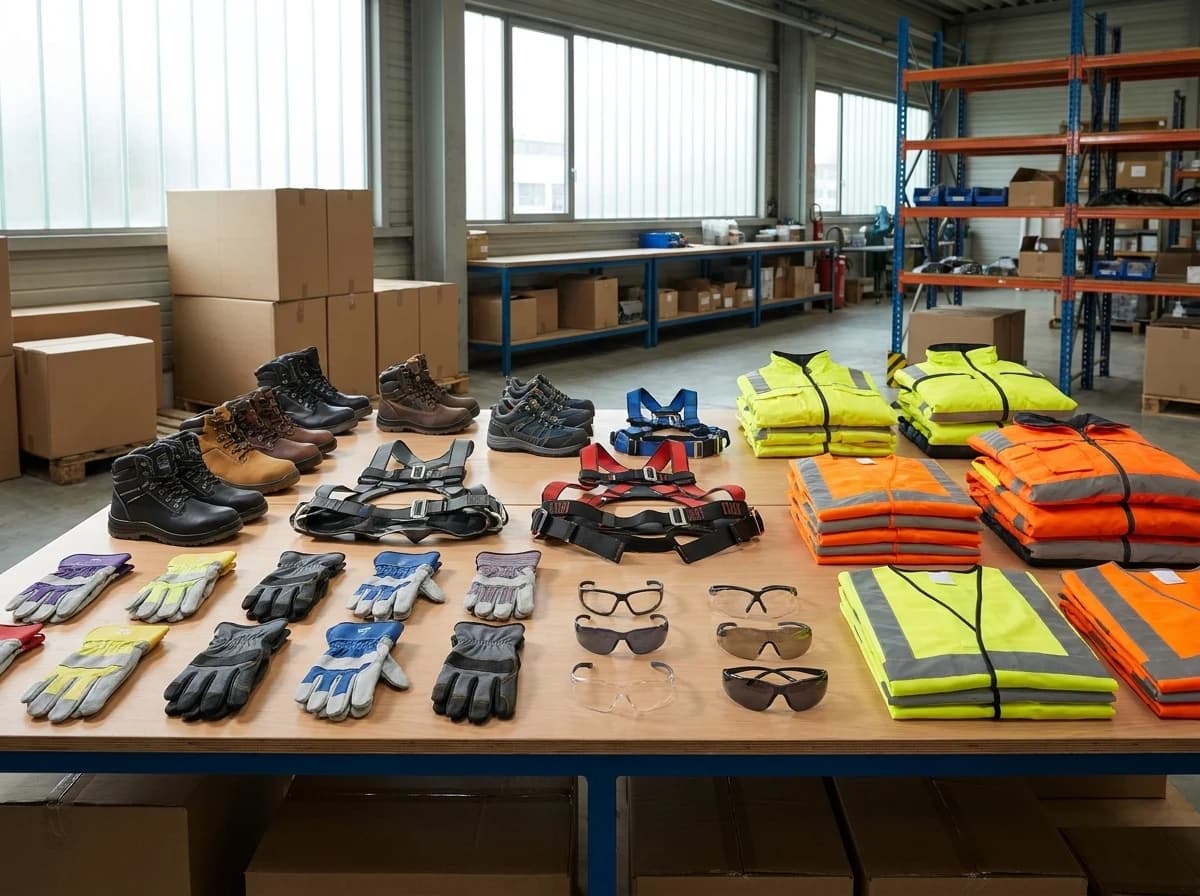
OSHA's updated construction PPE rule became effective on January 13, 2025. The revised language in 29 CFR 1926.95(c) requires PPE to be selected so that it properly fits each affected employee. For procurement teams, this means fit has to be planned before the order is placed.
Fit-sensitive PPE includes:
- full-body harnesses
- gloves
- safety footwear
- safety glasses and goggles
- respirators
- hard hats or helmets
- high-visibility garments worn over other clothing
- rainwear, coveralls, and thermal layers
A better bulk order usually includes:
- multiple glove sizes, not one default size
- footwear sizing that matches the actual workforce
- smaller and larger harness options
- eyewear options that fit different face shapes
- respirator models selected with fit testing in mind
- garments sized for seasonal layering
This is especially important for mixed workforces. PPE that is sized only around an "average" worker can leave smaller or larger workers with equipment that slips, gaps, restricts movement, or fails to protect correctly.
Decide What To Standardize And What To Localize
Standardization is useful, but not every PPE decision should be standardized at the same level.
Good items to standardize across a construction program:
- helmet color rules by role
- baseline safety glasses
- general work gloves for low-risk handling
- hi-vis garment class by traffic exposure
- standard boot requirements by site type
- issue labels, packaging, and reorder codes
- documentation required from suppliers
Items that often need local or task-level variation:
- cut-resistance level for gloves
- chemical glove material
- respirator type and filter/cartridge
- fall protection connection method
- electrical PPE class
- cold weather or rainwear specification
- anti-fog eyewear for humid or enclosed work
The rule is simple: standardize the process, not the hazard. Procurement can use the same approval workflow everywhere while still allowing the PPE itself to change by exposure.
Build A Quantity Plan That Includes Replacement Stock
Many PPE budgets are wrong because they only count the initial workforce. Construction PPE is consumed. Glasses scratch. Gloves wear out. Earplugs are disposable. Respirator filters load. Hi-vis garments fade and tear. Harnesses can be removed from service after a fall event or failed inspection.
Start with three numbers:
- active workers who need the item
- expected replacement interval
- project duration or reorder cycle
Then add reserve stock for damage, onboarding, visitors, subcontractor gaps, weather changes, and inspection failures.
| PPE item | Initial order logic | Replacement planning |
|---|---|---|
| Safety glasses | At least one per worker, plus spares | Replace when scratched, damaged, or poorly fitting |
| Work gloves | Multiple pairs per worker depending on task | High-turnover item; plan by trade and task intensity |
| Earplugs | Disposable stock by shift and exposure | Replenish continuously where noise exposure exists |
| Earmuffs | One per assigned worker or shared controlled stock | Replace cushions when worn, cracked, or hardened |
| Hard hats | One per worker plus visitor/spare stock | Replace after impact, damage, or manufacturer service life |
| Hi-vis vests | One or more per worker by season and shift | Replace when faded, torn, or reflective material fails |
| Safety footwear | Usually worker-specific issue | Manage by role, fit, and replacement policy |
| Harnesses | Worker-specific or controlled issue by crew | Inspect before use; remove after fall arrest or failed inspection |
| Respirators | Worker-specific for tight-fitting reusable models | Replace filters/cartridges by use conditions and program rules |
For high-turnover categories like gloves, safety glasses, and disposable hearing protection, low unit price can be misleading. A product that fails twice as fast may cost more over the project than a slightly more expensive product with better durability.
Compare Suppliers On More Than Unit Price
A construction PPE supplier is not just a source of products. In a bulk program, the supplier affects compliance, replacement speed, worker acceptance, and how much time your team spends fixing procurement problems. For contractor PPE supplier bulk orders, compare suppliers on their ability to keep the same approved products, size curves, documents, and packing rules available after the first shipment.
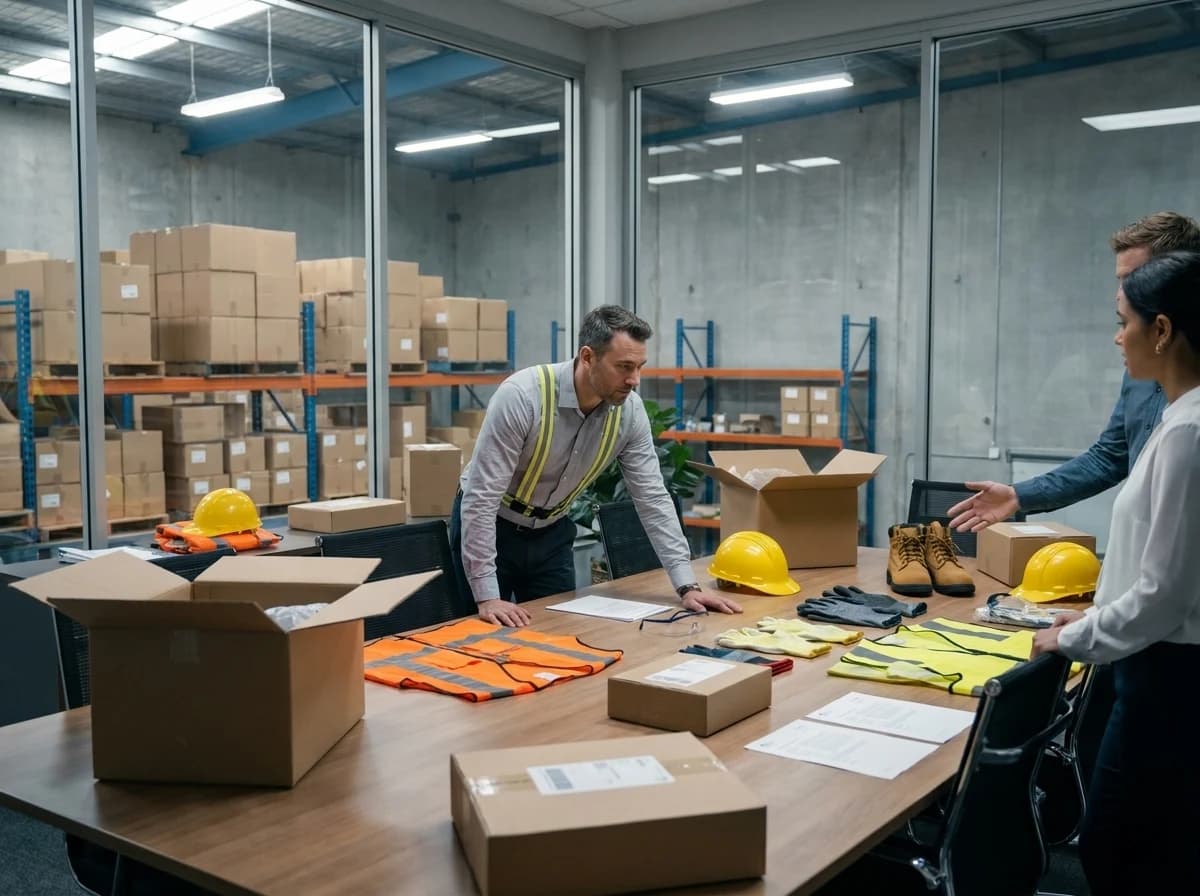
Use this supplier scorecard before selecting a bulk PPE vendor:
| Supplier factor | What to ask | Why it matters |
|---|---|---|
| Certification proof | Can you provide product certificates, label photos, and test reports? | Reduces risk of non-compliant PPE entering the site |
| Category range | Can you support head, eye, hand, foot, hi-vis, respiratory, and fall protection? | Simplifies purchasing and repeat orders |
| Size coverage | What sizes are available by category? | Supports OSHA proper-fit expectations |
| Bulk packaging | Can cartons be labeled by trade, size, site, or phase? | Reduces issue errors on site |
| Repeatability | Will the same model be available for reorders? | Prevents uncontrolled product substitutions |
| Lead time | What is normal lead time and rush lead time? | Protects project schedules |
| Documentation | Can documents be supplied before shipment? | Helps safety teams approve items early |
| Customization | Can logo, color, packaging, or kit labeling be supported? | Useful for contractors and distributors |
| Replacement support | How are damaged, wrong-sized, or missing items handled? | Reduces downtime and administrative friction |
The cheapest quote can still be the most expensive option if it creates delays, wrong sizing, unverified certification, or repeated substitutions.
Use Kits Carefully
PPE kits can be useful when they are built around a real work scenario. They become a problem when they hide mismatched items inside a convenient bundle.
Good kit examples:
- visitor PPE kit: hard hat, safety glasses, hi-vis vest, disposable earplugs
- general site-entry kit: hard hat, glasses, gloves, hi-vis vest
- roofing crew kit: harness, lanyard or SRL, anchor connector, helmet, gloves
- concrete cutting kit: eye protection, face shield, respirator, hearing protection, gloves
- roadwork kit: Class 3 hi-vis, hard hat, safety glasses, hearing protection, gloves
Before approving a kit, check:
- every item matches the task
- sizes can vary inside the kit
- replacement items can be ordered separately
- certification documents are available for each component
- packaging does not make inspection harder
Do not use a kit to avoid hazard assessment. Use it to make a good hazard assessment easier to execute.
Manage Packaging, Labeling, And Site Issue
Bulk PPE buying does not end when the order ships. The products still have to reach the right workers in the right condition.
For large orders, ask suppliers about:
- carton labels by PPE category
- carton labels by size
- crew or trade-based packaging
- project name or site code labeling
- packing lists that separate baseline PPE from task-specific PPE
- barcode or SKU consistency for reorder control
- user instructions included with the relevant product
On site, keep the issue process simple:
- Receive and inspect cartons against the purchase order.
- Separate PPE by category and size.
- Quarantine items with missing labels, missing documents, or visible damage.
- Issue fit-sensitive PPE to named workers where appropriate.
- Keep spare stock visible and controlled.
- Document replacement for high-risk categories such as fall protection and respiratory protection.
This is not paperwork for its own sake. It prevents the common problem where the warehouse has stock, but supervisors cannot find the right size or category when the work changes.
Category Notes For Bulk Construction PPE
Head protection
Check impact type, electrical class, suspension quality, chin strap need, color rules, and compatibility with earmuffs, face shields, and headlamps. If your crews work near electrical exposure, make sure helmet class is not treated as a cosmetic choice.
Eye and face protection
Safety glasses are a high-loss item. Buy enough spares, but do not reduce the specification too far. Anti-fog performance, side protection, face shape, and compatibility with respirators matter more than many buyers expect. Use the construction eye and face protection guide when this category is a weak point.
Hand protection
Gloves are usually the category where standardization goes wrong first. One glove rarely fits every task. Separate general handling, cut exposure, wet cement, welding, chemical exposure, cold weather, and electrical work. Use the construction gloves selection guide for deeper task matching.
Foot protection
Footwear should be matched to toe protection, puncture resistance, slip resistance, waterproofing, electrical hazard needs, and walking surface. Bulk buying also has to account for fit and worker-specific issue. Use the construction safety footwear guide before standardizing boot requirements.
Fall protection
Fall protection is a system, not a single product. Harness, lanyard, SRL, anchor, connector, clearance, rescue, and inspection requirements have to work together. Use the fall protection PPE for construction sites guide before ordering harnesses in volume.
Respiratory protection
Respirators are not ordinary consumables when they are required for hazardous exposure. Tight-fitting respirators may trigger medical evaluation, fit testing, training, maintenance, and written program requirements under OSHA rules. Do not buy respirators in bulk until the exposure and program requirements are clear.
High-visibility clothing
Visibility buying depends on traffic exposure, light conditions, garment class, garment color, and whether workers need flame-resistant or weatherproof layers. For roadwork and night work, basic vests may not be enough.
Use the high-visibility clothing for construction workers guide before finalizing ANSI/ISEA 107 Class 2 vs Class 3, EN ISO 20471 requirements, color strategy, reflective layout, rainwear, FR needs, or replacement stock.
A Practical Bulk PPE Request-For-Quote Template
A strong RFQ saves time because it forces suppliers to answer the questions that matter before price negotiation starts.

Include these fields:
- project name and delivery location
- target market or certification market
- worker count by trade
- baseline PPE list
- task-specific PPE list
- required standards and certificates
- size range by category
- expected first shipment quantity
- expected reorder cycle
- packaging and labeling requirements
- logo or customization requirements
- delivery deadline
- replacement and return expectations
- required documents before production or shipment
Example RFQ language:
We are sourcing construction PPE for a multi-trade project. Please quote by category and by size where applicable. Include certification documents, available size range, MOQ, lead time, packaging options, replacement availability, and any model substitutions that may occur during repeat orders.
This kind of RFQ makes the supplier compare the same requirements instead of quoting whatever is easiest to sell. For a supplier-ready format, use the Construction PPE RFQ Template, then attach size notes from the PPE Size & Standards Planning Sheet.
Common Mistakes In Bulk Construction PPE Buying
Buying by lowest unit price
Low price matters, but only after the item meets the hazard, standard, fit, and durability requirement. A cheaper glove that wears out twice as fast is not cheaper. A cheaper respirator without the right approval is not equivalent. A cheaper harness without clear certification and instructions is not acceptable.
Treating every worker as the same user
Construction crews do different work. A scaffolder, electrician, concrete worker, welder, road worker, and site visitor do not need the same PPE package.
Ignoring fit until delivery
Fit problems are harder to fix after shipment. The right time to solve sizing is during RFQ and sample approval.
Forgetting replacement stock
If replacement PPE is not planned, supervisors will delay work, reuse damaged equipment, or improvise. All three are bad outcomes.
Accepting vague certification language
"CE standard," "ANSI quality," and "OSHA approved" are not enough. Ask for the actual standard, marking, document, and product model.
Buying task PPE without checking compatibility
A good glove can make a small connector difficult to operate. A rain jacket can cover a harness D-ring. A face shield can interfere with a respirator. PPE has to work as a system on the worker.
Bulk Construction PPE Purchasing Checklist
Use this checklist before placing the order:
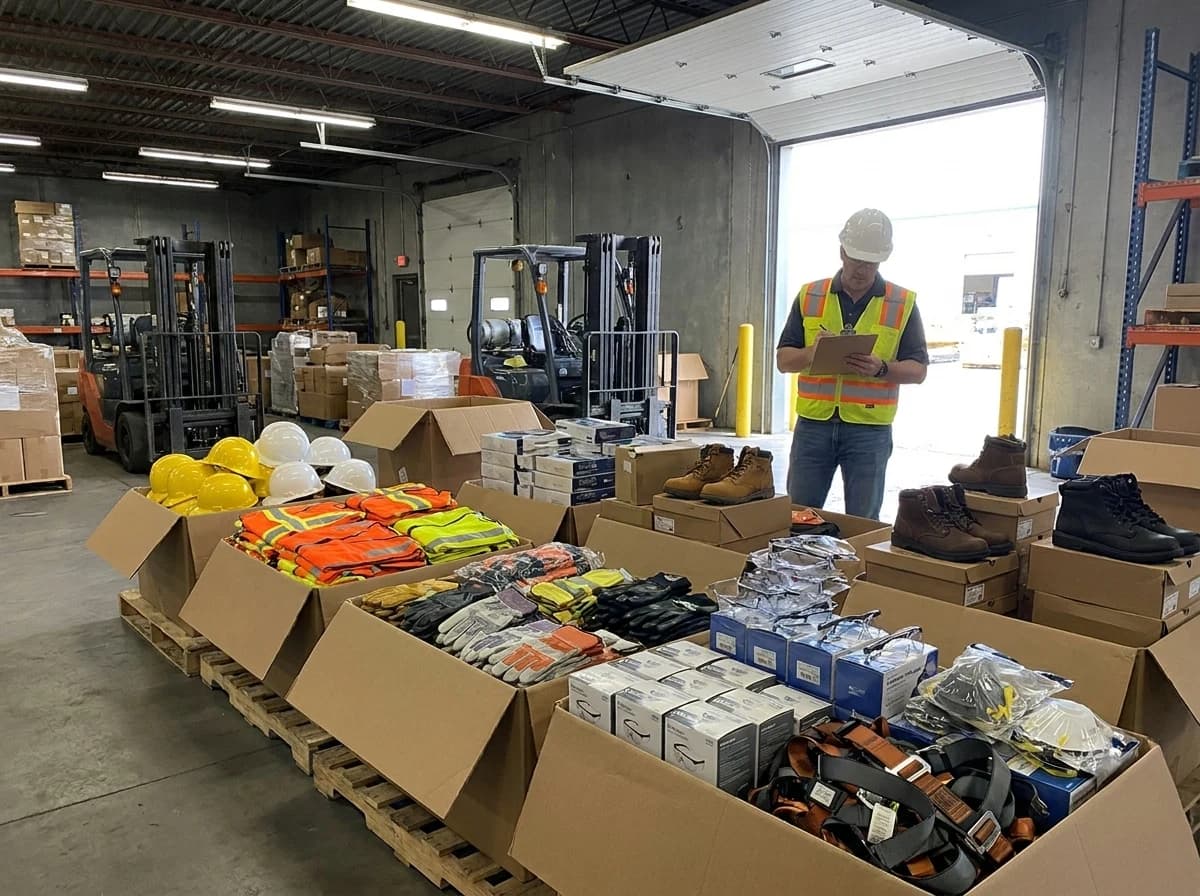
- The site scope is defined by trade, phase, and hazard.
- Baseline PPE and task-specific PPE are separated.
- Required standards are listed by category.
- Supplier documents have been requested before shipment.
- Size ranges are confirmed for gloves, harnesses, footwear, garments, eyewear, and respirators.
- Fit-sensitive PPE has a worker-level issue plan where needed.
- Replacement stock is planned for consumables and high-wear items.
- Fall protection is purchased as a system, not just a harness.
- Respirator purchases align with the respiratory protection program.
- Packaging and carton labels match how PPE will be issued on site.
- Reorder SKUs and substitution rules are clear.
- Related site documents, training, and inspection routines are ready.
If this list feels too broad, return to the construction PPE checklist and confirm the field-level requirement first. If the question is which categories belong in the total site package, use the construction PPE solution page.
Frequently Asked Questions
What PPE should be included in a bulk construction PPE order?
Most bulk construction PPE orders start with hard hats or helmets, safety glasses, gloves, safety footwear, high-visibility clothing, and hearing protection. Task-specific orders may add respirators, face shields, fall protection systems, chemical gloves, welding PPE, electrical PPE, rainwear, or coveralls.
How do I buy bulk safety equipment for a new construction crew?
Build the order from worker roles and hazards first. For a new construction crew, list the trade mix, site-entry PPE, task-specific PPE, standards, size ranges, replacement stock, delivery country, packaging needs, and required documents before asking suppliers for price. Then send the same RFQ to each supplier so the quotes are comparable.
What is the best bulk PPE kit for contractors?
The best bulk PPE kit for contractors is modular. It starts with a baseline kit for site entry - head protection, eye protection, hi-vis, gloves, and safety footwear requirements - then adds trade modules for roadwork, scaffolding, demolition, electrical work, concrete, welding, respiratory exposure, or fall protection. A single generic kit is rarely the safest or cheapest long-term option.
How do I choose a bulk PPE supplier for construction?
Choose a supplier that can prove certification, support the size range you need, provide consistent models for repeat orders, package products clearly, and supply replacement stock without long delays. Unit price should be compared only after those requirements are met.
What should I ask a contractor PPE supplier for bulk orders?
Ask for certificates or test reports, product label photos, available size ranges, sample policy, MOQ, lead time, carton labeling, replacement availability, accepted substitutions, and whether the supplier can pack by worker, trade, kit type, or project phase. For repeat contractor orders, packaging and replacement support can matter as much as the first unit price.
Should construction PPE be bought as kits?
Kits are useful for visitors, site-entry PPE, and defined task packages. They are risky when they hide generic items inside a bundle. Every kit should still be checked by hazard, size, standard, and compatibility.
How much replacement PPE should a construction site keep?
The right reserve depends on workforce size, project length, work intensity, and PPE category. High-turnover items such as gloves, safety glasses, earplugs, and disposable respirators need more frequent replenishment. Fit-critical or high-risk items such as harnesses and reusable respirators need controlled spare stock.
Does OSHA require employers to pay for PPE?
Under 29 CFR 1926.95(d), employers generally must provide required PPE at no cost to employees, subject to specific exceptions such as non-specialty safety-toe footwear and non-specialty prescription safety eyewear when off-site use is allowed.
What is the biggest mistake when buying construction PPE in bulk?
The biggest mistake is buying one generic package for every worker. Bulk procurement should standardize the buying process while still matching PPE to the worker's task, hazard, fit, and work environment.
Build A Repeatable Construction PPE Buying System
Bulk PPE purchasing works best when it connects safety, procurement, and site operations. Safety defines the hazard. Procurement verifies standards, cost, lead time, and supplier reliability. Site teams confirm fit, issue control, replacement, and day-to-day use.
Start with the Complete PPE solution for construction sites to map the full PPE category structure. Use the OSHA PPE requirements for construction guide to confirm the compliance side. Use the construction PPE checklist for field execution. Then use this procurement guide to turn those decisions into a repeatable buying process.
- View the construction PPE solution page
- Read the OSHA construction PPE compliance guide
- Download the Construction PPE RFQ Template
- Open the AI Quote Generator
- Request a bulk PPE quote
Related Guides On Laifappe.com
- Complete PPE solution for construction sites
- OSHA PPE requirements for construction
- Construction PPE checklist
- Types of hard hats for construction
- Type 1 vs Type 2 hard hats
- Safety helmet vs hard hat for construction
- High-visibility clothing for construction workers
- Hearing protection for construction workers
- Respiratory protection for construction dust and fumes
- Fall protection PPE for construction sites
- PPE for road and bridge construction projects
- Construction safety footwear guide
- Construction gloves selection guide
- Eye and face protection for construction sites
Sources: OSHA 29 CFR 1926.95, OSHA Personal Protective Equipment in Construction final rule effective January 13, 2025, OSHA Subpart E construction PPE guidance, OSHA respiratory protection requirements under 29 CFR 1910.134 as incorporated for construction through 29 CFR 1926.103, EU Regulation 2016/425, ANSI/ISEA Z89.1, ANSI/ISEA Z87.1, ANSI/ISEA 107, ASTM F2413, NIOSH respirator approval guidance, and relevant EN PPE standards including EN 397, EN 166, EN 388, EN ISO 20345, EN ISO 20471, EN 149, and EN 361/354/355/360/795.
Related PPE
Source the PPE covered in this guide
Move from research to a buyer shortlist with the matching solution page, category paths, selected PPE options, and RFQ next steps.