Buyer next step
Turn this guide into a sourced PPE shortlist with standards, quantities, and role-based kit notes.
Planning tools
Use these tools before moving from this guide into quantities, sizing, labels, or RFQ planning.
Short answer: True—when Class 2 high-visibility clothing is the worker's visibility-control garment, it must remain visible from the outside. On a trailer yard, work zone, equipment route, loading area, or traffic-adjacent construction site, a jacket, hoodie, or rain shell should not hide the compliant garment. Use suitable certified hi-vis outerwear or move the compliant layer outside, subject to the employer's hazard assessment and site rules.
Do not treat “Class 2 must always be the outermost layer” as a universal standalone OSHA sentence. In temporary traffic-control zones within a highway right-of-way, Section 6C.05 of the current FHWA MUTCD — 11th Edition with Revision 1, dated December 2025 — requires Performance Class 2 or 3 apparel and assigns class selection to the employer-designated person responsible for worker safety. OSHA separately requires warning garments for flaggers. On other construction and trailer-yard sites, the employer's hazard assessment and site policy determine the required class and garment setup.
The buying rule is simple: either the outer garment must itself be suitable certified hi-vis, or the selected Class 2 or Class 3 garment must remain clearly visible from the front, back, and sides. Harnesses, tool belts, radios, and backpacks should be assessed with the garment as a system so they do not defeat its intended visibility. Do not buy high-vis workwear only by color or vest type. The RFQ should name the standard, type/class, garment format, color, reflective layout, size range, weather layer, FR or arc need, washing durability, and replacement stock.
Use this article for high-visibility PPE selection. For the full construction PPE structure, start with the Complete PPE solution for construction sites. For the regulatory side across PPE categories, use OSHA PPE requirements for construction. For site issue checks, use the construction PPE checklist. For purchasing workflow, use the bulk construction PPE procurement guide. For road crews, bridge crews, night shifts, and low-visibility work, connect this guide to PPE for road and bridge construction projects and night construction and low-visibility PPE.
For surface mines, quarries, haul roads, crusher yards, and mixed pedestrian-equipment zones, use the mining and quarrying PPE solution to combine visibility garments with head, respiratory, hearing, eye, hand, and foot protection.
Class 2 Hi-Vis Outermost-Layer Rule: Quick Answer
True in the practical visibility sense. If a worker is relying on Class 2 high-visibility clothing for a trailer yard, work zone, traffic route, equipment route, or loading area, the compliant hi-vis layer must stay visible from the outside. A Class 2 vest or shirt does not perform as intended if a raincoat, jacket, or hoodie hides it. Equipment worn over the garment must also be checked so the required fluorescent and retroreflective areas remain effective.
The practical rule for supervisors is simple: the outside layer should either be suitable certified hi-vis, or the selected hi-vis garment must remain clearly exposed from the front, back, and sides. The exact class and configuration still come from the applicable work-zone rule, employer hazard assessment, and site policy. If the site requires jackets, rainwear, cold-weather gear, or harnesses, the procurement plan should include compatible hi-vis outerwear or a clear layering procedure.
This is the direct answer to the common safety-check question: "Class 2 high visibility clothing must be the outermost layer of clothing when on the trailer yard." The answer is true when that garment is the layer being used for visibility control. If the outer garment is a certified Class 2 or Class 3 hi-vis jacket, rain shell, or garment system, the visibility requirement can still be met because the certified layer remains on the outside.
| Situation | Correct action | Common failure |
|---|---|---|
| Worker adds a jacket over a Class 2 vest | Use a certified hi-vis jacket or wear the vest over the jacket if site rules allow it | Dark jacket covers the reflective tape |
| Worker adds rainwear | Use ANSI/ISEA 107 or EN ISO 20471 hi-vis rainwear | Clear or dark rainwear reduces visibility |
| Worker wears a fall harness | Check that fluorescent material and reflective tape remain visible | Harness webbing blocks the main reflective pattern |
| Trailer yard, loading area, or equipment route | Keep Class 2 or higher hi-vis visible for the full shift | Vest is removed, covered, or too dirty to work |
| Work zones with jackets or hoodies | Move the certified hi-vis layer outside or issue certified hi-vis outerwear | Warm clothing hides the compliant garment |
| Night work or high-speed traffic | Assess whether Class 3 or a certified garment system is required by the work-zone plan | Basic sleeveless vest is treated as enough |
For a bulk order, write this into the RFQ: "Hi-vis garments must remain visible as the outermost work layer; provide certified outerwear options for rain, cold weather, and Class 3 exposure." Use the Construction PPE RFQ Template if you need a supplier-ready format.
Construction Hi-Vis Quick Answer
| Construction exposure | Recommended starting point | Buyer note |
|---|---|---|
| General building site with trucks, cranes, forklifts, telehandlers, or loaders | ANSI/ISEA 107 Type R Class 2 | Treat Class 2 as the normal baseline when workers share space with mobile equipment. |
| Roadwork, paving, bridge work, utility work near traffic | Type R Class 2 or Class 3 | Increase to Class 3 when speed, traffic proximity, lighting, or role risk is higher. |
| Flaggers, signal persons, night work, poor weather, high-speed zones | Type R Class 3 garment system | A basic vest may not be enough; specify sleeves, pants, jacket, rainwear, or certified garment combinations. |
| Export projects or CE/EN procurement | EN ISO 20471 Class 2 or Class 3 | Ask for label photos, declaration/certificate reference, and washing-cycle durability. |
| Welding, asphalt heat, flame, or arc exposure | FR or arc-rated hi-vis where required | Do not assume ordinary synthetic hi-vis is safe around sparks, heat, or electrical exposure. |
Why High-Visibility Clothing Matters On Construction Sites
High-visibility clothing is primarily a struck-by control. It helps workers stand out from the background so equipment operators, truck drivers, crane spotters, forklift drivers, supervisors, and other workers can see them sooner.
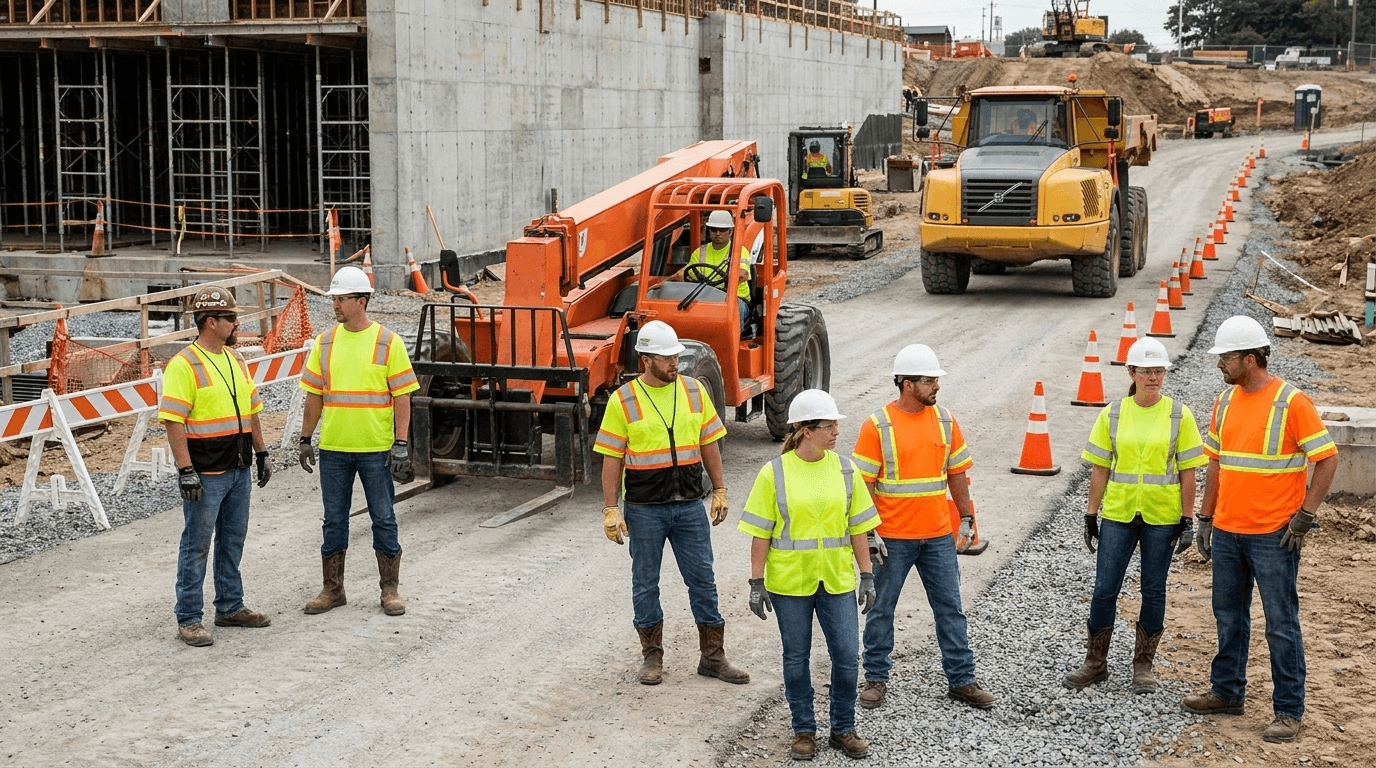
Construction visibility risk is common in:
- road construction and highway work zones
- bridge, paving, asphalt, and utility work
- building sites with trucks, cranes, loaders, telehandlers, forklifts, and dumpers
- night shifts, early-morning starts, and low-light winter work
- dusty demolition, concrete cutting, excavation, and earthmoving
- temporary traffic-control zones
- laydown yards, loading areas, and gate access points
- mixed contractor sites where visitors and subcontractors move through active work areas
The key point is that high-vis clothing is not only for road crews. Any construction site with moving vehicles, heavy equipment, poor sight lines, or low-light conditions needs a deliberate visibility plan.
That plan should answer four practical questions:
- Who needs high-visibility clothing before entering the site?
- What performance class is required for each role or zone?
- Which garments remain visible after layering, rain, dirt, and wear?
- How will supervisors replace faded or damaged garments before they stop working?
What OSHA And ANSI Require For Construction Hi-Vis
OSHA's construction signaling rule, 29 CFR 1926.201, requires flaggers to wear warning garments and says flagger signaling and warning garments must conform to the MUTCD requirements incorporated by reference. OSHA has also stated in highway and roadway construction interpretation guidance that workers exposed to public traffic or construction vehicles and equipment need high-visibility garments as protection from traffic hazards.
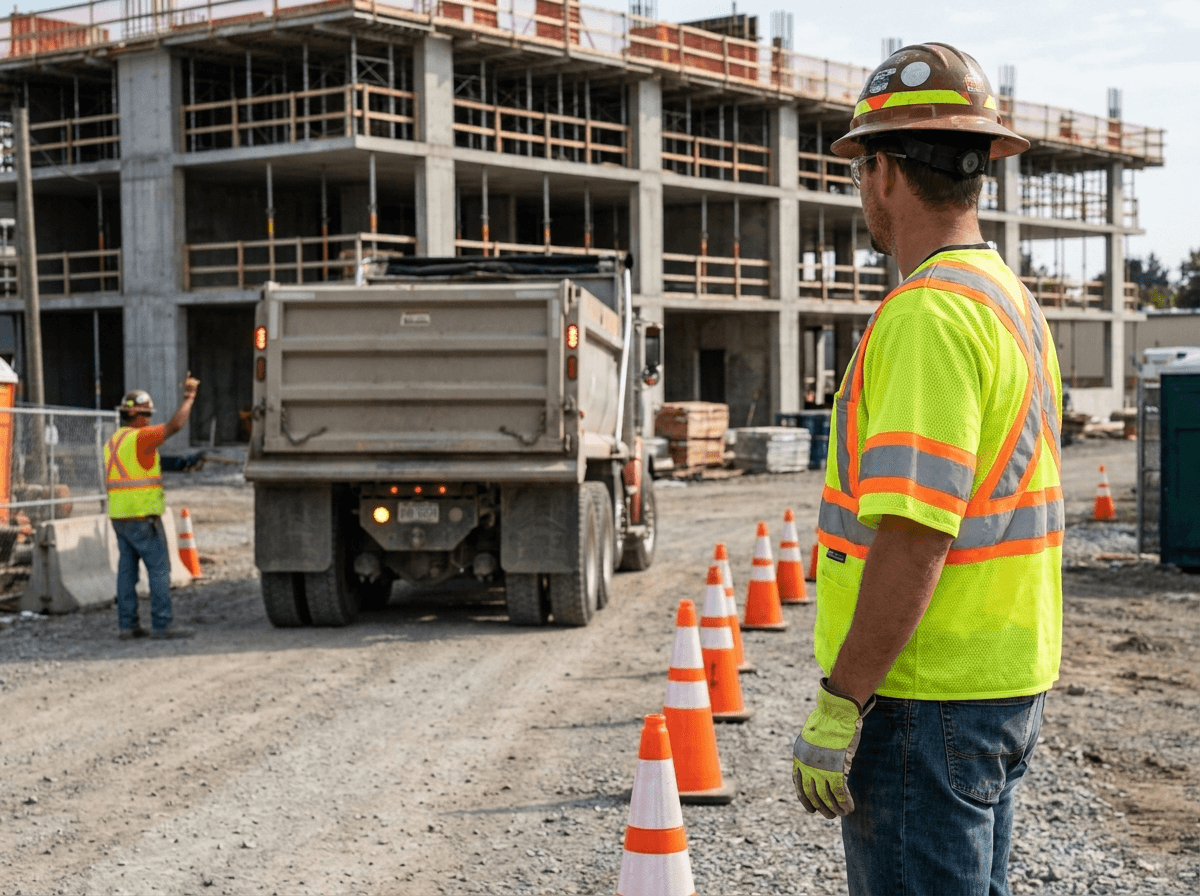
In practical terms, construction buyers should treat high-visibility clothing as required whenever workers are exposed to:
- public road traffic
- site haul trucks, dump trucks, loaders, rollers, graders, cranes, telehandlers, or forklifts
- reversing vehicles or blind spots
- night work, low-light work, or poor weather visibility
- temporary traffic-control zones
- mobile equipment operating near pedestrians
For US construction purchasing, the main consensus standard is ANSI/ISEA 107. The standard classifies high-visibility safety apparel by expected use type and performance class. A purchase order should not only say "safety vest." It should specify the intended type and class.
A stronger RFQ line looks like this:
High-visibility vest or shirt for construction traffic exposure, ANSI/ISEA 107 Type R, Performance Class 2 minimum; Class 3 required for night highway work, high-speed traffic exposure, and high-risk flagging roles.
For global projects, add EN ISO 20471 to the specification where CE/EN compliance is required.
ANSI/ISEA 107 Types And Classes Explained
ANSI/ISEA 107 separates high-visibility apparel by both type and performance class.
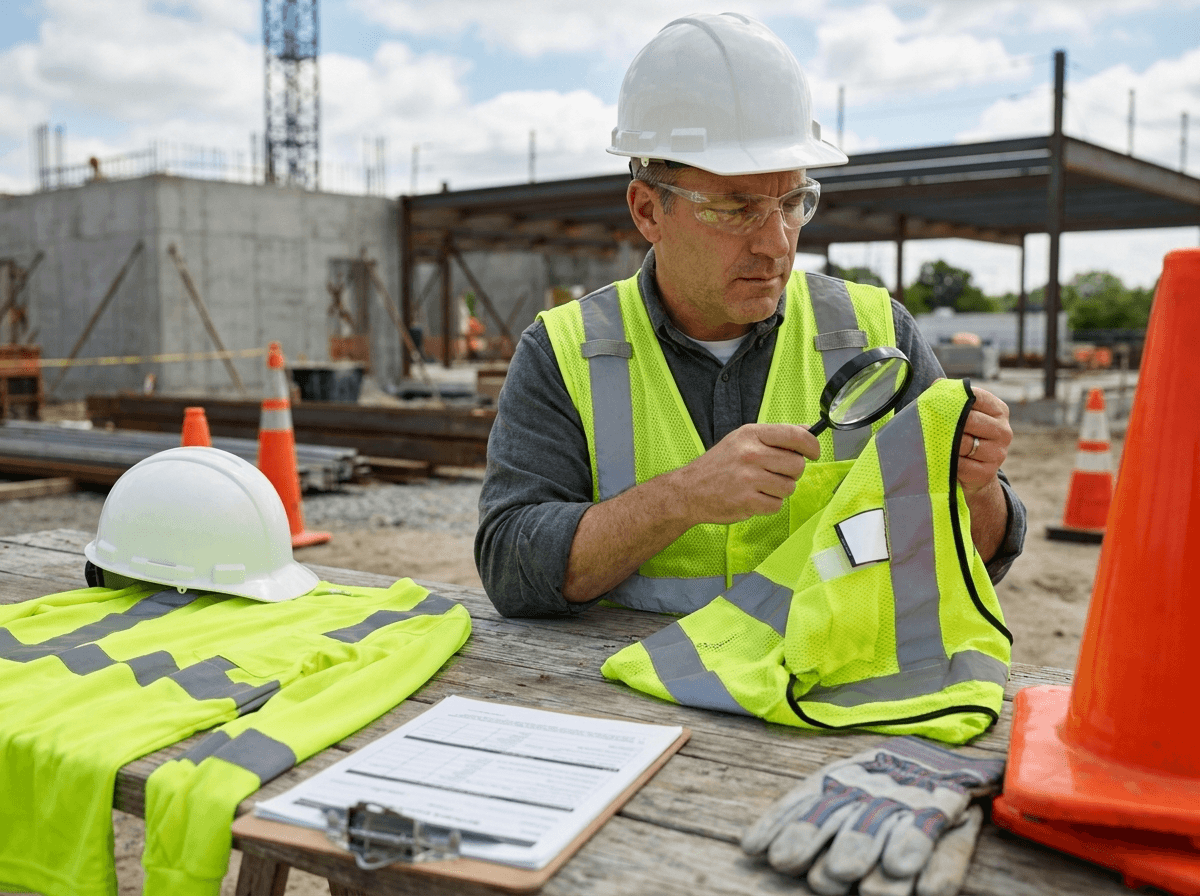
The type describes the use environment:
| ANSI/ISEA 107 type | Typical setting | Construction relevance |
|---|---|---|
| Type O | Off-road use | Useful for some controlled site areas away from roadway traffic |
| Type R | Roadway and temporary traffic-control zones | Most relevant for construction roadwork, utility work, and traffic-adjacent crews |
| Type P | Public safety | Mainly for emergency responders and public safety workers |
The class describes the amount and layout of visible material:
| Performance class | Practical meaning | Typical construction use |
|---|---|---|
| Class 1 | Lowest recognized visibility level | Low-risk off-road areas with slow equipment and clear separation |
| Class 2 | More visible material than Class 1 | Common minimum for general construction traffic exposure |
| Class 3 | Highest visibility level with more body coverage | Highway work, night work, high-speed traffic, complex equipment zones |
For construction, Class 2 is often the practical baseline, while Class 3 should be used for higher-risk traffic exposure. A Class 1 vest is not enough for most active construction traffic zones.
The class is not just a label. It affects garment design, fluorescent background area, retroreflective material, and whether sleeves or additional body coverage are needed. That is why some sites move from vests to hi-vis shirts, jackets, coveralls, or vest-and-pant systems for higher-risk work.
EN ISO 20471 Classes For International Projects
For projects that require European or international PPE documentation, EN ISO 20471 is the key high-visibility clothing standard. It also uses three classes based on minimum visible material area and garment design.
| EN ISO 20471 class | Visibility level | Typical use |
|---|---|---|
| Class 1 | Lowest level | Low-risk environments with limited vehicle movement |
| Class 2 | Medium level | General construction sites, yard work, moderate traffic exposure |
| Class 3 | Highest level | Roadwork, night work, high-speed traffic, poor visibility, high-risk mobile equipment zones |
EN ISO 20471 Class 3 normally requires more body coverage than a basic vest. A single sleeveless vest may not reach Class 3 on its own. Buyers often need a jacket, long-sleeve shirt, coverall, or certified garment combination.
For export procurement, ask suppliers for:
- declaration of conformity
- CE marking information where applicable
- standard and class shown on product label
- test report or certificate reference
- washing-cycle durability claim
- reflective material and fluorescent fabric specification
- photos of labels and packaging before shipment
Do not assume that a bright yellow garment is EN ISO 20471 certified. Certification depends on tested material, garment design, reflective layout, label information, and compliance documentation.
Class 1, Class 2, Or Class 3: Which One Fits The Job?
The right class depends on exposure, not job title. A general laborer near live traffic may need higher visibility than a supervisor inside a controlled indoor area.
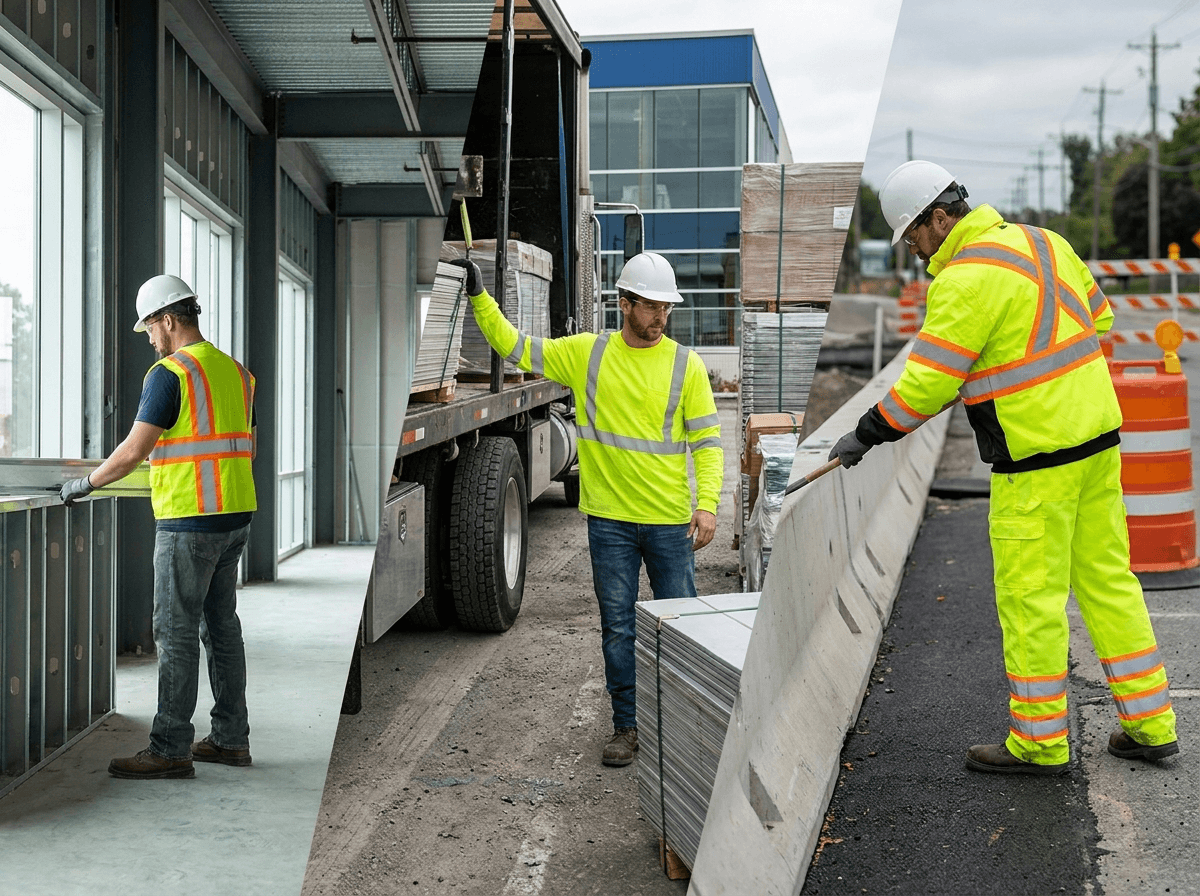
Use this practical selection table:
| Construction exposure | Suggested hi-vis level | Why |
|---|---|---|
| Controlled indoor work with no vehicle exposure | Not always required, or Type O/Class 1 where site policy requires visibility | Low struck-by visibility exposure |
| General building site with telehandlers, trucks, cranes, and forklifts | Class 2 baseline | Workers need to stand out in mixed equipment zones |
| Site gate, loading area, laydown yard, or truck route | Class 2 minimum; Class 3 for poor light or complex traffic | Drivers need earlier visual recognition |
| Road construction, utility work near traffic, paving, bridge work | Type R Class 2 or Class 3 depending on speed, role, and light | Public traffic and work-zone vehicles create severe struck-by risk |
| Flagging and traffic control | Usually Class 3 for high-risk road exposure | Workers must be visible from longer distance and multiple directions |
| Night work, rain, fog, winter low light | Class 3 or enhanced garment system | Reflective material and body coverage become more important |
| Welding, hot work, or flame exposure | FR hi-vis certified to both visibility and flame standards | Ordinary synthetic hi-vis can melt or ignite |
If the site has uncertainty, move one level higher. The cost difference between an under-specified vest and a better garment is small compared with the cost of a serious struck-by incident or a failed inspection.
For the complete PPE package behind roadwork and bridgework, use the PPE for road and bridge construction projects solution.
Color, Reflective Tape, And Day/Night Visibility
High-visibility clothing works through two different mechanisms:
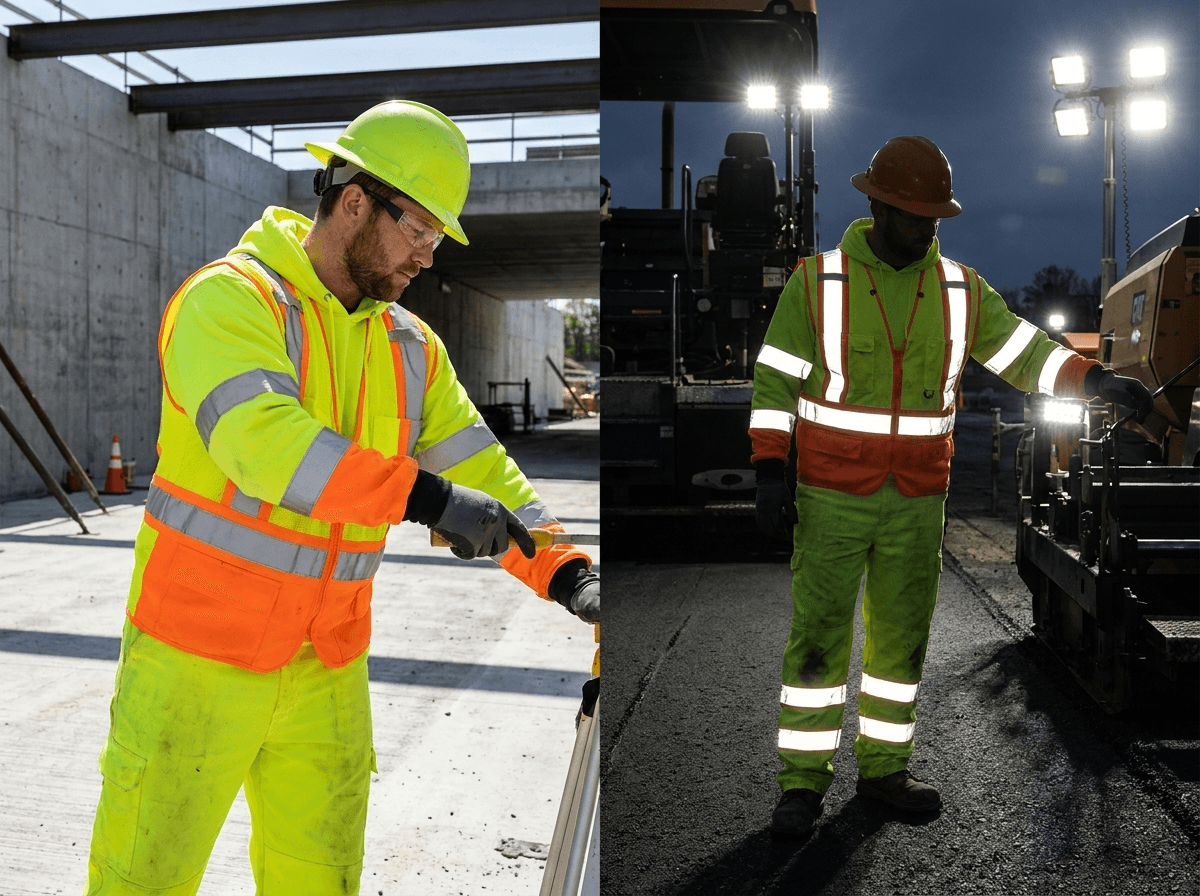
- Fluorescent background material improves daytime visibility.
- Retroreflective material returns light toward headlights or work lights for night and low-light visibility.
The most common fluorescent colors are yellow-green and orange-red. Both can work when certified, but they behave differently against construction backgrounds.
| Color | Strength | Common limitation |
|---|---|---|
| Fluorescent yellow-green | Strong daytime visibility, high contrast against many dark structures and asphalt | Can blend with some vegetation, equipment colors, or dirty backgrounds |
| Fluorescent orange-red | Strong contrast in roadwork and some earthmoving environments | May be less visible against orange equipment, cones, or certain soil backgrounds |
| Red or other colors | Sometimes used for role identification | Must still meet the required visibility standard if used as PPE |
Reflective tape layout matters as much as color. The worker should be recognizable as a human shape from multiple angles. For construction, check whether the garment provides:
- torso visibility from front and back
- shoulder visibility when workers bend, carry materials, or face away
- side visibility near crossing traffic
- sleeve or leg visibility where Class 3 or higher exposure requires more body movement recognition
- reflective material that remains exposed when the worker wears tool belts, harnesses, rainwear, or outer layers
A vest covered by a fall harness, tool belt, backpack blower, or jacket may no longer provide the visibility level the buyer intended.
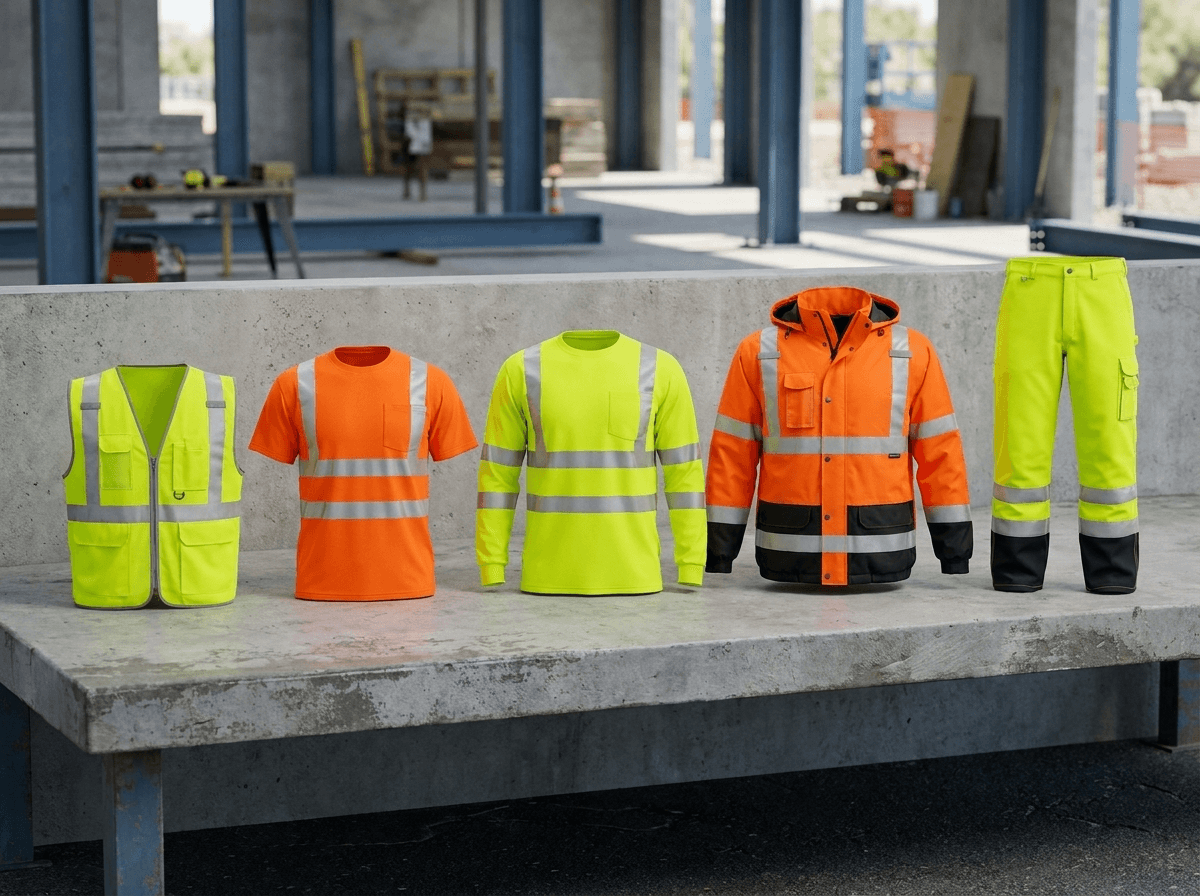
High-Visibility Clothing By Construction Task
Different construction tasks need different garment systems.
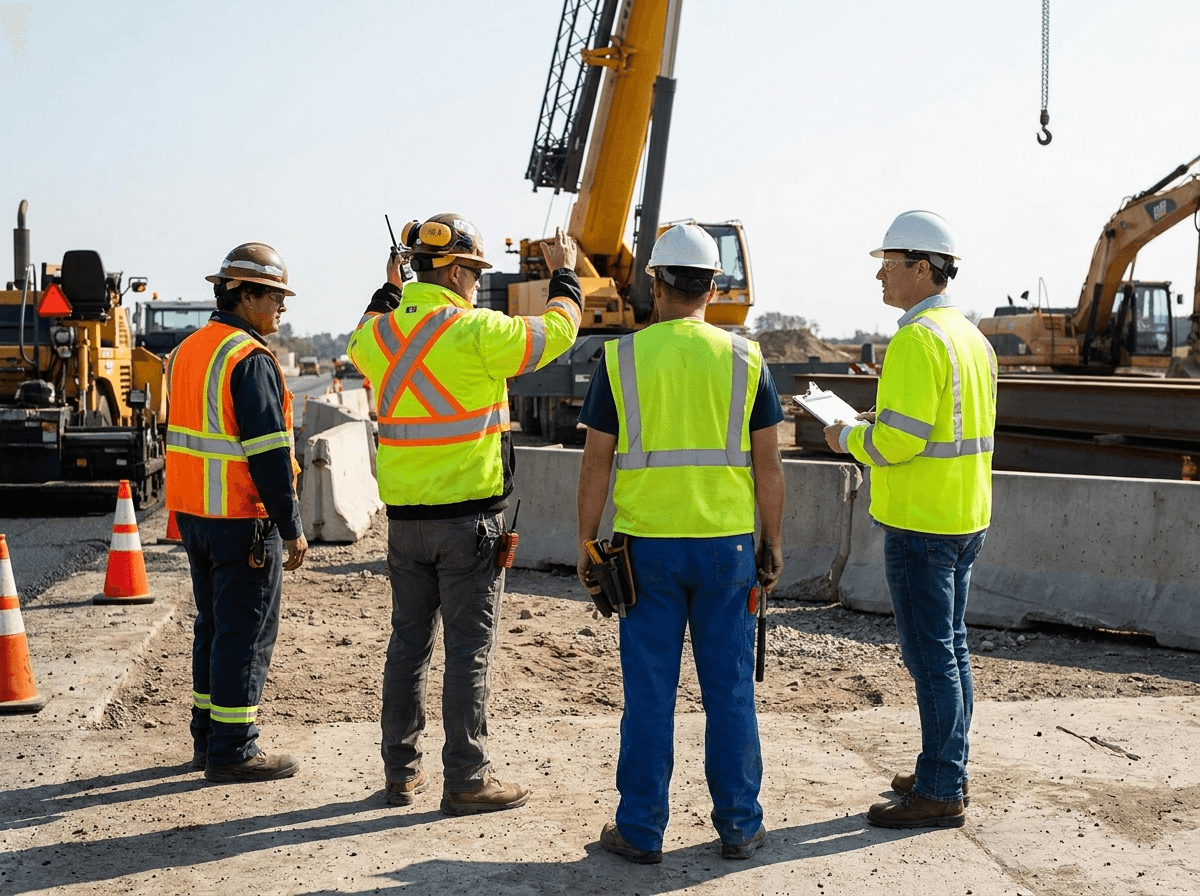
| Task or role | Practical hi-vis choice | Procurement note |
|---|---|---|
| Site visitors | Lightweight Class 2 vest | Keep clean spare stock at the gate and replace damaged visitor vests quickly |
| General labor | Class 2 vest or shirt | Shirts reduce the chance that workers remove visibility when they remove a vest |
| Equipment spotters | Class 2 or Class 3 depending on traffic exposure | Choose strong side and shoulder visibility |
| Roadwork and paving | Type R Class 3 shirt, jacket, or vest-and-pant system | Night and high-speed exposure usually need more than a basic vest |
| Concrete cutting and demolition | Durable hi-vis shirt or vest over dust-appropriate PPE | Dust can reduce fluorescent contrast and reflective performance |
| Crane and lifting zones | Class 2 minimum, often Class 3 for signal persons | Ensure signal persons remain visually distinct from surrounding workers |
| Utility and excavation crews | Class 2 or Class 3 depending on road proximity | Mud, rain, and trench conditions make wash durability important |
| Welding and hot work | FR hi-vis garment | Do not use ordinary polyester vests near sparks or flame exposure |
| Rain and winter work | Hi-vis rain jacket, insulated jacket, or certified outer shell | The outermost layer must be the visible layer |
This is why procurement should not buy one vest for everyone. A better program uses a small number of controlled garment packages by site zone and trade.
Compatibility With Other Construction PPE
High-visibility clothing has to work with the rest of the PPE system. A certified garment can still fail in the field if other equipment covers it, shifts it, or makes workers remove it.
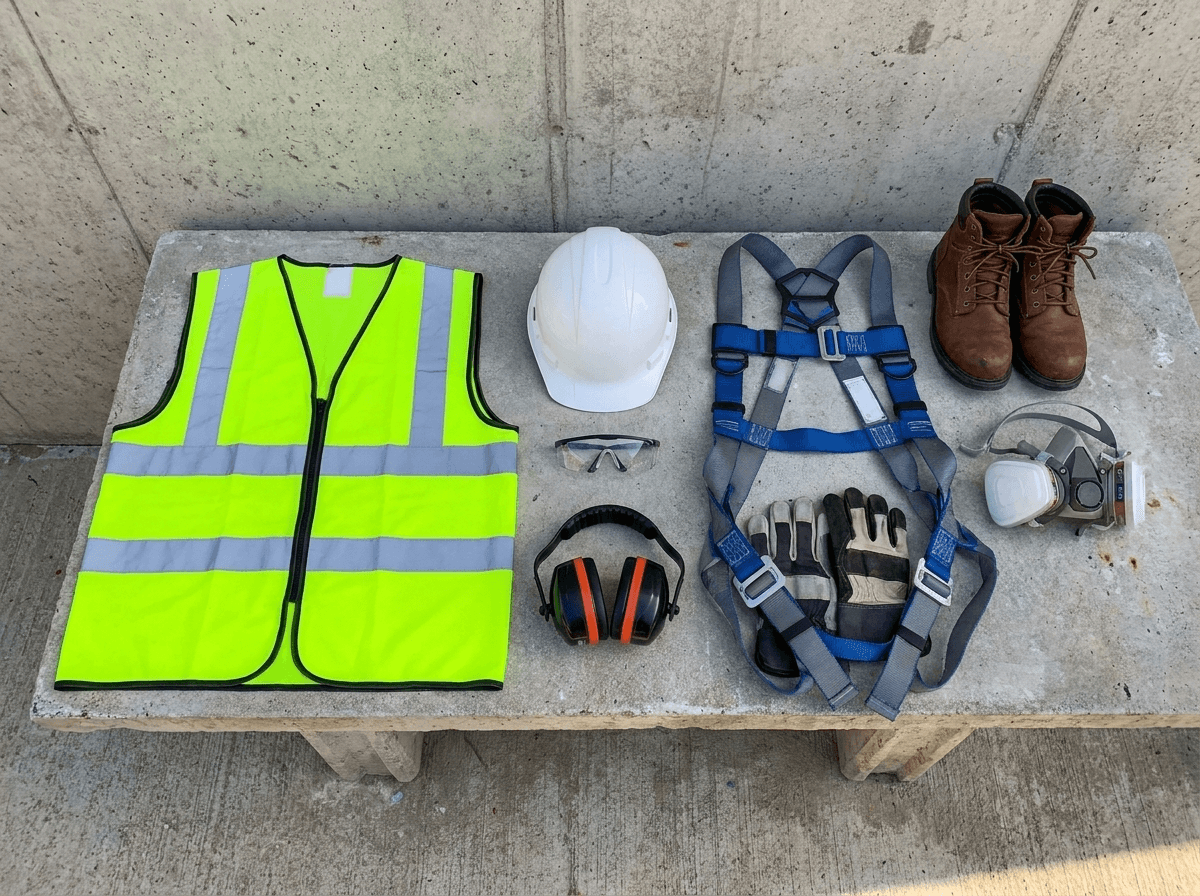
Check compatibility with:
- Hard hats and helmets: reflective stickers may help head-level visibility, but they do not replace hi-vis clothing.
- Fall protection harnesses: harness webbing can cover reflective tape and fluorescent material.
- Tool belts and radios: waist equipment can block lower torso visibility.
- Respirators: straps and hoods may affect shirt collars, jackets, and face protection.
- Safety glasses and face shields: anti-fog needs increase when workers wear hi-vis rainwear or layered clothing.
- Hearing protection: hooded hi-vis jackets must still allow earmuffs or helmet-mounted hearing protection to seal correctly.
- Gloves and sleeves: long sleeves improve visibility but must still allow dexterity and cut/chemical protection where needed.
- Footwear and gaiters: reflective pants or leg bands can help night visibility, but they must not create trip hazards.
For site-wide selection, connect high-vis decisions back to the construction PPE checklist. For purchasing at scale, include compatibility checks in the bulk construction PPE procurement guide.
Weather, Flame, And Wash Durability Considerations
The garment that works in a clean catalog photo may not work after two weeks on site.
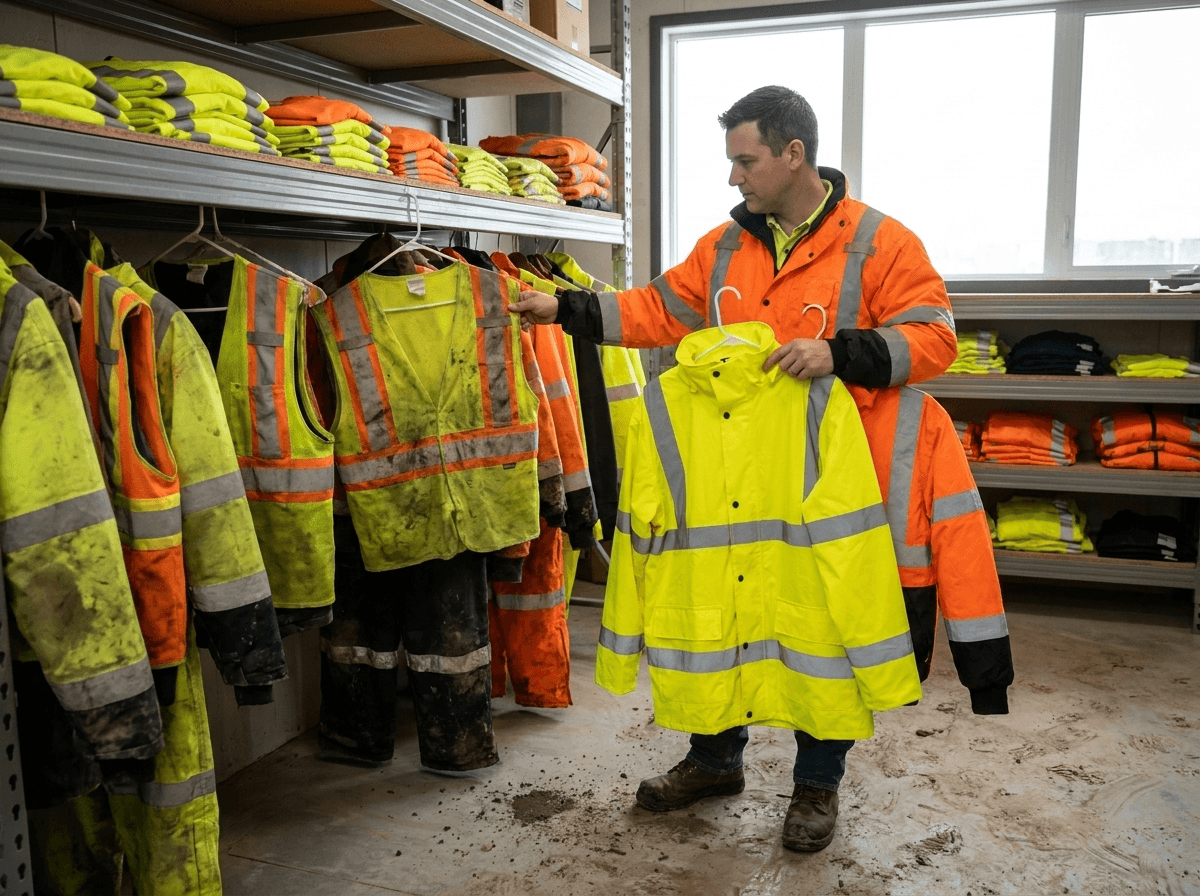
Rain and cold weather
The visible garment must be the outermost layer. If workers wear a non-hi-vis rain jacket over a certified vest, visibility drops immediately. For wet or cold sites, specify hi-vis rain jackets, insulated jackets, or certified outer shells.
Heat and sun
Hot-weather crews may avoid heavy garments. Lightweight mesh vests, breathable shirts, and moisture-management fabrics can improve compliance. But comfort cannot remove the required visibility class.
Flame and hot work
Ordinary hi-vis garments are often synthetic. Around welding, cutting, asphalt heat, flame, or arc exposure, buyers should evaluate flame-resistant or arc-rated hi-vis options. Do not assume that a bright vest is safe around sparks.
Washing and contamination
High-vis garments degrade. Fluorescent fabric fades. Reflective tape cracks, peels, or becomes dull. Dirt, cement dust, oil, asphalt, and paint can cover visible material.
Set a replacement rule before the order is placed:
- replace garments with torn reflective tape
- replace garments that remain dirty after washing
- replace faded fluorescent fabric
- remove garments with unreadable or missing labels
- track maximum wash cycles where the supplier declares them
- keep spare stock by size and garment type
Supervisors should be able to remove a failed garment from service without waiting for a new purchase request.
Bulk Buying Checklist For Construction Hi-Vis
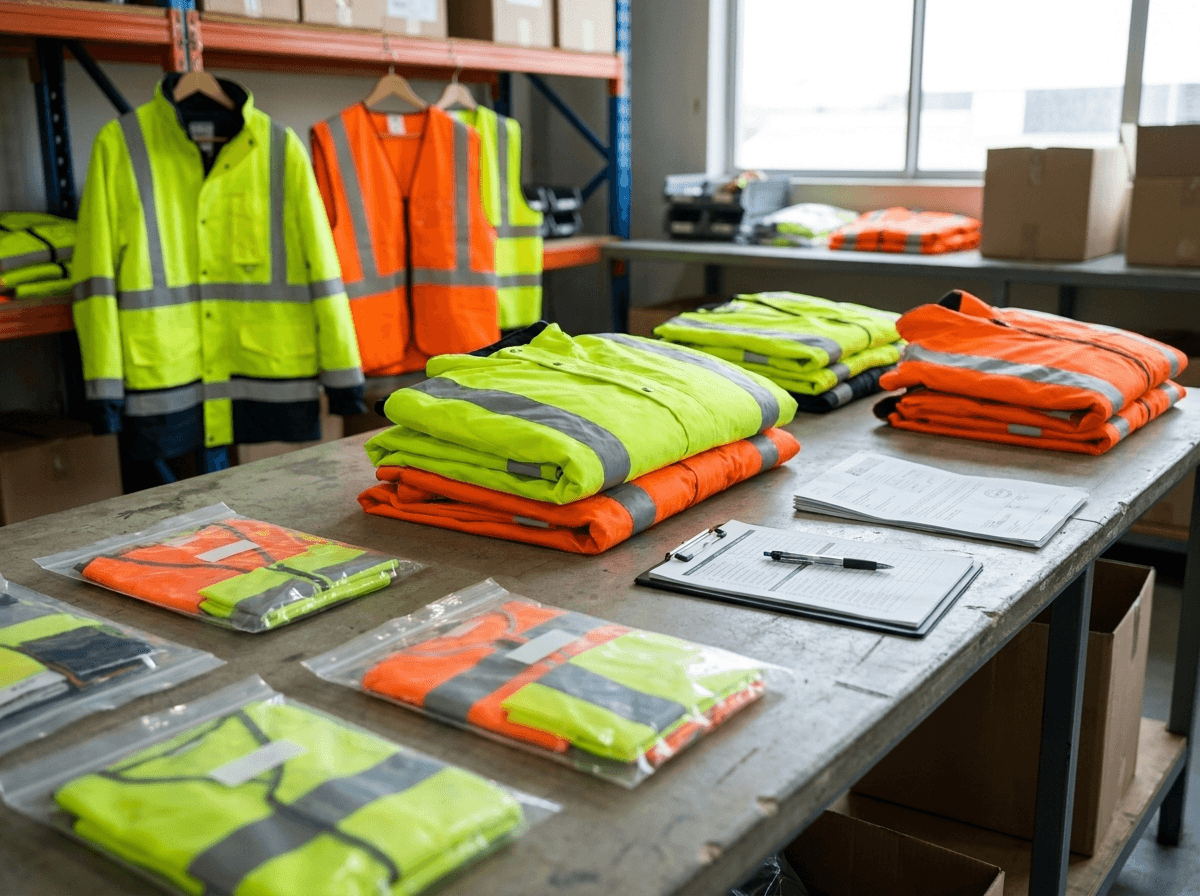
Bulk buying high-vis clothing is not just counting workers. It is a visibility system.
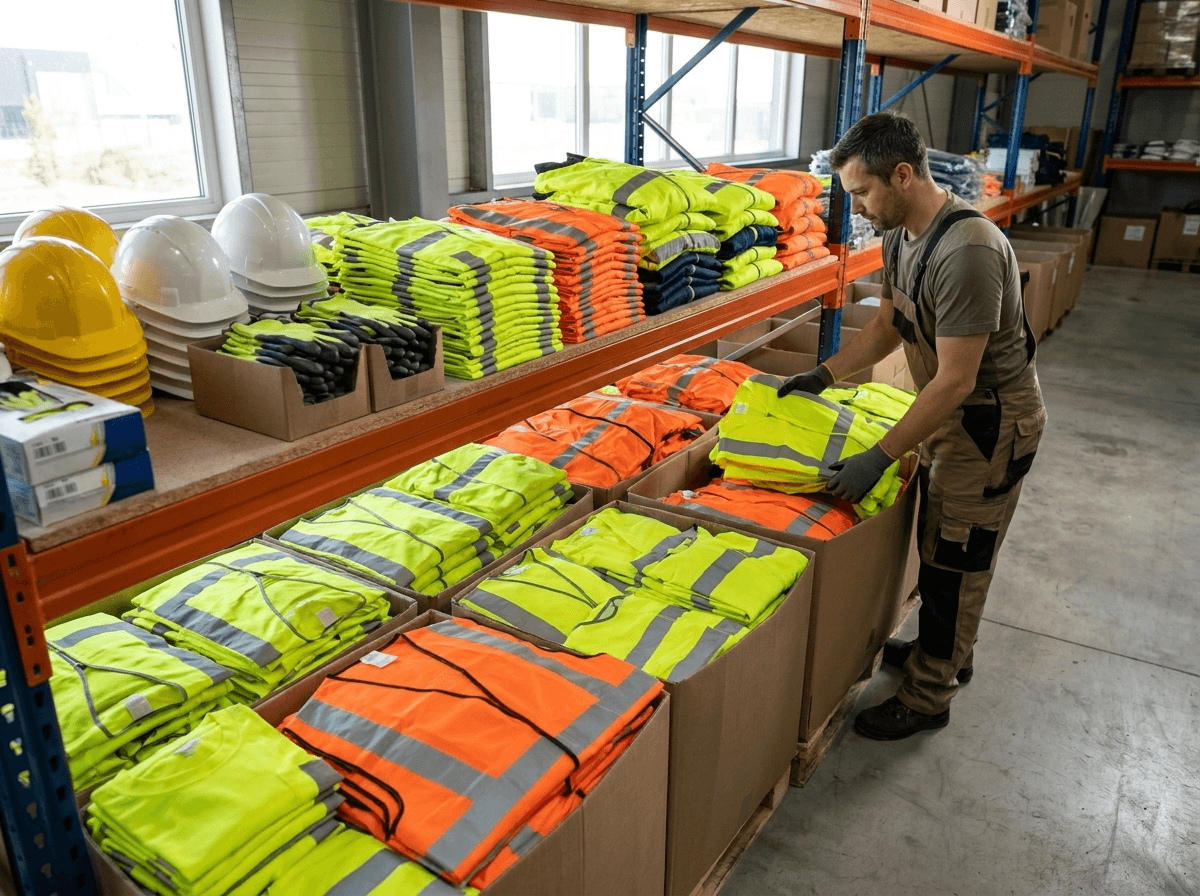
Before sending an RFQ, define:
- site type and traffic exposure
- required standard: ANSI/ISEA 107, EN ISO 20471, or both
- required type and class by role or zone
- garment style: vest, shirt, jacket, rainwear, pants, coverall, or combination
- color strategy: yellow-green, orange-red, or role-coded certified colors
- size range, including larger sizes for outerwear layering
- climate needs: mesh, breathable fabric, rainwear, thermal lining, UV exposure
- FR or arc-rated requirements
- expected washing and replacement cycle
- packaging by size, role, crew, site, or project phase
- label photos, certificates, and declarations required from supplier
- reorder SKU stability for future replenishment
A simple bulk order table may look like this:
| Worker group | Garment | Standard requirement | Notes |
|---|---|---|---|
| Visitors | Class 2 vest | ANSI/ISEA 107 Type R Class 2 | Low-cost controlled issue, keep gate stock |
| General site workers | Class 2 vest or shirt | ANSI/ISEA 107 Type R Class 2 | Size range S-5XL, replacement stock |
| Road crew | Class 3 shirt or jacket | ANSI/ISEA 107 Type R Class 3 | Add pants or rainwear for night/weather |
| Flaggers | Class 3 garment system | ANSI/ISEA 107 Type R Class 3 | Highest visibility and role identification |
| Hot work crew | FR hi-vis shirt/jacket | Visibility + flame/arc requirement | Verify both certifications |
| Export project crew | Hi-vis garment | EN ISO 20471 Class 2 or 3 | Request CE/EN documentation |
For larger orders, avoid one-size-fits-all cartons. Ask for cartons labeled by size and crew package. This reduces issuing errors and makes replacement stock easier to control.
Common High-Visibility Clothing Mistakes
The most common mistakes are simple:
- buying "bright" clothing without checking ANSI/ISEA 107 or EN ISO 20471 certification
- using Class 1 garments in active construction traffic zones
- assuming a vest is enough for night work or highway work
- letting workers cover their vest with jackets, harnesses, backpacks, or tool belts
- buying one size range that does not fit the actual workforce
- ignoring women workers and smaller body sizes
- ignoring larger sizes needed over winter layers
- using ordinary synthetic hi-vis near welding or flame exposure
- keeping faded or dirty garments in service too long
- failing to keep spare stock for visitors and new workers
High-vis clothing is low-cost compared with many PPE categories, so under-buying usually creates more risk than savings.
Quick Selection Framework
Use this short sequence when choosing high-visibility clothing for a construction project:
- Identify traffic and mobile-equipment exposure.
- Decide whether the project needs ANSI/ISEA 107, EN ISO 20471, or both.
- Set the minimum class by site zone and role.
- Choose garments that remain visible as the outermost layer.
- Check compatibility with harnesses, helmets, tool belts, rainwear, and radios.
- Add FR, arc-rated, waterproof, insulated, or breathable options where the task requires them.
- Verify certificates, labels, and washing durability.
- Buy replacement stock before the first issue.
For a broader PPE package, pair this article with:
- Complete PPE solution for construction sites
- OSHA PPE requirements for construction
- Construction PPE checklist
- How to buy construction PPE in bulk
- PPE for road and bridge construction projects
- Construction hard hat types
- Construction safety footwear guide
For procurement, use the Construction PPE RFQ Template to specify garment class, color, size range, outer-layer requirements, weather layers, washing durability, and label photos. If you already know the role count and class requirements, request high-vis workwear pricing.
FAQ
Is high-visibility clothing required on construction sites?
It is required for flaggers under OSHA's construction signaling rule and is expected where workers are exposed to public traffic, construction vehicles, or moving equipment hazards. Many contractors make Class 2 hi-vis the site-entry baseline because traffic and equipment exposure is common.
Is Class 2 or Class 3 better for construction?
Class 2 is commonly used as a baseline for general construction traffic exposure. Class 3 provides higher visibility and is better for roadwork, night work, flagging, high-speed traffic, poor weather, and complex mobile-equipment zones.
Can a construction worker wear only a hi-vis vest?
Sometimes, but not always. A vest may be enough for general site access, but higher-risk work may require Class 3 garments, sleeves, pants, jackets, rainwear, or FR hi-vis. The visible garment must also stay exposed when the worker wears harnesses, tool belts, jackets, or other PPE.
True or false: Class 2 high-visibility clothing must be the outermost layer in a trailer yard?
True when the Class 2 garment is the visibility control for that worker. The high-visibility garment has to remain visible from the outside to do its job. A Class 2 vest or shirt loses much of its value if it is covered by a jacket, raincoat, harness, backpack, tool belt, or other outer layer. For trailer yards, roadwork, equipment routes, and work zones, supervisors should check that reflective tape and fluorescent background material remain visible throughout the shift.
What should workers wear in work zones?
Workers in construction work zones should wear high-visibility reflective gear matched to the traffic and equipment exposure. Dark clothing is not enough, and jackets worn over vests can create a visibility failure. The practical rule is simple: the compliant high-vis layer should be the visible outer layer, or the outer garment itself should be certified high-vis.
What color is best for construction hi-vis?
Fluorescent yellow-green and fluorescent orange-red are both common when certified. Yellow-green often gives strong daytime visibility against dark construction backgrounds. Orange-red may create useful contrast in roadwork and earthmoving environments. The right choice depends on site background, equipment colors, traffic control, and worker role identification.
How often should high-visibility clothing be replaced?
Replace it when fluorescent material is faded, reflective tape is cracked or peeling, the garment remains dirty after washing, labels are unreadable, or the supplier's declared washing life has been reached. Keep spare stock so supervisors can replace failed garments immediately.
Should high-vis clothing be included in a bulk PPE order?
Yes. High-vis garments should be part of the baseline construction PPE package for sites with traffic or mobile equipment exposure. Bulk orders should specify class, standard, size range, garment type, weather needs, replacement stock, and documentation.
Sources
- OSHA 29 CFR 1926.201, Signaling
- OSHA highway work zone safety resources
- OSHA interpretation on high-visibility warning garments in highway and road construction work zones
- FHWA MUTCD 11th Edition with Revision 1 (December 2025), Section 6C.05 High-Visibility Safety Apparel
- ANSI/ISEA 107-2020, American National Standard for High-Visibility Safety Apparel
- ISO 20471:2013, High visibility clothing — Test methods and requirements
Related PPE
Source the PPE covered in this guide
Move from research to a buyer shortlist with the matching solution page, category paths, selected PPE options, and RFQ next steps.