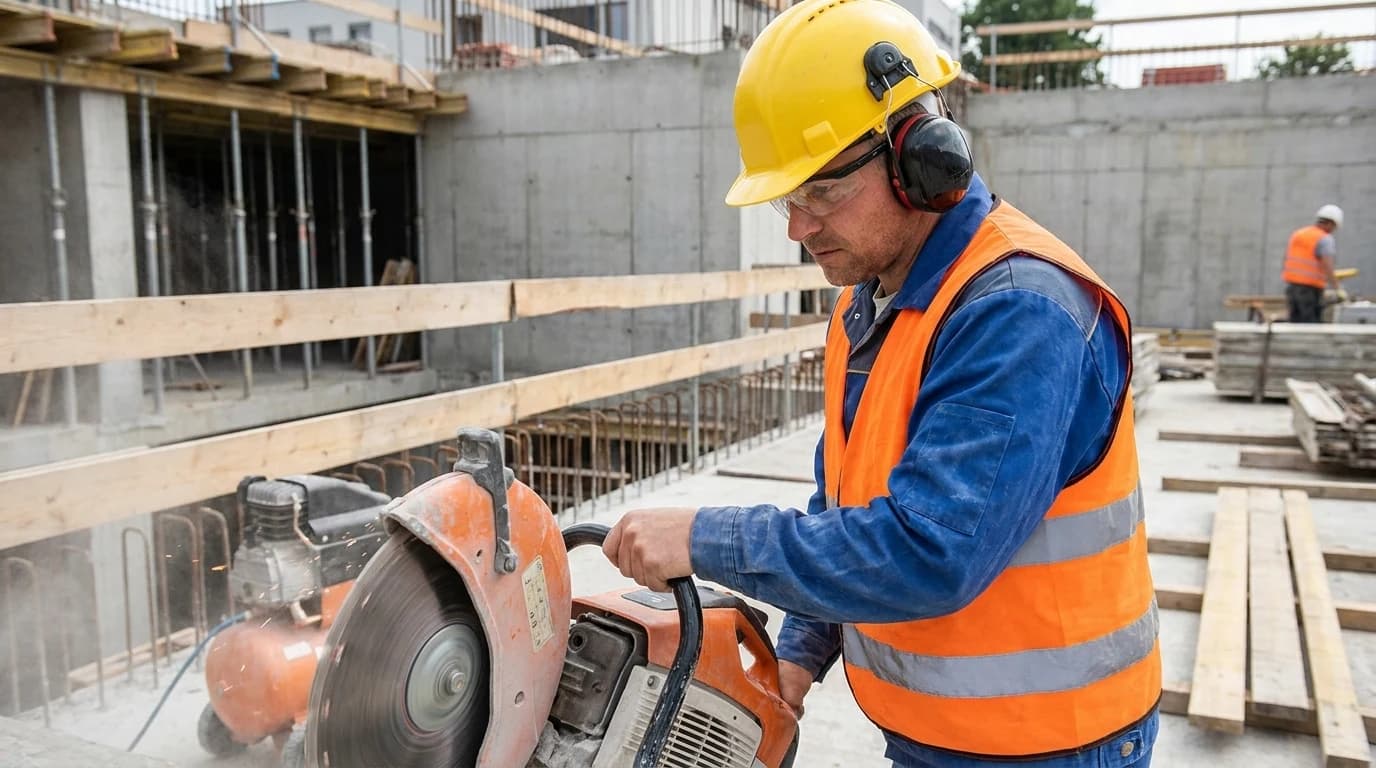
Buyer next step
Turn this guide into a sourced PPE shortlist with standards, quantities, and role-based kit notes.
Planning tools
Use these tools before moving from this guide into quantities, sizing, labels, or RFQ planning.
Construction noise is easy to underestimate because it feels normal on a jobsite. Saws, drills, grinders, compressors, excavators, generators, nailers, and demolition tools can all become part of the background. The problem is that hearing damage does not wait for a dramatic incident. It builds from repeated exposure, poor fit, inconsistent use, and hearing protectors that do not match the work.
NIOSH construction surveillance data shows why this category deserves its own page. About 37% of construction workers have been exposed to hazardous noise in the last year, about 13% report hearing difficulty, about 7% report tinnitus, and 52% of noise-exposed construction workers report not wearing hearing protection.
This guide helps safety managers, supervisors, and PPE buyers choose hearing protection for construction workers by task, exposure, comfort, compatibility, and replacement planning. For the full site-wide PPE structure, use the Complete PPE solution for construction sites. For daily field checks, use the construction PPE checklist. For OSHA compliance context across all PPE categories, use OSHA PPE requirements for construction.
For blasting, crushers, drilling rigs, haul trucks, and processing equipment, use the mining and quarrying PPE solution to place hearing protection inside the wider mine-site PPE package.
Why Construction Hearing Protection Is Harder Than It Looks
Hearing protection looks simple from a purchasing desk. Buy earplugs or earmuffs, hand them out, and the problem appears solved. On a real construction site, that is rarely enough.
Construction hearing protection is hard because:
- noise levels change throughout the day
- crews move between quiet and high-noise areas
- workers often need to communicate while protected
- hearing protectors have to fit with hard hats, safety glasses, respirators, and face shields
- disposable earplugs are often inserted incorrectly
- earmuffs lose performance when cushions are damaged or interfered with by other PPE
- too much attenuation can make workers remove protection to hear instructions
- replacement stock is often forgotten until workers are already exposed
The goal is not maximum noise reduction on paper. The goal is enough real-world protection that workers will wear correctly and consistently.
What OSHA Requires For Construction Noise And Hearing Protection
OSHA handles construction noise mainly through 29 CFR 1926.52 and 29 CFR 1926.101.
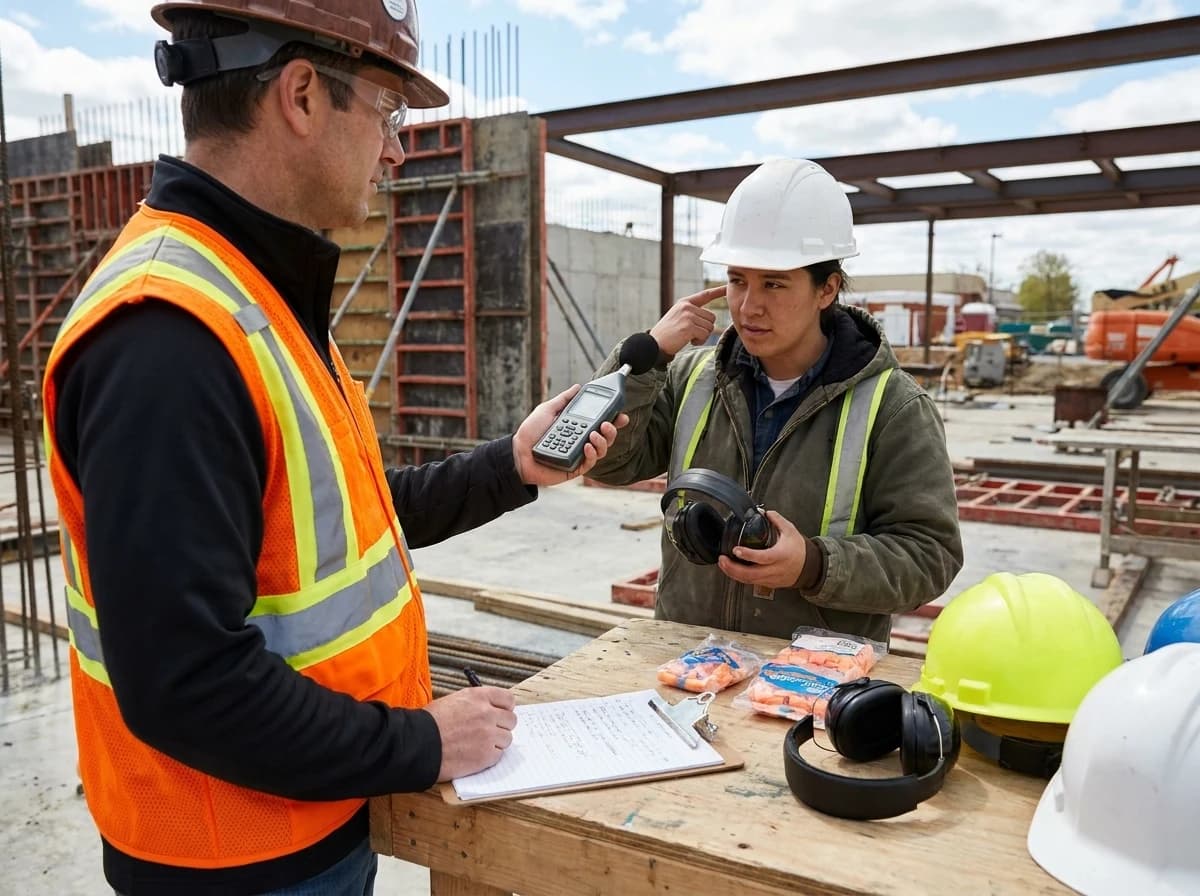
Under 29 CFR 1926.52, employers must provide protection when sound levels exceed the values in Table D-2. When employees are subjected to levels above that table, feasible administrative or engineering controls must be used. If those controls do not reduce noise within the table limits, PPE must be provided and used.
OSHA's construction Table D-2 includes these permissible exposure limits:
| Duration per day | Sound level |
|---|---|
| 8 hours | 90 dBA |
| 6 hours | 92 dBA |
| 4 hours | 95 dBA |
| 3 hours | 97 dBA |
| 2 hours | 100 dBA |
| 1.5 hours | 102 dBA |
| 1 hour | 105 dBA |
| 30 minutes | 110 dBA |
| 15 minutes or less | 115 dBA |
OSHA also states that impulsive or impact noise should not exceed 140 dB peak sound pressure level.
Under 29 CFR 1926.101, hearing protection must be provided and used when it is not feasible to reduce exposure to the Table D-2 levels. Ear protective devices inserted in the ear must be fitted or determined individually by competent persons. Plain cotton is not an acceptable hearing protector.
For construction, OSHA also states on its noise topic page that a continuing, effective hearing conservation program is required when exposures exceed 90 dBA as an 8-hour TWA. NIOSH uses a more protective recommended exposure limit of 85 dBA over an 8-hour shift. A buyer should treat the difference carefully: 90 dBA is the federal OSHA construction compliance trigger discussed above, while 85 dBA is a strong prevention benchmark and often a better internal action level.
Common Construction Noise Sources
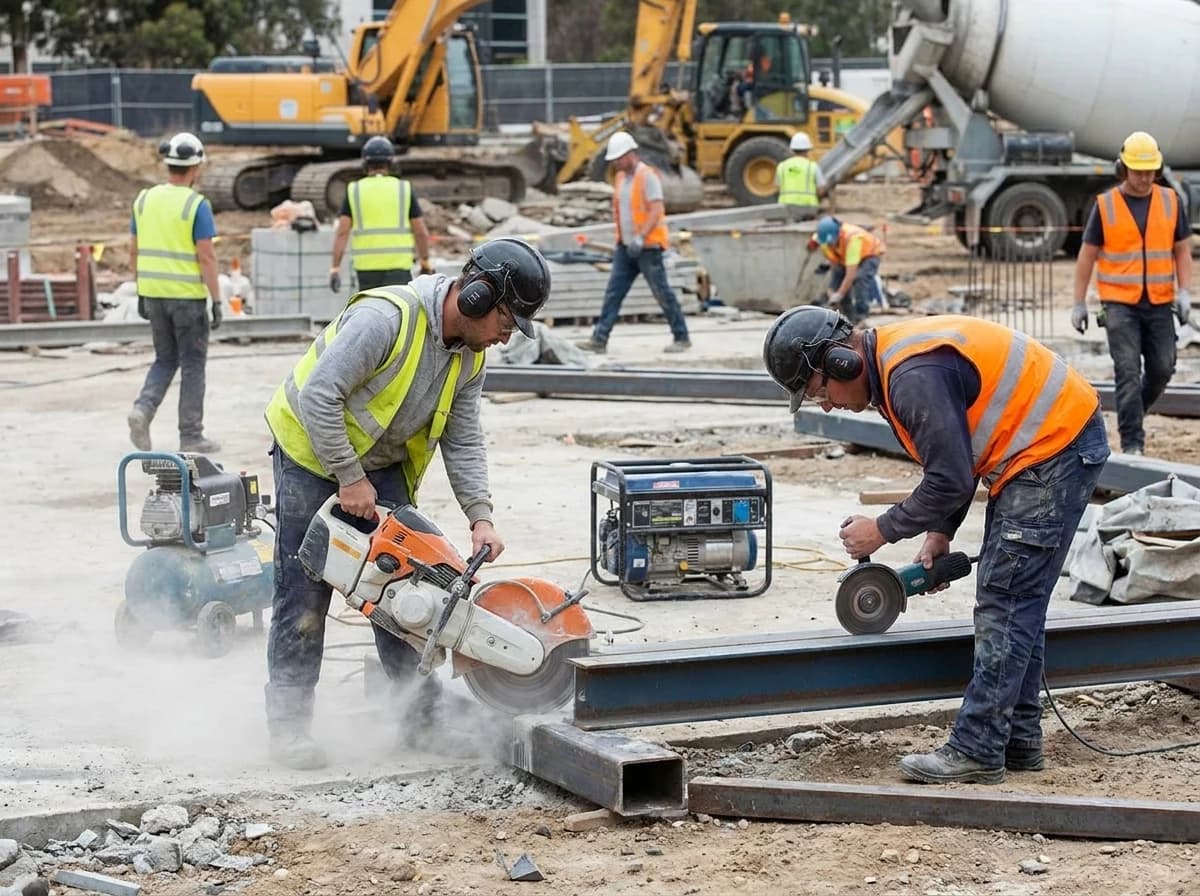
Noise exposure varies by tool, distance, duration, environment, and whether the work happens outdoors, indoors, or in a partially enclosed structure. The table below is a practical planning guide, not a substitute for measurement.
| Construction source | Typical risk pattern | Hearing protection implication |
|---|---|---|
| Circular saws and chop saws | Short bursts, repeated through the day | Earplugs or earmuffs should be readily available at cutting stations |
| Jackhammers and breakers | Very high continuous noise during use | Higher attenuation and often double protection should be considered |
| Grinders and cutting wheels | High noise plus face and eye hazards | Hearing PPE must fit with face shields, glasses, and respirators |
| Concrete drilling and coring | High noise, dust, vibration | Hearing, respiratory, eye, and hand PPE need to work together |
| Compressors and generators | Background noise over long periods | Area controls and access planning matter, not just individual PPE |
| Excavators, dozers, and loaders | Equipment noise plus communication needs | Workers on foot need protection without losing situational awareness |
| Nail guns and impact tools | Impulse and repeated peak noise | Use protection even if exposure feels intermittent |
| Demolition work | Variable, unpredictable, often enclosed | Measure when possible and provide task-specific protection |
| Road construction | Equipment, traffic, saws, compactors | Hearing PPE must remain compatible with high-vis and communication needs |
If workers have to raise their voice to speak with someone nearby, the noise level deserves attention. That field test does not replace monitoring, but it is a useful trigger for supervisors.
Earplugs, Earmuffs, Canal Caps, And Communication Headsets
Different hearing protectors solve different problems. Buying one type for the whole site is usually the wrong approach.
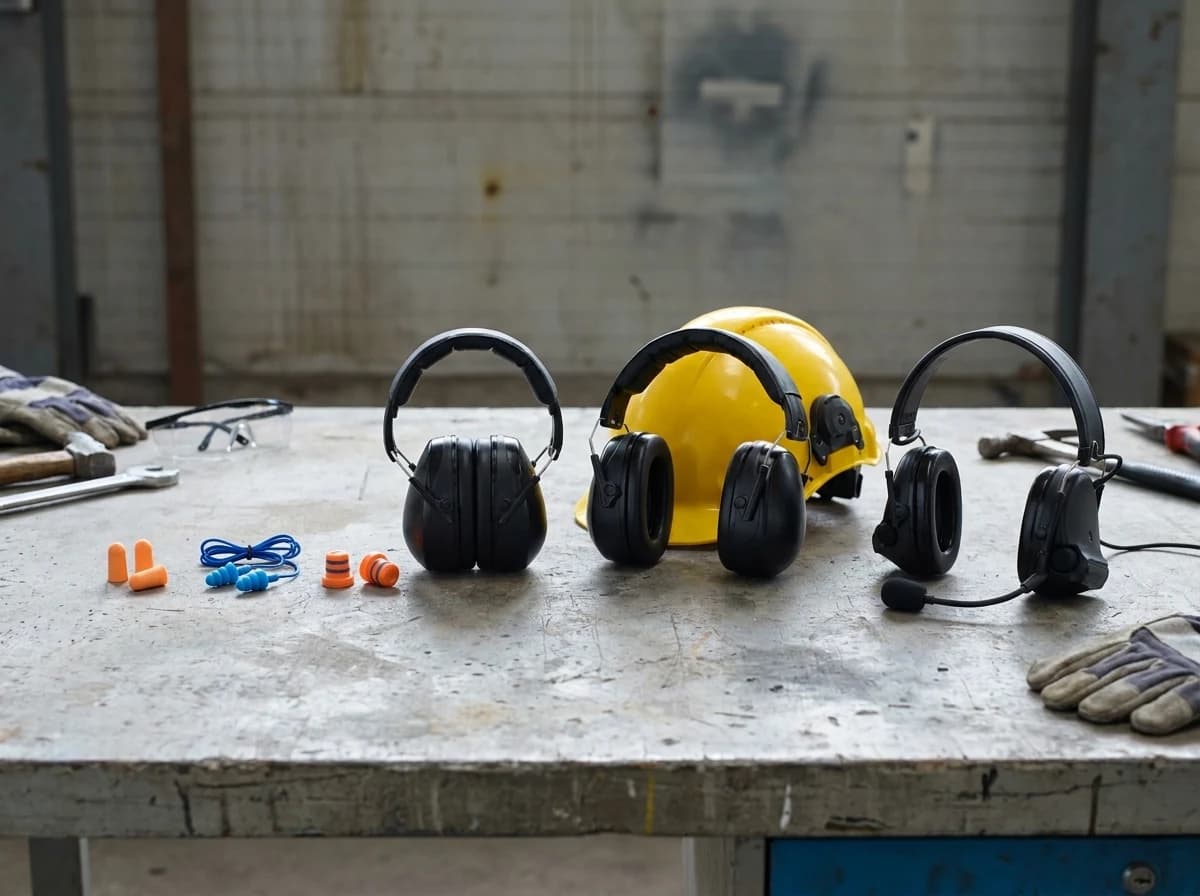
Disposable foam earplugs
Foam earplugs are low cost, compact, and useful for high-turnover sites or visitor stock. They can provide strong attenuation when inserted correctly. The weakness is fit. A poorly rolled and shallowly inserted foam plug may provide far less protection than its package rating suggests.
Best fit:
- general construction workers who need low-cost disposable protection
- dirty or wet work where reusable items are harder to maintain
- visitor or short-duration exposure stock
Main risk:
- poor insertion and inconsistent use
Reusable pre-molded earplugs
Reusable earplugs are faster to insert and easier to manage for assigned workers. They can be more comfortable for some workers and reduce waste compared with disposable plugs.
Best fit:
- assigned workers with repeated noise exposure
- crews that need quick removal and reinsertion
- sites trying to reduce disposable PPE waste
Main risk:
- hygiene and replacement discipline
Banded canal caps
Canal caps can work for intermittent exposure where workers move in and out of noisy zones. They are convenient but often provide less protection than well-fitted plugs or earmuffs.
Best fit:
- intermittent exposure
- supervisors, inspectors, or maintenance workers entering noisy zones briefly
Main risk:
- using them for sustained high-noise work where more protection is needed
Earmuffs
Earmuffs are easier to supervise visually because managers can see whether they are being worn. They are also useful when workers struggle with earplug insertion. The weakness is compatibility. Hard hats, safety glasses, respirators, hair, hoodies, and face shields can break the seal.
Best fit:
- workers who need easy-to-check protection
- cold weather work
- tasks where earplug fit is unreliable
- workers who cannot wear inserted plugs comfortably
Main risk:
- seal interference from other PPE
Helmet-mounted earmuffs
Helmet-mounted earmuffs can be useful when head protection and hearing protection must stay together. They need to match the helmet system and remain in good condition.
Best fit:
- equipment zones
- roadwork
- demolition
- repetitive high-noise areas where helmets are always required
Main risk:
- poor compatibility between helmet slots, muff arms, and other face PPE
Communication headsets
Communication headsets can protect hearing while allowing radio communication. They are more expensive but may improve compliance when workers need to hear instructions, alarms, or equipment movement.
Best fit:
- crane and rigging support
- roadwork
- equipment maintenance
- supervisors in high-noise zones
- crews where communication failures create safety risk
Main risk:
- buying them for comfort or convenience without checking attenuation and jobsite durability
How To Choose The Right NRR Or SNR
NRR and SNR are rating systems used to describe hearing protector attenuation. NRR is common in the United States. SNR is common in Europe and many international markets. Both are useful, but neither should be treated as a guaranteed real-world reduction for every worker.
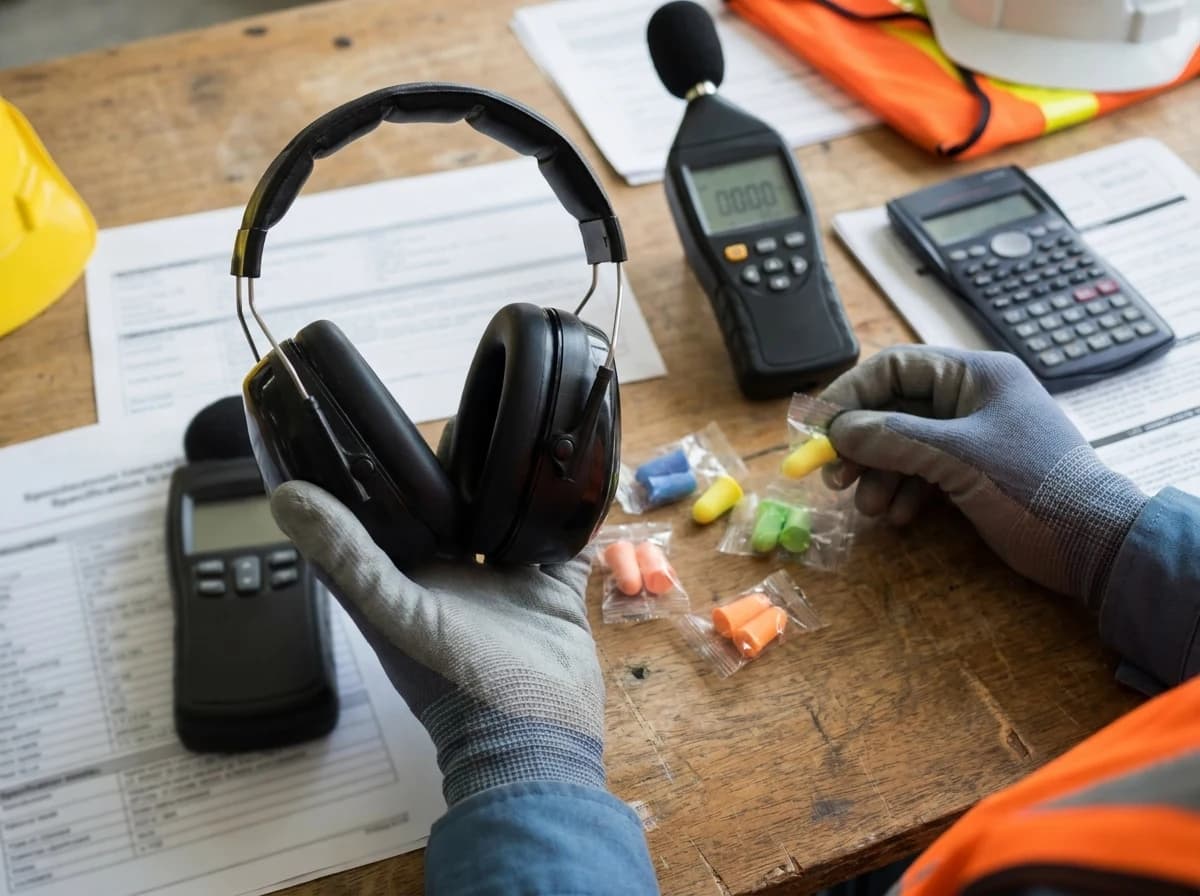
The better question is: what protected exposure does the worker actually receive?
NIOSH advises that most workers need 10 dB or less of sound reduction to bring exposure down to a safer range, and that employers should avoid overprotection. Too much reduction can make workers less aware of speech, equipment movement, alarms, and other hazards. Workers may then remove the protection to hear properly.
As a practical starting point:
| Exposure condition | Selection approach |
|---|---|
| Intermittent moderate noise | Comfortable earplugs or canal caps may be enough if fit is reliable |
| Sustained saw, grinder, or compressor exposure | Earplugs or earmuffs with adequate attenuation and good comfort |
| Very high noise around breakers, pile driving, or enclosed demolition | Higher attenuation and possible double protection |
| Noise at or above 100 dBA or impulse sound | NIOSH recommends double protection, such as earmuffs over earplugs |
| Communication-critical work | Consider flat-attenuation plugs or communication headsets |
Do not choose hearing protection only by the highest NRR or SNR number on the package. Choose by measured or estimated exposure, fit, comfort, compatibility, and whether the worker will keep it on.
Fit Matters More Than The Package Rating
Hearing protection ratings assume correct fit. Construction conditions often work against that assumption.
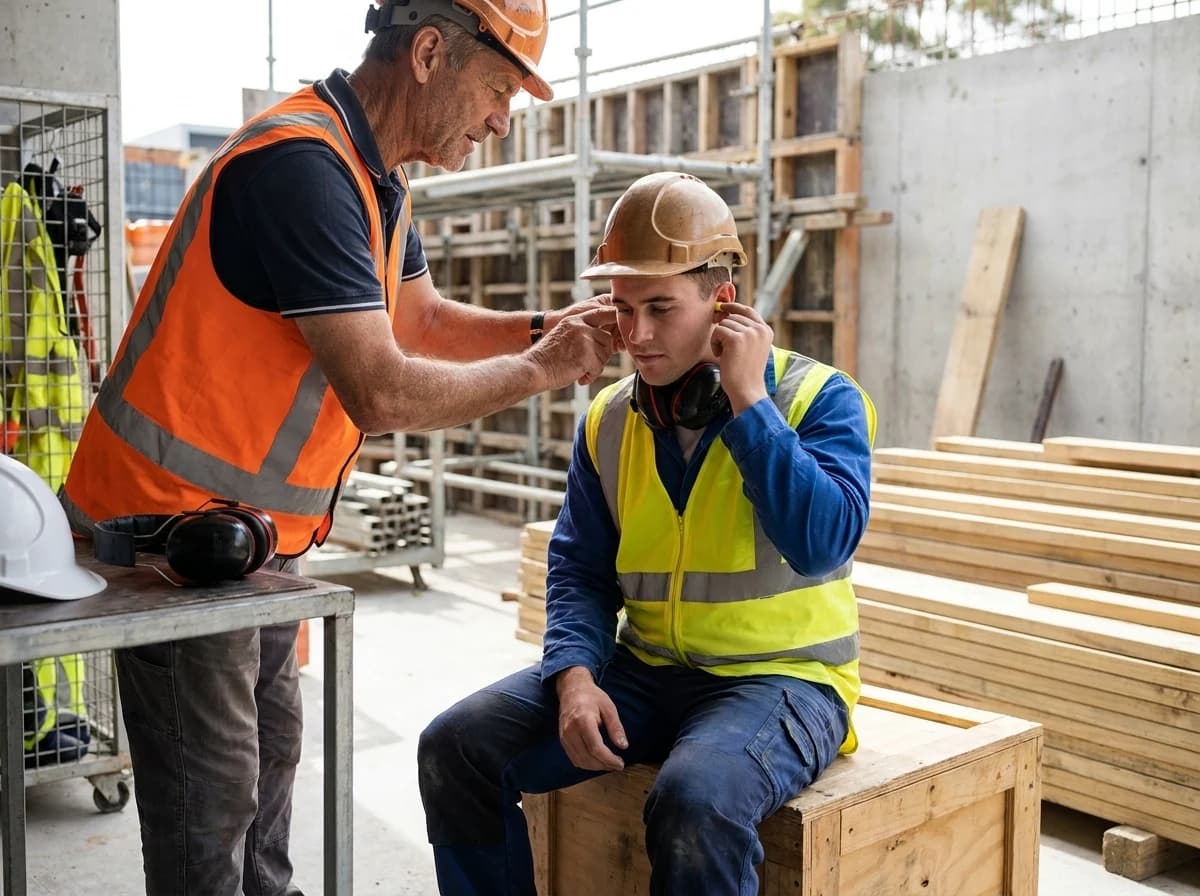
Foam earplugs fail when they are:
- not rolled tightly before insertion
- inserted too shallowly
- removed and reinserted with dirty hands
- too large or too small for the ear canal
- worn inconsistently across repeated tasks
Earmuffs fail when:
- safety glasses break the cushion seal
- hard hat suspension or helmet attachments interfere
- hair, hoodies, or balaclavas sit under the cushion
- cushions are cracked, compressed, dirty, or hardened
- the headband has lost tension
OSHA's construction hearing protection rule requires inserted ear protective devices to be fitted or determined individually by competent persons. OSHA and NIOSH also recognize hearing protector fit testing as a useful way to verify individual attenuation, even where fit testing is not itself required by the federal noise standards.
For procurement teams, this means hearing PPE should be bought in options, not just cartons. Stocking several types and sizes can improve actual protection more than buying one high-rated model for everyone.
Compatibility With Other Construction PPE
Hearing protection rarely works alone on a construction site. It has to fit with the rest of the PPE system.
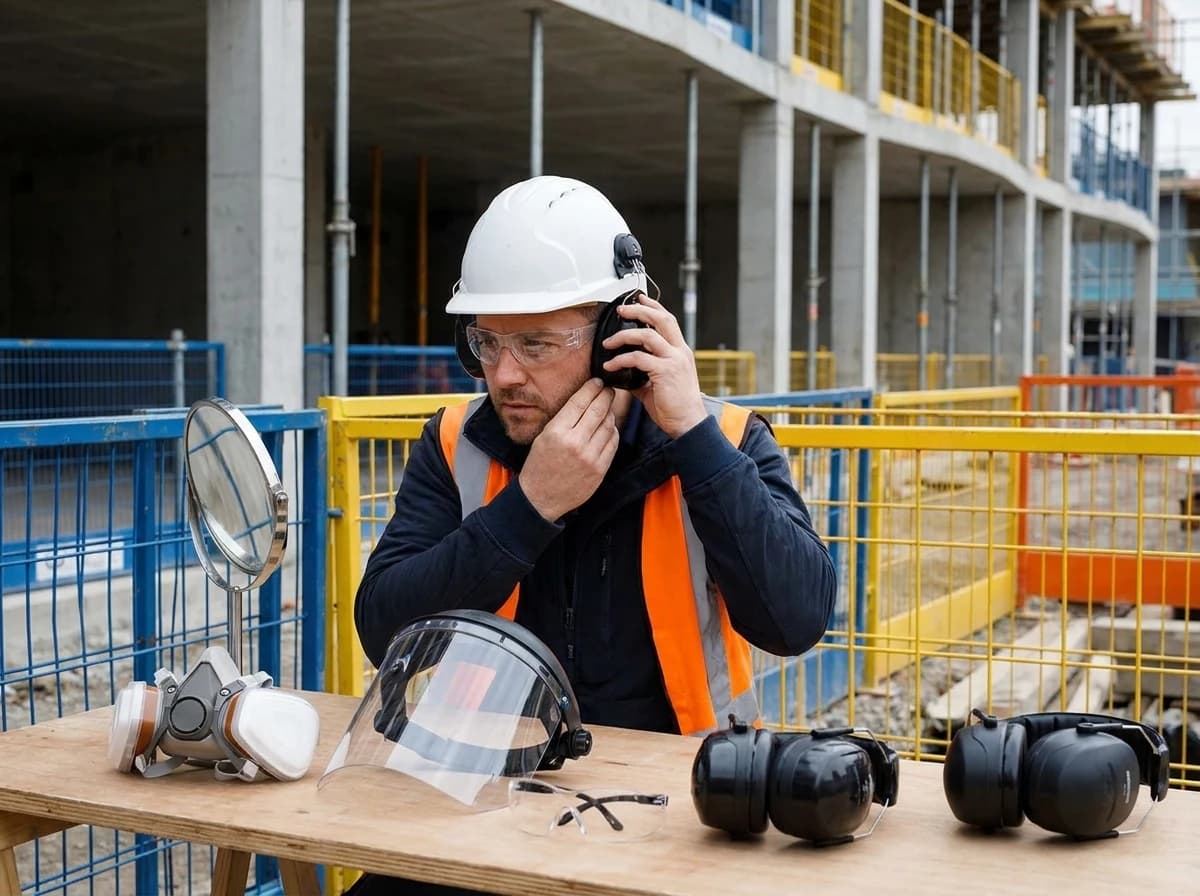
Check these combinations before buying in bulk:
| PPE combination | What can go wrong | What to check |
|---|---|---|
| Earmuffs + safety glasses | Glasses break the cushion seal | Thin temples or earplugs instead |
| Earmuffs + hard hat | Mounting arms do not fit or seal correctly | Helmet-compatible muff system |
| Earplugs + dirty work | Reuse creates hygiene issues | Disposable plugs or clean storage case |
| Earplugs + gloves | Workers struggle with insertion | Training, clean hands, or reusable plugs |
| Hearing PPE + respirator | Straps interfere or workers remove one item | Full PPE fit check |
| Hearing PPE + face shield | Shield headgear blocks earmuff position | Compatible headgear or earplugs |
| Hearing PPE + radio communication | Workers remove protection to hear | Communication headset or flat-attenuation option |
If hard-hat-mounted earmuffs are part of the system, confirm the helmet type and accessory slot before buying. Use the types of hard hats for construction guide for Type I vs Type II, Class G/E/C, brim style, and helmet accessory decisions. If eye and face PPE is part of the same task, use the eye and face protection for construction guide. If glove dexterity affects earplug insertion, use the construction gloves selection guide.
Hearing Protection By Construction Task
The right hearing protector depends on the task, not only the worker's job title.

| Task or crew | Common noise pattern | Practical hearing PPE approach |
|---|---|---|
| General labor | Variable, often intermittent | Disposable or reusable earplugs available at noisy zones |
| Carpentry and framing | Saws, nailers, compressors | Earplugs or earmuffs staged near cutting areas |
| Concrete cutting and drilling | Sustained high noise plus dust | Earplugs or earmuffs compatible with respirator and eye PPE |
| Demolition | High, variable, sometimes enclosed | Stronger attenuation, close supervision, possible double protection |
| Road construction | Equipment, traffic, saws, compactors | Hearing PPE plus communication and high-vis compatibility |
| Heavy equipment operation | Cab and ground noise exposure | Protection for ground work and maintenance checks |
| Roofing | Cutters, compressors, nailers, wind | Comfortable protection that stays usable with fall PPE |
| Steel erection | impacts, grinding, equipment | Earplugs or low-profile options compatible with helmets and eye PPE |
| Welding and grinding | noise plus eye, face, heat hazards | Earplugs often easier than earmuffs under welding headgear |
| Plant maintenance | mixed equipment and enclosed noise | Measured exposure and task-specific protector choice |
For role-based PPE packages beyond hearing protection, use the Complete PPE solution for construction sites.
Area Controls, Signage, And PPE Stations
Hearing protection works better when the site makes correct use easy.
Good construction controls include:
- quieter equipment where feasible
- distance and barriers around generators or compressors
- limiting time near high-noise tasks
- rotating workers only when it does not spread exposure to more people
- marking high-noise zones clearly
- placing earplug dispensers at entry points to noisy areas
- storing earmuffs where workers actually need them
- replacing damaged muffs and dirty reusable plugs early
Do not rely on a one-time issue during onboarding. Many construction noise exposures happen when workers move temporarily into a noisy area and do not have protection within reach.
The construction PPE checklist can help supervisors make hearing protection part of pre-start planning rather than an afterthought.
Bulk Purchasing And Replacement Planning
Hearing protection is one of the easiest PPE categories to underbuy because the unit price feels small. That creates a different problem: workers run out of clean plugs, shared earmuffs get damaged, or the only available option does not fit the task.
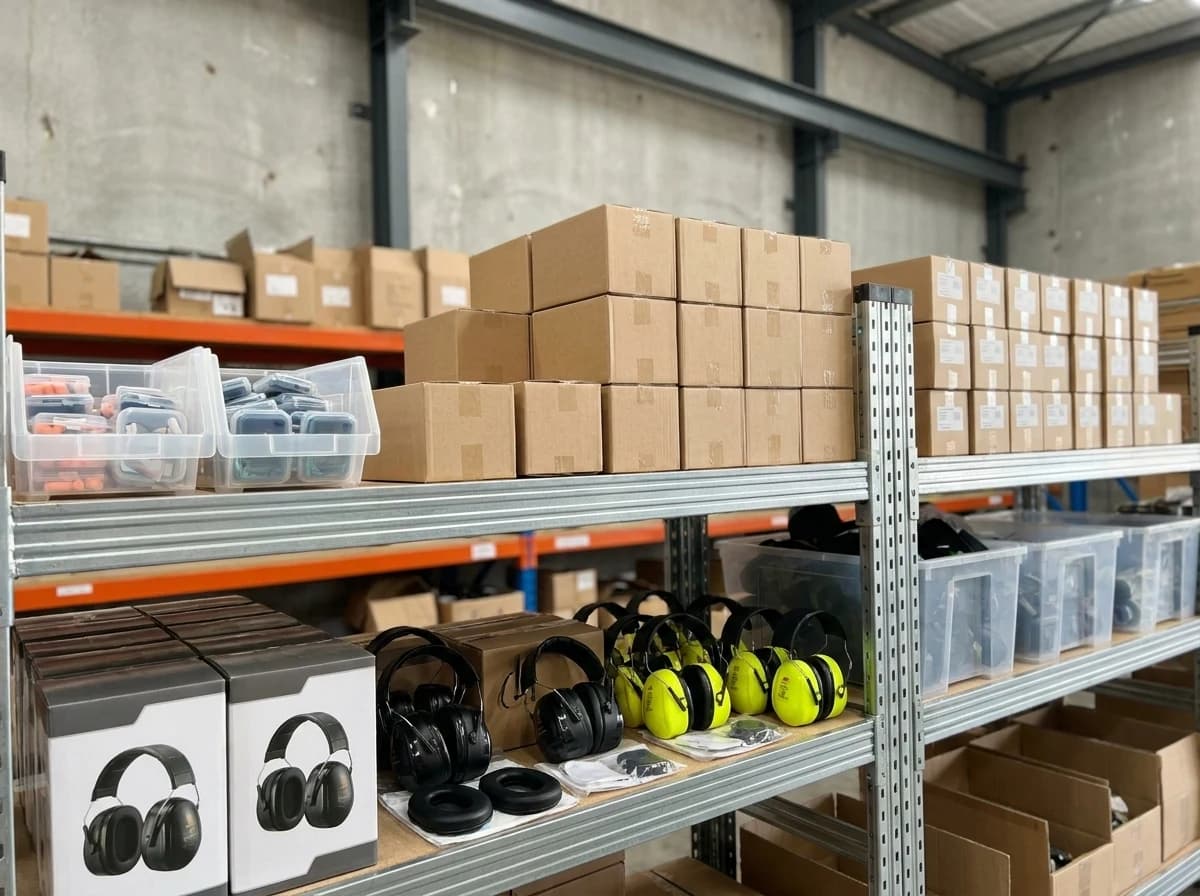
When buying hearing protection in bulk, plan for:
- disposable earplug consumption by shift and exposure area
- reusable plug assignment and cleaning
- spare earmuff cushions
- replacement headbands or full earmuff units
- helmet-mounted earmuff compatibility
- visitor stock
- subcontractor gaps
- seasonal comfort changes
- communication headset needs for selected roles
| Item | Bulk buying note |
|---|---|
| Foam earplugs | Buy by shift consumption, not just headcount |
| Reusable earplugs | Assign by worker and include storage cases |
| Banded plugs | Useful for intermittent visitors and supervisors |
| Earmuffs | Inspect cushion condition and headband tension |
| Helmet-mounted earmuffs | Match helmet model and attachment system |
| Communication headsets | Buy for roles where communication drives compliance |
| Fit-test support | Consider for high-noise crews or repeated non-use problems |
For a broader purchasing workflow, use the bulk construction PPE procurement guide.
For the product path, start with the hearing protection category, then shortlist by task: 3M 1100 noise reduction earplugs for disposable plug stock, BDS flanged ear plugs for reusable plug programs, and adjustable noise reduction earmuffs for visible, easy-to-supervise hearing protection.
Common Mistakes In Construction Hearing Protection
Buying the highest NRR for everyone
Higher attenuation is not always better. Overprotection can reduce situational awareness and cause workers to remove hearing protection. Select enough protection for the exposure while preserving communication and warning-sound awareness.
Treating earplug insertion as obvious
Foam earplugs are often worn incorrectly. Workers need practical training, not just a box of plugs. Supervisors should be able to recognize shallow insertion and poor fit.
Ignoring compatibility with safety glasses
Earmuffs can lose seal when safety glasses have thick temples. This is common on construction sites and easy to miss during purchasing.
Forgetting intermittent exposure
Short visits to saw stations, compressor areas, or demolition zones still matter. Hearing protection has to be available at the point of exposure.
Reusing dirty or damaged protectors
Reusable plugs and earmuffs need replacement discipline. Dirty plugs create hygiene issues. Hard or cracked muff cushions can reduce performance.
Treating hearing protection as separate from the rest of PPE
Hearing PPE is part of the worker's full equipment system. It must work with hard hats, eye protection, respirators, gloves, face shields, high-vis garments, and fall protection.
Supervisor Checklist Before Noisy Work Starts
Use this short check before high-noise tasks:
- What tool, equipment, or area is creating the noise?
- Can the noise be reduced by distance, barrier, maintenance, scheduling, or quieter equipment?
- Which workers are exposed and for how long?
- Is hearing protection available at the point of exposure?
- Is the selected protector enough for the likely exposure without overprotecting?
- Does it fit with hard hats, safety glasses, respirators, or face shields?
- Has the worker been shown how to insert, wear, and check it?
- Is replacement stock available if plugs are dirty or earmuffs are damaged?
- Does the task require communication, alarms, or spotter instructions?
- Does the work need monitoring or review by the safety team?
This check is short enough for daily work and specific enough to prevent the most common hearing protection failures.
Frequently Asked Questions
What hearing protection is best for construction workers?
There is no single best hearing protector for every construction worker. Foam earplugs, reusable plugs, earmuffs, helmet-mounted muffs, and communication headsets all have a place. The right choice depends on exposure level, duration, fit, comfort, communication needs, and compatibility with other PPE.
How do you choose the right hearing protection device for construction sites?
Start with the noise source, exposure time, and the other PPE the worker must wear. Foam earplugs can work well for many mobile tasks, earmuffs are easier to supervise, helmet-mounted muffs can solve hard-hat compatibility problems, and communication headsets may be needed around spotters, alarms, or heavy equipment. Do not choose by the highest NRR alone. Choose a protector that gives enough real-world protection, fits the worker, supports communication, and will actually be worn for the full exposure.
When does OSHA require hearing protection in construction?
OSHA construction noise rules require protection when sound levels exceed the limits in 29 CFR 1926.52 Table D-2. If feasible engineering or administrative controls do not reduce exposure to those limits, hearing protection must be provided and used. 29 CFR 1926.101 also requires inserted ear protective devices to be fitted or determined individually by competent persons.
Is 85 dBA or 90 dBA the right number for construction?
For federal OSHA construction compliance, the core construction table uses 90 dBA for 8 hours and related shorter-duration limits. NIOSH recommends a more protective 85 dBA 8-hour REL. Many employers use 85 dBA as an internal prevention trigger even when the legal construction table is different.
Are earmuffs better than earplugs?
Not automatically. Earmuffs are easier to supervise and can be easier for some workers to wear correctly. Earplugs may be more comfortable in hot weather and fit better with helmets, face shields, and respirators. The better choice is the one that provides adequate real protection and is worn consistently.
When should construction workers use double hearing protection?
NIOSH recommends double protection, such as earmuffs over earplugs, for workers exposed to noise levels of 100 dBA or greater or impulse sounds. The final decision should consider measured exposure, task duration, communication needs, and competent safety judgment.
Can plain cotton be used as hearing protection?
No. OSHA's construction hearing protection standard states that plain cotton is not an acceptable protective device.
Build Hearing Protection Into The Construction PPE System
Hearing protection should not sit outside the construction PPE program. It belongs in the same planning process as head protection, eye and face protection, gloves, footwear, respirators, high-vis garments, and fall protection.
Start with the Complete PPE solution for construction sites to map the full site PPE system. Use the OSHA PPE requirements for construction guide to confirm compliance obligations. Use the construction PPE checklist to bring hearing protection into daily pre-start checks. Use the bulk construction PPE procurement guide when the decision needs to become a repeatable purchasing and replacement plan.
View the construction PPE solution page Read the OSHA construction PPE compliance guide Request a hearing PPE quote
Related Guides On Laifappe.com
- Complete PPE solution for construction sites
- OSHA PPE requirements for construction
- Construction PPE checklist
- PPE for demolition and concrete cutting work
- How to buy construction PPE in bulk
- Types of hard hats for construction
- Respiratory protection for construction dust and fumes
- Eye and face protection for construction sites
- Construction gloves selection guide
- Construction safety footwear guide
Sources: OSHA 29 CFR 1926.52, OSHA 29 CFR 1926.101, OSHA occupational noise exposure topic page, OSHA hearing loss in construction topic page, OSHA Safety and Health Information Bulletin on hearing protector fit testing, NIOSH noise and hearing loss prevention guidance, and NIOSH construction hearing loss surveillance data updated April 13, 2026.
Related PPE
Source the PPE covered in this guide
Move from research to a buyer shortlist with the matching solution page, category paths, selected PPE options, and RFQ next steps.