
Buyer next step
Turn this guide into a sourced PPE shortlist with standards, quantities, and role-based kit notes.
Planning tools
Use these tools before moving from this guide into quantities, sizing, labels, or RFQ planning.
Construction site safety gloves should be selected by task, not bought as one generic pair for every worker. Rebar tying, abrasive material handling, wet cement, demolition, impact tools, welding, electrical work, and general material handling all need different glove choices. A useful RFQ should name the hazard, glove material or coating, cut or impact level, size range, replacement rate, and whether the glove is part of a larger PPE kit.
Construction gloves are one of the most common PPE items on any jobsite, and also one of the most commonly misselected.
Many sites buy one glove for everyone and assume the hand-protection problem is solved. It is not. The glove that works for moving drywall is not the glove for tying rebar. The glove that works for rough framing is not the glove for wet cement, solvents, welding, or electrical exposure. A glove that improves grip on one task can reduce dexterity on another. A glove that protects well against abrasion may perform badly against chemical splash. A glove that feels strong may still be the wrong choice for sharp sheet metal or energized work.
That is why glove selection should start with hazard matching, not with price or habit. Use this guide when you need to choose the right construction site safety gloves by task, material, coating, cut risk, impact exposure, and site conditions. For the wider site-wide PPE mix, use Complete PPE Solution for Construction Sites. For the regulation-first view, use OSHA PPE Requirements for Construction. For field issue and pre-start checks, use Construction PPE Checklist.
Quick Answer: Construction Site Safety Gloves
For a construction site safety gloves RFQ, separate the order by task instead of buying one "general work glove" for every crew. The right construction hand protection is the glove that workers will keep on while still getting enough cut, puncture, abrasion, grip, chemical, heat, impact, or electrical protection for the actual task.
| Task group | Glove feature to specify | Bulk order check |
|---|---|---|
| Site-entry baseline | General-purpose coated knit glove with dependable grip and size range | Good for routine handling, but do not use it as the answer for every construction hand hazard. |
| Rebar, sheet metal, sharp edges | Cut-resistant liner, suitable EN 388 or ANSI cut level, usable dexterity, secure cuff | Confirm size range, tying dexterity, puncture exposure, and replacement rate by crew. |
| Rough, abrasive materials | Abrasion-resistant palm, durable coating or leather, strong grip | Do not overbuy cut level if abrasion and service life are the real problems. |
| Demolition, rigging, impact tools | TPR or impact back, abrasion resistance, reinforced palm | Check whether impact protection still allows safe trigger and tool control. |
| Wet concrete, masonry, oily handling | Coating choice such as nitrile, latex, or chemical-resistant material | Do not mix wet-cement gloves with dry handling gloves in the same line item. |
| General material handling | Grip, abrasion resistance, breathable shell, economical replacement | Use this as the baseline glove, then add task-specific gloves as modules. |
To screen product families before writing the RFQ, compare all hand protection, cut-resistant gloves, nitrile-coated gloves, and leather work gloves. Category labels are a starting point, not proof that a specific model meets the required cut, impact, chemical, heat, or electrical performance; verify the model documentation and sample on the actual task.
For procurement planning, connect glove quantities to the bulk construction PPE procurement guide, the contractor PPE kit checklist, and the PPE Size & Standards Planning Sheet. For a supplier-ready request, use the Construction PPE RFQ Template or request a bulk glove quote.
Why Construction Glove Selection Is Harder Than It Looks
Hand exposure on construction sites comes from many different directions at the same time:
- rough materials that abrade skin and wear out coatings
- sharp edges that cut or puncture
- repeated lifting that creates grip and fatigue problems
- wet cement, adhesives, solvents, fuels, and sealants
- hot work, sparks, and heated surfaces
- cold weather, wet weather, and reduced dexterity
- vibration, awkward tool use, and reduced fine control
- electrical contact risk in specific tasks
Because the exposures overlap, glove selection is rarely about one feature. Buyers and supervisors usually have to balance four things together:
- the main hazard
- the level of dexterity needed
- the environment, such as wet, oily, dusty, cold, or hot conditions
- how the glove fits with the rest of the worker's PPE and tools
A glove that is too bulky slows work and gets removed. A glove that is too thin tears early. A glove that is too loose can create snag risk. A glove that is too tight reduces circulation and hand control. Since OSHA made proper fit explicit in construction PPE selection effective January 13, 2025, glove sizing is not just a comfort issue anymore.
What OSHA Requires for Construction Gloves
OSHA's construction standards do not treat gloves as a one-size-fits-all site item. They treat glove selection as a hazard-control decision.

The key construction rules are:
- 29 CFR 1926.28(a): the employer must require appropriate PPE wherever employees are exposed to hazardous conditions.
- 29 CFR 1926.95(a): extremity protection must be provided, used, and maintained wherever hazards from the work or environment can cause injury through physical contact, absorption, or other exposure.
- 29 CFR 1926.95(c): PPE has to be of safe design and, since the 2025 revision became effective on January 13, 2025, selected so that it properly fits each affected employee.
That structure matters because construction does not give glove selection a neat, stand-alone glove section in Subpart E the way it does for footwear, head, eye, hearing, or respiratory protection. In practice, construction glove compliance usually sits on three layers:
- the broad duty under
1926.28(a)to require appropriate PPE where the hazard exists - the PPE selection and fit rules under
1926.95 - the task-specific standard where one exists, such as electrical protective equipment under
1926.97or certain electrical work provisions under1926.416
That means glove selection in construction is hazard-based:
- if the task creates a real hand hazard, appropriate glove protection is required
- if the exposure changes from abrasion to cut, chemical, heat, or electrical risk, the glove choice may need to change too
- if the glove creates a new hazard because it is too loose, too bulky, contaminated, or incompatible with the tool or material, that is still a selection failure
There are also task-specific OSHA points construction teams should keep in view:
- Electrical work is not a normal glove decision. When the job calls for electrical protection, insulating gloves have to be selected, used, and maintained as electrical PPE rather than treated like ordinary site gloves.
- Underground or concealed line exposure can trigger more specific hand-protection requirements. For example, OSHA states in
1926.416(a)(1)that when employees use jackhammers, bars, or other hand tools where underground powerline locations are unknown, they must be provided with insulated protective gloves. - Masonry and wet cement work remains performance-oriented under OSHA. In its interpretation letter on masons, OSHA refused to grant a formal exemption from the general PPE rule, but also stated that not every masonry task automatically requires gloves. The actual trigger is the hazard assessment: if employees are exposed to wet cement or other hand hazards, glove protection is required; if that specific hazard is not present, a blanket glove rule is not what the standard says.
- Ordinary weather gloves are not the same thing as hazard-matched PPE. OSHA expressly distinguishes ordinary gloves worn only for weather from protective gloves selected for workplace hazards.
The professional way to read OSHA here is simple: construction glove compliance is not about proving that every worker owns a pair of gloves. It is about proving that the glove on the worker's hand matches the hazard of the task being performed.
The Main Glove Hazards on Construction Sites
Before you choose a glove, identify the dominant hazard. This sounds basic, but it is the step most sites shortcut.

Abrasion and rough handling
This is the most common exposure on general construction sites. Handling block, brick, lumber, formwork, rebar, scaffolding parts, cable, or rough metal edges wears down skin quickly and destroys weak gloves fast.
What matters:
- palm coating durability
- grip under dust or light moisture
- basic abrasion resistance
- enough flexibility for repeated lifting and carrying
Cuts and lacerations
Sharp sheet metal, strap ends, cut wire, flashing, glass, metal studs, rebar tie wire, and power-tool-adjacent tasks can all create real laceration risk.
What matters:
- cut-resistant liner
- whether the cut is from edges, burrs, or blades
- whether dexterity is still good enough for the task
Sites often overbuy cut resistance for low-risk tasks and underbuy it for sheet metal, glazing, and metal framing work.
Punctures
Puncture hazards behave differently from straight cuts. Wire ends, nails, metal offcuts, protrusions, and thorn-like debris can defeat gloves that test well for abrasion or basic cut resistance.
What matters:
- puncture-focused performance
- palm thickness and reinforcement
- whether the glove is meant for handling rough hardware rather than fine assembly
Impact and crush exposure
General material handling does not always require impact gloves, but some tasks do. Work around pipe, rigging, heavy components, demolition, steel handling, and powered tools can create repeated back-of-hand strike and pinch exposure.
What matters:
- TPR or other back-of-hand protection
- flexibility around the knuckles
- whether the bulk interferes with grip or trigger control
Wet cement, chemicals, and skin irritation
Wet concrete and mortar are common construction skin hazards, and many teams underestimate them because they are so familiar. Add adhesives, sealants, cleaning agents, fuels, coatings, and solvents, and the glove decision becomes very different from normal material handling.
What matters:
- chemical resistance to the actual substance
- cuff length and splash control
- whether the task is brief contact or extended exposure
- whether disposable gloves are being used correctly or as a false economy
No glove material protects against every chemical. For chemical work, manufacturer compatibility data matters more than general category labels.
Heat, sparks, and hot work
Welding, cutting, torch work, grinding near heat, and handling hot materials call for gloves chosen for thermal performance, not just abrasion.
What matters:
- heat resistance
- spark and spatter resistance
- cuff and wrist coverage
- balance between thermal protection and dexterity
Electrical exposure
Most gloves on a construction site are not electrical gloves. This is where a lot of confusion starts.
What matters:
- whether the task involves actual electrical protection
- whether the glove is insulating rubber or only general hand protection
- whether leather protectors are required over the insulating glove
If the task creates true electrical contact risk, the glove choice must be built around electrical standards, not around general cut or grip features.
The Main Types of Construction Gloves
Once the hazard is clear, the next question is glove family. Most construction glove selection falls into these groups.

General-purpose coated knit gloves
These are the most common site gloves for good reason. They are light, relatively low-cost, and easy to issue in volume. Most are used for:
- general labor
- light material handling
- carpentry support
- logistics and cleanup
- dry or slightly damp tasks needing grip
They work best when the site needs:
- good grip
- decent dexterity
- moderate abrasion resistance
- manageable replacement cost
They work poorly when the site actually needs strong cut, chemical, heat, or electrical protection.
Cut-resistant gloves
These are used where sharp edges are not occasional but central to the task. Common use cases include:
- sheet metal and metal stud work
- glazing and sharp-edge handling
- rebar tying and wire-heavy work
- demolition sorting with sharp debris
- ducting and flashing installation
The common mistake is assuming higher cut rating is always better. Often it is not. Heavier cut gloves can reduce dexterity and slow tasks that need feel and control. The correct choice is usually the lowest rating that still credibly matches the hazard.
Impact gloves
These are used where the back of the hand is at repeated risk from knocks, pinches, and crush contact. Common use cases include:
- rigging and lifting support
- steel handling
- demolition
- heavy material movement
- equipment-adjacent work
They are useful, but not universal. On some tasks they improve protection. On others they are too bulky and reduce tool control.
Leather gloves
Leather remains common in construction because it is tough, familiar, and useful in many rough-handling tasks. Leather gloves are often chosen for:
- rough material handling
- abrasive tasks
- welding support
- rope, cable, and rigging contact
- outdoor use where durability matters more than fine dexterity
They are not chemical gloves, and they are not the right answer where wet cement, solvents, or electrical insulation is the real exposure.
Chemical-resistant gloves
These are chosen by substance, not by appearance. Common materials include nitrile, neoprene, butyl, latex, and other synthetic rubbers. Use cases include:
- wet cement and mortar
- adhesives and sealants
- solvents and cleaners
- coatings, fuels, oils, and degreasers
For these tasks, the first question is not "which glove feels strongest?" It is "which glove is compatible with the substance and duration of exposure?"
Welding and heat-resistant gloves
These are specialized gloves for:
- welding
- torch cutting
- hot metal handling
- spark-heavy tasks
They need more wrist and forearm protection, better heat resistance, and material that holds up under thermal exposure. They are usually the wrong glove for precision mechanical work.
Rubber insulating gloves
These are for electrical protection, not general site wear. They are used in electrical work where insulating performance is required. They should be treated as a separate category entirely from normal site gloves.
If your site is evaluating electrical exposures, the glove decision belongs alongside the wider electrical PPE plan, not inside the general glove drawer. Use PPE for Electrical Installation on Construction Sites when voltage-rated gloves, leather protectors, arc-rated clothing, Class E head protection, and EH footwear need to be specified as one system.
How To Read Construction Glove Labels and Standards
Construction buyers often look at glove labels without knowing which marking actually helps them compare products. The useful question is not "does this glove have a standard logo?" The useful question is "which test result on this glove actually maps to my hazard?"

| Standard | Usually used for | What to compare in practice | Common mistake |
|---|---|---|---|
| ANSI/ISEA 105 | U.S. occupational glove performance comparisons | cut, abrasion, puncture, impact, and related performance scores | treating "ANSI glove" as enough without checking which hazard score matters |
| EN 388 | mechanical risk gloves in Europe and export markets | abrasion, cut, tear, puncture, and sometimes impact | assuming EN 388 means chemical or heat protection |
| EN 374 | chemical protective gloves | chemical suitability, glove material, and the actual substance involved | choosing by glove material alone instead of checking chemical compatibility |
| EN 407 | heat and thermal hazards | contact heat, flame, and hot-work-related glove performance | assuming any leather glove is automatically adequate for thermal work |
| ASTM D120 | rubber insulating gloves for electrical protection | voltage class, inspection, and use with the correct accessories | confusing electrical PPE with ordinary rubberized or coated gloves |
The key point is simple: standards help you compare gloves inside the right category. They do not make one glove universal.
How skilled buyers actually use these standards
- For mechanical handling, compare the abrasion, cut, puncture, and impact performance that fits the job rather than buying the highest score available.
- For chemical work, check the actual substance, the expected contact pattern, and the manufacturer's compatibility data. A chemical glove is not chosen by brand, thickness, or color.
- For hot work, check whether the glove is built for thermal exposure or just rough handling.
- For electrical work, stop treating gloves as ordinary hand PPE and move into electrical PPE selection, inspection, testing, and storage logic.
If a supplier only tells you "cut resistant" or "chemical resistant" without showing what that means in test or compatibility terms, the selection is still incomplete.
Glove Materials and Coatings: What They Usually Do Well
Buyers often start with the hazard, but the final decision usually gets made at the material and coating level. That is where glove selection becomes much more practical.
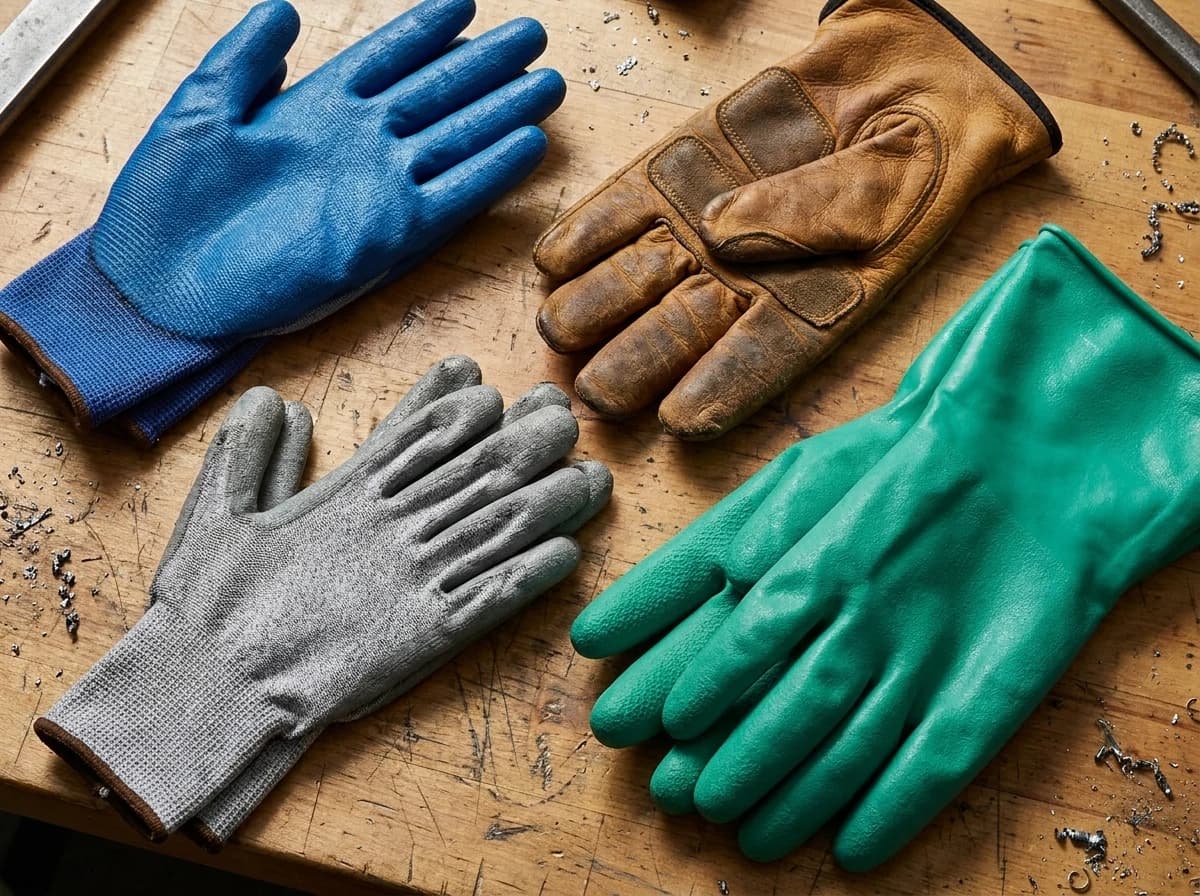
| Glove material or build | Usually good for | Usually weak for | What buyers should watch |
|---|---|---|---|
| Coated knit glove | general labor, grip, light to medium abrasion, high-volume issue | chemical immersion, serious heat, true electrical protection | coating type, grip in wet or dusty conditions, service life |
| Leather glove | rough handling, sparks, moderate heat, abrasion | wet cement, solvent exposure, fine dexterity | stiffness, cuff length, heat exposure, wet-condition behavior |
| High-cut liner glove | sheet metal, rebar, flashing, wire, sharp handling | chemical splash, hot work unless specifically designed for it | real task dexterity, puncture needs, palm durability |
| Impact glove | rigging, steel handling, demolition, back-of-hand strike exposure | fine assembly, tight spaces, some trigger-heavy work | whether the TPR bulk slows grip or tool handling |
| Nitrile or similar chemical glove | oils, cleaners, many construction chemicals, tasks needing more dexterity | universal solvent protection, high heat, tasks needing strong abrasion life | splash vs immersion exposure, cuff length, reuse limits |
| Neoprene, butyl, latex, or other chemical glove materials | substance-specific chemical tasks | "universal" use across all chemicals | the actual chemical chart for the exact product, not just the base material |
| Rubber insulating glove | electrical protection | normal rough site use without the right electrical PPE system | class rating, leather protectors, inspection, storage, retest rules |
Coating choice matters more than many buyers think
On construction sites, many glove decisions are really coating decisions:
- some coatings are chosen mainly for grip
- some for abrasion life
- some for dexterity
- some to help the glove survive oil, dirt, or repeated handling
That is one reason "coated glove" is not a complete answer. Two coated knit gloves may look similar on a shelf and behave very differently once workers start handling block, rebar, metal studs, or wet material all day.
Chemical glove material is not a shortcut
OSHA's PPE assessment guidance is especially useful here. It notes that rubber, latex, nitrile, butyl, neoprene, and other synthetic materials are used for chemical and liquid protection, but also warns that glove effectiveness must be checked against the specific workplace chemical and conditions.
That means all of these questions matter:
- Is the exposure a brief splash, repeated contact, or extended immersion?
- Is the chemical diluted, mixed, heated, or contaminated with something else?
- Does the job need high dexterity or can it tolerate a thicker glove?
- Is the glove being reused after exposure?
OSHA also notes that thicker glove material often improves chemical resistance but can reduce grip and dexterity. That tradeoff matters on construction sites where workers still need to control tools, fasteners, and materials safely.
How To Choose Gloves by Construction Task
This is the part most supervisors, buyers, and crew leaders actually need.

| Construction task | Main hand hazard | Glove family to start with | What to check before buying | Common selection mistake |
|---|---|---|---|---|
| General material handling | abrasion, light scrape, grip loss | coated knit or general-purpose handling glove | grip, fit, coating life, replacement cost | buying a glove too thin to survive normal site wear |
| Rough framing and carpentry | abrasion, splinters, grip, occasional scrape | coated glove or durable leather-style handling glove | dexterity for fasteners and tool handling | overbulking the glove and losing control |
| Rebar, wire, metal studs, flashing | cut, puncture, abrasion | cut-resistant glove with usable dexterity | edge type, hand feel, palm durability, puncture exposure | choosing heavy cut protection that workers remove for tying or positioning |
| Masonry and concrete work | wet cement, abrasion, skin irritation | glove selected for cement contact plus durability | chemical compatibility, cuff coverage, wet handling grip | treating a normal coated glove as enough for cement contact |
| Demolition and cleanup | mixed sharp debris, abrasion, impact | cut or impact glove depending on the material stream | whether the stream is mostly sharp debris or crush contact | using one demolition glove for every debris type |
| Welding and hot work | heat, sparks, rough handling | welding or thermal glove | heat protection, cuff length, dexterity for the process | using ordinary handling gloves around sparks and heat |
| Electrical installation | electrical exposure plus normal handling | insulating glove system where required | voltage class, protectors, inspection, storage, retest rules | using ordinary rubberized gloves as if they were electrical PPE |
| Roofing and scaffold work | grip, abrasion, dexterity | lighter handling glove with stable grip | control, glove bulk, compatibility with climbing and connectors | choosing gloves that interfere with clips, fasteners, or climbing grip |
| Chemical application or cleanup | splash, skin absorption, irritation | chemical-resistant glove matched to the substance | actual chemical chart, splash vs immersion, reuse limits | choosing by glove material name alone |
General labor
Most general labor tasks do not need the heaviest glove on the market. What they need is consistency:
- good fit
- dependable grip
- acceptable durability
- low enough cost to replace before failure
This is the place where coated knit gloves usually make sense.
Concrete and masonry
This category gets misjudged constantly. Teams focus on abrasion and forget skin exposure from wet cement and mortar. If the worker's hands are contacting wet material, chemical and dermal protection matters, not just toughness.
The professional selection questions are:
- Is the worker actually touching wet cement, mortar, grout, or admixture?
- Is the contact brief and occasional, or repeated through the shift?
- Does the glove need to resist chemical irritation while still surviving block, trowel, and rough-surface handling?
- Does the cuff protect the wrist from slurry intrusion?
This is also where OSHA's masonry interpretation becomes useful. OSHA did not say masons automatically need gloves on every task. It said the hazard assessment controls the answer, and where wet cement exposure creates dermal hazard, glove protection is part of the response.
In practice, many sites fail here because they issue a normal coated glove that grips block well but offers weak protection once the hand is repeatedly exposed to wet cement.
Steel, rebar, and sheet metal
This is where sites often need more cut performance than they realize. But the glove still has to let the worker tie, grip, place, and control material. Overly stiff gloves create a new problem.
The practical selection logic is:
- choose for the real edge condition, not just the idea of "metal work"
- separate jobs that need repeated hand feel from jobs that can tolerate a heavier glove
- check puncture and palm wear, not only cut claims
- expect faster replacement if the glove is doing constant wire, flashing, or stud work
This is also where teams often realize they need more than one "metal-work glove." Rebar tying, sheet metal handling, metal stud framing, and demolition sorting can all look similar at a distance and still need different balances of cut performance, puncture resistance, grip, and dexterity.
Welding and hot work
Do not solve these tasks with normal site gloves. Choose for heat and spark exposure first, then check whether the worker still has enough control for the job.
Good buying questions include:
- does the process create sparks only, or real sustained heat?
- how much cuff length is needed?
- is the worker welding, cutting, handling hot metal, or switching between tasks?
- can the user still maintain enough control for the process?
Leather gloves may be useful here, but "leather" by itself is not the whole answer. The glove still has to match the heat level, wrist exposure, and dexterity requirement.
Electrical work
Do not assume "rubberized" means electrically protective. If the glove is part of electrical protection, it has to be treated as electrical PPE, with the right class, inspection, storage, and use practices.
This is a hard line:
- coated gloves are not the same thing as insulating gloves
- general hand protection is not the same thing as electrical PPE
- rubber insulating gloves belong in a controlled inspection and storage program, not in the same issue logic as general handling gloves
If the task creates actual electrical exposure, the site should move out of normal glove selection and into the electrical PPE system entirely.
Demolition and mixed debris work
Demolition is where glove selection often breaks down because the hazard profile changes hour by hour.
One debris stream may be mostly:
- broken sharp material
- jagged metal
- splintered wood
- abrasive concrete
The next may involve:
- heavy pieces
- crush contact
- awkward lifting
- contaminated surfaces
That is why demolition teams often need at least two glove tracks instead of one: one biased toward cut and abrasion, and one biased toward impact and heavier handling.
Glove Fit, Dexterity, and Worker Compliance
A glove can look correct on paper and still fail in the field because workers hate using it.
Common reasons gloves get removed or misused:
- fingers are too long
- palm is too loose
- coating is too slick for the material
- glove is too bulky for fasteners, clips, or trigger work
- cuff catches on clothing or tools
- heat buildup is too high in warm conditions
That is why proper fit matters in construction PPE. Oversized gloves are not just annoying. OSHA specifically noted that poorly fitted gloves can create additional hazards, including getting caught in machinery.
For site managers and buyers, this means:
- stock multiple sizes, not one default size
- check fit on the actual users, not just on a sample hand
- separate high-dexterity tasks from heavy-handling tasks
- treat worker rejection as a selection signal, not just a behavior problem
What a Real Construction Glove Program Usually Stocks
One of the easiest ways to improve both safety and procurement efficiency is to stop thinking in terms of "the site glove" and start thinking in terms of a small glove program.
For many construction operations, a practical glove mix looks like this:
- one general-purpose coated glove for baseline handling work
- one higher-cut glove for metal, wire, and sharper material streams
- one impact-oriented glove for heavier handling, rigging, or demolition tasks
- one chemical-resistant glove for wet cement, cleaners, sealants, or chemical contact tasks
- one welding or heat glove for hot work
- one electrical insulating glove system only where electrical PPE is actually required
That does not mean every site needs every glove family in the same quantities. It means most sites need more than one. The real procurement lesson is to simplify the program, but not to oversimplify it into one glove for every exposure.
Common Glove Buying Mistakes on Construction Sites
Buying one glove for the whole site
This is the biggest one. It lowers purchase complexity and usually increases hand-protection failures.

Choosing by price only
Cheap gloves can be expensive when they fail early, reduce productivity, or create more injuries and replacements.
Confusing durability with protection
A thick glove is not automatically the right glove. It may still be weak against chemicals, cuts, heat, or electrical risk.
Ignoring the actual substance
Chemical glove selection without checking the actual material is weak PPE practice. Cement, solvent, oil, sealant, and cleaner exposures do not all behave the same way.
Letting worn gloves stay in service too long
Gloves fail gradually, which makes them easy to ignore. Coatings wear smooth. Liners open up. Leather hardens. Seams split. Once that happens, the glove is no longer doing the job it was chosen for.
Overprotecting the task and destroying dexterity
This is common in metal work and fastener-heavy tasks. If the glove prevents hand control, the worker may remove it at the exact moment exposure is highest.
A Practical Supervisor Check Before Issuing Construction Gloves
Before a shift or before a new task starts, a useful glove check is short:
- What is the actual hand hazard on this task?
- Is the glove chosen for abrasion, cut, impact, chemical, heat, or electrical risk?
- Does the glove fit the worker properly?
- Can the worker still control the tool, fastener, or material safely?
- Is the glove clean and intact enough to keep using?
- If chemicals are involved, has the actual substance been checked against glove compatibility?
That kind of check works better than a long glove policy nobody remembers.
When Gloves Should Be Replaced
Construction gloves are consumable PPE. Replacement should be expected, not delayed.
Replace gloves when you see:
- holes, tears, or split seams
- worn-through coating
- smooth or lost grip where grip matters
- contamination that cannot be cleaned safely
- hardened, brittle, or cracked material
- heat damage, burn marks, or melted areas
- any electrical glove condition that removes it from safe service
Chemical glove inspection deserves extra care. OSHA's PPE guidance notes that visual inspection can catch tears and obvious damage, but pinhole leaks may need a more thorough check, such as filling the glove with water and rolling the cuff to reveal leaks. OSHA also warns that discolored or stiff chemical gloves may indicate degradation from exposure.
That is especially important for:
- cement-contact gloves reused across shifts
- gloves exposed to cleaners, fuels, or sealants
- any glove being reused after chemical splash or repeated wet work
The other professional point many sites miss is reuse discipline. A glove can still look "usable" and already be chemically compromised. Reuse decisions for chemically exposed gloves should follow the manufacturer's guidance, not just a visual guess from the gang box.
For procurement teams, this is one reason glove strategy belongs inside the wider PPE program. Replacement rate matters just as much as initial selection.
Which Related Pages To Use Next
Most buyers and supervisors do not stop at gloves alone. The next useful page depends on what question comes next:
- Use Complete PPE Solution for Construction Sites when you need the full site-wide PPE structure.
- Use Construction PPE Checklist when you need a faster field routine before work starts.
- Use OSHA PPE Requirements for Construction when you need the compliance and documentation side.
- Use Hearing Protection for Construction Workers when glove dexterity, dirty hands, or other PPE affects earplug insertion and noisy-task protection.
- Use Respiratory Protection for Construction Dust and Fumes when hand protection is part of concrete cutting, demolition, coating, or respirator cartridge handling work.
- Use Safety Footwear Guide for Construction Workers when grip, puncture risk, or footing are part of the same hand-intensive task.
- Use Fall Protection PPE for Construction Sites when glove choice is part of an elevated-work system rather than a stand-alone decision.
- Use PPE for Scaffolding and Elevated Platforms when gloves must support coupler handling, climbing, tool tethering, and connector control.
- Use PPE for Road and Bridge Construction Projects when glove choice has to cover asphalt heat, rebar, wet concrete, vibration, cutting, and traffic-zone work.
- Use PPE for Electrical Installation on Construction Sites when ordinary work gloves must be separated from voltage-rated insulating glove systems.
- Use Eye and Face Protection for Construction Sites when the same task creates flying-particle, splash, grinding, or welding exposure.
- Use How to Buy Construction PPE in Bulk when glove selection needs to become a repeatable purchasing and replenishment plan.
FAQ
What gloves are best for general construction work?
There is no single best glove for all construction work. For many general labor tasks, coated knit gloves are a practical starting point because they balance grip, dexterity, and replacement cost. But sharp metal, wet cement, chemicals, welding, or electrical work can require a very different glove.
Are cut-resistant gloves enough for all construction tasks?
No. Cut resistance is only one part of glove selection. A cut-resistant glove may still be the wrong choice for wet cement, chemical splash, hot work, or electrical exposure.
What hand protection is best for rebar work on construction projects?
For rebar work, start with cut-resistant gloves that still allow tying, gripping, and placement control. Check the actual exposure: rebar tying may need dexterity and cut resistance, while rebar loading, bending, demolition, or steel handling may need more abrasion, puncture, or impact protection. A glove that is too stiff can be removed by workers, so fit and dexterity are part of the safety decision.
What gloves are recommended for rough, abrasive construction materials?
For rough or abrasive materials such as block, brick, formwork, scaffolding parts, concrete, cable, or rough metal, prioritize abrasion resistance, palm durability, grip, and service life. Cut level matters if sharp edges are present, but the best glove for abrasive handling is often the one that survives repeated contact without becoming too bulky for the task.
Are gloves used in construction the same for every trade?
No. A baseline handling glove can work for low-risk general labor, but masonry, rebar, demolition, welding, electrical work, wet cement, chemical handling, and hot work need separate glove specifications. For bulk orders, separate gloves by task group rather than issuing one model to every worker.
Does OSHA require construction workers to wear gloves all the time?
Not in that simple blanket form. OSHA's construction PPE rules are hazard-based. Where the task creates a real hand hazard, appropriate hand protection is required. Where the hazard changes, the glove choice may need to change too.
What is the biggest glove mistake on construction sites?
Buying one glove for every task. That usually leads to overprotection on some work, underprotection on others, and more workers taking gloves off when they should still be wearing them.
How should buyers compare construction gloves?
Compare them by hazard, dexterity, fit, durability, compatibility with the task, and replacement cycle. Standards such as ANSI/ISEA 105, EN 388, EN 374, EN 407, and ASTM D120 help when they are used inside the right glove category.
Turn Glove Selection Into A Bulk Order
If you are buying gloves for multiple crews, separate baseline handling gloves from rebar, abrasive material, demolition, wet cement, electrical, welding, and chemical glove lines. Add sizes, replacement rate, sample approval, and allowed substitutions to the RFQ so suppliers quote comparable products.
- Open the Construction PPE RFQ Template
- Download the PPE Size & Standards Planning Sheet
- Request a bulk glove quote
- Read the bulk construction PPE procurement guide
Related Guides on Laifappe.com
- Complete PPE Solution for Construction Sites
- Construction PPE Checklist
- OSHA PPE Requirements for Construction
- Hearing Protection for Construction Workers
- Respiratory Protection for Construction Dust and Fumes
- Safety Footwear Guide for Construction Workers
- Fall Protection PPE for Construction Sites
- PPE for Demolition and Concrete Cutting Work
- PPE for Scaffolding and Elevated Platforms
- PPE for Road and Bridge Construction Projects
- PPE for Electrical Installation on Construction Sites
- Eye and Face Protection for Construction Sites
- How to Buy Construction PPE in Bulk
Related PPE
Source the PPE covered in this guide
Move from research to a buyer shortlist with the matching solution page, category paths, selected PPE options, and RFQ next steps.