
Buyer next step
Turn this guide into a sourced PPE shortlist with standards, quantities, and role-based kit notes.
Full brim vs cap style hard hats is a shell-shape decision. It is not the same as Type I vs Type II impact protection, and it is not the same as Class G, Class E, or Class C electrical rating. A construction buyer can choose the right brim shape and still choose the wrong impact type or electrical class if the hazard assessment is not clear.
The short answer is simple: full brim hard hats give more all-around shade, rain runoff, and side-edge coverage from nuisance debris. Cap style hard hats are usually easier for face shields, earmuffs, headlamps, and standard construction accessories. The best choice depends on weather, overhead work, accessory load, electrical exposure, worker movement, and how the hard hat will be issued in bulk.
Use this article for the focused brim-shape decision. For the broader head protection category, read construction hard hat types. For shell airflow, use vented vs non-vented hard hats. For impact direction, use Type 1 vs Type 2 hard hats. For electrical classes, use Class E vs Class G vs Class C hard hats. For role colors, visitor helmets, and site identification, use hard hat color codes on construction sites. If the question is whether to move from hard hats to helmet-style protection, use the safety helmet vs hard hat guide. For a quick field check, use the Hard Hat Class Decoder.
Quick Answer: Full Brim vs Cap Style Hard Hats
Choose brim style after you have confirmed the required impact type and electrical class. Brim shape affects comfort, weather coverage, accessory compatibility, visibility, and worker acceptance. It should not be used as proof of compliance.

| Buyer question | Short answer | RFQ note |
|---|---|---|
| Which is better for outdoor construction? | Full brim often helps with sun, rain, and all-around nuisance debris. | Check accessory compatibility before bulk buying. |
| Which is better for face shields and earmuffs? | Cap style is often easier with common slots, brackets, face shields, and helmet-mounted earmuffs. | Test the complete PPE system, not the shell alone. |
| Does full brim mean more impact protection? | No. Impact protection depends on Type I or Type II marking and product design. | Specify Type separately from brim style. |
| Does cap style mean lower quality? | No. Cap style is a common construction baseline and may be the most practical choice for accessory-heavy work. | Confirm Type, Class, suspension, and accessory list. |
| Which should contractors buy in bulk? | Many contractors need both. Use full brim for weather-heavy outdoor crews and cap style for accessory-heavy crews. | Split the order by crew, task, and work zone. |
The safest RFQ wording is:
Construction head protection meeting ANSI/ISEA Z89.1, with Type I or Type II impact protection and Class G, Class E, or Class C electrical rating as specified by jobsite exposure. Quote cap style and full brim options separately, including accessory compatibility and replacement parts.
That wording is stronger than asking for "full brim hard hats" or "cap hard hats" without Type, Class, accessories, and documentation.
What Full Brim Hard Hats Are Good For
Full brim hard hats have a brim that extends around the entire shell. The practical benefit is all-around coverage. On outdoor construction sites, that can help with sun, rain runoff, and light nuisance debris from different directions.

Full brim hard hats may fit:
- road and bridge construction
- utility-adjacent outdoor work
- concrete, civil, and infrastructure crews
- site supervision in rain or strong sun
- outdoor material yards and staging areas
- open sites where workers spend long hours exposed to weather
- crews that prefer all-around shade and water runoff
The full brim can help reduce sun exposure around the face, ears, and neck, especially when used with site-approved neck shades or sun protection. It can also move rainwater away from the face and collar better than a short front brim.
However, full brim does not automatically mean safer. The buyer still has to confirm the standard, Type, Class, suspension, size range, and accessory compatibility. A full brim hard hat may protect against top impact if it is Type I, or top and lateral impact if it is Type II. The brim shape alone does not answer that question.
What Cap Style Hard Hats Are Good For
Cap style hard hats have a front brim and a familiar construction profile. They are common because they work well with many standard accessories and are easy to issue across mixed jobsites.
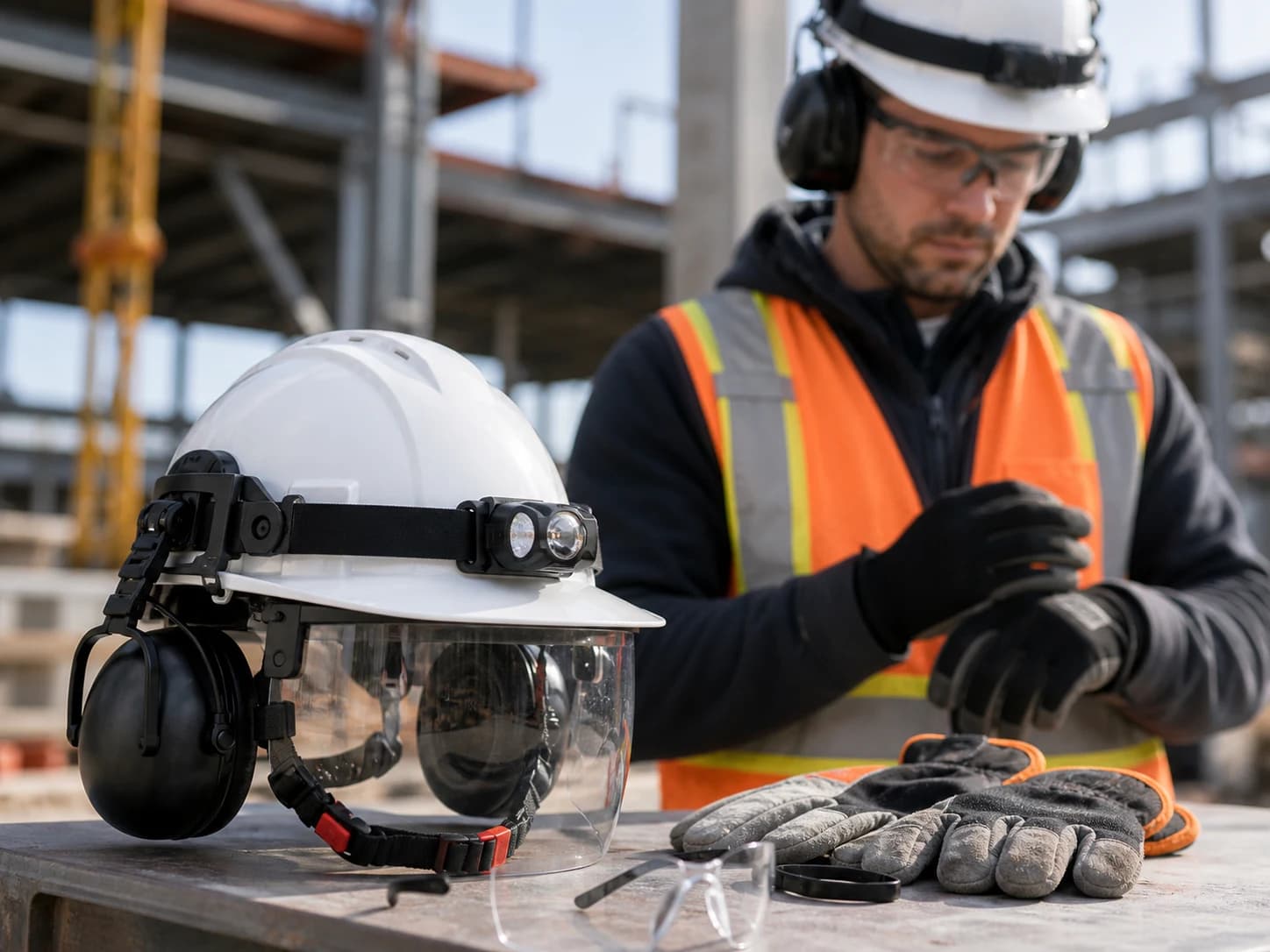
Cap style hard hats may fit:
- general construction access
- electrical and mechanical trades
- concrete, framing, drywall, and interior trades
- workers using face shields or welding adapters
- workers using helmet-mounted earmuffs
- workers using headlamps or mounted accessories
- visitor and inspector stock
- warehouse, yard, and staging work connected to construction
The practical advantage is compatibility. Many accessory systems are designed around cap style shells. Face shield brackets, earmuffs, slots, headlamps, and rain troughs may fit more predictably on cap style hard hats than on full brim models.
Cap style is also familiar to workers. That matters for adoption, fit checks, storage, and replacement parts. For a contractor trying to standardize across many sites, a cap style hard hat may be easier to manage than a full brim product if accessories are common.
The limitation is weather coverage. A cap style brim helps at the front, but it does not give the same all-around shade or rain runoff as a full brim shell. Outdoor crews may prefer full brim when the rest of the PPE system allows it.
OSHA, ANSI, Type, And Class Still Come First
Brim shape is not the compliance category. OSHA's construction head protection rule, 29 CFR 1926.100, requires protective helmets where workers face possible head injury from impact, falling or flying objects, or electrical shock and burns. It points to ANSI Z89.1 consensus standards and requires electrical insulation specifications where high-voltage electrical shock and burns are an exposure.
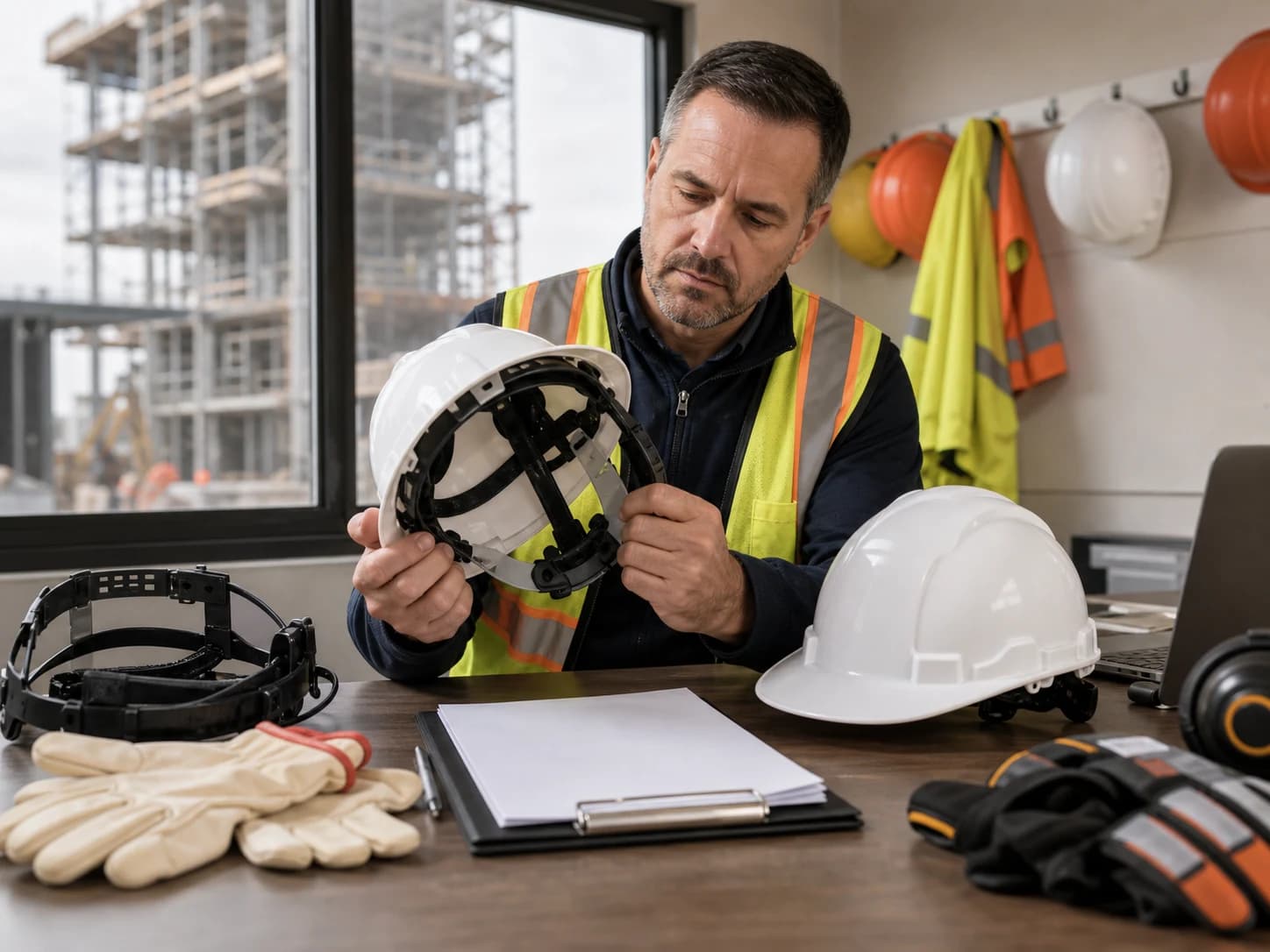
The practical purchasing order should be:
- Decide whether head protection is required by the hazard.
- Decide Type I or Type II by impact direction.
- Decide Class G, Class E, or Class C by electrical exposure.
- Decide vented or non-vented shell by electrical class, comfort, and environment.
- Decide full brim or cap style by weather, accessory fit, and worker acceptance.
- Confirm markings, data sheet, instructions, replacement parts, and field fit.
OSHA's head protection safety bulletin explains that head protection includes two impact types and three electrical classes, and that employers should select head protection based on jobsite hazards. The ISEA head protection overview also separates Type I/Type II impact protection from Class G/E/C electrical protection.
Do not use brim shape as a shortcut. A full brim hard hat can still be the wrong product if the electrical class is wrong. A cap style hard hat can still be the wrong product if the worker needs Type II side-impact protection. A helmet-style product can still be wrong if it is vented Class C in an electrical work zone.
Full Brim vs Cap Style Comparison Table
Use this table before asking suppliers for samples.

| Buying factor | Full brim hard hats | Cap style hard hats |
|---|---|---|
| Main advantage | All-around shade, rain runoff, and edge coverage from nuisance debris. | Broad accessory compatibility and familiar construction fit. |
| Common work setting | Outdoor civil, road, bridge, utility-adjacent, and weather-heavy sites. | General construction, trades, face shield work, hearing protection, and visitor stock. |
| Weather performance | Better all-around sun and rain coverage. | Front brim helps, but side and rear coverage are limited. |
| Accessory fit | Can be more limited with earmuffs, face shields, and some mounted accessories. | Often easier with standard slots, brackets, shields, and earmuffs. |
| Electrical class | Must be verified separately. | Must be verified separately. |
| Impact type | Must be verified separately. | Must be verified separately. |
| Worker acceptance | Often preferred outdoors, especially in sun or rain. | Often preferred where accessories, low clearance, or standardization matter. |
| Main buying risk | Buying full brim for weather but missing accessory compatibility. | Buying cap style as a default when outdoor weather exposure needs more coverage. |
| RFQ wording | Ask for full brim, Type/Class, accessory list, and replacement parts. | Ask for cap style, Type/Class, accessory list, and replacement parts. |
The table should guide supplier questions, not replace product documentation. Ask for actual markings, data sheets, certificates where relevant, and sample units before a large purchase.
Construction Scenarios: Which Brim Style Fits?
Different construction roles can need different brim styles inside one contractor order.

| Construction scenario | Better starting point | Why |
|---|---|---|
| Road and bridge crews | Full brim or site-approved outdoor shell | Sun, rain, traffic exposure, and long outdoor wear often drive comfort. |
| Electrical installation | Cap style or full brim only after Class review | Electrical class and accessory compatibility matter before brim shape. |
| Concrete and civil work | Full brim where accessories allow | Outdoor exposure and rain runoff can matter during long shifts. |
| Interior trades | Cap style | Weather coverage is less important, and accessories may matter more. |
| Demolition and renovation | Cap style or Type II review | Goggles, face shields, respirators, and hearing protection often control the system. |
| Steel and scaffold work | Type II/retention review first | Side impact and chin strap needs may matter more than brim shape. |
| Utility-adjacent work | Full brim may help outdoors, but Class E/G review comes first | Weather exposure is real, but electrical exposure cannot be ignored. |
| Visitor stock | Cap style Class G baseline is often easiest | Simple issue, predictable fit, and standard accessories are easier to manage. |
| Outdoor supervision | Full brim may fit | Supervisors often walk open sites in sun and rain, with less accessory load. |
The right answer can be "both." A contractor may buy full brim hard hats for outdoor civil crews and cap style hard hats for mechanical, electrical, demolition, and accessory-heavy crews.
Sun, Rain, And Weather Exposure
Weather is the strongest reason to consider full brim hard hats. Outdoor construction crews often deal with direct sun, rain, wind, dust, and long wear time. A full brim shell can make the hard hat more acceptable because it gives all-around coverage.
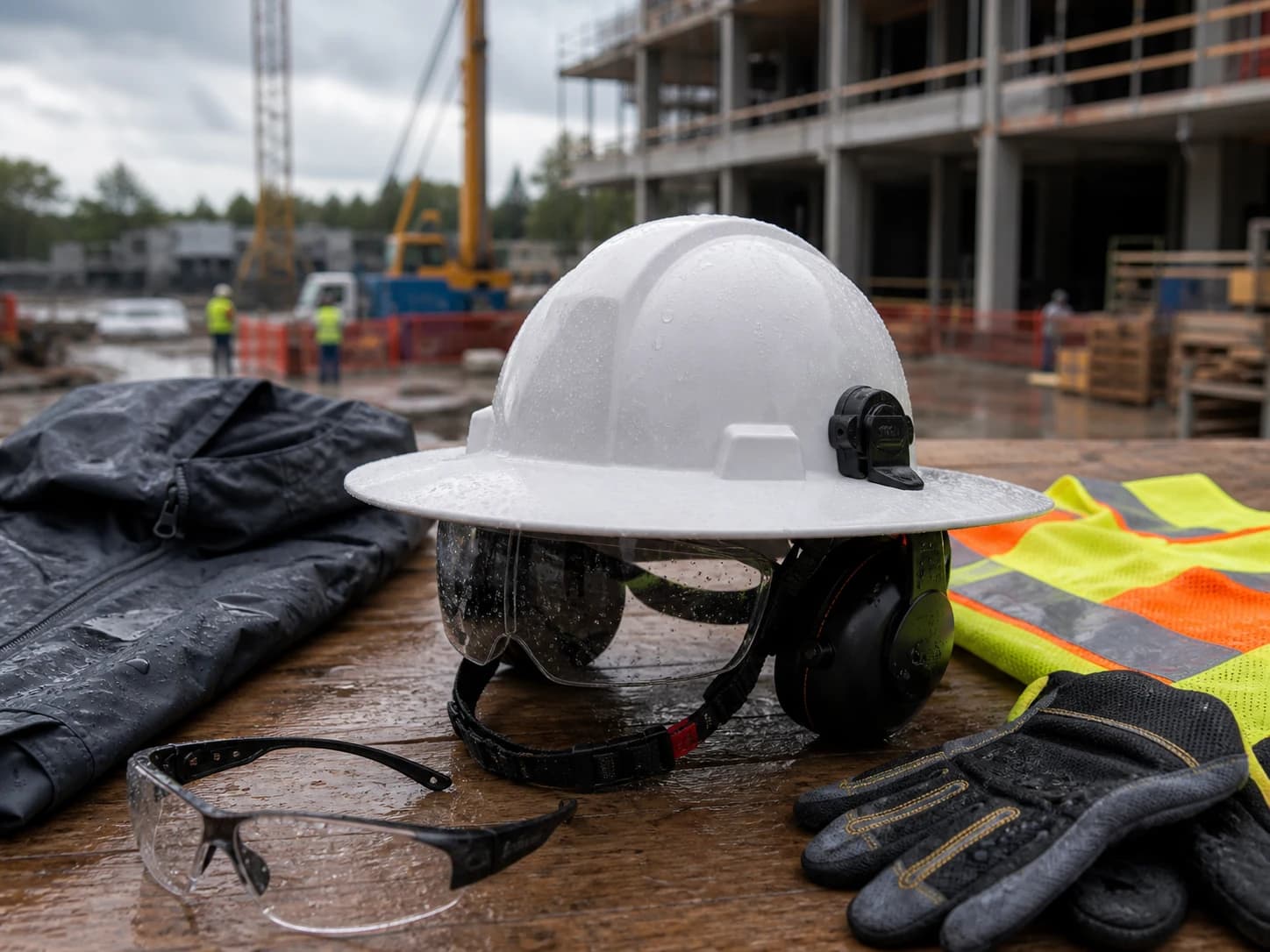
Full brim can help with:
- sunlight from side and rear angles
- rain runoff away from the face and collar
- nuisance debris that falls or blows from different directions
- outdoor worker acceptance during long shifts
- neck shade compatibility where manufacturer-approved accessories are available
Cap style can still work outdoors, especially where accessories matter more than shade. For example, a worker using a face shield, earmuffs, headlamp, or welding adapter may get more value from a compatible cap style system than from a full brim shell that blocks the accessory setup.
Weather exposure also connects to heat stress. A full brim hard hat can help with shade, but it does not replace hydration, rest breaks, shade areas, breathable clothing, and heat planning. Use the heat stress PPE guide when outdoor head protection is part of a larger hot-weather PPE plan.
Accessory Compatibility: Face Shields, Earmuffs, Lights, And Chin Straps
Accessory compatibility is the biggest reason many buyers stay with cap style hard hats. Construction head protection rarely works alone. The same worker may need safety glasses, goggles, face shield, hearing protection, respirator, headlamp, chin strap, rain gear, or fall protection.
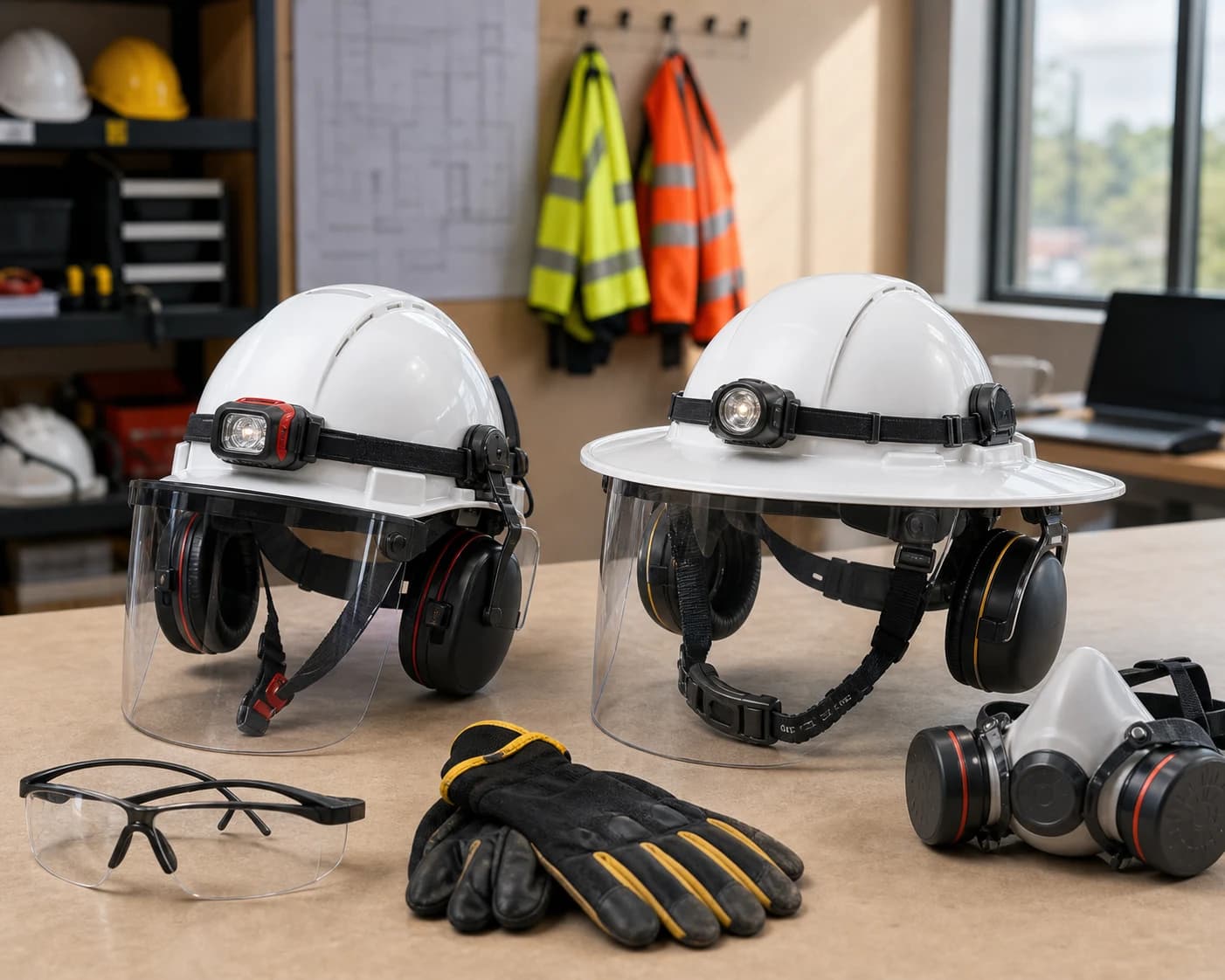
Check full brim and cap style samples with:
- face shields and brackets
- helmet-mounted earmuffs
- safety glasses and sealed goggles
- respirator straps
- welding adapters
- headlamps and mounted lights
- chin straps and retention systems
- neck shades and sun shades
- winter liners and rain accessories
- communication headsets
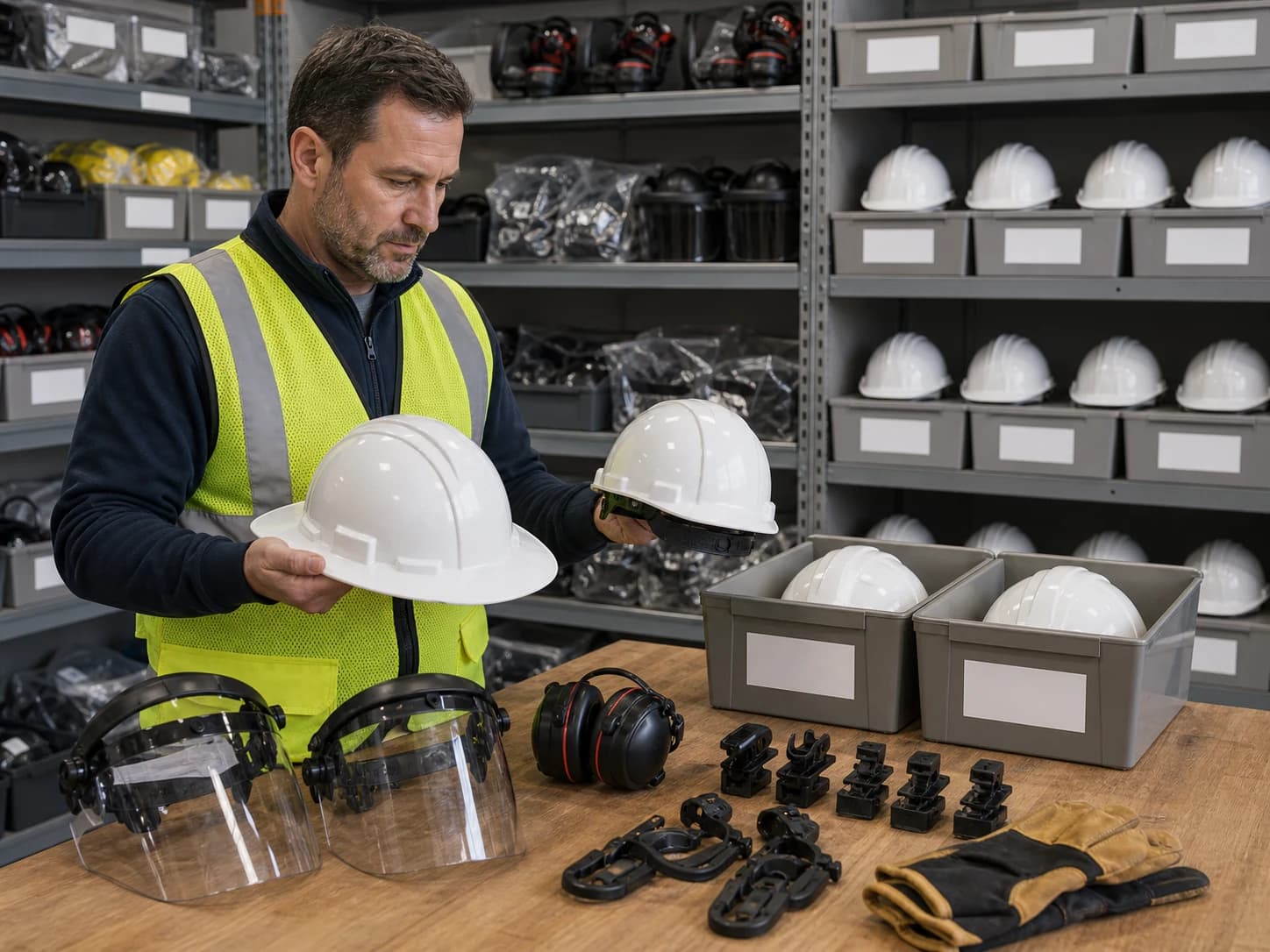
Full brim shells can interfere with some brackets, earmuffs, and face shields. Some full brim models have accessory systems that solve this, but the buyer has to confirm model-specific compatibility.
Cap style shells usually have broader accessory support, but that does not mean every cap style product works with every accessory. The buyer should ask for a manufacturer-approved accessory list and test the complete PPE combination before the bulk purchase.
Do not drill, cut, or modify a brim to make accessories fit unless the manufacturer explicitly permits it. Unauthorized modifications can weaken the shell, affect electrical protection, or void product instructions.
Full Brim, Cap Style, And Electrical Work
Electrical work is not decided by brim shape. It is decided by electrical exposure, product marking, shell construction, and the employer's hazard assessment.

For electrical crews, the buyer should first ask:
- Is electrical shock or burn exposure possible?
- Is the work near energized conductors, overhead lines, temporary power, panels, switchgear, or electrical installation?
- Is Class E or Class G required?
- Does the shell need to be non-vented?
- Does the product documentation support the required class?
- Do face shields, safety glasses, hearing protection, and chin straps fit the selected shell?
Only after those questions should the buyer compare full brim and cap style options.
A full brim Class E hard hat may be useful for outdoor utility-adjacent work if accessories fit and the product documentation supports the class. A cap style Class E hard hat may be more practical for electricians who need face shields, lamps, hearing protection, or tighter accessory setups.
Do not choose a full brim or cap style product because it looks more rugged. Check the marking and documentation.
Bulk Buying And Inventory Control
Bulk hard hat orders often fail because the buyer treats brim shape as a color choice. In reality, brim style affects stock planning, replacement parts, accessories, and worker issue rules.
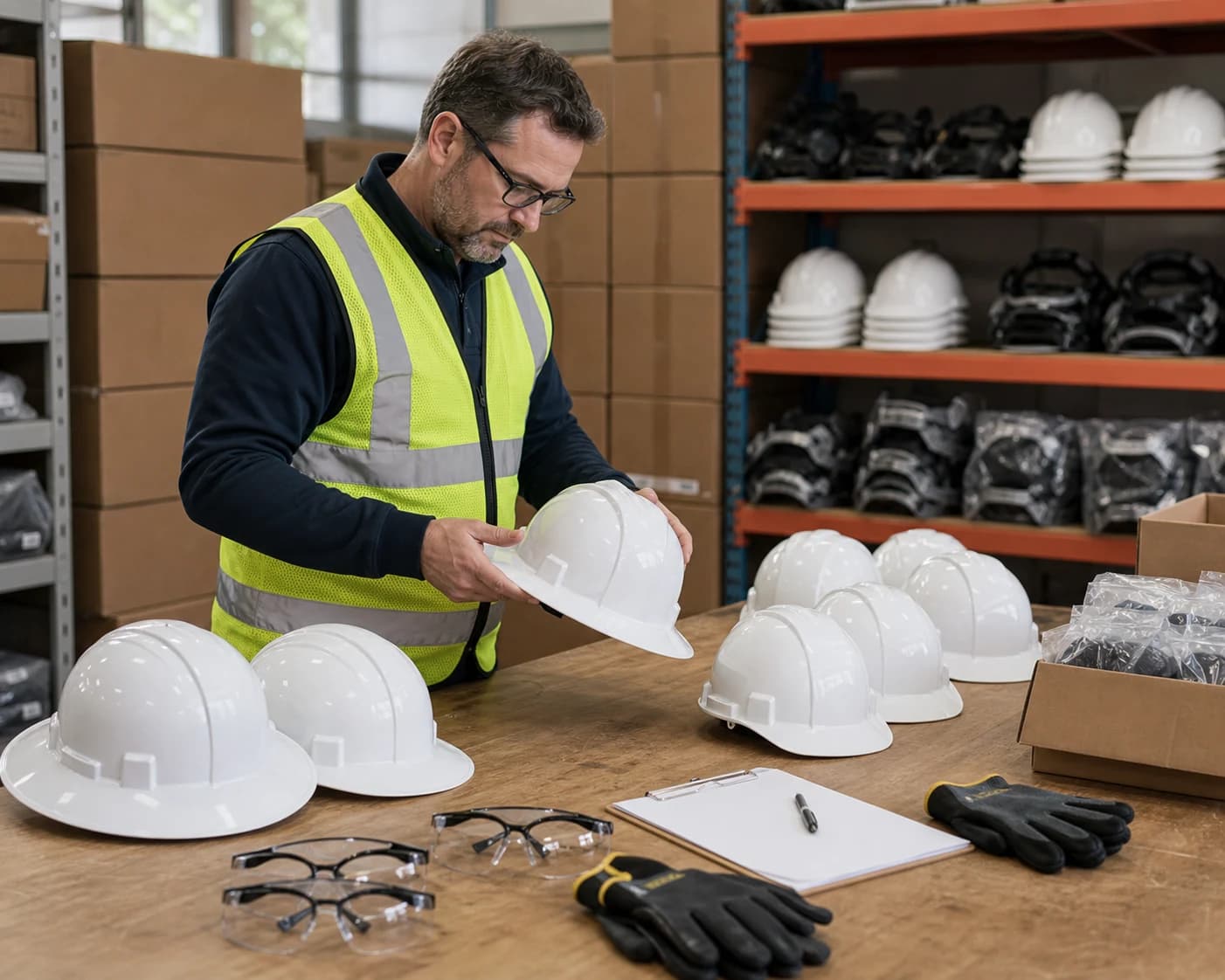
Before placing a bulk order, split quantities by:
- work zone
- trade or crew
- indoor vs outdoor work
- sun and rain exposure
- accessory needs
- electrical exposure
- Type I vs Type II needs
- full brim vs cap style preference after sample trials
- replacement suspension and chin strap needs
Do not mix very similar hard hats without a clear issue system. If a full brim Class C model and a cap style Class E model are stored together, workers may grab the wrong shell. Use bins, colors, labels, supervisor issue rules, or separate stock locations.
For larger projects, buy sample units first. Have actual workers test the full PPE setup: hard hat, glasses, goggles, earmuffs, face shield, respirator, chin strap, vest collar, hoodie or approved liner, and fall protection if used. A product that looks good in a catalog may fail when worn with the rest of the kit.
How To Write Full Brim Or Cap Style Into An RFQ
A weak RFQ says:

Need construction hard hats. Full brim preferred. Send best price.
A stronger RFQ says:
Please quote construction head protection meeting ANSI/ISEA Z89.1. Provide separate options for full brim and cap style shells. Include Type I or Type II, Class G/E/C electrical rating, vented or non-vented status, suspension type, size range, chin strap options, manufacturer-approved accessory list, face shield and earmuff compatibility, replacement suspensions, marking photos, data sheet, sample lead time, MOQ, packaging, and price breaks.
For contractor buying, split the RFQ into role-based lines:
| RFQ line | Example wording |
|---|---|
| Outdoor civil crew | Full brim hard hat, Type/Class as required, rain and sun exposure considered, accessory list required. |
| General site crew | Cap style Class G hard hat, Type I or Type II as required, replacement suspension available. |
| Electrical crew | Class E or Class G as required, non-vented where required, brim style chosen after accessory review. |
| Face shield or hearing-heavy crew | Cap style hard hat or compatible full brim model, approved brackets and earmuffs required. |
| Visitor stock | Durable cap style Class G baseline with simple sizing and replacement suspensions. |
Use the Construction PPE RFQ Template to keep these requirements consistent across suppliers.
Inspection, Fit, And Replacement Checks
Full brim and cap style hard hats need the same basic field discipline. The shell shape does not remove the need for inspection, correct fit, and replacement parts.

Before issue, check:
- standard marking
- Type I or Type II marking
- Class G, Class E, or Class C marking
- shell style and vent status
- manufacturer name or identification
- size range
- shell condition
- suspension condition
- chin strap condition where used
- accessory approval and fit
- reverse-wearing marking if reverse wearing is needed
- date code or service-life guidance
- whether the shell was drilled, cut, painted, heat damaged, or chemically damaged
Fit matters because brim style can change worker perception. A full brim shell may feel larger or catch more wind. A cap style shell may feel more familiar but provide less shade. Workers should test fit while moving, bending, looking up, wearing eye protection, and using the accessories required for the task.
Buy replacement suspensions with the first order. Many sites keep shells longer than suspensions, and workers may swap incompatible parts if replacements are not available.
Common Buying Mistakes
The most common full brim vs cap style hard hat mistakes are predictable.
Mistake 1: Treating brim shape as the main safety rating. Brim shape affects usability, not the whole protection rating. Type and Class still matter.
Mistake 2: Buying full brim for everyone because the site is outdoors. Full brim may help outdoors, but face shields, earmuffs, respirators, and lamps may make cap style more practical for some crews.
Mistake 3: Buying cap style for everyone because it is familiar. Cap style may be easy to manage, but outdoor crews may need better sun and rain coverage.
Mistake 4: Ignoring electrical class. Full brim and cap style products can have different electrical classes. Check the marking and documentation.
Mistake 5: Not testing accessories before bulk purchase. Accessory compatibility should be checked before ordering hundreds of shells.
Mistake 6: Ignoring replacement parts. Suspensions, chin straps, sweatbands, and approved accessories should be available for the selected model.
Buyer Checklist
Use this checklist before approving a full brim or cap style hard hat order.

- Confirm the required standard and product marking.
- Choose Type I or Type II by impact exposure.
- Choose Class G, Class E, or Class C by electrical exposure.
- Decide whether vented or non-vented shell is allowed.
- Compare full brim and cap style by work zone, weather, and accessory load.
- Test face shields, earmuffs, goggles, respirators, headlamps, chin straps, and liners.
- Run sample fit trials with workers from each crew.
- Check replacement suspensions and approved accessories.
- Separate inventory by crew, class, and shell style if similar products could be confused.
- Put brim style, Type, Class, accessories, and documentation into the RFQ.
For a fast first pass, use the Hard Hat Class Decoder, then turn the result into supplier-ready RFQ wording.
FAQ
What is the difference between full brim and cap style hard hats?
Full brim hard hats have a brim around the entire shell. Cap style hard hats have a front brim. Full brim models often help with all-around sun and rain coverage, while cap style models often fit common accessories more easily.
Are full brim hard hats safer than cap style hard hats?
Not automatically. Safety depends on the product's Type, Class, design, fit, condition, and suitability for the hazard. Brim shape is only one selection factor.
Are cap style hard hats good for construction?
Yes. Cap style hard hats are common in construction because they are familiar and often work well with face shields, earmuffs, headlamps, and other accessories. Buyers still need to confirm Type, Class, fit, and documentation.
When should I choose a full brim hard hat?
Choose full brim when outdoor weather, sun, rain runoff, and all-around nuisance debris coverage matter, and when the required accessories fit the shell.
When should I choose a cap style hard hat?
Choose cap style when accessory compatibility, standardization, lower-profile front access, or familiar site issue matters more than all-around brim coverage.
Does full brim or cap style affect electrical protection?
Brim shape does not define electrical class. Electrical protection is shown by the product's Class marking and documentation. Always confirm Class G, Class E, or Class C separately.
Can full brim hard hats use face shields and earmuffs?
Some can, but compatibility is more model-specific. Ask the supplier for a manufacturer-approved accessory list and test the actual face shield or earmuff setup before bulk purchase.
Next Step For Construction Buyers
Do not choose full brim or cap style hard hats by appearance alone. Start with hazard, Type, Class, vent status, accessory load, weather exposure, and worker fit. Then test sample units before buying in bulk.
For the full hard hat cluster, use:
- Construction hard hat types
- Vented vs non-vented hard hats
- Class E vs Class G vs Class C hard hats
- Type 1 vs Type 2 hard hats
- Hard hat color codes on construction sites
- Safety helmet vs hard hat for construction
- Hard Hat Class Decoder
- Bulk construction PPE procurement guide
If you are building a complete jobsite package, connect the brim-style decision with the construction PPE solution, contractor PPE kit checklist, construction eye and face protection guide, and construction hearing protection guide.
Sources
Related PPE
Source the PPE covered in this guide
Move from research to a buyer shortlist with the matching solution page, category paths, selected PPE options, and RFQ next steps.
Related Tools
Turn this guide into a faster PPE shortlist
Use the matching tools to check footwear sizing, decode certification labels, or estimate order quantities before you move from research to purchasing.
Hard Hat Class Decoder
Decode Type I vs Type II and Class G, Class E, and Class C before writing head protection into an RFQ.
Decode hard hatsPPE Quantity Calculator
Estimate monthly usage, replacement cycles, and budget needs before you place a bulk PPE order.
Plan quantitiesAI Quote Generator
Turn site conditions, hazards, and worker roles into a shortlist of PPE SKUs and a fast quote request.
Build a quote