Buyer next step
Turn this guide into a sourced PPE shortlist with standards, quantities, and role-based kit notes.
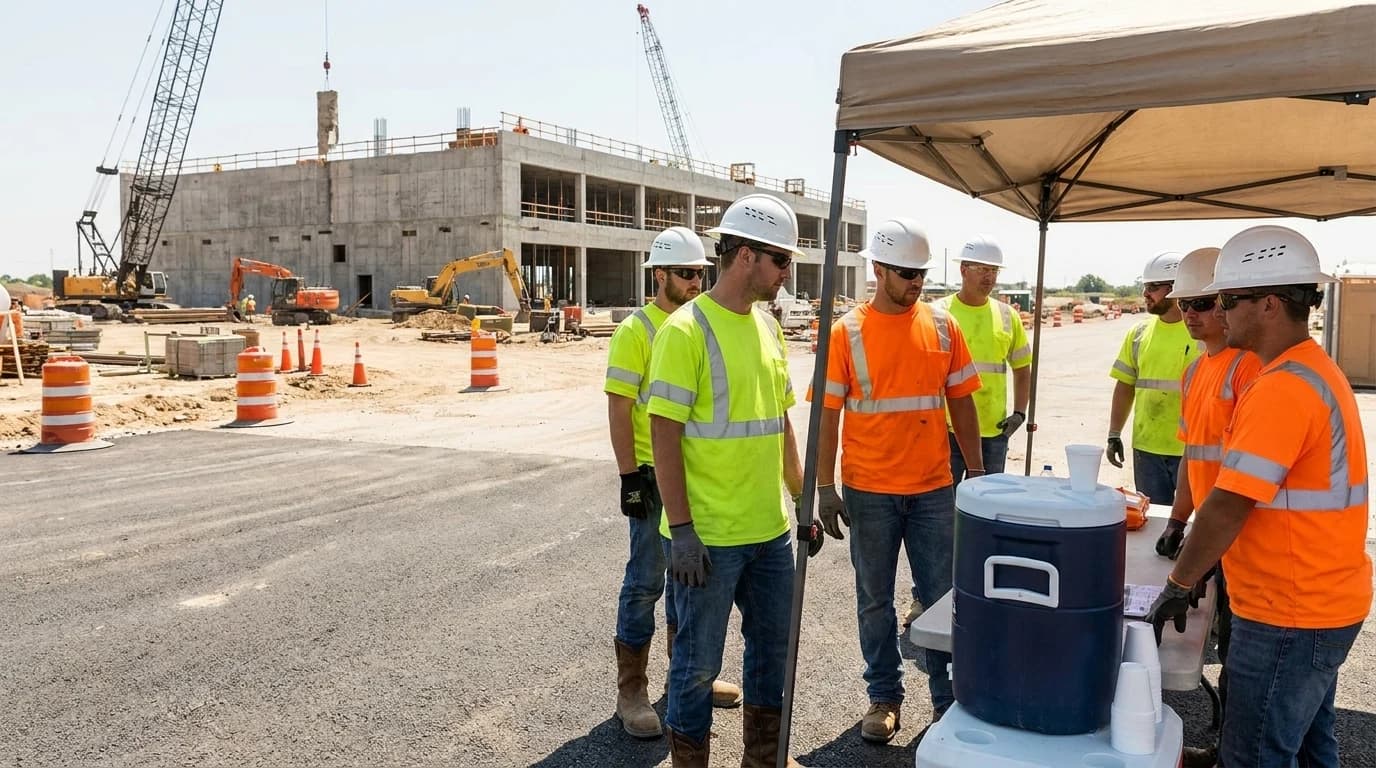
Heat stress is not only a weather problem. On construction sites, heat risk is shaped by the task, work pace, sunlight, humidity, radiant heat from asphalt or concrete, enclosed spaces, heavy clothing, respirators, helmets, gloves, boots, and how quickly a worker has been acclimatized.
That makes heat stress a PPE planning issue as well as a supervision issue. PPE can help protect workers from sun, burns, eye irritation, and contact hazards, but PPE can also trap body heat, reduce cooling, and make heavy work harder. A strong summer construction PPE program should balance protection, breathability, fit, visibility, hydration, shade, and replacement stock.
This guide is the hot-weather companion to the construction PPE checklist, the high-visibility clothing guide, and the bulk construction PPE procurement guide. For jobsite-wide PPE planning, start with the complete PPE solution for construction sites.
Quick Heat Stress PPE Checklist for Construction
Use this checklist before hot-weather work starts:
- Has the site reviewed heat exposure for the task, shift length, location, humidity, radiant heat, and work pace?
- Are new and returning workers given time to build heat tolerance before full-load work?
- Does the work plan include water, rest, shade, emergency response, and supervisor monitoring?
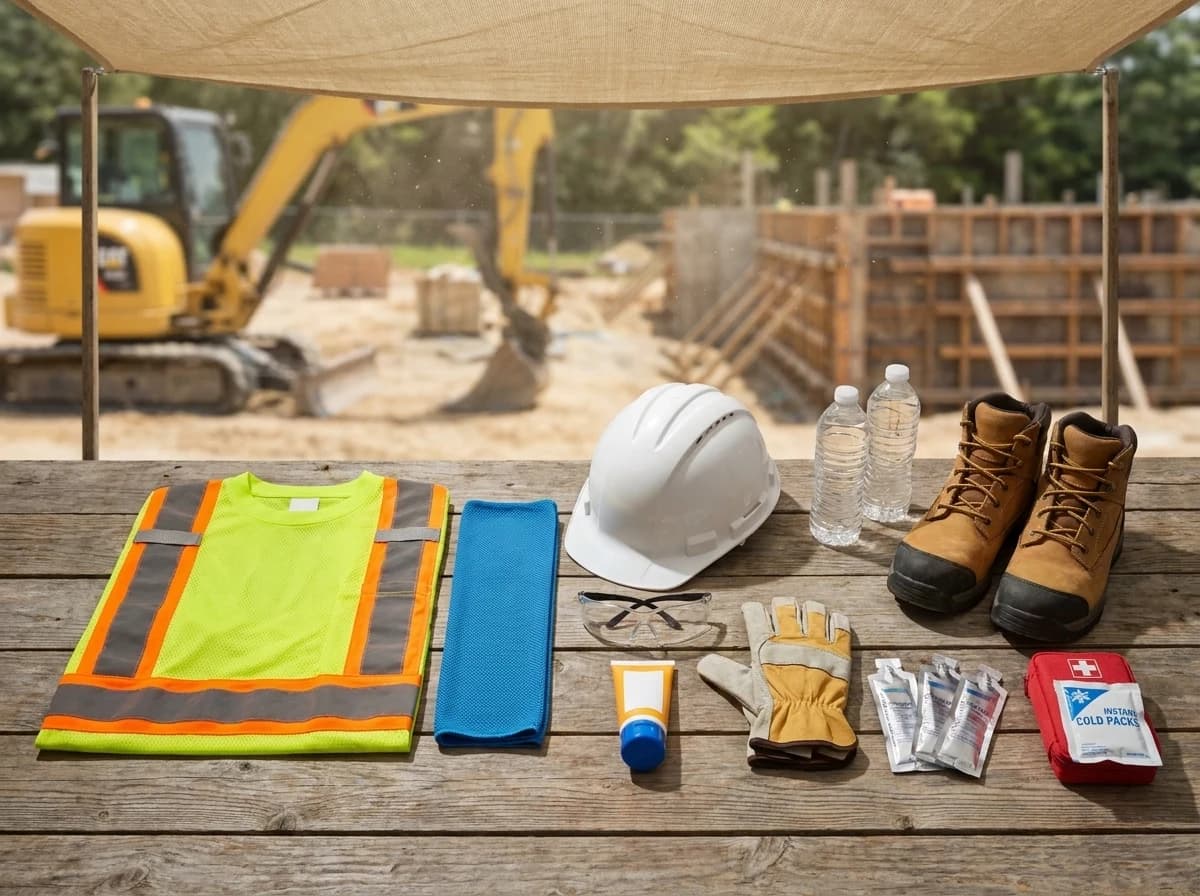
- Is high-visibility clothing breathable enough for the heat while still meeting the required class and traffic exposure?
- Are helmets or hard hats compatible with sun protection, sweatbands, cooling liners, hearing protection, and eye protection?
- Are safety glasses or goggles selected to reduce fogging, sweat irritation, dust, and glare?
- Are gloves protective enough for the task without trapping unnecessary heat or reducing grip with sweat?
- Are safety boots breathable where possible while still meeting toe, puncture, slip, chemical, or electrical requirements?
- Has respiratory protection been reviewed for heat burden, fit, filter loading, communication, and break schedules?
- Are cooling towels, cooling vests, shade canopies, hydration stations, electrolyte options, and replacement PPE available where needed?
- Are supervisors trained to recognize heat illness symptoms and respond quickly?
- Are workers encouraged to report heat symptoms early without fear of being blamed or ignored?
PPE is only one layer. If the work plan relies on cooling products while ignoring acclimatization, workload, water, rest, and shade, the program is incomplete.
Why Heat Stress Belongs in Construction PPE Planning
Construction workers often wear protective equipment that can increase heat load:
- high-visibility vests, jackets, pants, and rainwear
- helmets, hard hats, face shields, and neck shades
- cut-resistant gloves, chemical gloves, or impact gloves
- safety boots with waterproof membranes or puncture plates
- respirators, cartridges, filters, and coveralls
- fall protection harnesses and tool belts
Each item may be necessary for the task, but together they can reduce heat loss. A worker tying rebar in direct sun, cutting concrete in a respirator, paving asphalt, roofing, flagging traffic, or climbing scaffold can experience heat stress faster than the temperature alone suggests.
OSHA's heat exposure overview notes that occupational heat exposure depends on multiple factors, including physical activity, temperature, humidity, sunlight, heat sources, air movement, and clothing or protective gear that hampers cooling. For construction teams, that means PPE selection should be part of the heat hazard assessment, not an afterthought.
2026 OSHA Heat Enforcement Context
On April 10, 2026, OSHA updated its National Emphasis Program for outdoor and indoor heat-related hazards. The revised program focuses inspections and outreach on industries and workplaces where heat risk is most likely, including outdoor construction work.
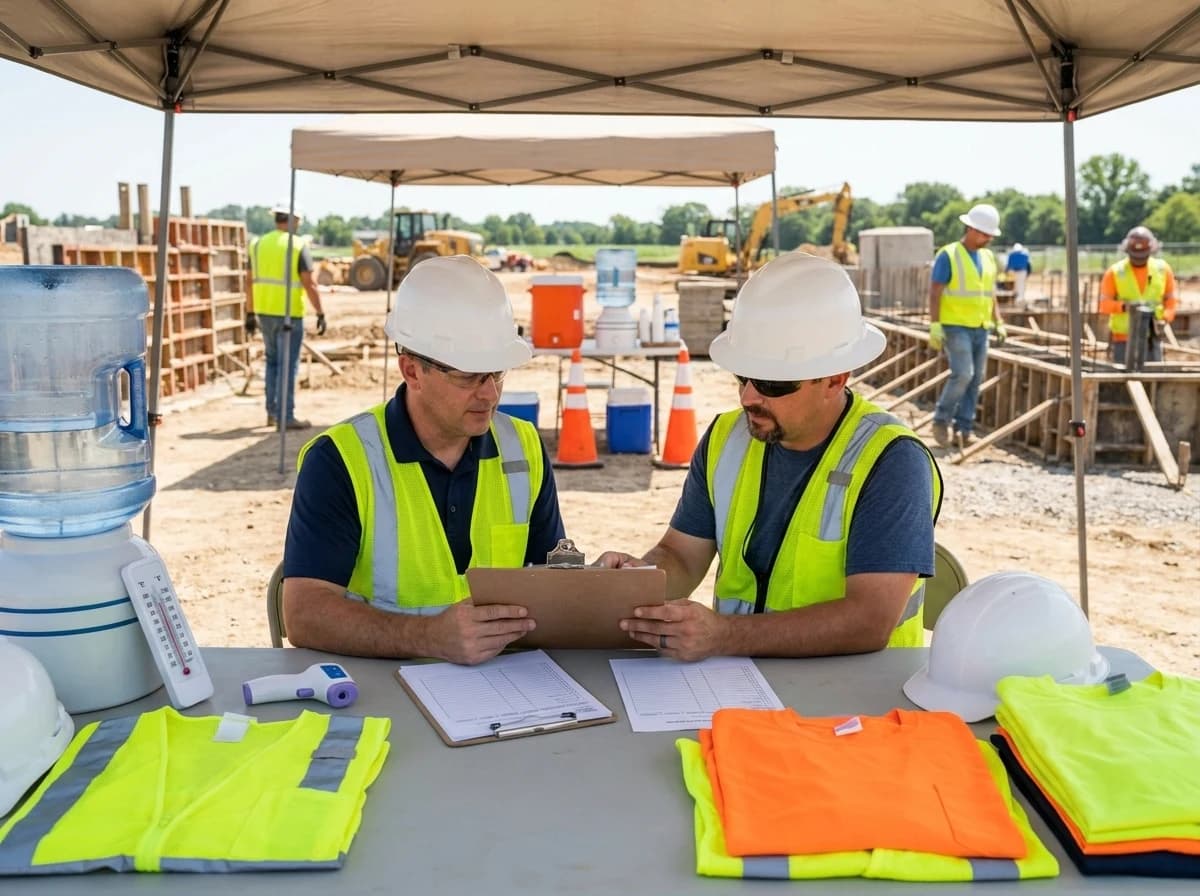
For construction employers and PPE buyers, the practical message is simple:
- Heat illness prevention remains an enforcement priority.
- Heat risk can trigger inspection attention during heat advisory or warning conditions.
- Employers should be able to show a real heat prevention plan, not only a box of water bottles.
- PPE choices should not make heat exposure worse without controls to offset the added burden.
OSHA also emphasizes acclimatization. Workers who have not recently worked in hot environments need time to build tolerance. This is especially important for new workers, returning workers, temporary workers, and crews moved suddenly into summer outdoor tasks.
Use OSHA's heat resources as a compliance reference, but build the field checklist around the actual work: roofing, roadwork, concrete, demolition, steel, scaffolding, utility work, equipment operation, or confined and semi-enclosed spaces. OSHA's heat hazard recognition guidance also highlights that protective clothing and equipment can reduce the body's ability to lose heat, so PPE should be reviewed together with workload and environmental conditions.
Heat Hazard Assessment Before Choosing PPE
Before buying cooling PPE or summer garments, answer these questions:
| Assessment question | Why it matters | PPE implication |
|---|---|---|
| Is the work in direct sun, shade, indoors, or near radiant heat? | Sunlight, asphalt, roofing, concrete, engines, and enclosed areas change heat load | Sun protection, cooling products, breathable garments, and more rest capacity may be needed |
| How heavy is the work? | Metabolic heat rises quickly during lifting, climbing, cutting, shoveling, rebar work, and demolition | Lightweight PPE and work-rest planning become more important |
| What PPE cannot be removed? | Respirators, gloves, helmets, hi-vis, and fall protection may be mandatory | Select lower-burden versions where allowed and plan breaks around required PPE |
| Is the worker new or returning? | Lack of acclimatization is a major risk factor | Issue cooling support early and reduce full-load exposure during the first days |
| Does the work include traffic or heavy equipment? | Visibility cannot be sacrificed for comfort | Use breathable hi-vis that still meets the exposure class |
| Is dust, silica, or fume exposure present? | Respirators increase breathing and heat burden | Pair respiratory protection with heat controls, fit checks, and filter management |
Do not treat heat PPE as a substitute for engineering controls, administrative controls, training, rest, shade, hydration, emergency response, or supervisor monitoring.
Breathable High-Visibility Clothing for Hot Weather
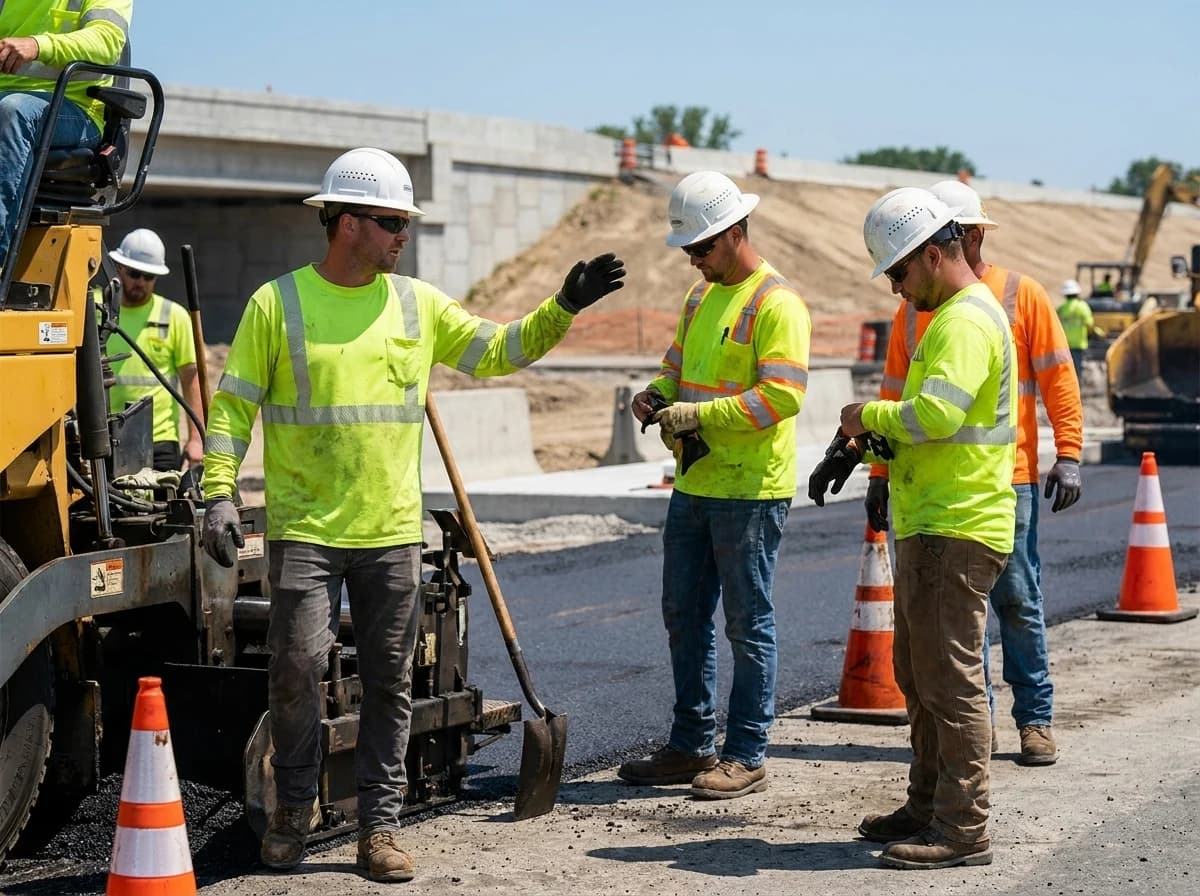
High-visibility clothing is often non-negotiable in roadwork, bridge work, equipment zones, logistics yards, and night shifts. In hot weather, the buying question is not "vest or no vest." It is which garment provides the required visibility with the lowest practical heat burden.
Look for:
- mesh or breathable fabric where the standard and jobsite rules allow it
- lightweight high-visibility vests for lower-exposure daytime work
- Class 2 or Class 3 garments where traffic, equipment, speed, or low visibility requires them
- moisture-wicking base layers that do not hide the reflective garment
- high-visibility shirts where they can reduce the need for extra layers
- reflective tape that remains effective after sweat, dust, washing, and UV exposure
- size ranges that fit workers without hanging loose or restricting movement
Do not let workers cover hi-vis with non-reflective cooling towels, hoodies, rain jackets, or backpacks. If workers need rainwear or sun protection, those outer layers must preserve visibility.
For class selection, color, tape layout, and replacement rules, use the high-visibility clothing guide. For traffic-heavy projects, connect this topic to the road and bridge construction PPE solution.
Head, Face, and Sun Protection
Head protection still has to match impact, electrical, and jobsite requirements. Heat does not remove the need for helmets or hard hats, but it changes the accessory plan.
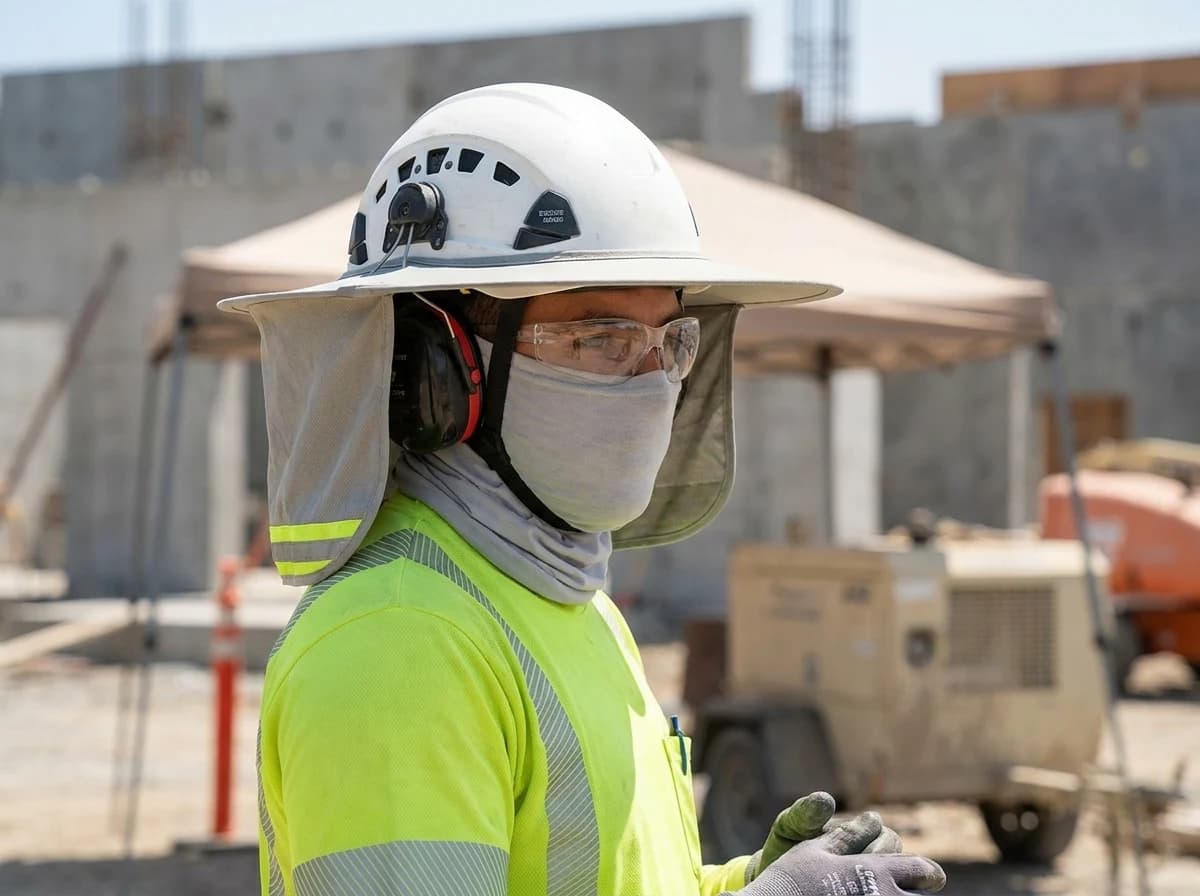
Consider:
- vented helmets only where electrical and site requirements allow them
- sweatbands that do not interfere with the suspension system
- neck shades or brim attachments that preserve visibility and do not create snag hazards
- cooling liners that are compatible with the helmet manufacturer's instructions
- clear or tinted eye protection selected for the actual light condition
- anti-fog eyewear for workers moving between shade, sun, humid air, and enclosed spaces
- sunscreen and skin coverage for exposed workers
Do not drill, cut, tape over, or improvise helmet accessories in a way that can weaken the shell, block suspension, or interfere with fit. When head protection must work with eyewear, hearing protection, respirators, and sun protection, verify compatibility before bulk purchase.
For hard hat classes, helmet types, and accessory compatibility, use the construction hard hat types guide. For upgrade decisions, use the safety helmet vs hard hat guide.
Cooling PPE: Vests, Towels, and Shade Kits
Cooling PPE can help, but only when it fits the task and is maintained properly.
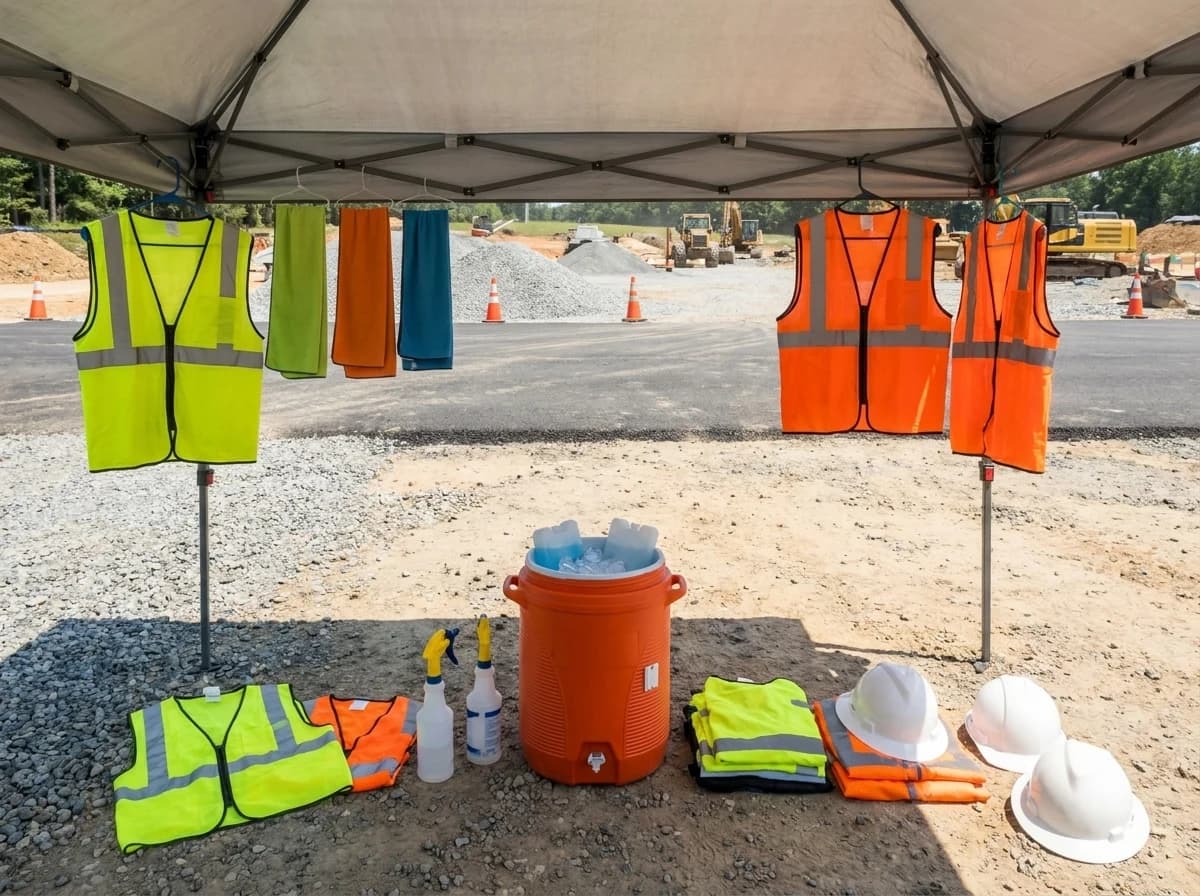
Common options include:
- evaporative cooling towels
- evaporative cooling vests
- phase-change cooling vests
- shade canopies and pop-up cooling stations
- helmet shades and neck shades
- cooling sleeves
- hydration packs where allowed by the task
- insulated water coolers and electrolyte stations
Selection depends on the work. Evaporative products may work better in dry conditions than in high humidity. Phase-change products may add weight. Hydration packs can interfere with harnesses, machinery, or confined work. Cooling towels can hide reflective tape if worn incorrectly.
Procurement should include spare units, cleaning instructions, storage, charging or re-cooling logistics, and replacement rules. A cooling vest that cannot be recharged during the shift may not solve the exposure that triggered the purchase.
Water, Rest, Shade, and Acclimatization
Hot-weather PPE only works inside a wider heat illness prevention routine. A breathable vest or cooling towel cannot compensate for a crew that has no water access, no rest plan, no shaded recovery point, and no supervisor watching for early symptoms.
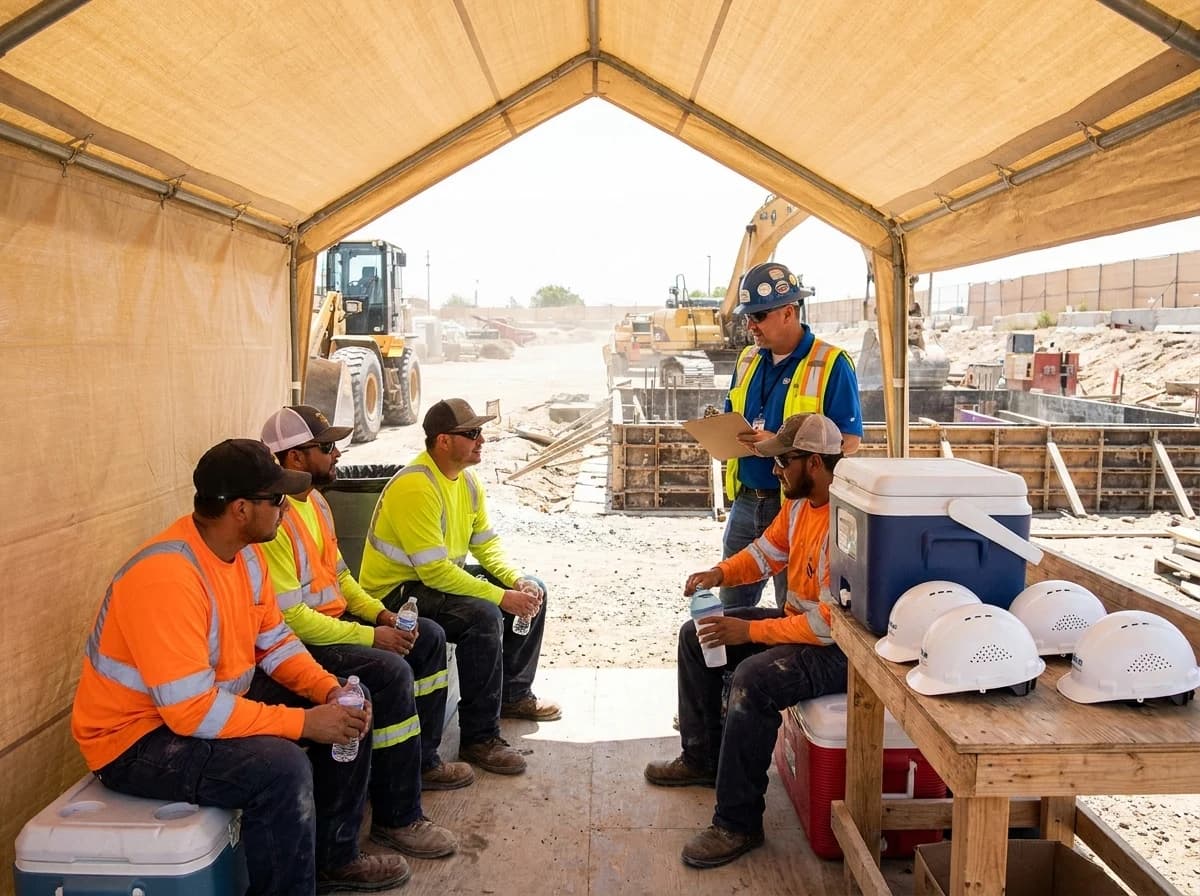
The field plan should define:
- where drinking water is located
- how often workers are reminded or allowed to drink
- where shaded or cooled rest areas are available
- who has authority to slow or stop work during heat conditions
- how new and returning workers are acclimatized
- how supervisors monitor crews during the first hot days of a project
- how the site responds when a worker reports dizziness, weakness, headache, nausea, confusion, cramps, or unusual fatigue
Acclimatization is especially important. OSHA notes that many outdoor heat fatalities occur during the first few days of work in warm or hot environments because the body has not yet built tolerance. That means the highest-risk worker may not be the least experienced construction worker. It may be a skilled worker returning after time away, moving from indoor work to outdoor work, or starting a new high-heat task after cooler weather.
PPE buyers should not ignore this operational side. If a project buys cooling vests, breathable hi-vis, and sweatbands but does not plan water, rest, shade, and acclimatization, the purchasing file looks stronger than the actual field protection.
Gloves, Footwear, and Socks in Hot Conditions
Hand and foot protection are often overlooked in heat stress planning. Sweat changes grip, fit, skin condition, and worker behavior.
For gloves, check:
- whether the glove is more protective than the task requires
- whether coated gloves trap heat or sweat excessively
- whether grip remains reliable when wet with sweat
- whether cut, impact, chemical, or heat protection is still required
- whether workers have replacement gloves when pairs become wet, dirty, or stiff
For footwear, check:
- breathable uppers where the hazard allows them
- waterproof boots only where water, slurry, chemicals, or wet work justify them
- moisture-wicking socks and spare socks for long shifts
- outsole grip on hot asphalt, concrete, gravel, rebar, ladders, and machine steps
- fit changes when feet swell in hot weather
- blister, skin, and fatigue complaints that indicate poor fit
For deeper selection, use the construction gloves guide and the construction safety footwear guide.
Respiratory Protection and Heat Burden
Respirators can add significant heat and breathing burden, especially during concrete cutting, demolition, sweeping, silica exposure, tunneling, interior renovation, and dusty equipment work.
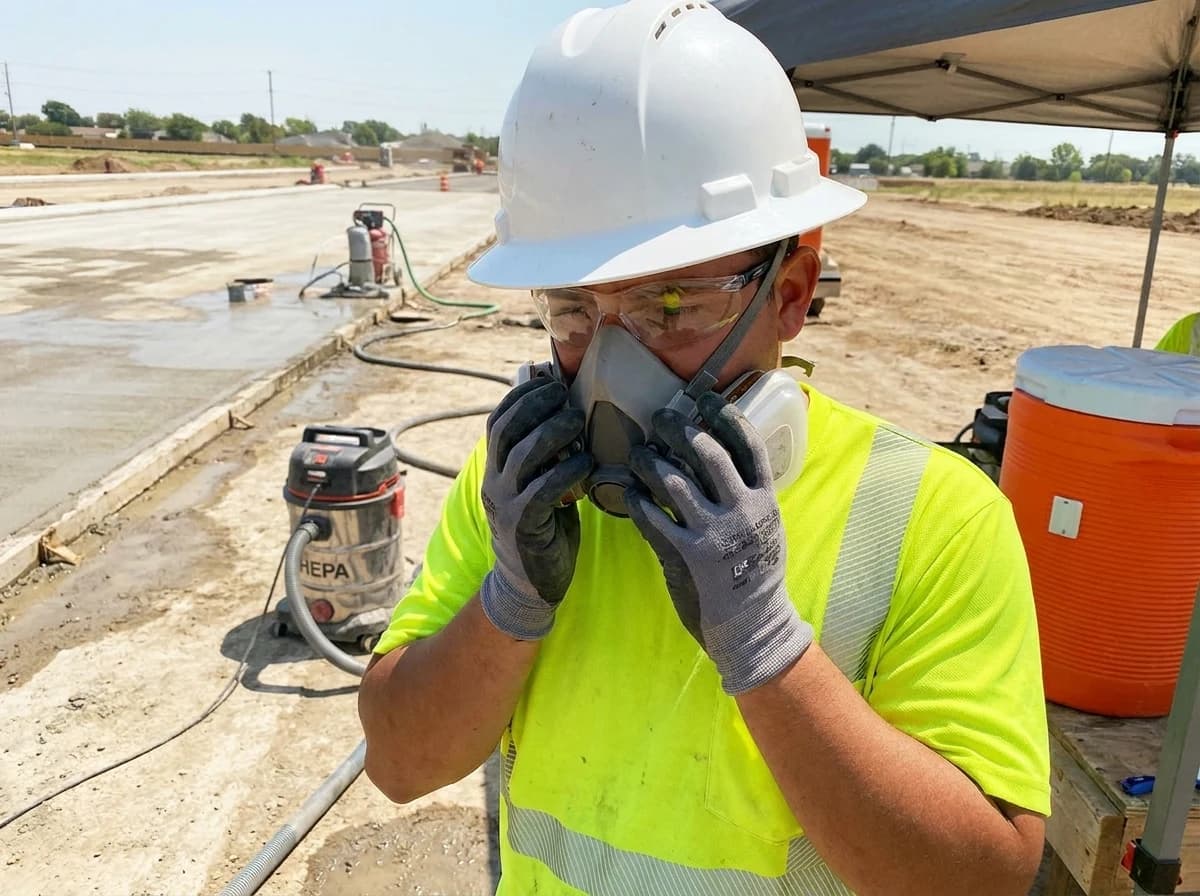
Before hot-weather respirator work, confirm:
- whether engineering controls and wet methods can reduce exposure
- whether the selected respirator is required by the hazard assessment
- whether medical evaluation, fit testing, and training are current
- whether filters or cartridges are appropriate for the contaminant
- whether filter loading makes breathing harder during the shift
- whether the respirator works with eye protection, helmets, hearing protection, and facial hair rules
- whether rest breaks account for the added burden
Do not downgrade respiratory protection just because the day is hot. Instead, reduce the exposure, adjust schedule and workload, improve rest/shade, and select the lowest-burden respirator that still meets the hazard and regulatory requirement.
For detailed respirator selection, use the construction respiratory protection guide. For demolition and silica-heavy work, use the demolition and concrete cutting PPE checklist.
Task-Based Heat Stress PPE Add-Ons
Different construction tasks need different heat controls.
| Work type | Heat stress drivers | PPE and equipment add-ons |
|---|---|---|
| Roadwork and paving | Asphalt, traffic exposure, radiant heat, reflective surfaces | Breathable hi-vis, sun protection, cooling towels, hydration stations, shade, spare gloves |
| Roofing | Direct sun, roof surface heat, fall protection, heavy material handling | Helmet sun shades where allowed, breathable gloves, fall protection compatibility, scheduled shade breaks |
| Concrete and masonry | Wet cement, dust, lifting, sun exposure | Gloves that balance chemical protection and heat burden, eye protection, respirator review, water-resistant but breathable footwear where possible |
| Demolition and concrete cutting | Silica, noise, fragments, heavy workload | Respirator heat planning, sealed eyewear, hearing protection, cooling/rest rotation, replacement gloves |
| Heavy equipment operation | Cab heat, ground inspections, engine heat, dust, visibility | Cab kit with water, eyewear, gloves, hearing protection, hi-vis outer layer, shade access during inspection breaks |
| Scaffolding and elevated platforms | Climbing, sun, fall protection, grip fatigue | Gloves with reliable sweat grip, helmet retention, hydration planning, harness-compatible cooling products |
For machinery-heavy work, use the heavy equipment operator PPE checklist. For night shifts, pair heat planning with the night construction and low-visibility PPE solution.
Heat Illness Symptoms and Emergency Readiness
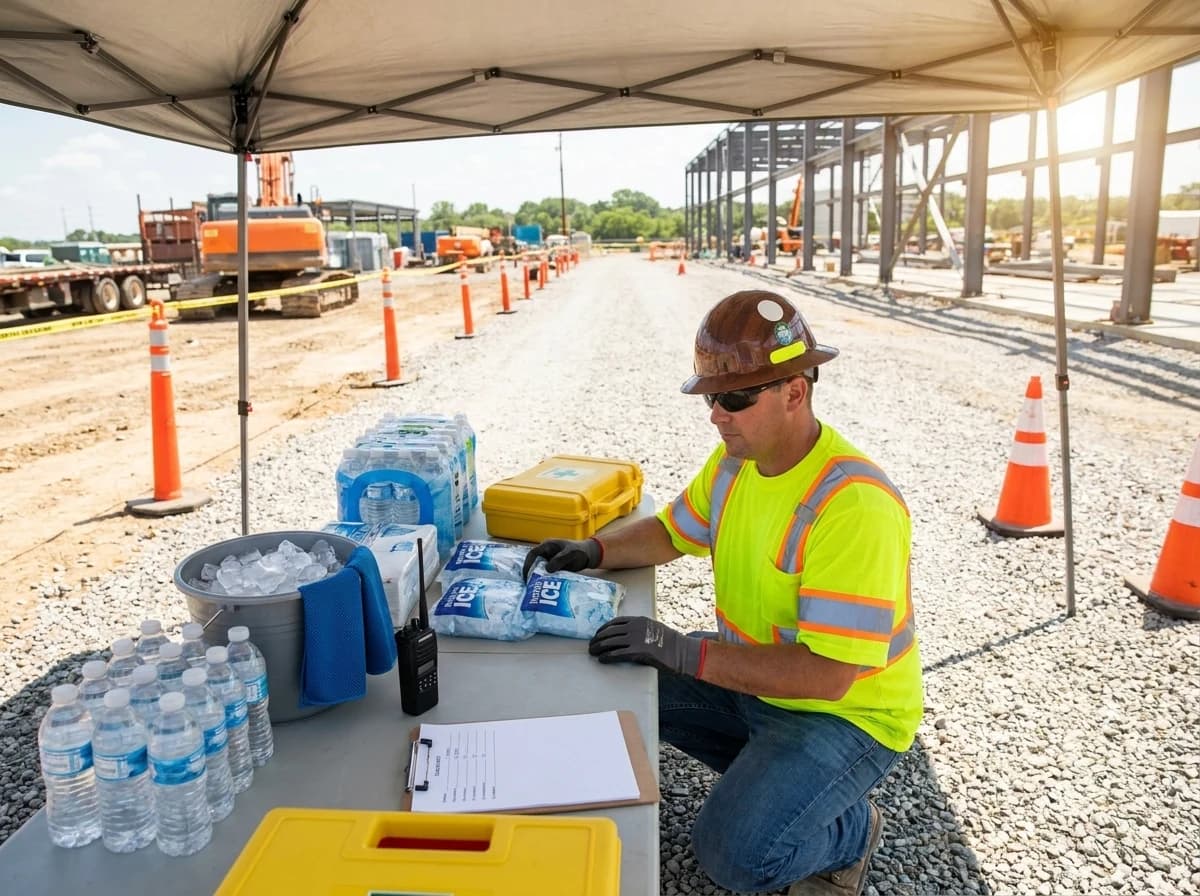
A hot-weather PPE program should include a response plan for symptoms, not only a product list. Workers and supervisors should know what early heat illness can look like and what to do when symptoms appear.
Watch for:
- heavy sweating or suddenly reduced sweating
- muscle cramps
- headache
- dizziness or faintness
- nausea or vomiting
- weakness or unusual fatigue
- confusion, slurred speech, or abnormal behavior
- hot skin or signs that the worker is no longer cooling normally
Supervisors should treat confusion, fainting, collapse, or altered behavior as urgent. Move the worker out of heat, start cooling, get medical help, and follow the site's emergency plan. Do not wait for a worker to "push through" symptoms while wearing PPE that may be adding heat burden.
This is also a procurement issue. A site that buys PPE for hot work may also need shade tents, coolers, electrolyte supplies, communication devices, first-aid supplies, and clear signage for hydration and rest points. For remote jobsites, road crews, and equipment-heavy work areas, emergency access and communication should be reviewed before heat conditions peak.
Procurement Checklist for Heat Stress PPE
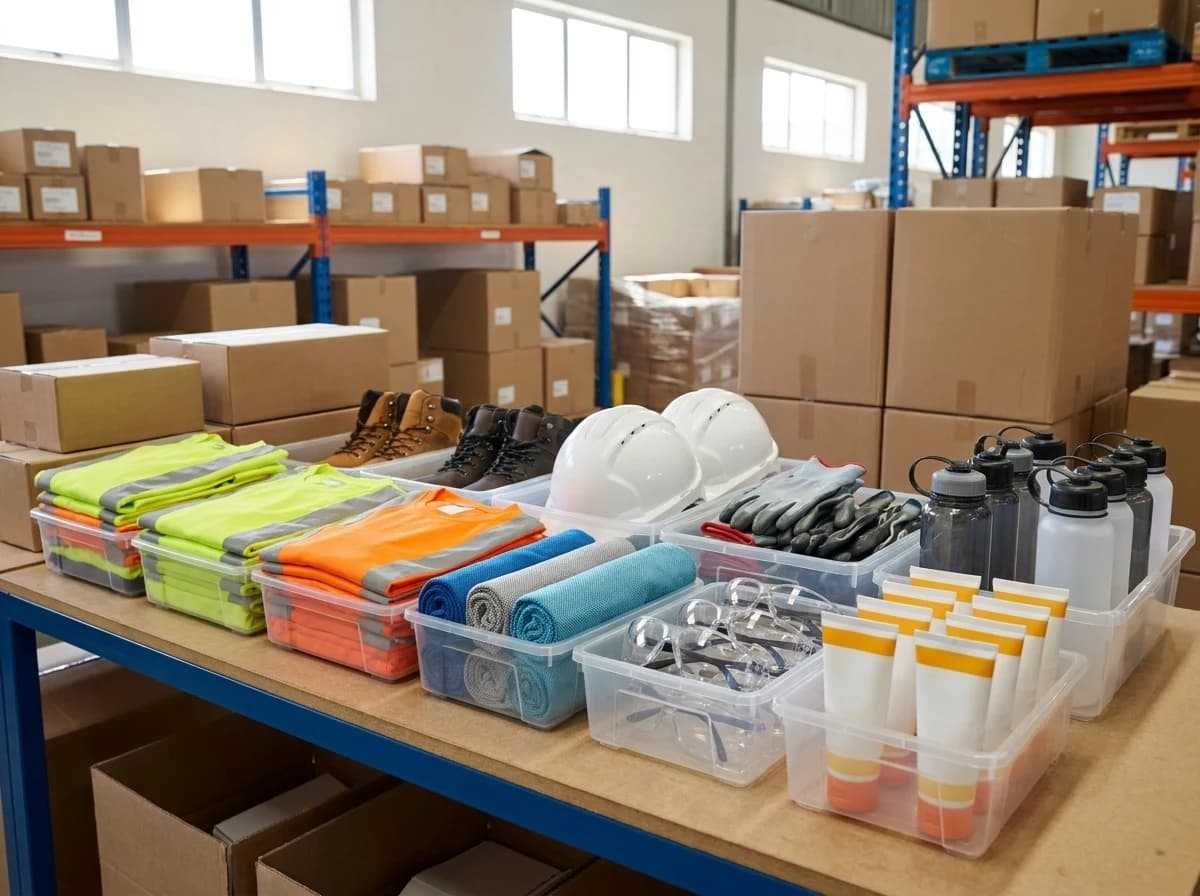
A hot-weather PPE order should include more than product names. Specify:
- task and hazard category
- required standard or site rule
- visibility class and garment type
- fabric weight, breathability, and color
- size range for proper fit
- helmet and eyewear compatibility
- glove coating, cut level, grip, and replacement quantity
- boot type, slip resistance, waterproofing, and size range
- respirator type, filters, fit-test needs, and replacement schedule
- cooling product type and recharge method
- water, electrolyte, shade, and storage equipment
- cleaning and sanitation instructions
- spare PPE for sweat, contamination, damage, and worker turnover
For larger projects, build heat kits by crew type rather than issuing one generic summer bundle. Road crews, roofers, concrete cutters, scaffold crews, equipment operators, and visitors do not need identical kits.
The bulk construction PPE procurement guide can help turn this checklist into an RFQ.
Common Hot-Weather PPE Mistakes
Avoid these frequent mistakes:
- buying dark or heavy garments for full-sun work when lighter compliant options are available
- choosing non-breathable rainwear as the default hot-weather outer layer
- allowing cooling towels or backpacks to cover reflective tape
- issuing one-size vests, gloves, or helmets that do not fit smaller or larger workers
- treating respirator discomfort as a reason to skip exposure control
- forgetting replacement gloves, glasses, socks, and sweatbands
- storing PPE in hot vehicles where materials degrade faster
- assuming experienced workers do not need acclimatization
- waiting for heat illness symptoms instead of planning for heat exposure before work starts
- focusing on cooling gadgets while ignoring water, rest, shade, and emergency response
Hot-weather PPE should make safe work easier. If workers consistently remove PPE because it is too hot, too heavy, too tight, or incompatible, the purchasing specification needs to change.
Frequently Asked Questions
Does OSHA require specific cooling PPE for construction?
OSHA does not generally prescribe one specific cooling vest or towel for every construction task. Employers still need to protect workers from recognized heat hazards and choose PPE that does not create avoidable risk. Cooling PPE can support a heat prevention plan, but it does not replace water, rest, shade, acclimatization, training, and emergency response.
Is breathable hi-vis acceptable for road construction?
It depends on the traffic exposure, required standard, garment class, and project specification. Breathability is important in hot weather, but visibility cannot be reduced below the requirement. Use the high-visibility clothing guide and the traffic control plan before choosing a garment.
Can workers remove PPE because it is hot?
Required PPE should not be removed while the hazard is present. If heat makes PPE difficult to wear, the employer should reduce exposure, adjust work-rest cycles, provide cooling support, select lower-burden compliant PPE, and review whether the work can be scheduled differently.
What PPE increases heat burden the most?
Respirators, impermeable clothing, chemical gloves, waterproof boots, heavy hi-vis layers, fall harnesses, helmets, and face shields can all add burden depending on the task. The issue is usually the total PPE system, not one item in isolation.
Should construction companies buy cooling vests for every worker?
Not automatically. Cooling vests may be useful for high-heat tasks, long exposure, limited shade, or required protective clothing. Start with hazard assessment and pilot the product with the actual crew before buying large quantities.
Build a Heat-Ready Construction PPE Kit
A practical heat-ready construction PPE kit usually includes:
- breathable high-visibility garment matched to the exposure
- helmet or hard hat with compatible sweatband and sun protection
- anti-fog eye protection
- task-matched gloves with spare pairs
- safety footwear and moisture-wicking socks
- cooling towel or vest where the task supports it
- hydration and electrolyte support
- shade or cooling station access
- respirator and filter planning where dust, silica, or fumes require it
- replacement PPE for sweat, dust, damage, and fit problems
If you need a bulk hot-weather PPE program for roadwork, roofing, concrete, demolition, heavy equipment, or general construction crews, Laifappe can help convert the hazard assessment into a role-based PPE list with sizing, replacement stock, and documentation.
Related PPE
Source the PPE covered in this guide
Move from research to a buyer shortlist with the matching solution page, category paths, selected PPE options, and RFQ next steps.
Related Tools
Turn this guide into a faster PPE shortlist
Use the matching tools to check footwear sizing, decode certification labels, or estimate order quantities before you move from research to purchasing.
Safety Footwear Label Decoder
Decode ASTM F2413 and EN ISO 20345 markings such as S3, SRC, HRO, EH, and PR in seconds.
Decode labelsPPE Quantity Calculator
Estimate monthly usage, replacement cycles, and budget needs before you place a bulk PPE order.
Plan quantitiesSafety Boot Size Guide
Convert US, EU, UK, CN, and JP sizing and check width fittings before you lock in footwear specs.
Check sizing