
Buyer next step
Turn this guide into a sourced PPE shortlist with standards, quantities, and role-based kit notes.
Planning tools
Use these tools before moving from this guide into quantities, sizing, labels, or RFQ planning.
Hard hat color codes on construction sites help workers identify roles quickly, but they are not the same as safety certification. A white hard hat may commonly indicate a supervisor, a yellow hard hat may commonly indicate general labor, and a green hard hat may commonly indicate safety staff or new workers. Those meanings are site rules, not universal OSHA or ANSI requirements.
For construction buyers, that distinction matters. Color can support communication, visitor control, crew separation, and inventory management. Color cannot prove that the hard hat is Type I, Type II, Class G, Class E, or Class C. A buyer can order the right color and still buy the wrong head protection if impact type, electrical class, shell style, fit, and accessory compatibility are not specified.
Use this guide for the focused hard hat color code decision. For impact type, read Type 1 vs Type 2 hard hats. For electrical classes, read Class E vs Class G vs Class C hard hats. For shell airflow, read vented vs non-vented hard hats. For brim shape, read full brim vs cap style hard hats. For the broader category, start with construction hard hat types. For a quick field decision, use the Hard Hat Class Decoder.
Quick Answer: Hard Hat Color Codes On Construction Sites
There is no single OSHA hard hat color code that every construction site must follow. Most color codes are company, contractor, project, or regional practices. The best buying approach is to treat color as an identification layer after the required standard, impact type, electrical class, and product marking are clear.

| Color | Example site-assigned role | Buyer warning |
|---|---|---|
| White | Supervisors, engineers, managers, site visitors, architects, inspectors, or client representatives. | White does not prove Type II protection or higher authority under the site safety plan. |
| Yellow | General labor, operators, construction workers, or earthmoving crews. | The model still needs the Type and Class selected for the actual hazards. |
| Blue | Electricians, carpenters, technical trades, operators, or maintenance teams. | A blue hard hat for an electrician still needs the correct electrical class. Color is not insulation. |
| Green | Safety officers, first aid, environmental staff, new workers, trainees, or site induction status. | Decide whether green means safety staff or new workers. Do not use both meanings without another marker. |
| Orange | Road crews, traffic control, lifting crews, signal persons, visitors, or high-visibility roles. | Orange can help visibility, but hi-vis clothing still controls body visibility around equipment and traffic. |
| Red | Fire watch, emergency response, rescue, hot work, or safety-critical roles. | Red should be reserved if the site wants workers to recognize emergency responsibilities quickly. |
| Brown | Welders, hot work, heat exposure, or specialty trades. | Confirm the helmet material, accessories, face shield, and arc or heat exposure separately. |
| Gray | Visitors, temporary workers, inspectors, or unassigned spare stock. | Visitor stock still needs the hazard-based specification for every area visitors may enter. |
The safest RFQ wording is:
Construction head protection meeting ANSI/ISEA Z89.1 or the required project standard, with Type I or Type II and Class G, Class E, or Class C specified by work zone. Quote color options by role, including white, yellow, blue, green, orange, red, brown, and gray where available, without changing the required Type, Class, shell style, suspension, or accessory compatibility.
That wording keeps color in the right place. It asks suppliers for colors, but it does not let color replace the safety specification.
Are Hard Hat Colors Required By OSHA?
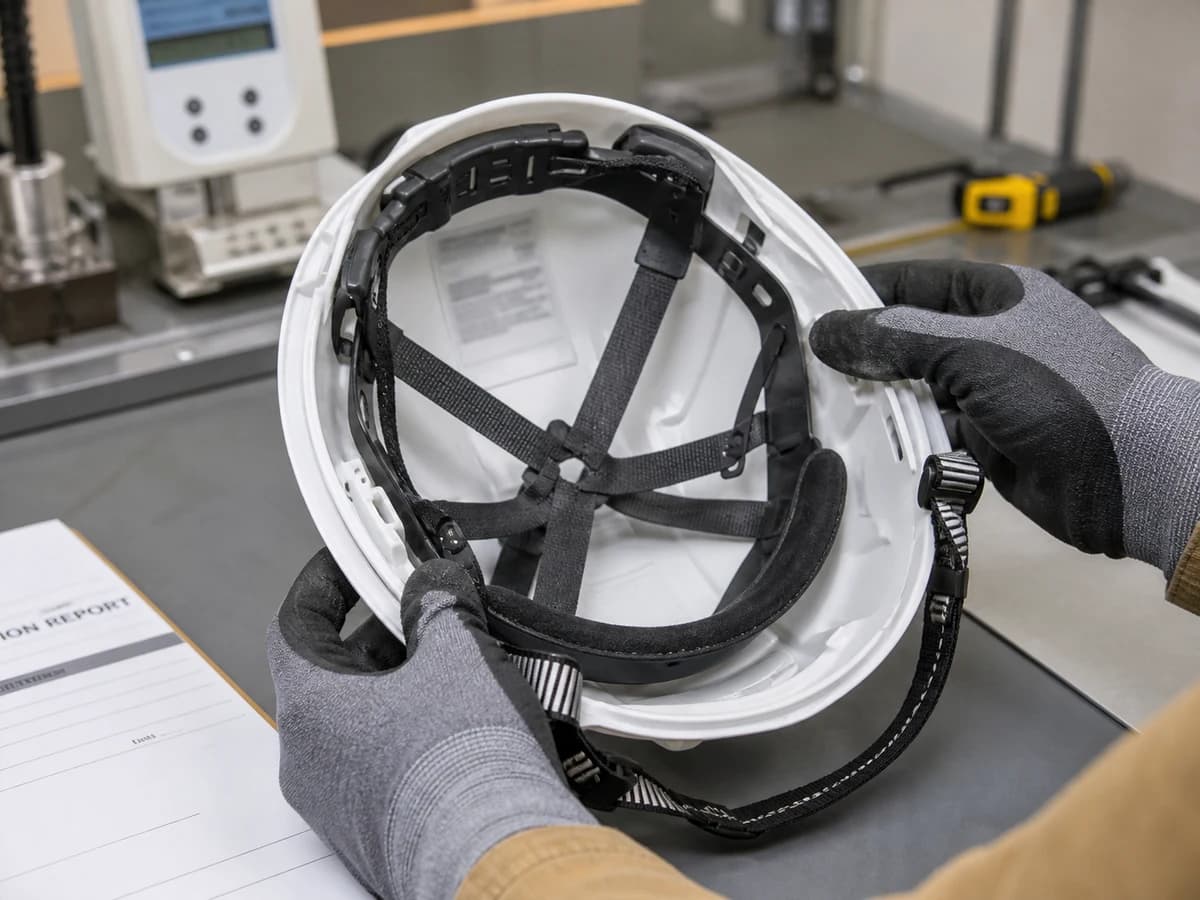
OSHA's construction head protection rule is 29 CFR 1926.100. The rule focuses on protecting workers from head injury from impact, falling or flying objects, electrical shock, and burns. It does not create one national hard hat color chart for supervisors, laborers, electricians, visitors, or safety officers.
For buying and site planning, this means:
- OSHA is concerned with hazard protection, not a universal helmet color code.
- ANSI/ISEA Z89.1 Type and Class markings matter more than color.
- Employers can create a color code to support communication and control.
- The color code should be written into the site PPE plan, orientation, and procurement documents.
- Suppliers should not be asked for "OSHA color hard hats" as if color alone proves compliance.
Color is useful because construction sites are busy. Supervisors, operators, spotters, electricians, new workers, visitors, and emergency response staff may need to be recognized quickly. But a color system is only effective when the site explains it, posts it, enforces it, and keeps inventory aligned with it.
For head protection compliance, start with the hazard assessment. Then choose the hard hat or safety helmet. Then assign the color.
Example Site Hard Hat Color-Code Patterns
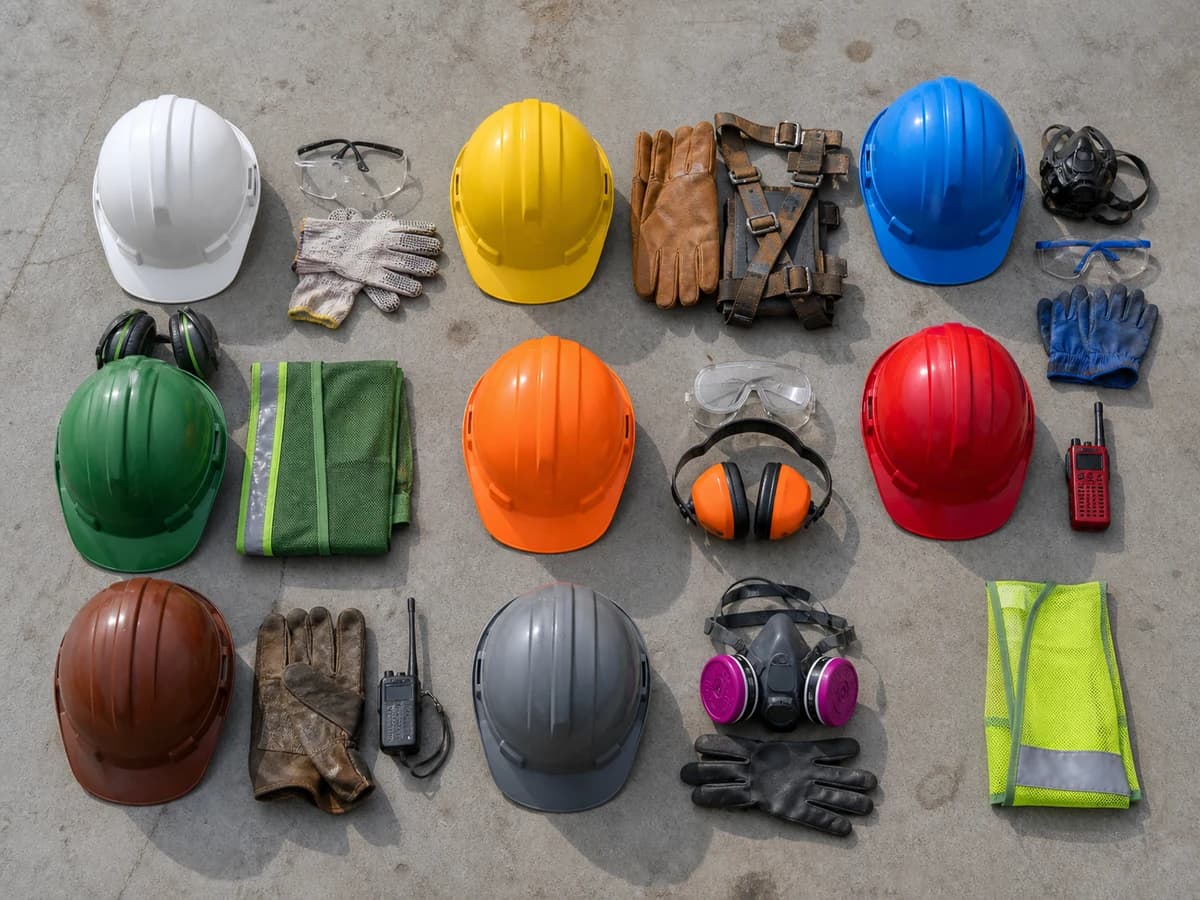
Use this chart as a starting point, not as a legal rule. A general contractor, plant owner, civil project, refinery, utility site, or international project may use different meanings.
| Hard hat color | Example site-assigned role | Procurement note |
|---|---|---|
| White | Managers, supervisors, engineers, architects, inspectors, client reps. | Good for people who need quick recognition but may move across zones. |
| Yellow | General workers, laborers, equipment operators, earthmoving crews. | May simplify general-crew identification; the protective model still follows the hazard assessment. |
| Blue | Electricians, carpenters, technical trades, maintenance, operators. | Do not let blue replace Class E or Class G review for electrical work. |
| Green | Safety officers, first aid, environmental team, new hires, trainees. | Pick one primary meaning and use stickers or labels for the secondary meaning. |
| Orange | Road crews, traffic control, signal persons, lifting crews, visitors. | Works well around equipment, but still pair with compliant hi-vis apparel. |
| Red | Fire watch, emergency response, rescue, hot work, safety-critical staff. | Reserve red if you want workers to associate it with urgent roles. |
| Brown | Welders, hot work, grinding, specialty heat-exposure tasks. | Check face protection, eye protection, FR clothing, and heat exposure separately. |
| Gray | Visitors, temporary staff, unassigned spare stock, inspectors. | Keep visitor helmets clean, inspected, and suitable for allowed areas. |
If the project already has a color code, follow that project rule. If the project does not, create a simple code with fewer colors. A smaller, well-trained system is better than a complicated chart that workers ignore.
White Hard Hats: Supervisors, Engineers, And Visitors
White is often assigned to supervisors, engineers, managers, inspectors, client representatives, or trained visitors. It can make decision makers easier to find, but it does not indicate a higher protective level. The same white shell may be sold in different Types, electrical Classes, brim styles, and suspension systems.

Good RFQ wording:
White hard hats for supervisors and engineering staff. Specify the approved model, Type, electrical Class, suspension, and accessories from the project hazard assessment and the zones those roles may enter.
Supervisors often cross electrical, lifting, demolition, traffic, and overhead-work zones. Their assigned model should therefore be suitable for their permitted work areas, not selected from color or job title alone.
Yellow Hard Hats: General Construction Crews
Yellow is often assigned to general labor, concrete, formwork, earthmoving, material-handling, or equipment-support crews. It is familiar and widely available, which can simplify bulk ordering and replacement stock.
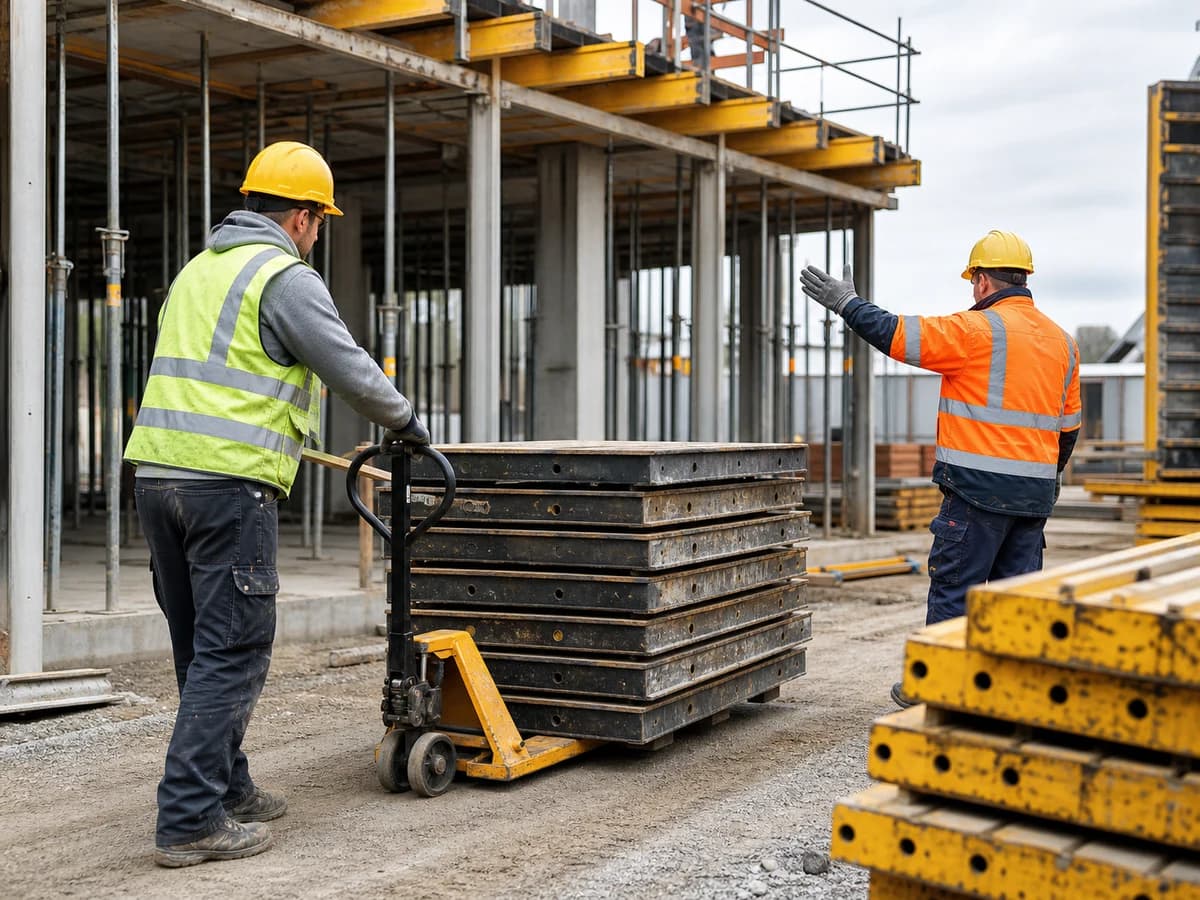
Do not turn that supply convenience into a default safety specification. The hazard assessment and project requirements must determine Type I or Type II, Class G/E/C, shell ventilation, retention, and accessories. Where electrical or lateral-impact hazards may exist, the responsible safety professional should define the required rating before the buyer requests colors.
Better RFQ wording:
Yellow hard hats for the general construction crew, using the project-approved model and hazard-based Type and electrical Class. Include ratchet suspension, compatible replacement parts, marking photos, documentation, and a stable reorder SKU.
For hot-weather non-electrical crews, do not switch to yellow Class C vented stock without confirming that electrical exposure is controlled out. Use the vented vs non-vented hard hats guide before making that decision.
Blue Hard Hats: Electricians, Carpenters, And Technical Trades
Blue may identify electricians, carpenters, maintenance teams, operators, survey crews, or other technical trades. The meaning changes by project, and blue does not make a helmet electrically protective.
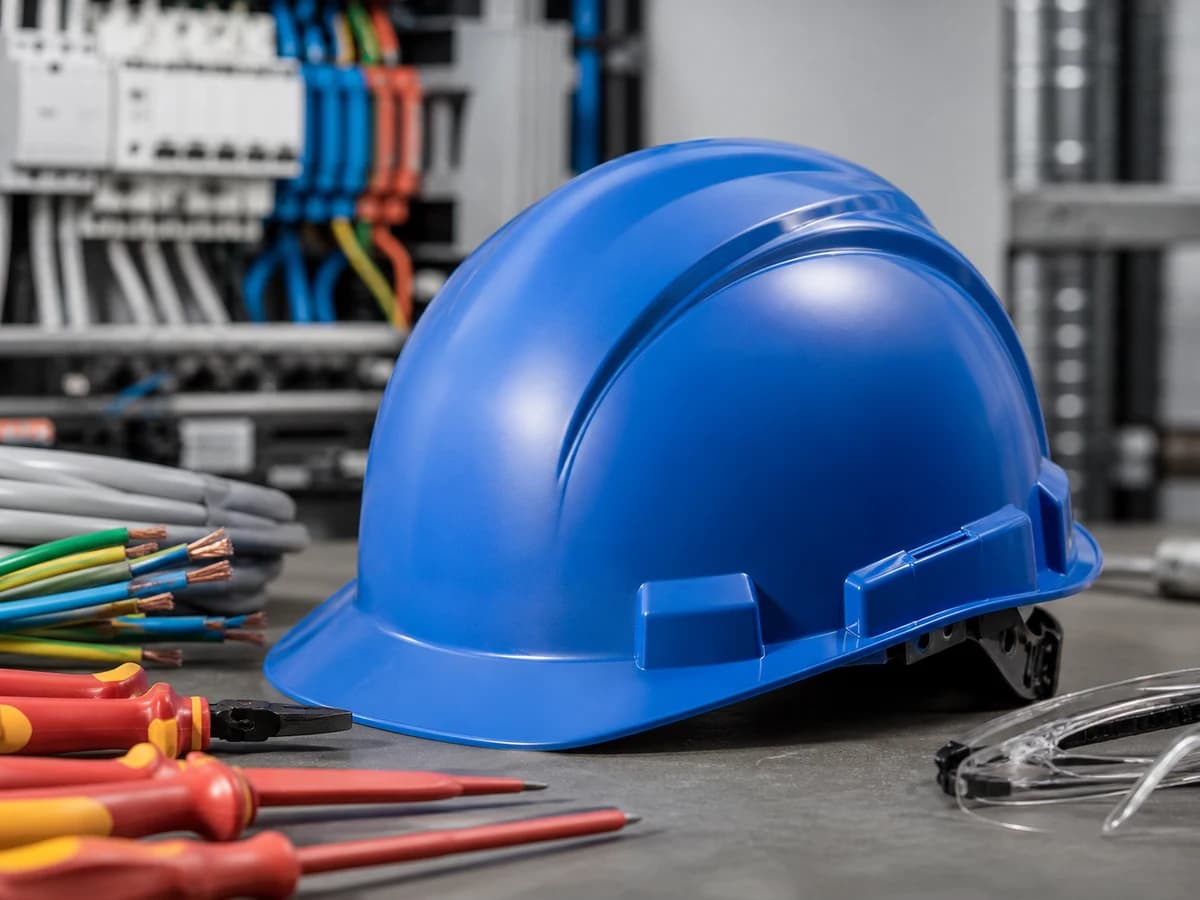
When blue is assigned to electrical workers, select the electrical Class, impact Type, vent status, retention, and face/eye-protection compatibility from the documented exposure. Confirm the permanent markings and manufacturer documentation rather than relying on shell color or product naming.
Good RFQ wording:
Blue hard hats or safety helmets for electrical and technical trades, using the project-specified electrical Class and impact Type. Quote only models whose markings, vent status, accessories, and documentation match the identified hazards.
Use the Class E vs Class G vs Class C hard hats guide when blue is tied to electrical work.
Green Hard Hats: Safety, First Aid, New Workers, Or Trainees
Green is often used for safety or first-aid personnel, but some sites use it for new workers or trainees. Those signals serve different purposes, so a project should not use green for both without an additional marker.

The cleaner approach is:
- reserve green for one primary role and use a manufacturer-approved band or label for the second status
- define the meaning during induction and in the written site PPE plan
- control green inventory so spare helmets do not weaken the signal
Good RFQ wording:
Green hard hats for the site's defined safety or induction role, with manufacturer-approved markers if a second status must be shown.
Orange, Red, Brown, And Gray Hard Hats
Orange, red, brown, and gray are less universal than white, yellow, blue, and green, but they can be useful on larger projects.
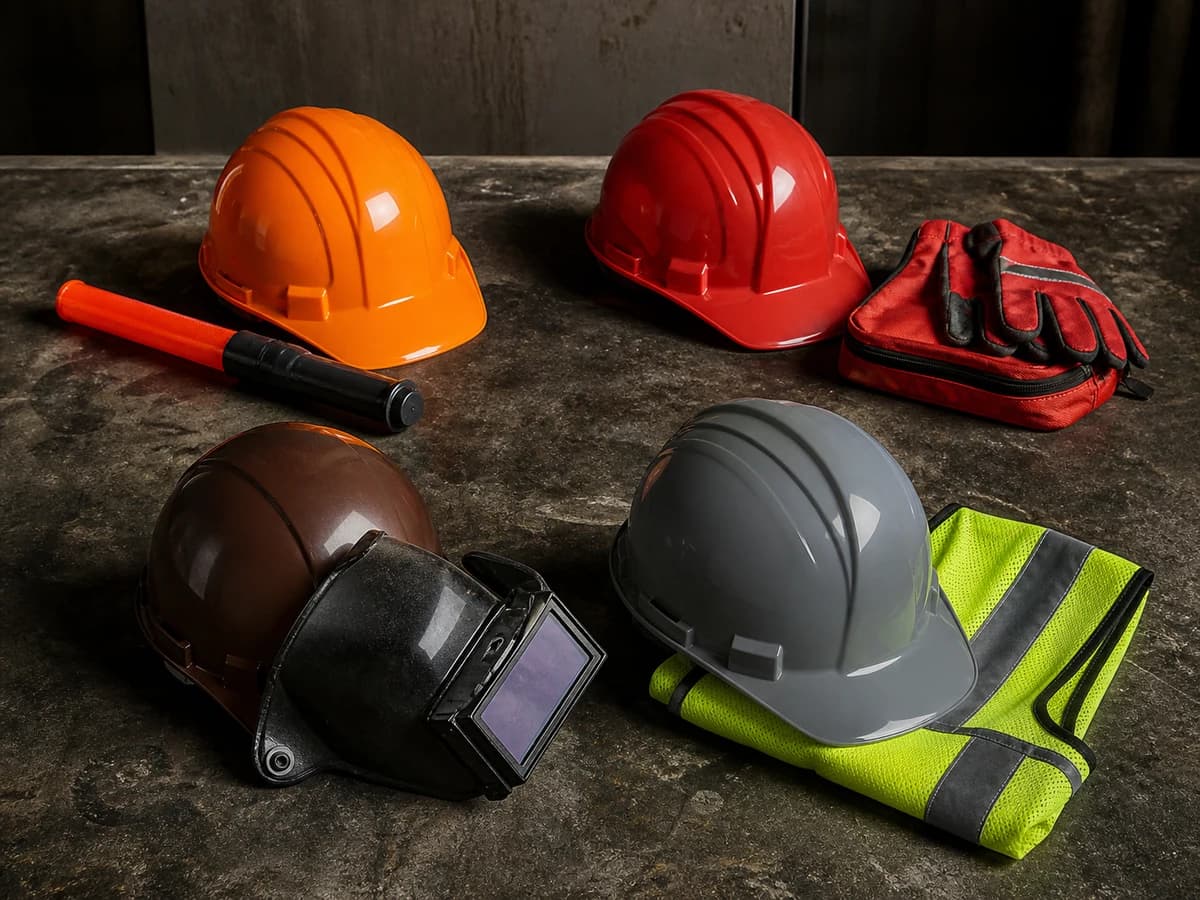
- Orange may identify roadwork, traffic-control, signal, lifting, or high-recognition roles. It does not replace the required high-visibility clothing.
- Red may be reserved for fire watch, emergency response, rescue, or another narrowly defined urgent role.
- Brown may identify welding or hot-work crews, but the helmet still must be compatible with the task's face, eye, hearing, flame, and electrical protection.
- Gray may identify visitors, inspectors, temporary workers, or controlled spare stock. Visitor helmets still need the hazard-based specification for every permitted area.
Issue visitor stock from a controlled point, explain the color rule during induction, inspect helmets after return, and do not let color replace escort or access restrictions.
Color Codes Are Not Type, Class, Or Compliance
The biggest mistake in hard hat color programs is letting color become a shortcut for safety performance. It should not.
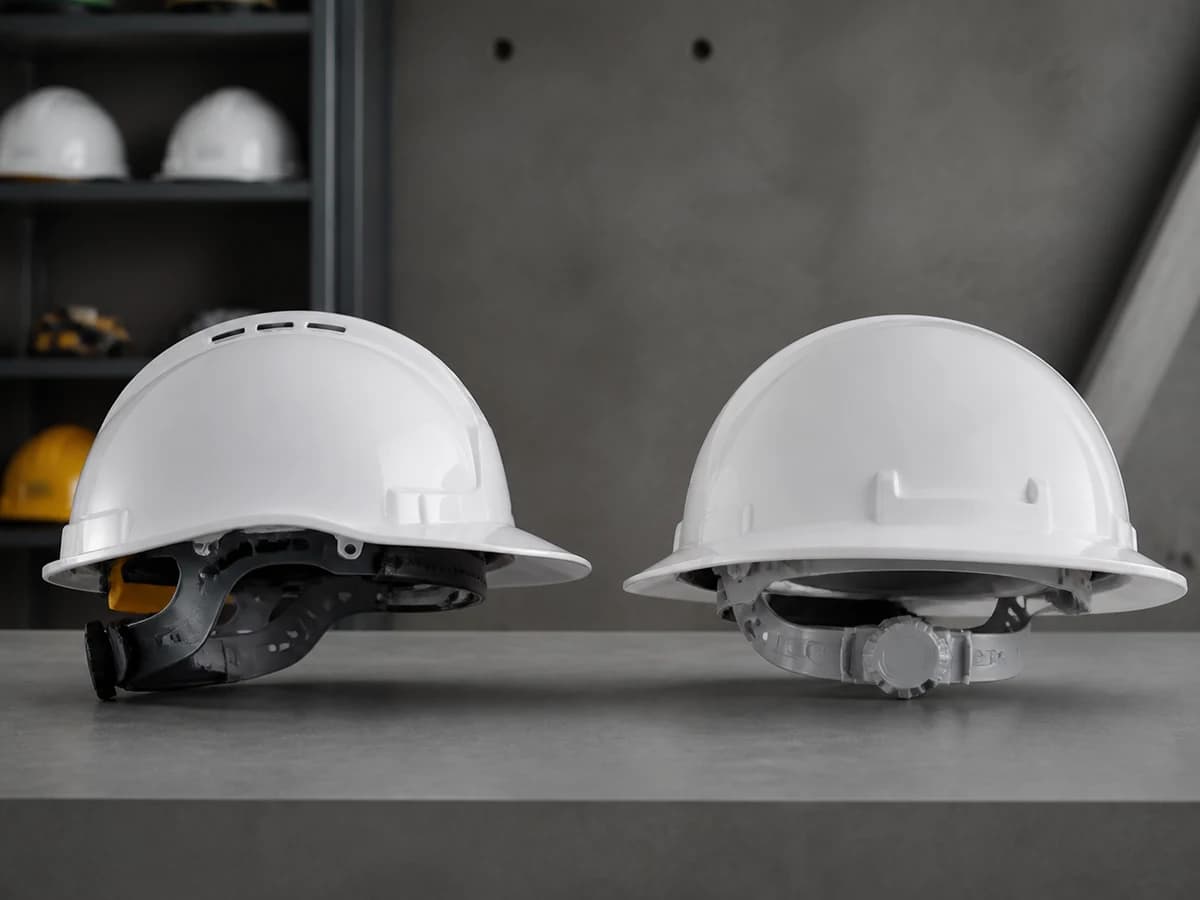
Hard hat selection should follow this order:
- Identify the head hazards.
- Choose Type I or Type II by impact exposure.
- Choose Class G, Class E, or Class C by electrical exposure.
- Choose vented or non-vented shell by electrical class, heat, debris, and weather.
- Choose cap style, full brim, or helmet style by work zone and accessories.
- Confirm suspension, chin strap, accessory compatibility, size range, and replacement parts.
- Assign color by role, crew, access status, or project rule.
Color should come after the hazard decision. Any shell color can be wrong if its marked Type, electrical Class, fit, or accessory compatibility does not match the work.
Use the Hard Hat Class Decoder when the buying team needs a fast first pass on Type and Class before assigning color.
How To Build A Site-Specific Hard Hat Color Code
A good color code should be simple enough for workers to remember and specific enough to help the site operate. Do not copy a chart from another project without checking whether it fits your crews.

First identify the roles that must be recognized quickly, workers who cross multiple zones, induction or visitor statuses, emergency functions, and any owner or general-contractor color rules. Confirm that suppliers can provide every required color in the same approved protective model and that replacement stock can be controlled.
Choose one primary purpose for color: role, employer, access level, work zone, or emergency function. Use manufacturer-approved labels, bands, badges, or packaging controls for secondary information. Explain the system during orientation and whenever the policy changes.
Procurement Matrix: Color By Role Without Losing Safety Specs
Use this matrix before sending a hard hat RFQ.

| Role or stock group | Common color | Safety specification to confirm | Notes |
|---|---|---|---|
| General site crew | Yellow | Type and electrical Class selected by documented exposure. | General-issue color should be easy to reorder. |
| Supervisors and engineers | White | Approved model for every zone they may enter. | Supervisors often cross multiple hazards. |
| Electrical crews | Blue or white | Project-specified electrical Class, impact Type, and vent status. | Color is not electrical protection. |
| Safety or first aid | Green or white with label | Hazard-based model plus compatible radios, face shields, or hearing PPE. | Keep the emergency or safety signal clear. |
| New workers or trainees | Green, gray, or stickered yellow | Approved model for the assigned work zone. | Use labels if green is already safety staff. |
| Roadwork or traffic control | Orange | Impact type, electrical class, hi-vis clothing compatibility. | Orange hard hats do not replace hi-vis garments. |
| Fire watch or emergency response | Red | Hazard-based model plus face and respiratory protection interface where needed. | Reserve red for urgent recognition if possible. |
| Welders and hot work | Brown, red, or trade color | Hard hat, welding shield, eyewear, hearing, FR clothing compatibility. | Check attachments and heat exposure. |
| Visitors | Gray, white, or orange | Approved model for all allowed visitor areas. | Visitor helmets need inspection and controlled issue. |
For large contractors, keep a color-to-SKU map. The same color may be available in several product versions, so the SKU should identify the exact Type, Class, suspension, shell style, and approved accessories.
Logos, Stickers, Reflective Tape, And Helmet Markings
Many sites add company logos, worker names, trade stickers, induction labels, QR codes, reflective tape, or emergency role markers to hard hats. These can help identification, but they should not damage the shell or hide safety markings.

Before adding stickers or labels, check:
- manufacturer instructions
- whether the adhesive, solvent, paint, or tape is allowed
- whether the placement hides cracks, UV damage, deformation, or required markings
- whether the addition affects inspection, accessory fit, or replacement lead time
Do not drill holes, cut vents, paint shells without approval, or attach accessories that the manufacturer has not approved. A hard hat color program should not lead workers to modify the product.
For stronger identification, use approved removable bands, small role labels away from required markings, or color-coded issue bins. Keep enough shell surface visible for inspection.
Inventory Control For Color-Coded Hard Hats
Color coding only works if the right helmet reaches the right worker. For procurement, that means inventory control matters as much as the color chart.

A practical hard hat inventory program should include:
- approved SKU list by color, Type, Class, and shell style
- reorder points for each color
- compatible spare suspensions and chin straps
- separate bins for Class C, Class G, and Class E stock
- a visitor issue and return process
- removal and replacement rules after impact, heat, chemical, UV, or suspension damage
- fit and accessory samples before bulk purchase
The biggest inventory risk is look-alike stock. A vented Class C hard hat and a non-vented Class E hard hat may look similar at a glance if they are the same color. Do not rely only on workers reading the tiny marking in a rush. Use separate colors, separate bins, labels, supervisor checks, or restricted issue points where electrical class matters.
For a full quantity plan, connect the color code to the bulk construction PPE procurement guide and the contractor PPE kit checklist.
How To Write Hard Hat Colors Into An RFQ
Weak RFQ wording:

Need 500 hard hats. White, yellow, blue, green. Send best price.
That request will produce inconsistent quotes. It tells suppliers the colors, but not the safety performance, shell style, suspension, accessories, or documentation.
Better RFQ wording:
Please quote construction hard hats or safety helmets meeting ANSI/ISEA Z89.1 or the project-required equivalent. Separate options by Type I and Type II impact protection and by Class G, Class E, and Class C electrical rating. Quote the approved model in white, yellow, blue, green, orange, red, brown, and gray where available. Include shell style, vented or non-vented status, suspension type, chin strap option, accessory compatibility, replacement suspensions, marking photos, documentation, MOQ, lead time, sample availability, packaging, and color-stable reorder SKUs.
Attach the approved color-to-role schedule from the procurement matrix above. Ask suppliers to confirm that every color is available in the same approved model; never accept a mismatched substitute merely to preserve the color code.
Common Mistakes With Hard Hat Color Codes
Mistake 1: Treating color as a safety rating. Color does not tell you Type I, Type II, Class G, Class E, or Class C. Product markings and documentation do.
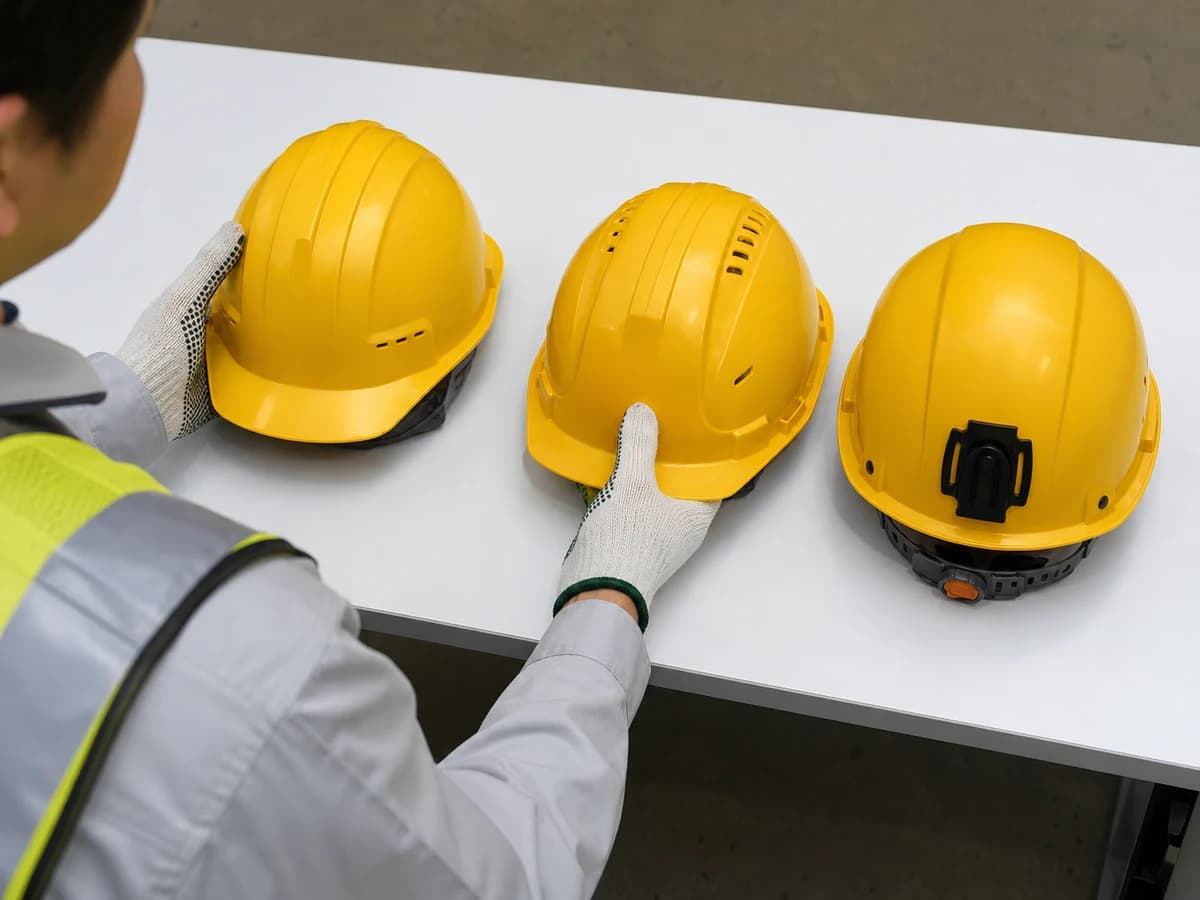
Mistake 2: Using role color to assume electrical or impact protection. Blue does not prove electrical protection, and white does not prove side-impact protection. Match permanent markings and documentation to the hazard assessment.
Mistake 3: Using green for both safety staff and new workers. This can confuse emergency recognition. Use labels, stickers, or another color if both signals are needed.
Mistake 4: Accepting inconsistent models to complete the color set. Suppliers may not offer every color in the same Type, Class, or shell style. Project requirements must also override subcontractor color preferences and low-grade visitor stock.
Mistake 5: Hiding markings or changing the policy without retraining. Keep required markings and inspection areas visible, and retrain workers whenever a color meaning changes.
Buyer Checklist
Use this checklist before approving a hard hat color code or bulk order.

- Is the project color code written down?
- Does each color have one clear primary meaning?
- Does the site explain the color code during orientation?
- Are impact Type and electrical Class specified before color?
- Are look-alike electrical Classes separated at issue points?
- Are supervisors and visitors issued models suitable for permitted areas?
- Are labels and logos manufacturer-approved and clear of required markings?
- Can the supplier provide the approved model in every requested color?
- Are compatible replacement parts and damaged-helmet controls included?
- Does the RFQ require marking photos, documentation, samples, and stable reorder SKUs?
Color coding should make the jobsite easier to read. It should not make the head protection specification weaker.
FAQ
What do hard hat colors mean on construction sites?
They may identify roles, trades, access status, or emergency functions. White, yellow, blue, green, orange, red, brown, and gray have common informal associations, but every site must define and train its own meanings.
Is there an OSHA hard hat color code?
No universal OSHA construction hard hat color code requires one specific color for each role. OSHA focuses on protecting workers from head injury, impact, falling or flying objects, electrical shock, and burns. Employers can create their own color code, but color does not replace the required head protection selection.
What does a white hard hat mean?
A site may assign white to supervisors, engineers, inspectors, client representatives, or visitors. The project rule controls the meaning.
What does a yellow hard hat mean?
A site may assign yellow to general crews or operators. The buyer must still specify the hazard-based Type, electrical Class, suspension, shell style, and documentation.
What does a blue hard hat mean?
A site may assign blue to electrical or technical trades. Confirm the required electrical Class because blue color is not insulation.
What does a green hard hat mean?
Green may identify safety staff, first aid, new workers, or trainees. Define one primary meaning and use an approved secondary marker if needed.
Can hard hat color show Class E or Class C?
No. Hard hat color does not show Class E, Class G, or Class C. Electrical class comes from product marking and documentation. A buyer should not use color as proof of electrical protection.
Should visitors wear a different hard hat color?
Often yes, because a different visitor color can help supervisors identify escorted or limited-access people. Visitor helmets still need to match the areas visitors can enter.
Can we put stickers or logos on hard hats?
Only if the manufacturer instructions and site rules allow it. Stickers and logos should not hide markings, cracks, UV damage, deformation, or inspection areas. Do not drill, cut, paint, or modify hard hats unless the manufacturer permits it.
What should a hard hat color RFQ include?
A hard hat color RFQ should include the required standard, Type I or Type II, Class G/E/C, shell style, vent status, suspension, chin strap option, accessory compatibility, replacement parts, color quantities, markings, documentation, samples, lead time, and reorder SKUs.
Related Guides On Laifappe.com
- Construction hard hat types
- Type 1 vs Type 2 hard hats
- Class E vs Class G vs Class C hard hats
- Vented vs non-vented hard hats
- Full brim vs cap style hard hats
- Safety helmet vs hard hat for construction
- Hard Hat Class Decoder
- Construction PPE solution
- Bulk construction PPE procurement guide
- Contractor PPE kit checklist
- High-visibility clothing for construction
Next Step For Construction Buyers
If you are building a construction hard hat program, do not start with color alone. Start with the hazard. Choose Type I or Type II. Choose Class G, Class E, or Class C. Decide shell style, venting, accessories, fit, and replacement parts. Then apply the color code.
For procurement, use the Construction PPE RFQ Template and list colors by role without weakening the safety specification. For quick Type and Class decisions, use the Hard Hat Class Decoder. For the full site package, connect this article with the construction PPE solution.
Sources
Related PPE
Source the PPE covered in this guide
Move from research to a buyer shortlist with the matching solution page, category paths, selected PPE options, and RFQ next steps.