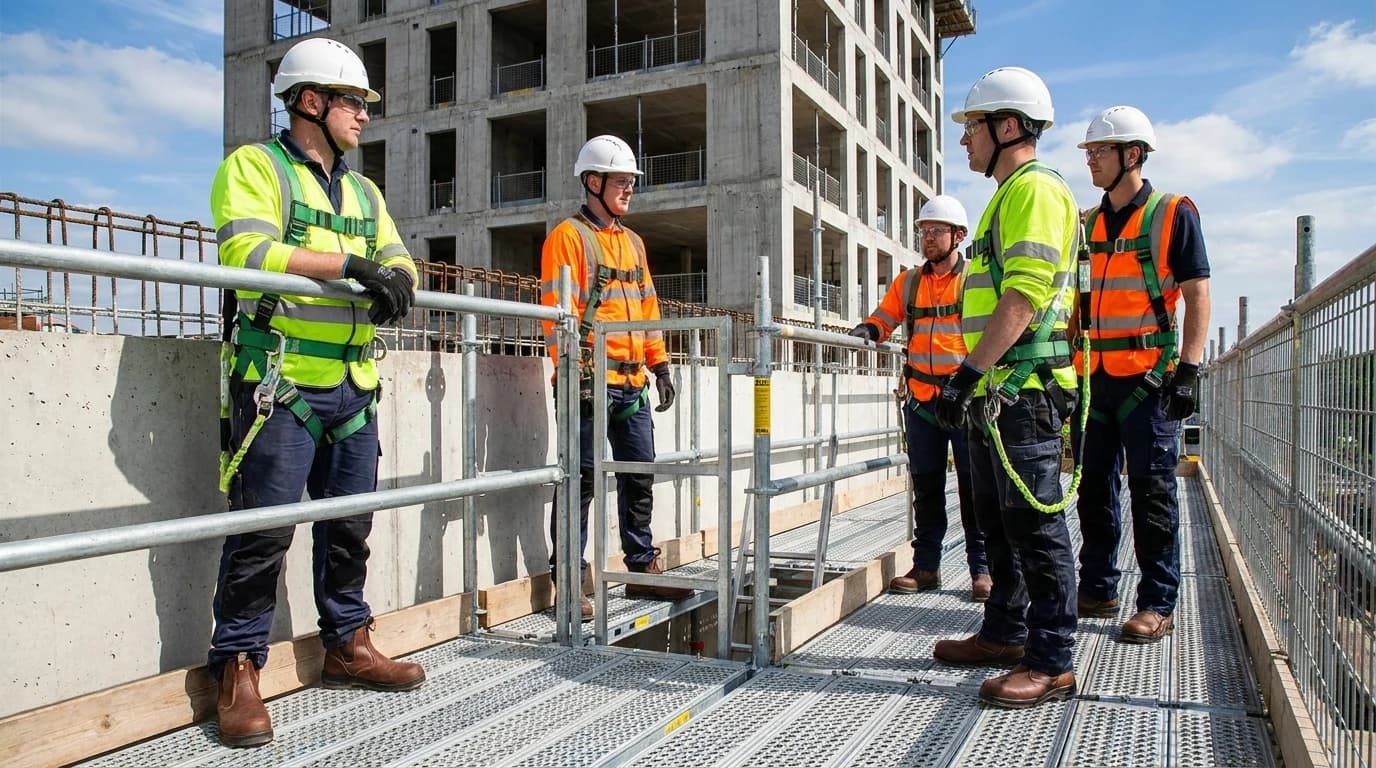
Buyer next step
Turn this guide into a sourced PPE shortlist with standards, quantities, and role-based kit notes.
Scaffolding work needs more than a general hard-hat-and-vest routine. Workers climb, handle tubes and planks, move tools above other workers, work near incomplete guardrails, face changing weather, and depend on stable access. A PPE checklist for scaffolding has to follow the worker's role, the scaffold status, and the surrounding jobsite hazards.
This article is the checklist companion to the PPE for scaffolding and elevated platforms solution. Use the solution page for procurement packages and bulk sourcing. Use this blog when a supervisor, safety manager, or contractor needs a field-ready checklist for scaffold erectors, scaffold users, inspectors, and ground support workers.
For the wider PPE program, start with the Complete PPE solution for construction sites. For fall-arrest system details, use the fall protection PPE for construction sites page. For kit purchasing, use the contractor PPE kit checklist.
Quick Scaffolding PPE Checklist
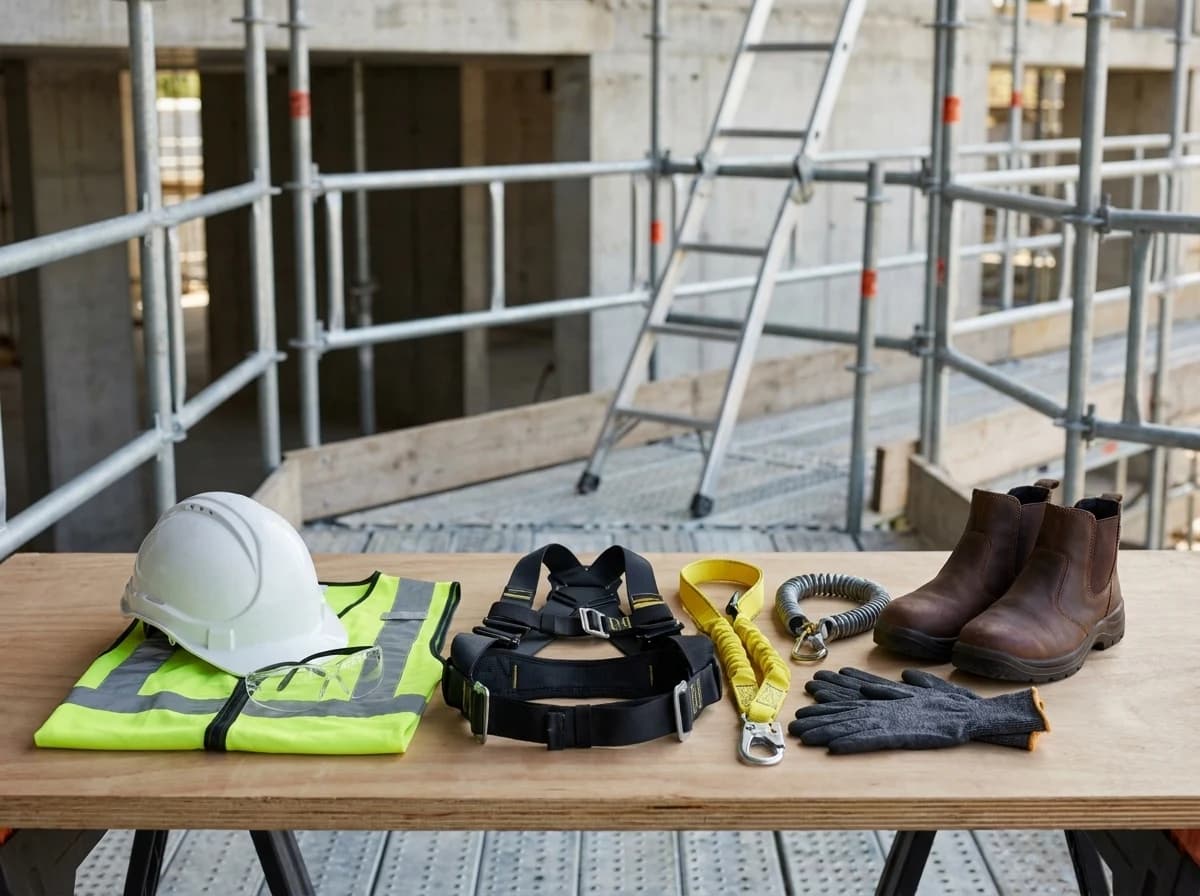
Use this checklist before scaffold work starts:
- Is the worker a scaffold erector, dismantler, user, inspector, ground support worker, or visitor?
- Is the scaffold complete, incomplete, being erected, being altered, being dismantled, or awaiting inspection?
- Are guardrails, platforms, access, base conditions, and load limits controlled before PPE is considered?
- Is fall protection needed because guardrails are incomplete, work is above the scaffold protection, or site policy requires tie-off?
- Is the harness the correct size and compatible with the lanyard, SRL, anchor, rescue plan, and work movement?
- Does head protection stay secure during climbing, leaning, wind, and overhead work?
- Are boots slip-resistant enough for ladders, platforms, wet planks, mud, and repeated climbing?
- Are gloves suitable for tubes, couplers, planks, tools, rope, and pinch-point exposure?
- Is eye protection selected for dust, wind, drilling, cutting, grinding, overhead debris, or nearby work?
- Is hi-vis clothing needed for cranes, vehicles, material handling, or mixed crews?
- Are tools tethered or controlled where dropped-object exposure exists?
- Does weather gear preserve harness fit, helmet retention, reflective visibility, and boot traction?
- Are replacement gloves, eyewear, lanyards, and damaged PPE controls available?
- Has a competent person inspected the scaffold and communicated restrictions before use?
If the scaffold is not safe to use, PPE does not fix the scaffold. Stop and correct the access, platform, guardrail, load, or inspection issue first.
Why Scaffolding PPE Needs a Separate Checklist
Scaffolding creates a different risk profile than general ground-level construction. A worker may need the same baseline PPE as other construction workers, but the exposure changes as soon as the worker climbs.
Key differences include:
- fall exposure can change during erection, alteration, and dismantling
- workers handle long tubes, planks, couplers, frames, braces, and tools
- dropped objects can strike workers below
- helmet retention matters more during climbing and leaning
- footwear has to work on narrow, wet, or dusty platforms
- gloves must provide grip without blocking dexterity
- weather can reduce traction, visibility, and hand control
- harnesses, hi-vis layers, tool belts, and outerwear can interfere with each other
That is why scaffolding PPE should be built by role rather than issued as one generic site kit.
OSHA Scaffolding Context for PPE Planning
OSHA addresses scaffolding hazards under 29 CFR 1926 Subpart L. OSHA's construction scaffolding page points to 1926.451 for general scaffold requirements, 1926.452 for requirements by scaffold type, 1926.453 for aerial lifts, and 1926.454 for training requirements.
From a PPE standpoint, the practical issue is that scaffolding safety starts with the scaffold itself. Capacity, platform construction, access, guardrails, falling-object protection, training, and competent-person inspection come before the PPE checklist.
PPE planning should then answer:
- What remains after scaffold controls are in place?
- Which workers are exposed during erection or dismantling?
- Who works below the scaffold?
- Are guardrails complete or incomplete?
- Are tools, materials, or debris above other workers?
- Is the worker using a personal fall arrest system?
- Does the PPE fit correctly and work together as a system?
The OSHA PPE requirements for construction guide explains the broader compliance framework and proper-fit rule.
PPE by Scaffolding Role
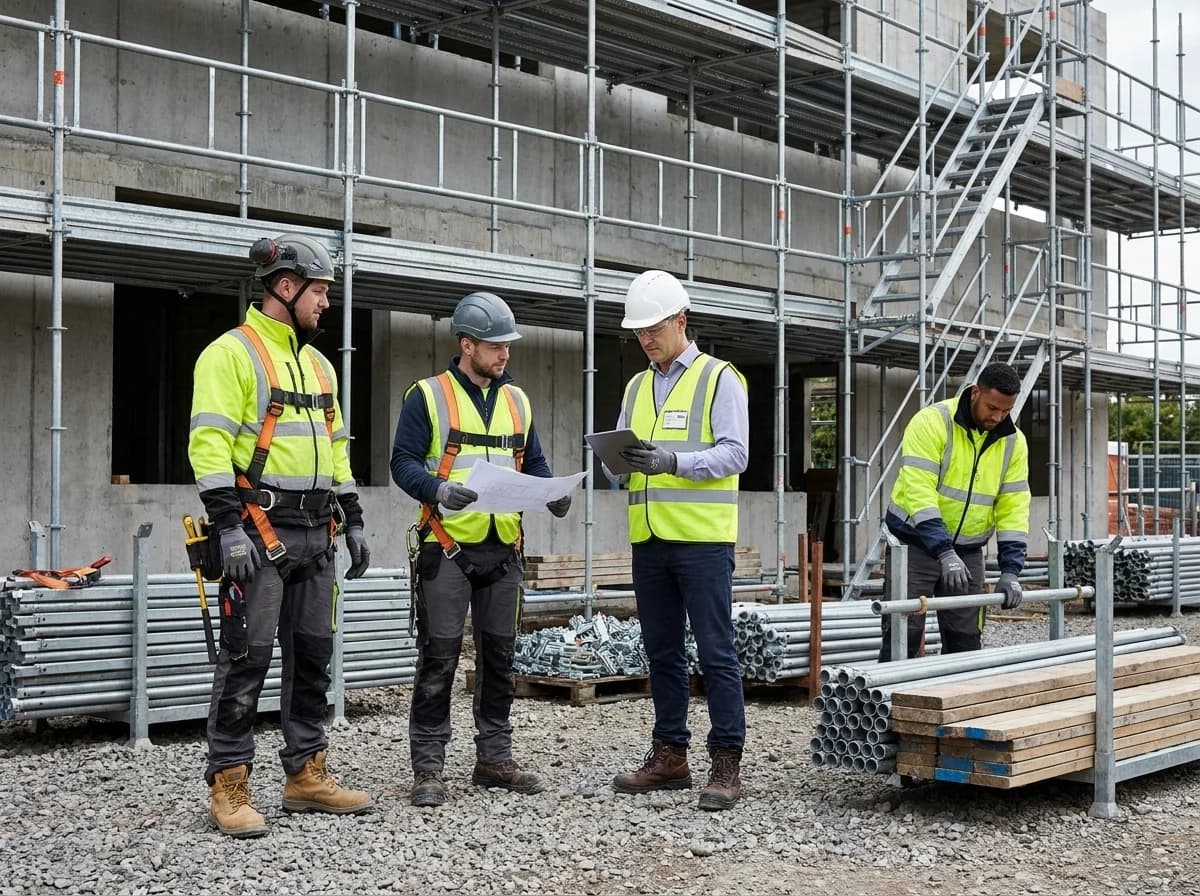
Scaffold PPE should change by role.
| Role | Main exposure | PPE focus |
|---|---|---|
| Scaffold erector | Incomplete guardrails, climbing, tube handling, falling objects | Harness, connector, helmet retention, gloves, boots, tool lanyards |
| Scaffold dismantler | Changing platform conditions, loose components, dropped objects | Fall protection, helmet with chin strap, impact or grip gloves, toe protection |
| Scaffold user | Completed platform, task work, overhead debris, trade tools | Helmet, eyewear, gloves, boots, hi-vis, task-specific PPE |
| Scaffold inspector | Climbing, inspection movement, documentation tools, visibility | Helmet retention, anti-slip boots, harness where needed, tethered tablet or clipboard |
| Ground support worker | Falling objects, equipment, material movement, exclusion zones | Helmet, hi-vis, safety boots, eye protection, gloves |
| Visitor or supervisor | Controlled access, observation, changing work areas | Site-entry PPE plus restrictions from unsafe scaffold zones |
A scaffold user does not automatically need every item a scaffold erector needs. But the site should not under-equip users when guardrails are missing, tasks create dust or debris, or workers move through erection zones.
Fall Protection and Harness Checks
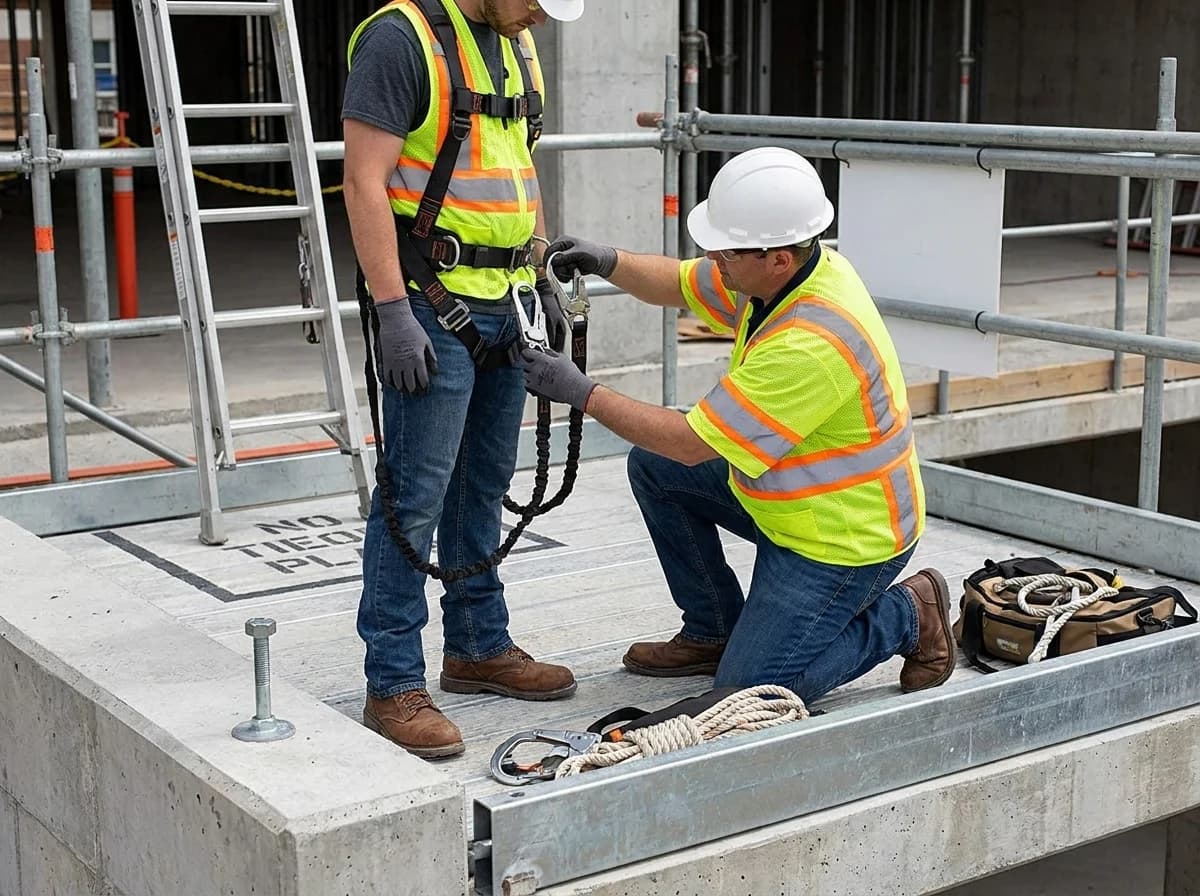
Fall protection is the most visible scaffolding PPE issue, but it is also the easiest to oversimplify. A harness alone is not a fall protection system. It must connect to a suitable lanyard, SRL, anchor, clearance plan, rescue plan, inspection routine, and worker training.
Check:
- Is fall protection required for this scaffold status and height?
- Are guardrails complete and suitable for the work?
- Is the worker erecting, dismantling, altering, inspecting, or simply using a completed scaffold?
- Is the harness the correct size for the worker?
- Is the connector compatible with the anchor and work movement?
- Is there enough fall clearance?
- Is swing fall exposure controlled?
- Is rescue planning realistic?
- Has the equipment been inspected before use?
- Has any equipment involved in a fall event been removed from service?
Scaffold fall protection should be linked to the full site fall protection program. Use the fall protection PPE for construction sites page for harness, lanyard, SRL, anchor, and rescue planning.
Head Protection and Chin Strap Retention
Head protection on scaffolding has two jobs: protect the wearer and prevent the helmet from becoming a dropped object. Climbing, leaning, wind, overhead work, and harness movement can dislodge ordinary head protection.
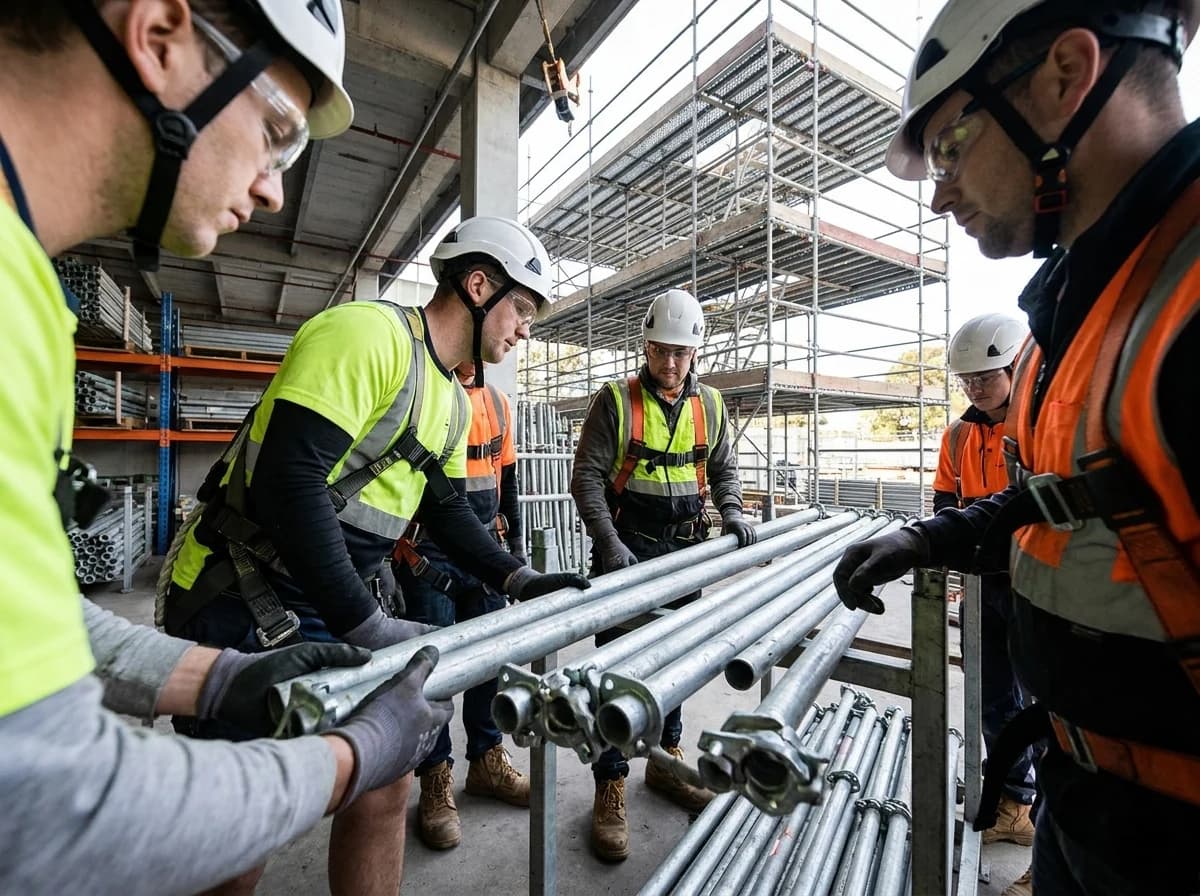
Check:
- Does the task need Type I or Type II head protection?
- Is a chin strap required by the site, manufacturer, task, or height exposure?
- Is the chin strap manufacturer-approved?
- Does the helmet work with safety glasses, goggles, earmuffs, respirators, and face shields?
- Is electrical class relevant near temporary power or overhead lines?
- Is the helmet damaged, expired, heavily UV-exposed, or modified?
For scaffold erection and dismantling, a helmet-style product or safety helmet with chin strap may be easier to keep secure than a loose cap-style hard hat. The final decision should follow the hazard and recognized standard, not just the product name.
Use the construction hard hat types guide and safety helmet vs hard hat guide for deeper selection.
Footwear for Ladders, Platforms, and Wet Planks
Scaffold footwear should support repeated climbing and stable platform movement.
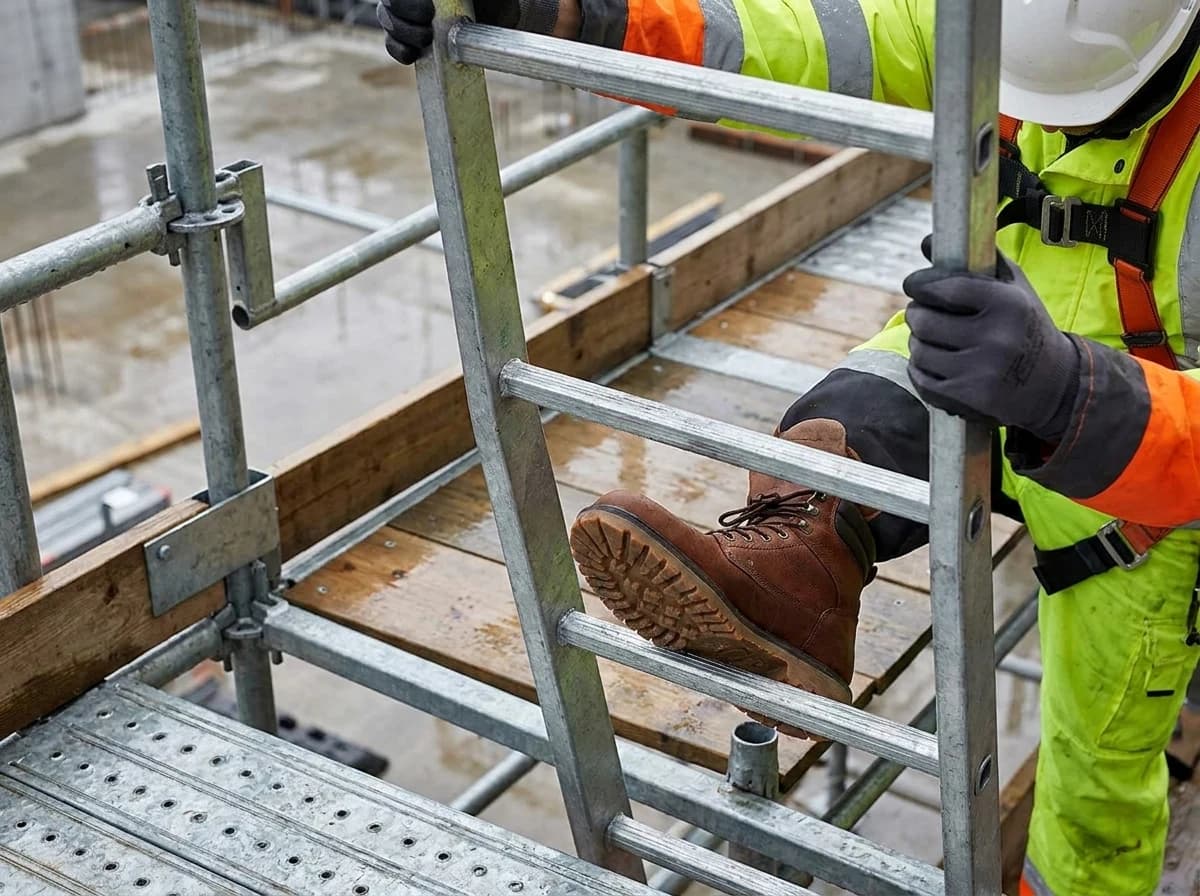
Look for:
- slip-resistant outsole
- toe protection
- puncture resistance where deck debris is possible
- stable heel and ankle support
- ladder or rung grip where relevant
- traction on wet, dusty, muddy, or icy surfaces
- enough flexibility for climbing without losing support
- good fit so the boot does not shift on ladders
Avoid footwear that becomes slick on metal planks, packs with mud, or feels unstable on scaffold access ladders. For wet scaffold work, waterproofing may matter, but not at the expense of traction and fit.
Use the construction safety footwear guide for boot standards, toe caps, slip resistance, puncture protection, and EN ISO 20345 ladder-grip considerations.
Gloves for Scaffold Tubes, Couplers, and Tools
Scaffold gloves have to balance protection and dexterity. Workers need grip for tubes and planks, protection from sharp edges and pinch points, and enough finger control for couplers, pins, levels, wrenches, and lanyards.
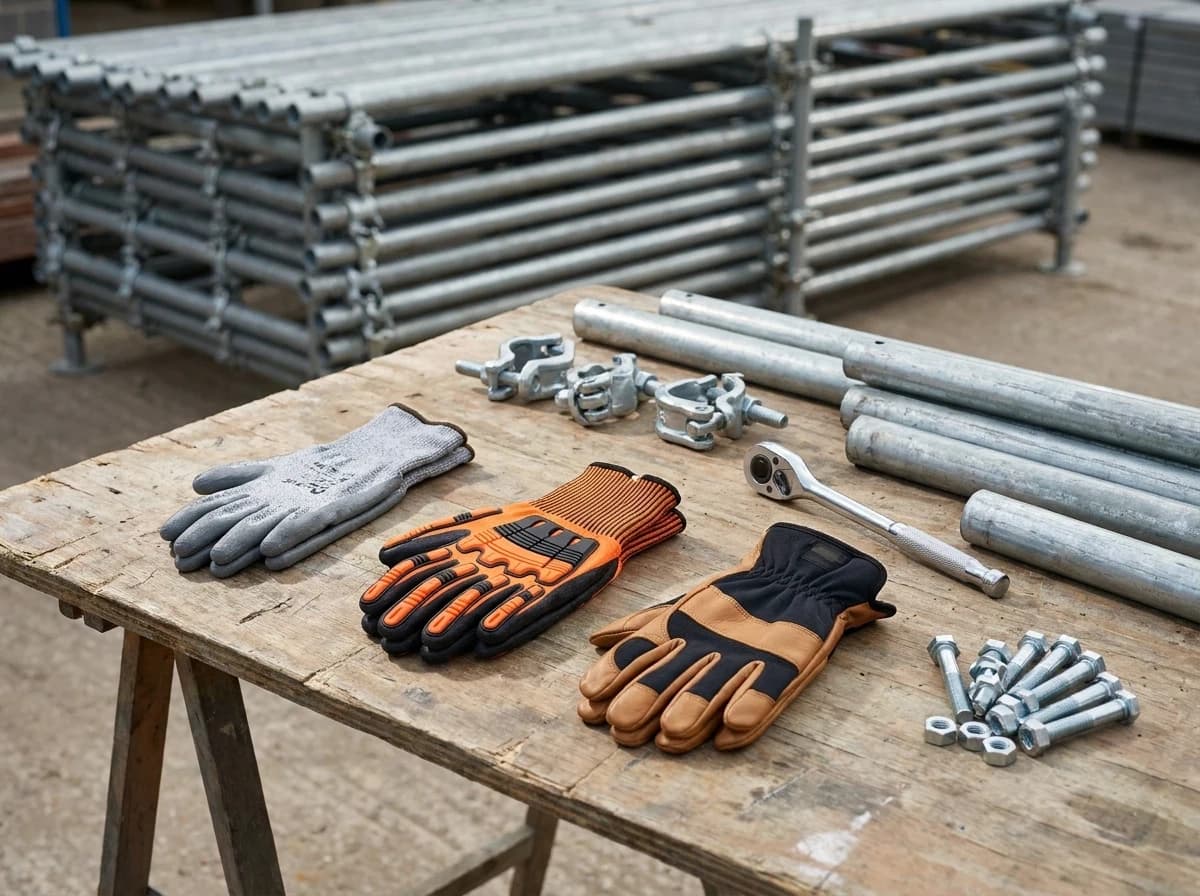
Check:
- grip on dry and wet metal
- cut resistance for sharp edges
- impact protection where crush exposure exists
- dexterity for couplers and small hardware
- abrasion resistance for repeated handling
- thermal protection in cold work
- compatibility with tool lanyards and radios
- replacement stock for wet, oily, or damaged gloves
Do not issue a glove that protects on paper but makes workers remove it to complete the task. That creates the exact exposure the glove was supposed to control.
Use the construction gloves selection guide for cut, impact, coating, grip, and dexterity decisions.
Eye and Face Protection on Scaffolds
Scaffold workers may be exposed to overhead dust, wind-blown debris, drilling, grinding, cutting, concrete chips, mortar, and work performed by other trades nearby.
Use:
- safety glasses with side protection for baseline impact exposure
- goggles for wind, dust, and fine particles
- face shield over primary eye protection for heavier chips or face-level debris
- welding or cutting protection where hot work happens from scaffolds
- anti-fog lenses where weather or respirators create fogging
The eye protection must remain compatible with helmets, chin straps, earmuffs, respirators, and face shields. Scratched or fogged eyewear is not a minor issue on scaffolds because reduced vision can also become a fall risk.
Use the eye and face protection for construction sites guide for task-based selection.
Tool Tethering and Dropped-Object Prevention
Dropped objects are a core scaffolding hazard. PPE should be paired with falling-object controls such as toe boards, debris nets, exclusion zones, tool lanyards, and controlled material movement.
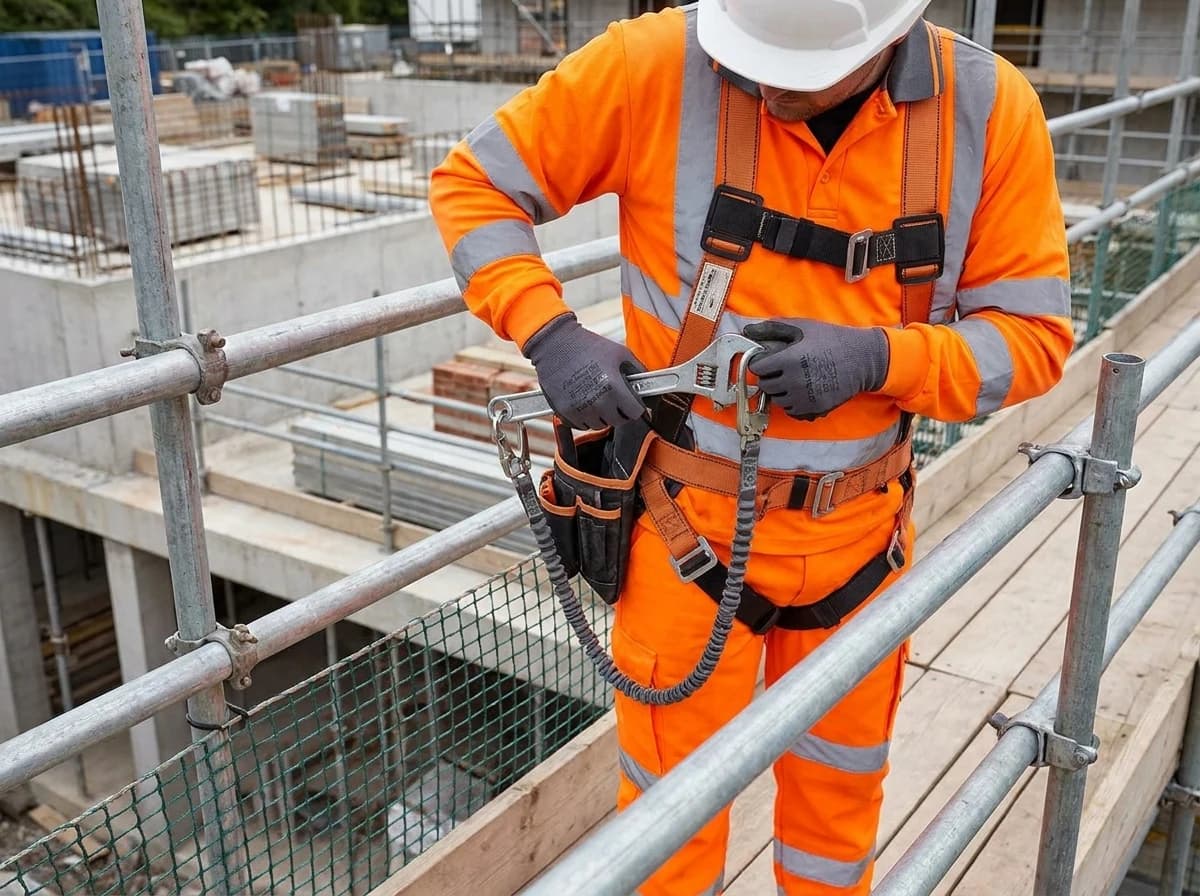
Check:
- Are hand tools tethered where they can fall to lower levels?
- Are lanyards rated for the tool weight?
- Are attachment points compatible with the tool and worker movement?
- Are workers trained not to overload lanyards or create snag hazards?
- Are dropped-object zones marked and enforced?
- Are ground workers wearing head protection and kept out of drop zones?
- Are materials stored so they cannot roll or slide off platforms?
Tool lanyards are not a substitute for platform housekeeping or exclusion zones. They are one part of the dropped-object control plan.
High-Visibility Clothing and Weather Layers
Scaffold workers often need high-visibility clothing because of cranes, forklifts, trucks, mixed contractors, material handling, and road-adjacent work. The visible layer must stay visible after harnesses, tool belts, rainwear, or jackets are added.
Check:
- Is Class 2 or Class 3 needed for the exposure?
- Does the hi-vis garment remain visible as the outer layer?
- Does the harness cover key reflective areas?
- Does rainwear or cold-weather clothing reduce visibility?
- Does the garment fit over layers without interfering with harness fit?
- Does mud, dust, or concrete contamination make replacement necessary?
Weather layers also affect grip, footing, and fall protection. A bulky jacket can change harness fit. Wet gloves can reduce tube control. Rain pants can change movement on ladders. Treat weather PPE as part of the scaffold PPE system, not a separate comfort item.
Use the high-visibility clothing for construction guide and the heat stress PPE guide for weather-related decisions.
Scaffolding PPE Kit Examples
Use kit examples as a starting point, then adapt them to the scaffold type and site plan.
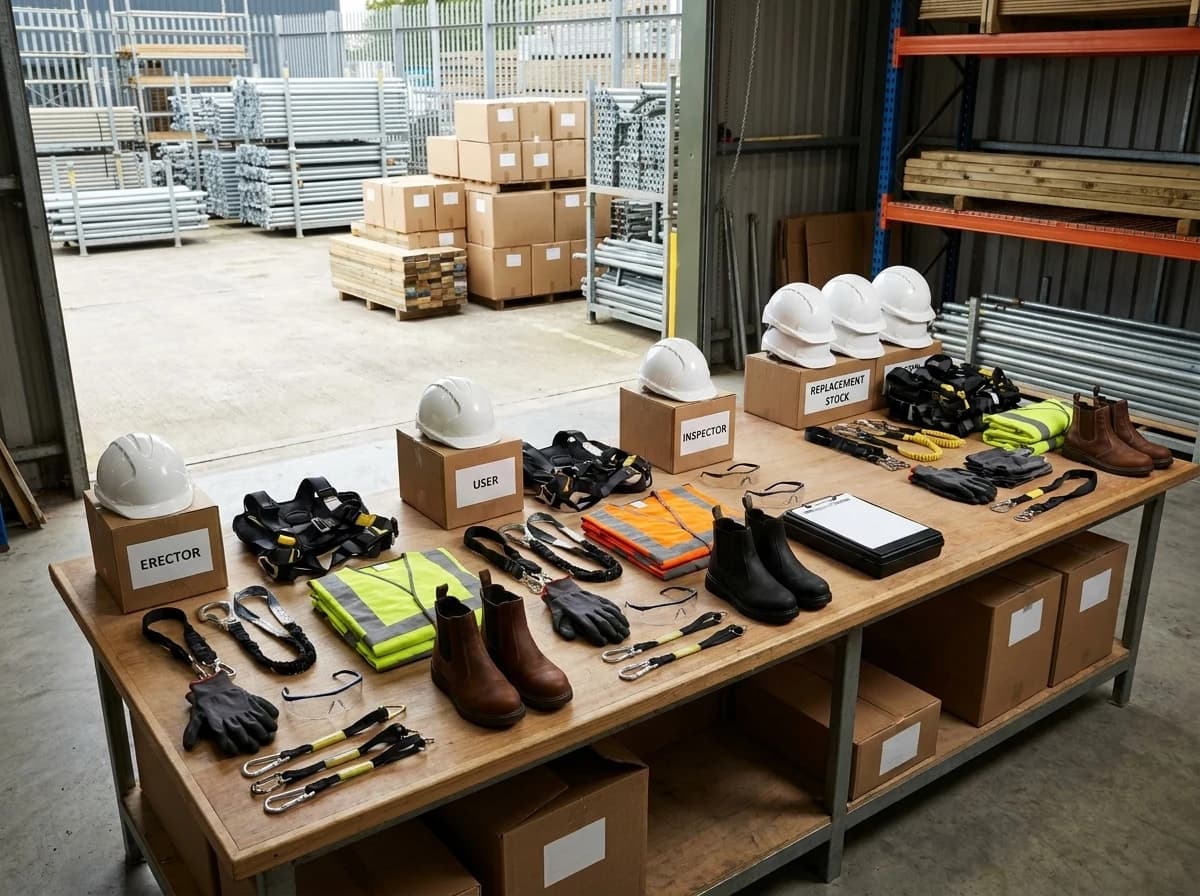
Scaffold erector kit
- safety helmet with chin strap
- full body harness
- suitable lanyard or SRL
- grip or cut-resistant gloves
- anti-slip safety boots
- eye protection
- hi-vis garment
- tool lanyards
- weather layer where needed
Scaffold user kit
- safety helmet or hard hat
- safety glasses or goggles
- work gloves matched to the trade
- anti-slip safety boots
- hi-vis garment
- fall protection where guardrails are incomplete or task exposure requires it
- task PPE for cutting, drilling, grinding, painting, or welding
Inspector kit
- helmet with chin strap
- anti-slip boots
- hi-vis garment
- gloves
- harness where access or inspection route requires it
- tethered tablet, clipboard, or inspection tool
- eyewear for debris and wind
Ground support kit
- head protection
- hi-vis garment
- safety boots
- gloves
- eye protection where debris or dust is possible
- clear drop-zone awareness and exclusion-zone controls
For repeatable packaging, use the contractor PPE kit checklist.
Common Scaffolding PPE Mistakes
Avoid these mistakes:
- assuming completed scaffold users need the same kit as erectors
- assuming erectors can work safely with only general site PPE
- using harnesses without checking connector, anchor, clearance, and rescue plan
- issuing helmets without retention where climbing and leaning can dislodge them
- using smooth-soled boots on wet or dusty platforms
- buying gloves that are too bulky for couplers and small tools
- letting harnesses or jackets cover hi-vis garments
- ignoring tool tethering and dropped-object zones
- treating eyewear as optional because the work is "only access"
- failing to replace damaged lanyards, gloves, eyewear, helmets, or boots
Most scaffold PPE failures are compatibility failures. The equipment may be compliant item by item, but weak as a system.
Frequently Asked Questions
What PPE is needed for scaffolding?
Most scaffold work needs head protection, eye protection, gloves, safety boots, and high-visibility clothing. Scaffold erectors, dismantlers, inspectors, and workers exposed to incomplete guardrails or elevated access may also need a full body harness, lanyard or SRL, tool lanyards, and stronger helmet retention.
Do scaffold workers always need a harness?
Not always. Fall protection depends on scaffold height, guardrail condition, scaffold status, site policy, task, and applicable OSHA requirements. Completed scaffolds may use guardrails as the fall protection method, while erection, dismantling, alteration, or incomplete guardrail conditions may require personal fall arrest systems.
Should scaffold workers wear helmets with chin straps?
Chin straps are often useful for scaffold work because workers climb, lean, work in wind, and move above others. Use manufacturer-approved chin straps or helmet systems designed for retention, and check compatibility with other PPE.
What boots are best for scaffolding?
Choose safety boots with slip-resistant outsoles, stable fit, toe protection, and good traction on ladders, platforms, wet planks, mud, and aggregate. Ankle support and ladder grip may be important for frequent climbing.
Are tool lanyards required for scaffolding?
OSHA requires protection from falling objects on scaffolds, and tool lanyards are one common control. Whether they are required for a specific task depends on the work plan, dropped-object exposure, site rules, and other controls such as toe boards, debris nets, and exclusion zones.
What is the difference between a scaffold PPE kit and a general construction PPE kit?
A general construction kit covers baseline site entry. A scaffold PPE kit adds height-work and platform-specific items such as helmet retention, fall protection compatibility, anti-slip footwear, tool tethering, and gloves suitable for tubes, planks, couplers, and access work.
Build a Scaffold-Ready PPE Kit
A scaffold-ready PPE kit should be role-based, compatible, and easy for supervisors to inspect. Start with the scaffold status and worker role, then select PPE that works together:
- helmet or hard hat with retention where needed
- harness and connector system where fall exposure requires it
- anti-slip safety boots
- gloves with grip, cut, impact, or weather protection as needed
- eye protection for wind, dust, debris, cutting, and overhead work
- hi-vis garment that remains visible as the outer layer
- tool lanyards and dropped-object controls
- weather PPE that does not compromise fit or visibility
- replacement stock for worn or damaged items
For sourcing packages, use the PPE for scaffolding and elevated platforms solution. For a broader contractor kit structure, use the contractor PPE kit checklist, or contact Laifappe with your scaffold type, worker roles, country or standard requirements, and expected crew size.
Related Guides on Laifappe.com
- PPE for scaffolding and elevated platforms
- Fall protection PPE for construction sites
- Complete PPE solution for construction sites
- Contractor PPE kit checklist
- Construction PPE checklist
- Types of hard hats for construction
- Safety helmet vs hard hat for construction
- Construction safety footwear guide
- Construction gloves selection guide
- Eye and face protection for construction sites
- High-visibility clothing for construction workers
- How to buy construction PPE in bulk
Sources: OSHA Scaffolding construction resources, OSHA 29 CFR 1926 Subpart L, OSHA 29 CFR 1926.451 general scaffold requirements, OSHA 29 CFR 1926.452 scaffold-type requirements, OSHA 29 CFR 1926.454 training requirements, OSHA 29 CFR 1926 Subpart M fall protection, OSHA 29 CFR 1926.95 PPE, ANSI/ISEA Z89.1 head protection, ANSI Z359 fall protection, EN 361/354/355/360 fall protection, EN ISO 20345 safety footwear, EN 388 gloves, EN 166 eye protection, and ANSI/ISEA 107 high-visibility apparel.
Related PPE
Source the PPE covered in this guide
Move from research to a buyer shortlist with the matching solution page, category paths, selected PPE options, and RFQ next steps.
Related Tools
Turn this guide into a faster PPE shortlist
Use the matching tools to check footwear sizing, decode certification labels, or estimate order quantities before you move from research to purchasing.
Safety Footwear Label Decoder
Decode ASTM F2413 and EN ISO 20345 markings such as S3, SRC, HRO, EH, and PR in seconds.
Decode labelsPPE Quantity Calculator
Estimate monthly usage, replacement cycles, and budget needs before you place a bulk PPE order.
Plan quantitiesSafety Boot Size Guide
Convert US, EU, UK, CN, and JP sizing and check width fittings before you lock in footwear specs.
Check sizing