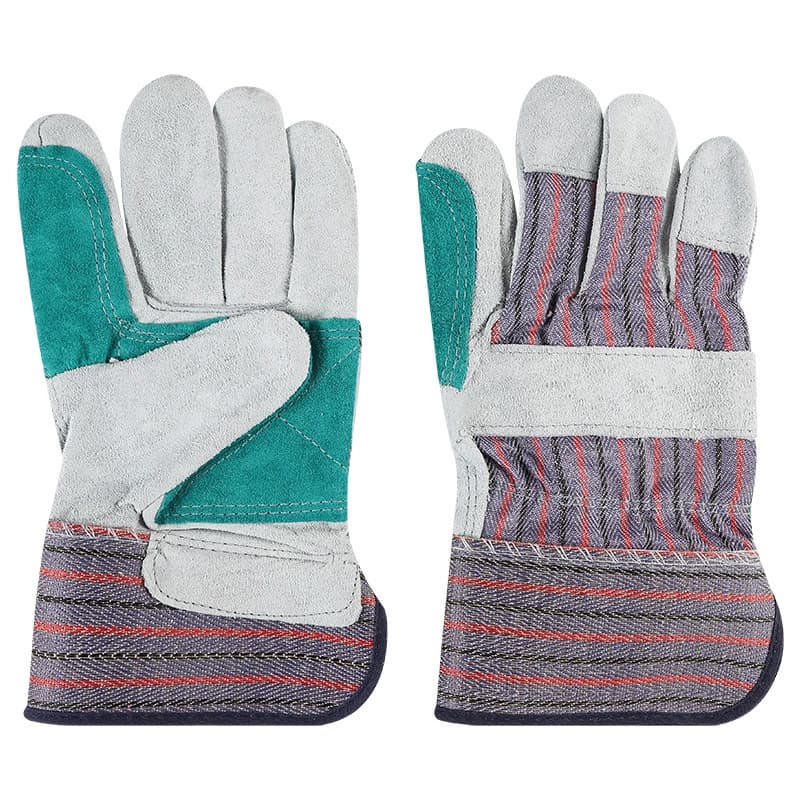
Split Cowhide Work Gloves with Green Fabric Reinforcement
From $1.10
Cowhide and split leather gloves for heavy duty general work

Cowhide and split leather durability
Leather work gloves are usually sought for harder-wearing tasks where abrasion resistance and tougher construction matter more than a thin coated-palm feel.
They are easier to evaluate when lined up against heavier construction and industrial handling jobs instead of lighter coated-glove tasks.
Compare leather type, palm durability, and reinforcement for the expected workload.
Check whether the task needs full heavy-duty coverage or a more flexible combination glove.
Review cuff style and comfort if the glove will be worn all day outdoors or on site.
Use leather work gloves where abrasion and rugged handling matter more than coated grip specialization.
Explore the product types and named features shown here. Review each model's details when comparing options for your workplace.
Compare related product families and individual models before preparing your enquiry.
They are often chosen when the task involves rougher surfaces, heavier abrasion, and a preference for more traditional heavy-duty glove construction.
No. Welding gloves focus on hot-work and spark exposure, while leather work gloves are more often used for broader heavy-duty handling tasks.
Because buyers usually look at different features when they are shopping for leather work gloves versus coated or cut-resistant gloves.


