Buyer next step
Turn this guide into a sourced PPE shortlist with standards, quantities, and role-based kit notes.
Planning tools
Use these tools before moving from this guide into quantities, sizing, labels, or RFQ planning.
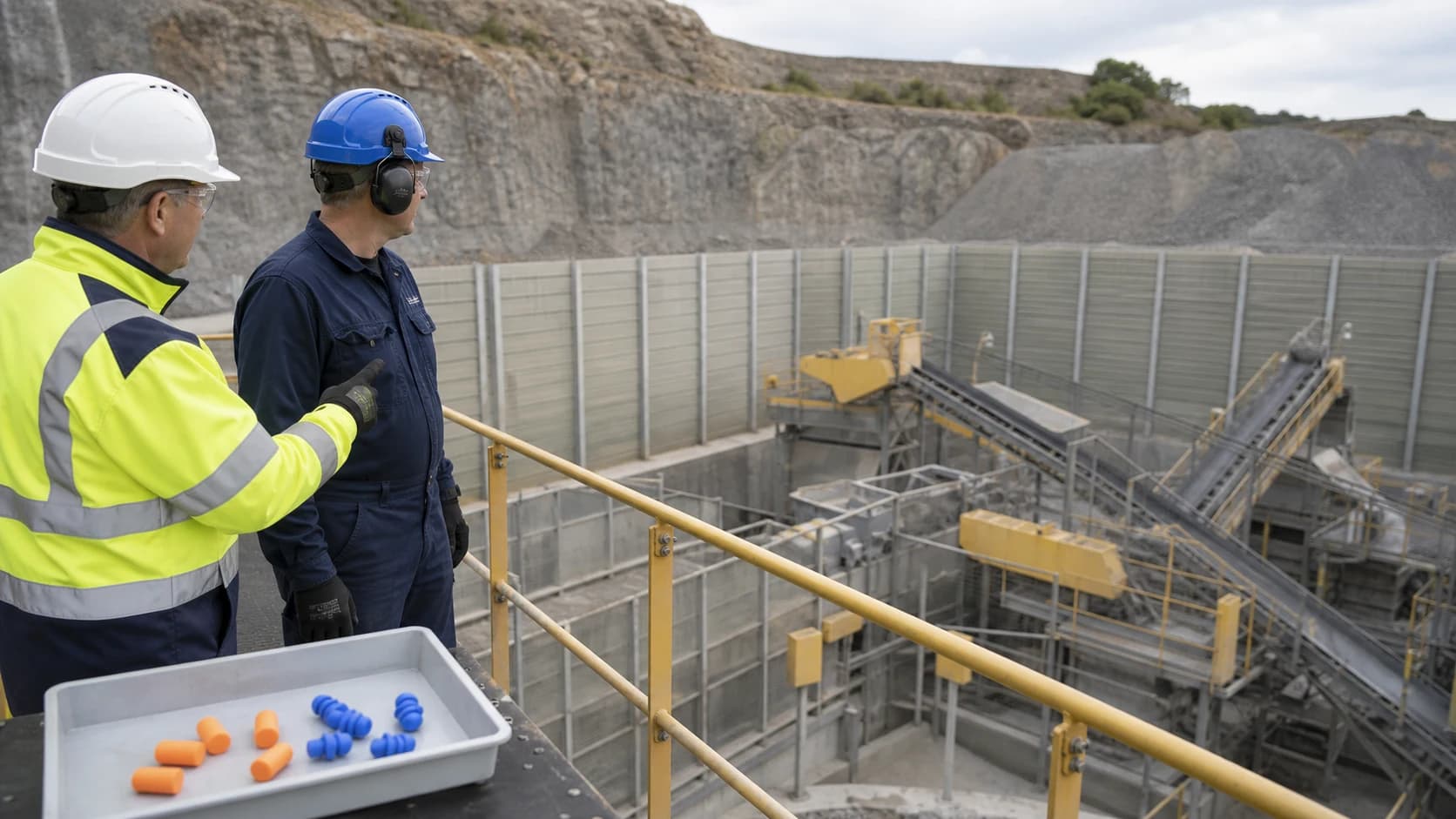
Mining hearing protection should be selected from the miner's measured exposure, task, work position, other PPE, communication needs, and the mine's hearing conservation program—not from equipment type or the highest Noise Reduction Rating on a package.
For U.S. mines covered by MSHA, 30 CFR Part 62 uses three important 8-hour time-weighted average thresholds: an 85 dBA action level, a 90 dBA permissible exposure level (PEL), and a 105 dBA dual hearing protection level. At and above the action level, the operator must establish the required hearing conservation protections. Above the PEL, the operator must use all feasible engineering and administrative controls and ensure hearing protector use. Above the dual protection level, plug-type and muff-type protectors must be used concurrently, in addition to the PEL controls.
This guide turns that framework into practical earplug, earmuff, dual-protection, compatibility, and bulk-purchasing decisions for drilling, crushing, screening, processing, haulage, and maintenance. It does not replace exposure monitoring, the mine's written programs, professional industrial hygiene advice, manufacturer instructions, or current legal requirements. Rules outside the United States differ.
For the complete site and procurement framework, start with the Mining Safety Equipment and PPE for Quarry Operations solution. Use the Mining PPE Checklist by Task for the wider pre-task check and the Open-Pit vs Underground Mining PPE guide when work areas change.
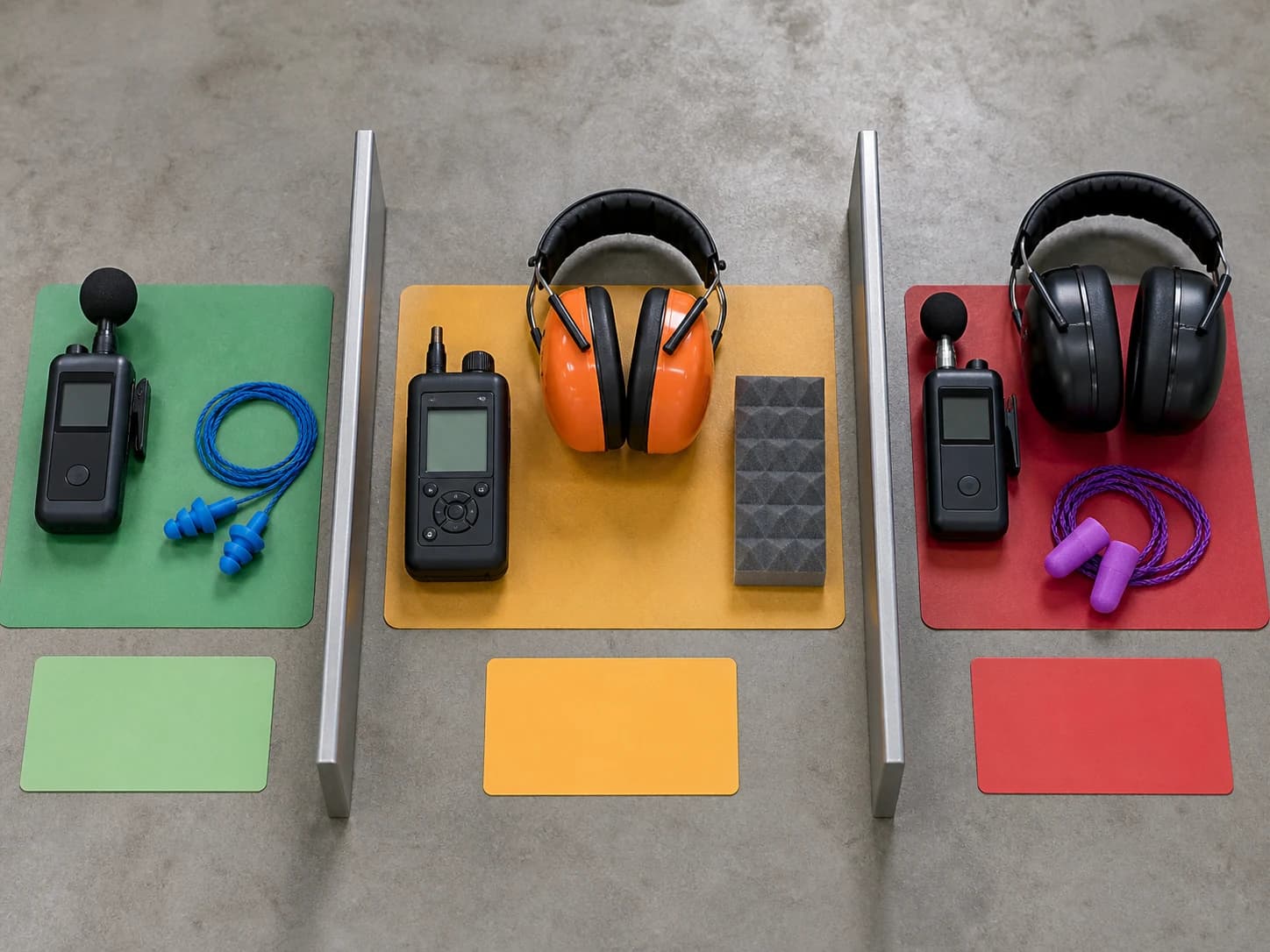
Quick MSHA Part 62 Decision Table
Use the table as a routing guide. The exposure determination, required controls, and the mine operator's program govern the final decision.
| Full-shift exposure result | Part 62 response | Hearing protection decision |
|---|---|---|
| Below the 85 dBA action level | Continue a monitoring system that can detect miners reaching or exceeding regulated levels; reassess when tasks, equipment, controls, production, or work position change | Protection may still be required by site policy or for specific high-noise tasks; do not infer a full-shift result from one spot reading |
| At or above 85 dBA TWA8 action level | Enroll the miner in a compliant hearing conservation program (HCP) | Provide a choice that includes at least two muff types and two plug types; equipment must be fitted, maintained, and replaced at no cost to the miner |
| Above 90 dBA TWA8 PEL | Use all feasible engineering and administrative controls, enroll the miner in the HCP, and ensure hearing protector use | Select and fit protection for the residual exposure while controls remain in place; protectors are not a substitute for feasible controls |
| Above 105 dBA TWA8 dual protection level | Continue all actions required above the PEL | Provide and ensure concurrent use of both plug-type and muff-type hearing protectors |
| Any exposure above 115 dBA | Part 62 requires the operator to ensure no miner is exposed above this maximum level, even when hearing protectors are worn | Stop treating PPE as the solution; eliminate or control the exposure and restrict access under the mine's procedure |
The MSHA action level, PEL, and dual protection level use different integration ranges and definitions. Use the mine's compliant dosimetry and exposure-assessment method rather than comparing a casual phone reading directly with this table.
Measure and Control Mine Noise Before Selecting Hearing Protection
A crusher, drill, screen, haul truck, or mill is not a noise exposure result. Exposure changes with distance, duration, enclosure, cab condition, maintenance, material, production rate, reflective surfaces, task rotation, and whether the worker leaves a protected position.
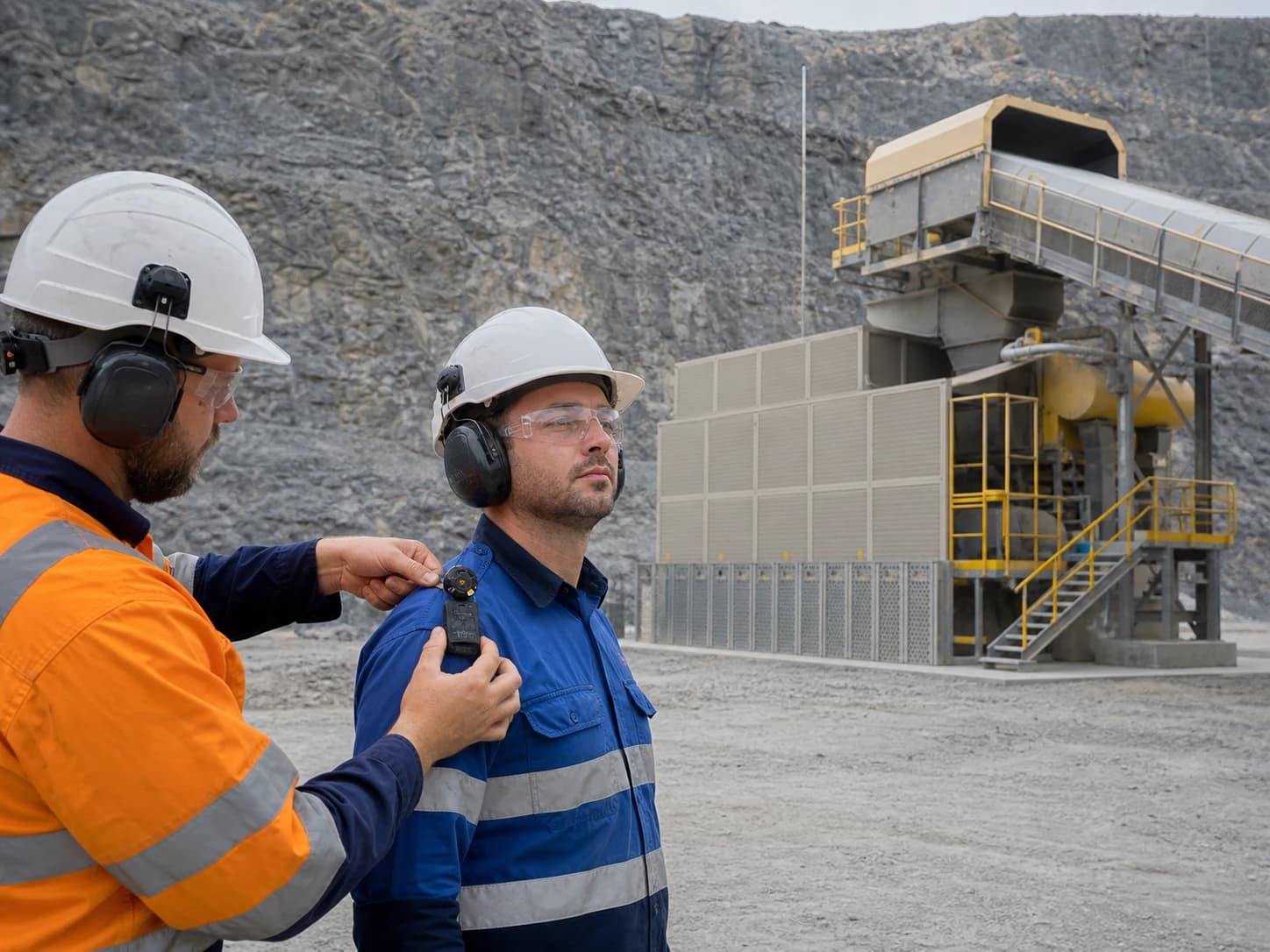
Build the decision from these steps:
- Define the worker and full shift. Separate the control-room operator, outside attendant, sampler, cleaner, maintenance technician, mobile-equipment operator, spotter, and contractor. Their time at the source can differ sharply.
- Monitor representative work. Use a system that can identify miners at or above the action level, above the PEL, above the dual protection level, or above the maximum level. Repeat monitoring when equipment, process, controls, production, or work practices may increase exposure.
- Control noise at the source and along the path. Maintain enclosures, damping, silencers, isolation, barriers, remote operation, filtered cabs, equipment condition, and other feasible engineering measures. Use administrative controls where appropriate and required.
- Select protection for the residual exposure. The hearing protector supports the control system. It does not erase an uncontrolled source or convert an exposed position into a safe one.
- Verify real use. Check fit, wear time, condition, compatibility, communication, and replacement. A high laboratory rating has little value when a plug is inserted shallowly or a muff cushion sits on an eyewear temple.
NIOSH describes hazardous noise as the primary cause of hearing problems and hearing loss for mine workers. Its mining program emphasizes durable, practical equipment controls for surface and underground operations, including stone, sand, and gravel sites. That controls-first approach is also sound purchasing practice: quieter equipment and maintained enclosures reduce dependence on perfect PPE use every minute of a shift.
What a Part 62 Hearing Conservation Program Must Cover
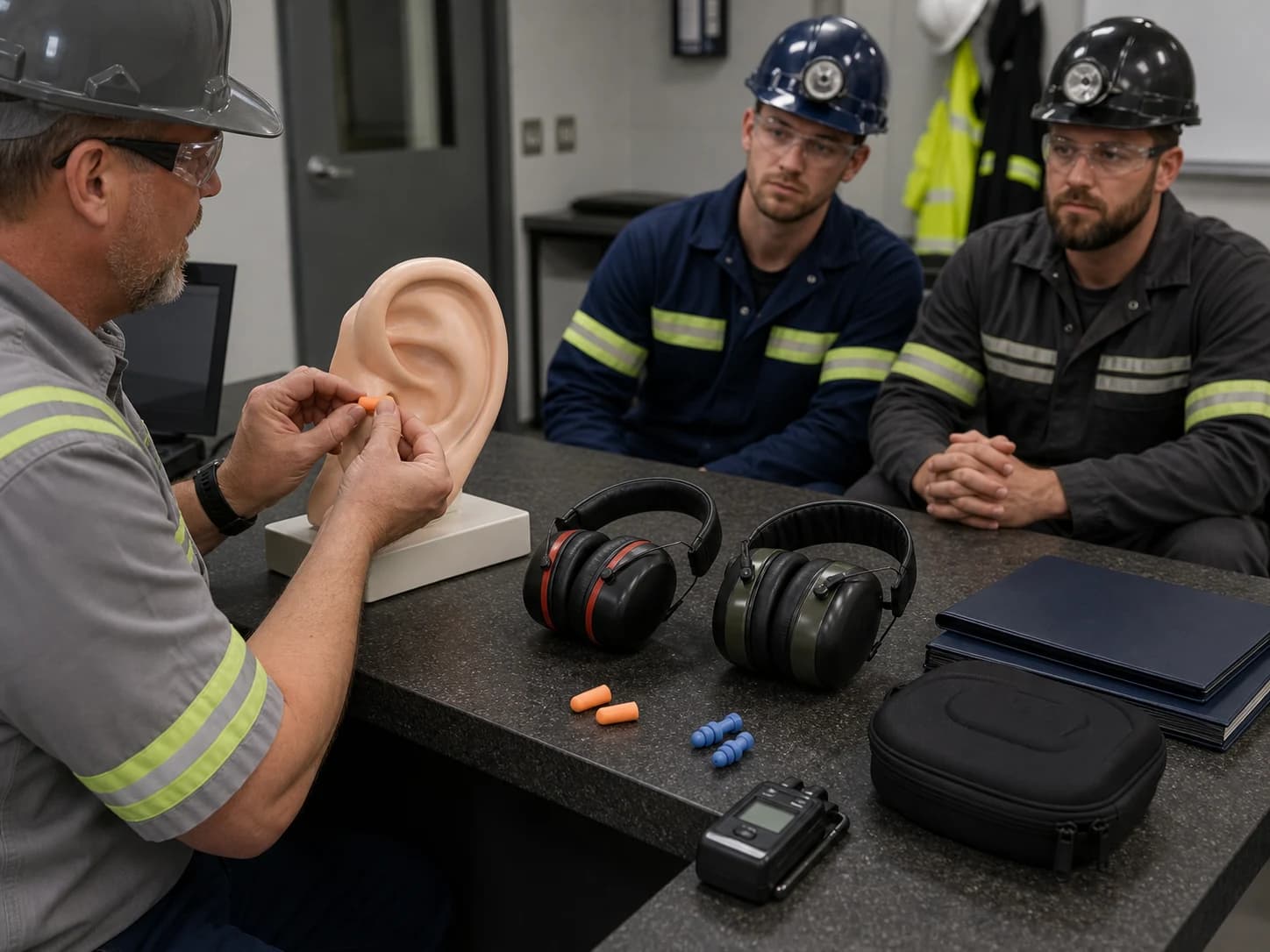
Under MSHA's compliance guidance, a Part 62 HCP includes:
- a noise monitoring system under Section 62.110
- provision and use of hearing protectors under Section 62.160
- audiometric testing under Sections 62.170 through 62.175
- training under Section 62.180
- recordkeeping under Section 62.190
The operator must establish the HCP when a miner's exposure equals or exceeds the action level. For purchasing teams, this means an earplug order alone is not a hearing conservation program. Product selection must connect to the people responsible for monitoring, fitting, training, audiometry, records, and corrective action.
MSHA's guide says miners at or above the action level must be offered a choice that includes at least two muff types and two plug types. The protectors must be in good condition, fitted, and maintained according to the manufacturer. This choice requirement is important: ear shape, helmet configuration, heat, hygiene, prescription eyewear, communication, and personal comfort affect whether a model can be worn correctly for the whole exposure period.
Hearing Protection by Mining and Quarry Task
Use task groupings to plan trials and stock, but base the final protection level on exposure data.
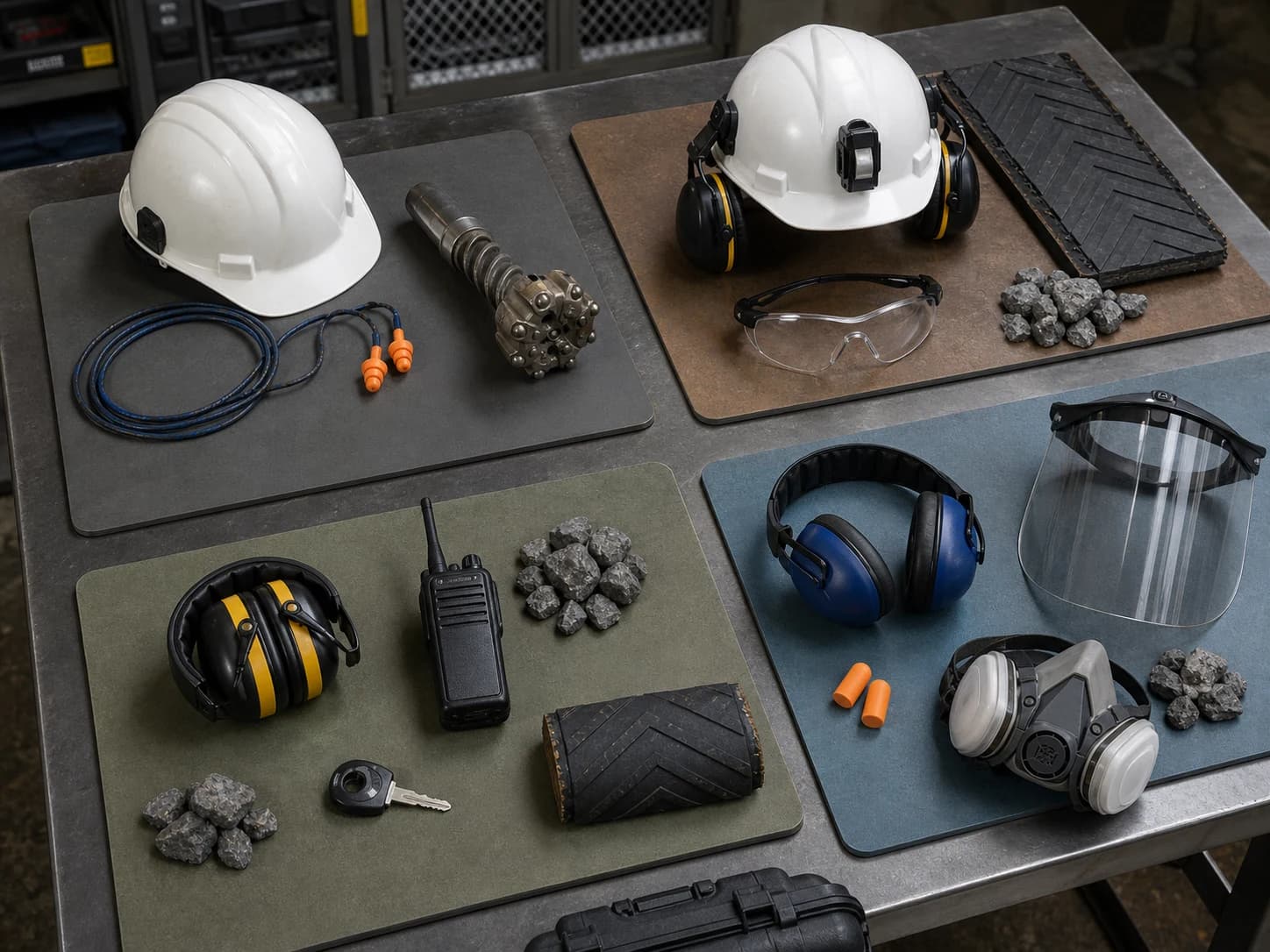
| Task or work area | Noise and use pattern to verify | Selection and compatibility questions |
|---|---|---|
| Drilling and bolting | Continuous machine noise, compressed air, rock contact, outside-cab work, helpers moving around the rig | Can plugs be inserted with clean hands? Do helmet-mounted muffs fit the exact helmet slots? Does the system work with eye protection, lamp, radio, and respiratory PPE? |
| Crushing and primary sizing | High continuous noise, changing position near feeder, crusher, transfer points, control room, and cleanup | Is protection easy to put on before leaving an enclosure? Do seals remain intact with goggles or glasses? Are warnings and startup communication handled through the site system? |
| Screening and processing | Vibrating screens, conveyors, pumps, mills, chutes, enclosed or reflective structures | Will heat and moisture reduce wear time? Are reusable devices cleaned without carrying process contamination into the ear? Is speech communication part of the trial? |
| Haulage and mobile equipment | Cab noise, doors or windows opened, radio use, pre-start inspection, refueling, spotter and pedestrian work | Is the cab exposure assessed separately from outside-cab tasks? Does protection interfere with vehicle communication, headwear, or warning recognition? |
| Maintenance and shutdowns | Grinding, impact tools, air tools, testing, guards removed under isolation, short intense exposures | Can protection be donned before the noisy step begins? Does it fit with face shields, welding PPE, respirators, bump or safety helmets, and confined-access needs? |
| Contractors and visitors | Unfamiliar routes, variable fit skill, short visits, inconsistent personal equipment | Is there a clean, simple issue method, sizing choice, fitting instruction, escort rule, and disposal or return process? |
For silica-generating drilling, crushing, and maintenance, hearing protection must also work with the selected respirator. Use the Mining Silica Dust Controls and Respirator Selection guide to check facepiece, eyewear, and head-protection interfaces rather than trialing each category separately.
Earplugs vs Earmuffs vs Dual Hearing Protection
No single style wins every mining task. A compliant program offers meaningful choices and validates them in the actual PPE system.
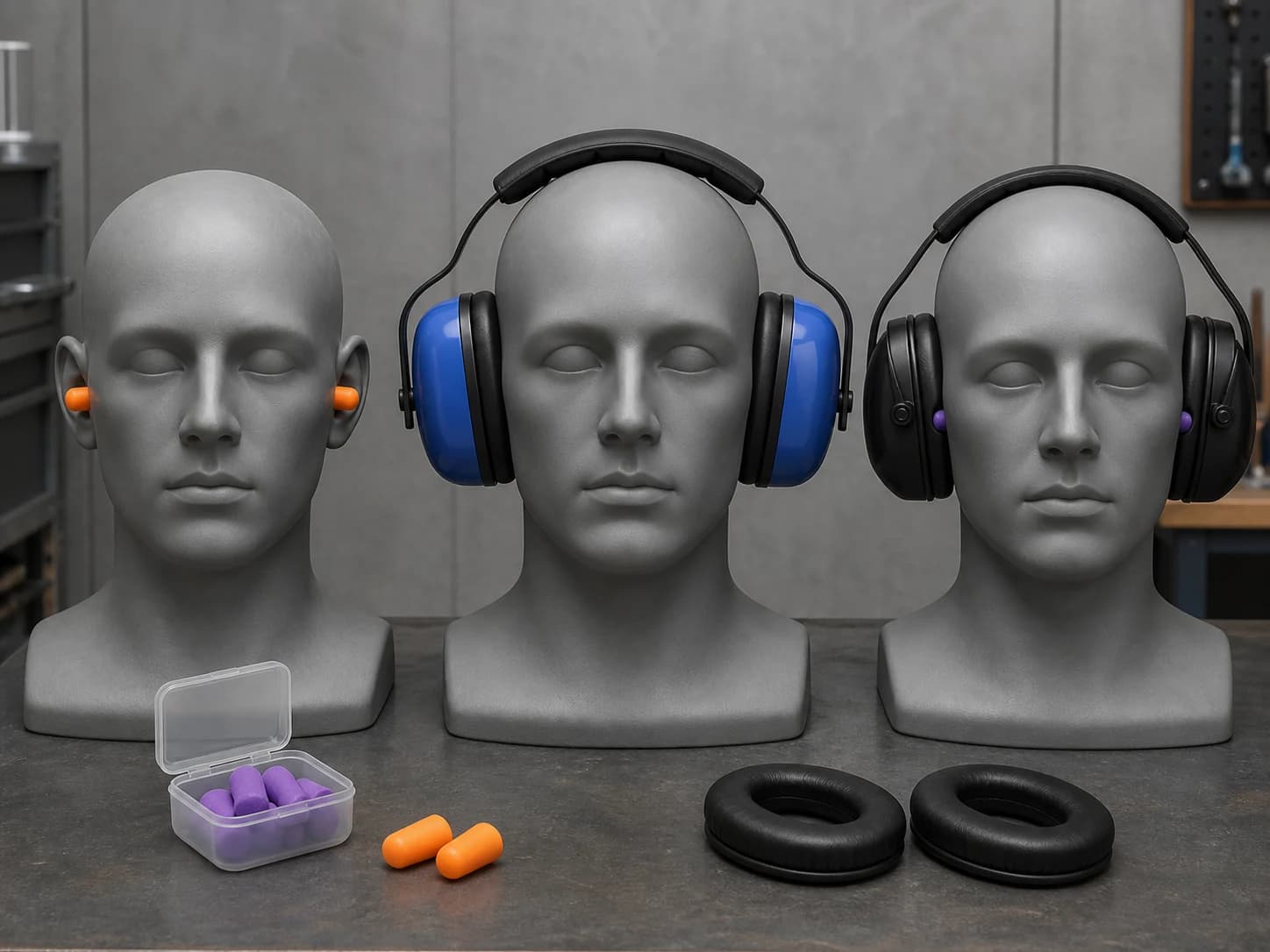
Disposable foam earplugs
Foam plugs are compact, inexpensive, and easy to stock at multiple issue points. When correctly sized, rolled, inserted, and held while expanding, they can work well under helmets, face shields, and some respirator configurations.
Their main weakness is fit variability. Dirty hands, shallow insertion, rushed donning, unusual ear canals, or repeated removal can reduce protection and increase hygiene problems. Individually packaged plugs help with distribution, but packaging does not prove correct fit.
Reusable premolded earplugs
Reusable plugs can simplify repeated use and reduce disposable consumption. Corded versions can be easier to retain during transitions. They require size choice, cleaning, clean storage, and replacement criteria for damaged flanges, hardened material, contaminated cords, or poor fit.
Do not assume one reusable size fits the entire workforce. The trial should include workers with different ear-canal sizes and the real gloves or hand-cleaning conditions used at the issue point.
Earmuffs
Earmuffs are visually easy to check and fast to don for intermittent entry into noisy areas. They can work well at a crusher enclosure door, maintenance shop boundary, or inspection route where workers repeatedly move between exposure zones.
Performance can be reduced by thick eyewear temples, respirator straps, hair, helmet accessories, damaged cushions, dirt, or a cup that is not fully seated. Helmet-mounted muffs must be approved and mechanically compatible with the exact helmet and attachment system. A similar-looking slot is not proof of compatibility.
Dual protection
Dual protection means a plug and a muff worn concurrently. Under Part 62 it is required when exposure exceeds the 105 dBA TWA8 dual protection level. A mine may also specify dual protection for particular controlled tasks based on its assessment.
Do not add the plug NRR and muff NRR together. Combined attenuation depends on the complete fit and method used by the program. Dual protection also increases heat, bulk, communication difficulty, and the chance that one component interferes with other PPE. Trial the complete combination and verify that both devices are worn correctly.
Communication headsets and level-dependent protection
Electronic or communications-enabled protectors can support radio use or situational awareness, but features do not automatically establish compliant attenuation or suitability. Confirm the protector's documentation, operating modes, battery behavior, environmental limits, radio interface, intrinsic-safety or other mine-specific requirements where applicable, and performance when the electronics are off.
Fit, Compatibility, Communication, and Warning Signals
The Quarry Eye and Face Protection guide includes an eyewear and earmuff interface checklist. Trial the actual combination so spectacle arms or goggle straps do not displace the hearing protector.
When earmuffs, a cap lamp, eye protection, communication equipment, and helmet retention share the same head-worn system, use the Mining Safety Helmet Buyer Guide to document the exact interfaces and sample approval.
The best protector is one that delivers adequate real-world attenuation and can be worn correctly for the entire required period.
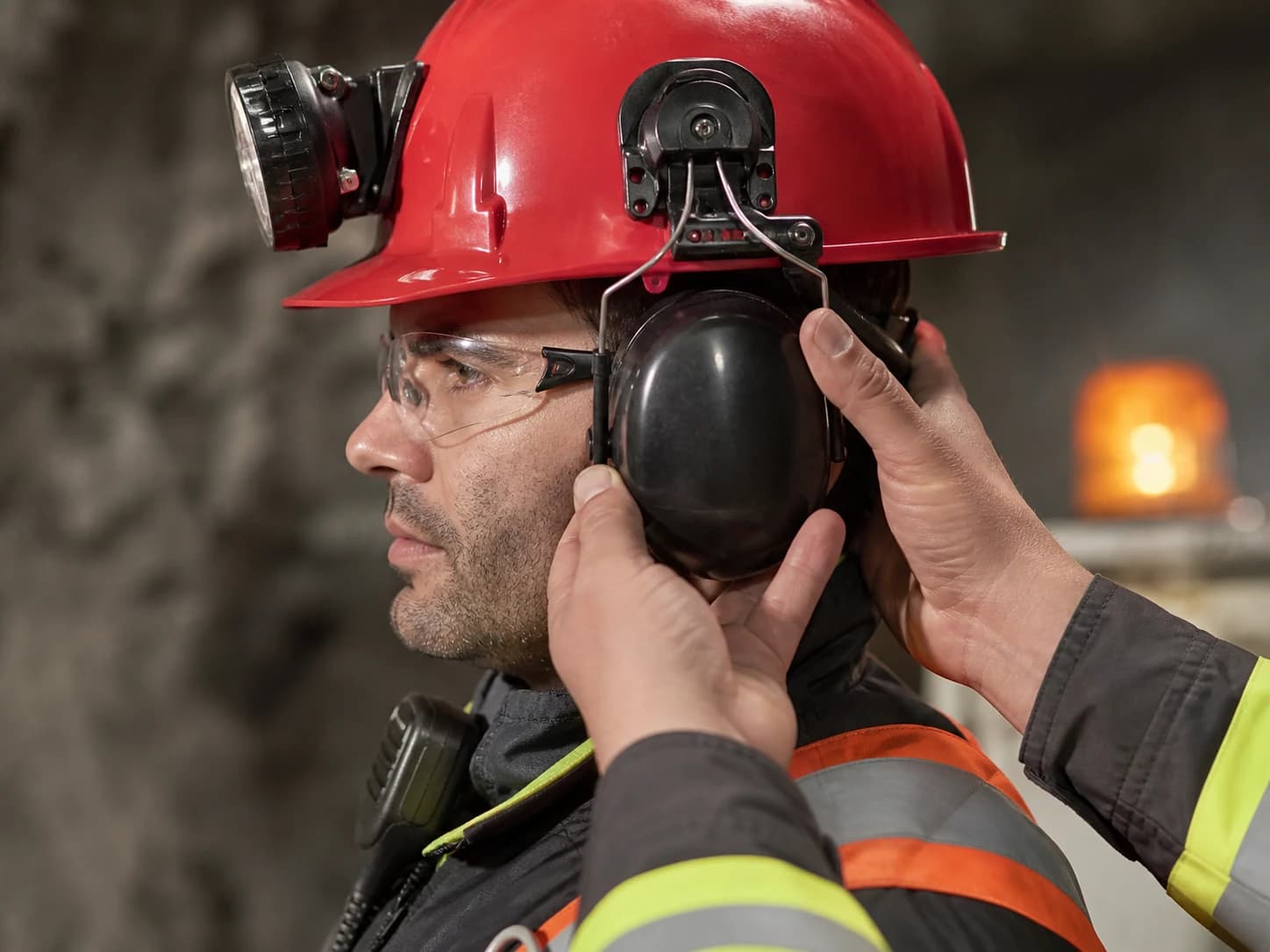
Fit and individual choice
- Provide enough plug and muff options to satisfy the Part 62 choice requirement and the workforce's actual fit needs.
- Train workers to insert each offered plug and adjust each muff.
- Use a visual and hands-on fit check at issue; consider hearing protector fit-testing to estimate individual attenuation and identify retraining needs.
- Recheck fit after a product substitution, size change, weight change affecting other PPE, or a standard threshold shift response.
PPE compatibility
Trial the complete assembly, not isolated catalog samples:
- helmet or hard hat, suspension, chinstrap, cap lamp, and mounted earmuffs
- safety glasses or goggles with muff cushions
- respirator straps and facepiece with hearing and eye protection
- face shield, welding shield, hood, cold-weather headwear, or rain hood
- radio microphone, communication headset, and emergency equipment
Thin eyewear temples can reduce muff interference, but procurement should verify the actual combination. Never modify a certified helmet, muff arm, cushion, plug, or respirator strap to make incompatible products fit.
Communication and warnings
Do not solve communication problems by allowing workers to remove protection in the exposure zone. Define how workers will receive startup warnings, evacuation signals, vehicle communication, instructions, and radio calls while protected. Options can include engineered warning systems, visual signals, remote communication, level-dependent protectors, communication headsets, and moving the conversation to a controlled area.
Overprotection can make communication and consistent wear harder, but underprotection is not the answer. Use the exposure assessment, validated attenuation method, fit evidence, and field trial to choose enough protection without unnecessary isolation.
NRR, Labels, and Fit Testing: What Buyers Should Not Assume
The Noise Reduction Rating is a laboratory label value, not the number of decibels that can automatically be subtracted from a miner's measured exposure. Real-world attenuation varies with fit, wear time, individual anatomy, condition, and the calculation method required by the regulator or program.
For each proposed protector, ask for:
- the applicable rating and test standard, with the complete model identity
- current product instructions and correct fitting method
- size or fit options
- compatibility and accessory documentation
- replacement components for muffs
- storage, cleaning, service-temperature, moisture, and shelf-life information
- any individual fit-testing compatibility and required adapters
The mine's industrial hygiene or hearing conservation owner should document how measured exposure and protector performance are evaluated. Avoid supplier comparisons that rank products only by the largest printed NRR.
Cleaning, Inspection, Storage, and Replacement
Mining environments add dust, sweat, oils, water, mud, heat, cold, and repeated cab-to-ground transitions. The issue plan should cover the full product life cycle.
Earplug controls
- Place clean disposable plugs before noisy-zone entry, not only inside the area.
- Provide hand-cleaning or a low-touch insertion method where hands are dirty.
- Do not wash single-use plugs unless the manufacturer specifically permits it.
- Clean reusable plugs using the approved method and dry them before storage.
- Replace plugs that are dirty, damaged, hardened, misshapen, or no longer fit.
Earmuff controls
- Inspect cushions for cracks, stiffness, deformation, contamination, and incomplete sealing.
- Check headbands, helmet arms, pivots, cups, and attachment points.
- Replace hygiene kits at the manufacturer's condition or interval trigger.
- Store muffs where cups and cushions are not crushed and electronics remain within specified conditions.
- Quarantine a protector after impact, chemical contamination, unauthorized modification, or uncertain damage until it is assessed.
Use named replacement triggers rather than one unsupported mine-wide interval. Track both consumables and reusable components so a worker is not forced to continue with damaged protection while waiting for stock.
Build a Mining Hearing Protection RFQ
A useful RFQ gives suppliers enough context to propose documented options without asking them to invent the mine's exposure assessment.
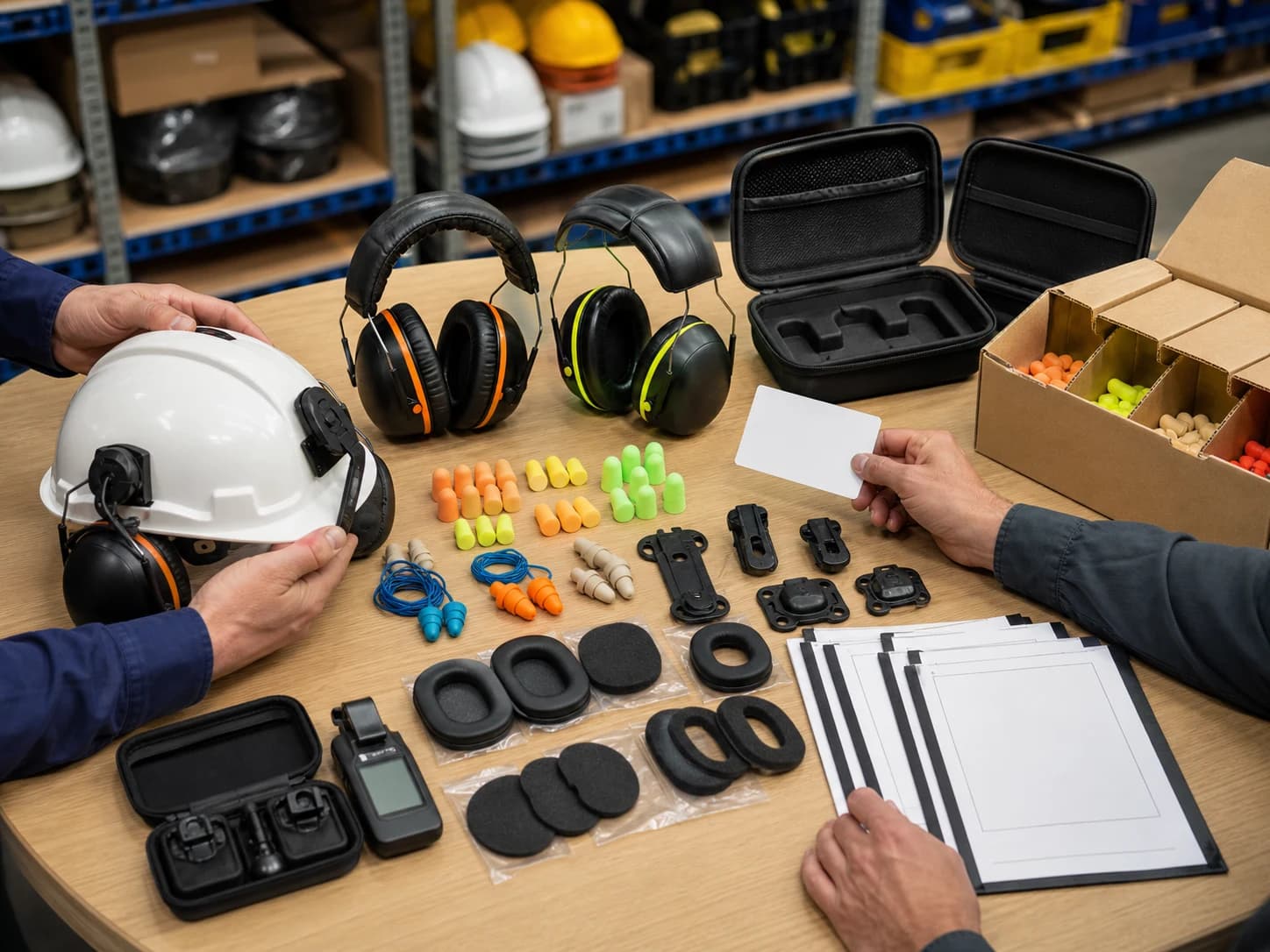
Include:
- Mine type, jurisdiction, work areas, and environmental conditions.
- Roles and headcount by shift, including contractors and visitors.
- Task and full-shift exposure results, including the action, PEL, or dual-protection routing already determined by the mine.
- Required plug and muff choice, sizes, disposable or reusable preference, and individual trial quantity.
- Helmet make, model, slot or accessory system, cap lamp, eyewear, respirator, face shield, radio, and other compatibility constraints.
- Communication, warning-signal, electronic, and battery requirements.
- Required standard, rating, test report, instructions, certificate or declaration, and document-language needs.
- Packaging, dispenser, hygiene, cleaning, storage, and contamination-control requirements.
- Replacement cushions, inserts, bands, batteries, chargers, consumables, and spare ratios.
- Delivery schedule, approved-substitution process, sample review, branding, and reorder identification.
Use the PPE calculator to plan issue and replacement quantities. Then send the approved exposure groups, compatibility list, documentation requirements, and trial quantities through the quote request.
Common Mining Hearing Protection Mistakes
- Buying the highest NRR for everyone. The label does not prove individual attenuation, compatibility, comfort, or full-shift wear.
- Treating PPE as a substitute for noise control. Part 62 requires feasible engineering and administrative controls above the PEL.
- Using one earplug size. Ear anatomy and fitting skill vary; meaningful choice improves the chance of a usable fit.
- Adding plug and muff ratings. Dual-protection performance is not the arithmetic sum of two package labels.
- Ignoring cab transitions. An operator's exposure can change when a door opens or the worker exits for inspection, fueling, sampling, or cleanup.
- Breaking earmuff seals with other PPE. Eyewear temples, respirator straps, hair, hoods, and helmet accessories can create gaps.
- Removing protection to communicate. Communication and warning systems must work while the required protection remains correctly worn.
- Buying helmet-mounted muffs without an assembly trial. Attachment, pressure, cup position, helmet rating, lamp, and face protection all need verification.
- Stocking products without replacement parts. Worn cushions, missing inserts, damaged bands, and dead batteries can disable an otherwise reusable system.
- Confusing a task name with exposure. Two crusher workers can have different results because of position, enclosure, duration, production, and controls.
Buyer and Supervisor Approval Checklist
- [ ] Exposure groups are defined by worker, task, position, and full shift.
- [ ] Monitoring can detect the Part 62 action, PEL, dual-protection, and maximum levels.
- [ ] Feasible engineering and administrative controls are implemented and maintained.
- [ ] HCP enrollment, audiometry, training, and records are assigned where required.
- [ ] At least two muff types and two plug types are available for miners at or above the action level.
- [ ] Selected devices are fitted and maintained under manufacturer instructions.
- [ ] Dual protection is identified for exposure above 105 dBA TWA8.
- [ ] Helmet, eyewear, respirator, lamp, radio, hood, and face-shield combinations were trialed.
- [ ] Workers can receive warnings and communicate without removing required protection.
- [ ] NRR is evaluated using the mine's documented method; ratings are not simply subtracted or added.
- [ ] Cleaning, inspection, storage, replacement parts, and spare stock are included.
- [ ] Reassessment triggers cover equipment, production, controls, tasks, work position, and product substitutions.
Frequently Asked Questions
When does MSHA require a hearing conservation program?
Under Part 62, the mine operator must establish a compliant HCP when a miner's noise exposure equals or exceeds the 85 dBA TWA8 action level during a work shift. The program includes monitoring, hearing protectors, audiometric testing, training, and recordkeeping.
At what level does MSHA require dual hearing protection?
When a miner's exposure exceeds the 105 dBA TWA8 dual hearing protection level, the operator must provide and ensure concurrent use of both plug-type and muff-type protectors, in addition to the actions required above the PEL.
Does every crusher operator need both earplugs and earmuffs?
No. The crusher label alone does not determine dual protection. Use the miner's compliant exposure result and the mine's controls. Dual protection is required under Part 62 above its defined 105 dBA TWA8 level and may also be specified by the mine for other assessed conditions.
Can the NRR be subtracted directly from a dosimeter result?
Do not assume so. NRR is a laboratory label value, and the calculation depends on the exposure measurement, regulator or program method, derating approach where applicable, and whether the device fits the individual. The mine's qualified owner should document the method.
Are earmuffs better than earplugs in a quarry?
Neither is universally better. Muffs are quick to don and visually inspect, while plugs can be cooler and easier to combine with other headgear. Dust, heat, hygiene, eyewear, respirators, helmets, communication, fit, and wear duration determine which options should be offered.
Can workers remove hearing protection to hear radio calls or alarms?
Required protection should remain correctly worn in the exposure zone. Design communication and warnings so they can be received while protected, using suitable engineered, visual, radio, or hearing-protection solutions validated by the mine.
How often should mining hearing protection be replaced?
Follow the manufacturer and the mine's condition-based rules. Replace disposable plugs as directed; replace reusable plugs, cushions, inserts, bands, arms, or electronic components when damaged, contaminated, deformed, hardened, unreliable, or beyond a stated service-life limit. Do not invent one universal interval.
Related Mining Guides and Primary Sources
- Mining Safety Equipment and PPE for Quarry Operations
- Mining PPE Checklist by Task
- Open-Pit vs Underground Mining PPE: Key Differences
- Mining Silica Dust Controls and Respirator Selection
- Mining & Quarry Safety Boots Buyer Guide
- Hearing Protection for Construction Workers for OSHA-regulated construction work rather than MSHA-covered mine operations
- MSHA Compliance Guide to the Occupational Noise Exposure Standard
- NIOSH Mining Noise-Induced Hearing Loss
- NIOSH Mining and Oil and Gas Extraction Hearing Statistics
NIOSH reported in April 2026 that about 24% of noise-exposed tested Mining workers had material hearing impairment, while 28% of noise-exposed Mining and Oil and Gas Extraction workers reported not wearing hearing protection. Those figures reinforce why mine hearing conservation must combine effective controls, correctly fitted choices, consistent wear, audiometry, training, and follow-up—not just a higher product rating.
Need a documented mining hearing protection shortlist? Send the mine type, work areas, exposure groups, helmet and other PPE models, communication requirements, worker count, preferred plug and muff formats, required documents, trial quantity, and replacement assumptions. LAIFAPPE can organize available product and documentation options for buyer review; the mine operator remains responsible for exposure assessment, controls, HCP compliance, final selection, fitting, training, and use.
Related PPE
Source the PPE covered in this guide
Move from research to a buyer shortlist with the matching solution page, category paths, selected PPE options, and RFQ next steps.