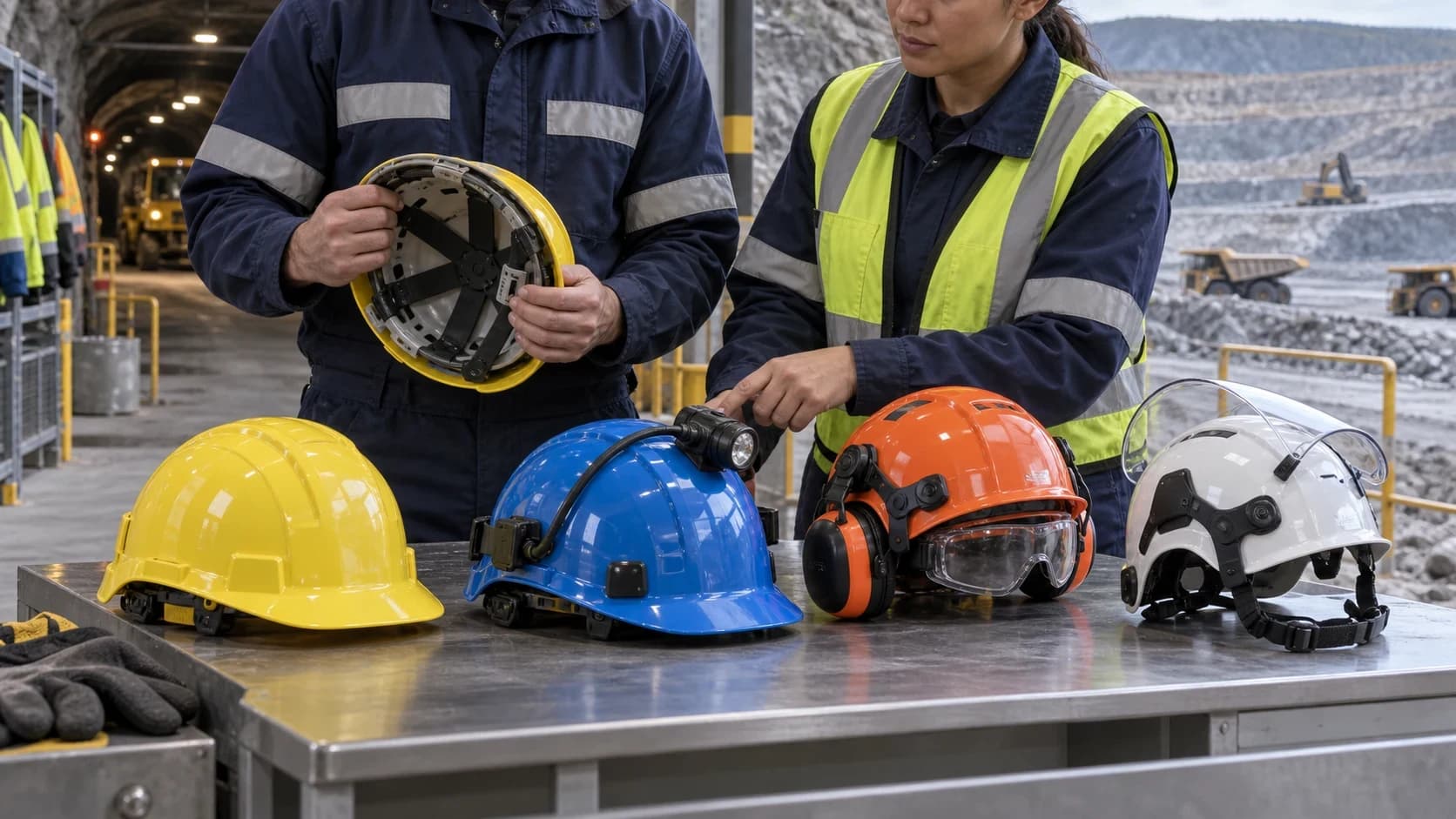
Buyer next step
Turn this guide into a sourced PPE shortlist with standards, quantities, and role-based kit notes.
Planning tools
Use these tools before moving from this guide into quantities, sizing, labels, or RFQ planning.
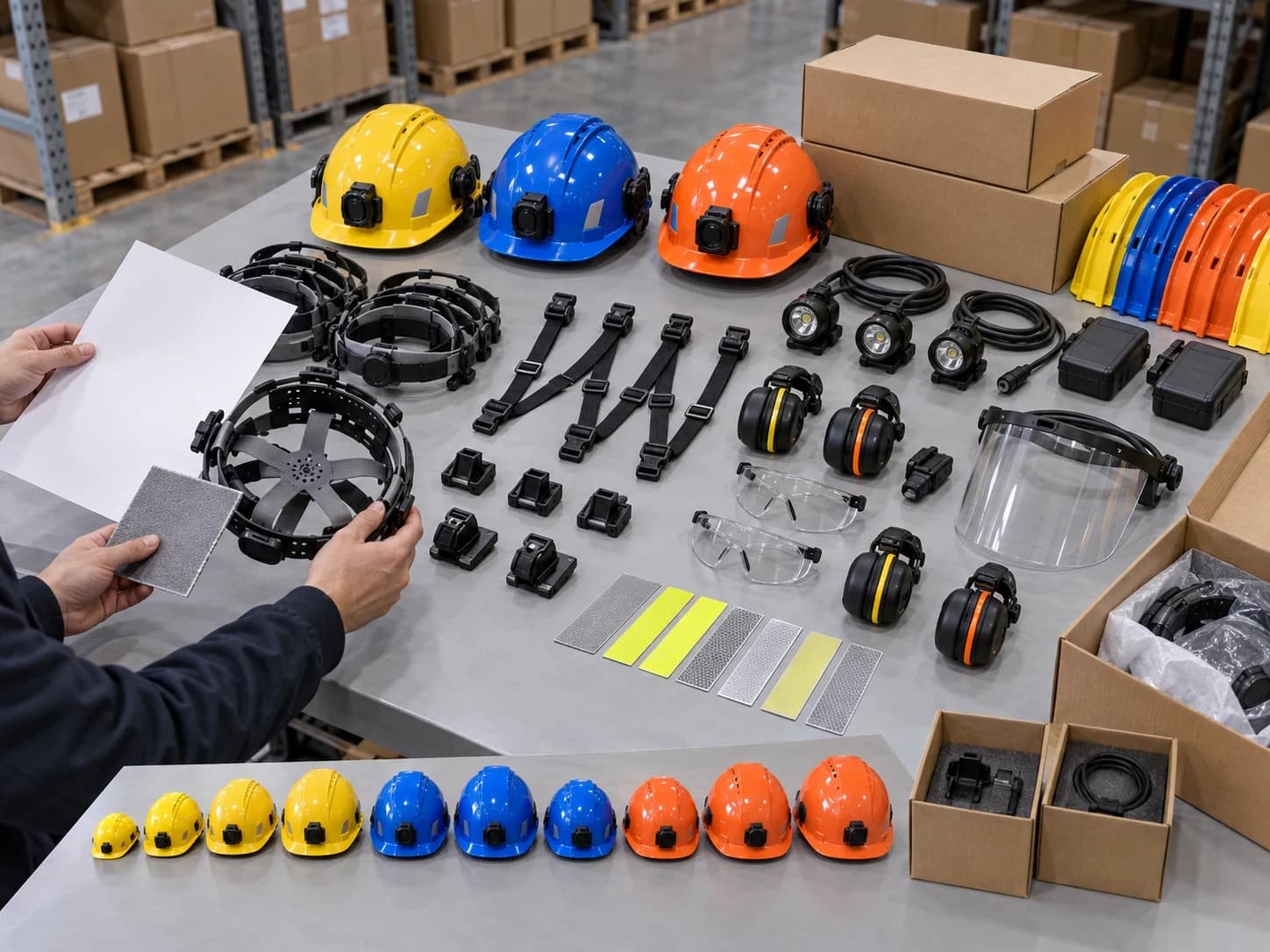
A mining safety helmet should be selected as part of a wearable system, not as an isolated shell. The suspension, retention system, cap-lamp bracket, lamp, cable, battery, earmuffs, eyewear, face protection, respirator straps, reflective marking, and communication equipment can all affect fit or function.
This guide is for mine and quarry safety managers, procurement teams, contractors, and PPE distributors approving helmets for bulk orders. It focuses on head protection, fit, cap-lamp interfaces, compatible accessories, sample approval, and RFQ wording. Use the Mining PPE Checklist by Task for complete role kits and the Open-Pit vs Underground Mining PPE guide for wider work-area differences.
A helmet does not control unstable ground, falling material, mobile equipment, electricity, poor illumination, or an explosive atmosphere. Those hazards require mine-specific engineering controls, operating procedures, examinations, traffic controls, lighting, training, and emergency systems. Start with the Mining and Quarrying PPE solution when head protection is one part of a larger buying brief.
Quick Answer: Approve the Helmet as a Complete Worn System
Do not approve a mining helmet because a catalog says “mine use” or shows a lamp on the shell. Use this sequence:
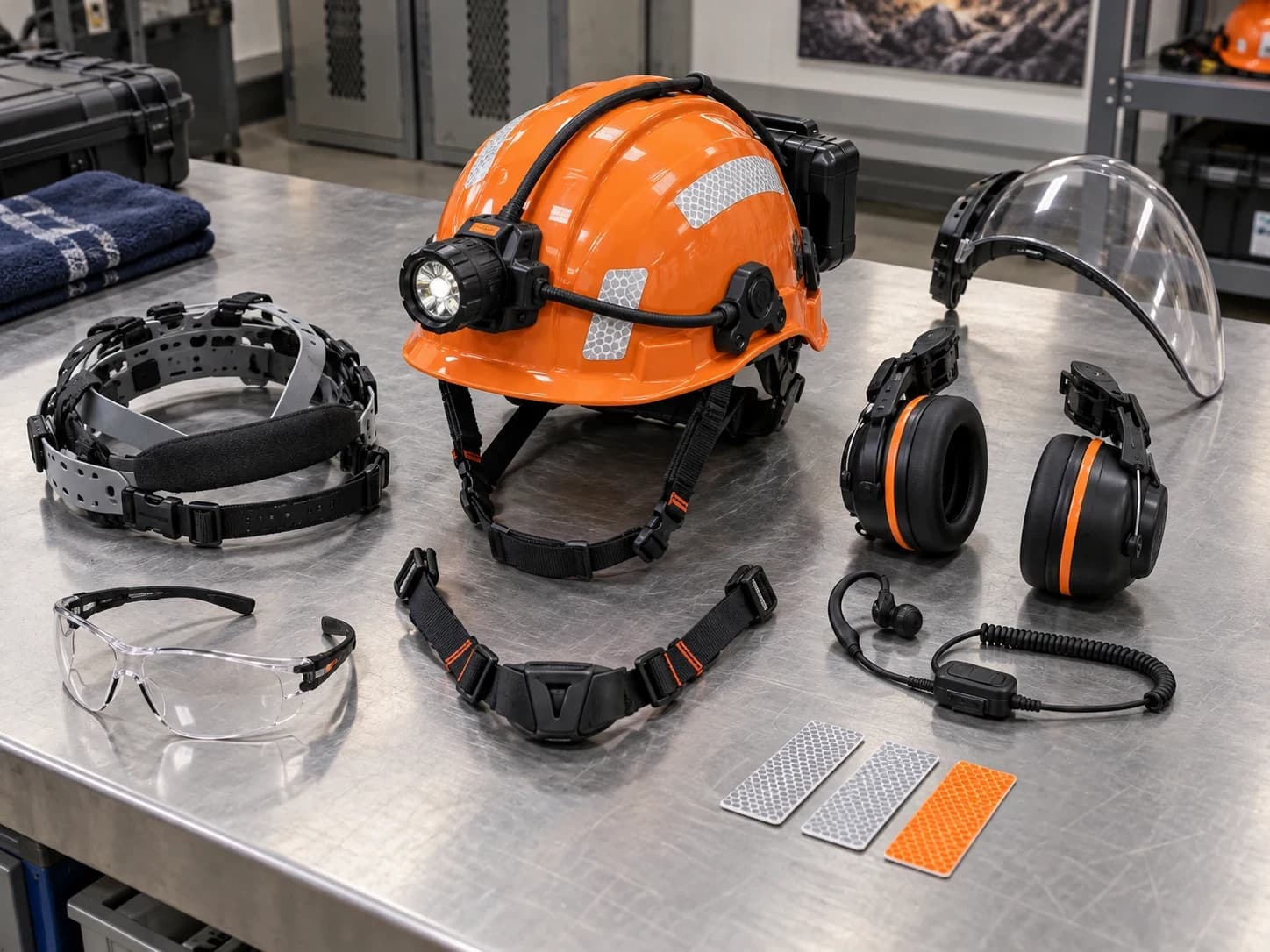
- Define the jurisdiction and work area. Record the country, mine type, surface or underground location, task, operating state, and site rules.
- Map the head hazards. Separate falling objects, top or lateral impact, penetration, low clearance, electrical exposure, weather, visibility, and retention needs.
- Specify the helmet evidence. State the required industrial head-protection standard and edition, helmet type or class where relevant, markings, instructions, and documents.
- Define the lamp system separately. Identify the exact lamp, approval or permissibility requirement, bracket interface, cable route, battery position, charger, inspection, and maintenance process.
- Map every interface. Check the suspension, chin strap, lamp bracket, eyewear, face shield, earmuffs, respirator, radio, hood, and reflective markings together.
- Trial the exact assembled sample. Use representative workers, real accessories, normal clothing, controlled work movements, and the actual inspection checklist.
- Freeze the approved combination. Record the helmet, suspension, strap, bracket, lamp, accessories, documents, packaging, replacement parts, and prohibited substitutions.
The result may be more than one controlled helmet system. Surface inspection crews, underground production workers, crusher attendants, electricians, and maintenance teams should not automatically receive the same configuration.
Start With the Mine, Task, and Head Hazard
The work area helps organize the decision, but the final specification must come from the hazards and the mine's procedures.
| Work area or role | Head-protection questions | Compatibility checks | Controls outside the helmet order |
|---|---|---|---|
| Open-pit and haul-road work | Falling material, vehicle access, sun, rain, wind, glare, dust, and work around plant | Eye protection, hearing protection, hi-vis clothing, radio headset, weather layers, and optional lamp | Traffic plan, pedestrian separation, machine visibility, lighting, parking, communication, and ground conditions |
| Underground metal or nonmetal | Roof or rib exposure, low clearance, restricted visibility, wet travelways, long travel, and emergency route | Cap lamp, cable, battery, retention, earmuffs, eyewear, respirator, communication, and self-rescue access | Ground control, ventilation, area lighting, gas monitoring where required, mobile-equipment controls, and emergency systems |
| Underground coal or another gassy/dusty mine | Head hazards plus equipment-permissibility and mine-specific electrical requirements | Exact permissible lamp assembly, helmet interface, cable, battery, charger, and other approved equipment | Ventilation, methane and dust controls, permissibility program, examinations, communication, and escape systems |
| Quarry face, crusher, and screening plant | Falling or flying material, overhead structures, dust, noise, weather, and maintenance transitions | Goggles or face protection, earmuffs, respirator, lamp if needed, and retention during access | Face and bench controls, guarding, isolation, suppression or extraction, housekeeping, and exclusion zones |
| Processing and maintenance | Overhead work, dropped parts, sharp structures, hot work, chemicals, electricity, and confined access | Face shield, welding protection, earmuffs, respirator, hood, communication, and specialist task PPE | Lockout or isolation, guarding, lifting, ventilation, hot-work controls, access, and rescue arrangements |
For U.S. surface metal and nonmetal mines, 30 CFR 56.15002 requires suitable hard hats where falling objects may create a hazard. Underground metal and nonmetal mines use the corresponding 30 CFR Part 57 personal-protection requirements. These rules establish a duty; they do not identify one universal helmet model or accessory package.
Operations outside the United States must apply their own current mining rules, product standards, and buyer requirements. Record the exact edition in the RFQ rather than using “international standard” as a substitute for a specification.
Separate Helmet Standards From Mine-Equipment Approval
Three different questions are often collapsed into one:
- Does the helmet meet the industrial head-protection standard required by the buyer?
- Is the electric cap lamp approved or permissible for the intended mine where such approval is required?
- Does the exact helmet, lamp, bracket, cable, battery, and accessory combination fit and function as the mine expects?
One “yes” does not answer the other two.
For U.S. industrial head protection, ISEA currently lists ANSI/ISEA Z89.1-2014 (R2019). The standard classifies industrial helmets by impact type and electrical class. A revision was under public review in early 2026, so buyers should verify the edition required by the applicable rule or contract when the order is placed. International buyers may specify EN 397 or another jurisdictional standard, but the offered model and documents must match that exact requirement.
For electric cap lamps used in U.S. mines, 30 CFR Part 19 describes MSHA's investigation and approval framework. Part 19 defines a permissible lamp as a complete assembly conforming to the design formally approved by MSHA. This is why a lamp approval cannot be inferred from a generic light, a bracket, a battery description, or the appearance of a helmet.
Use this evidence map:
| Evidence | What it may establish | What it does not establish by itself |
|---|---|---|
| Helmet label and model-specific report | The exact helmet's tested head-protection classification, within the report scope | Cap-lamp approval, mine suitability, accessory compatibility, or approval after unlisted modification |
| Declaration or certificate | A stated conformity route for the exact product and covered standard, when authentic and in scope | Performance outside its scope or equivalence to every mine rule |
| MSHA cap-lamp approval documentation | Approval or permissibility of the identified complete lamp design within its conditions | Approval of a separate helmet or every possible lamp-to-helmet combination |
| Manufacturer compatibility list | Accessories and replacement parts the helmet manufacturer allows for the model | Suitability for the mine's hazards or another manufacturer's unlisted parts |
| Buyer sample trial | Fit, stability, usability, and interference findings for the tested configuration | Laboratory certification, regulatory approval, or performance of a changed production model |
Treat the Cap-Lamp Mount as an Interface, Not a Claim
A headlamp mount means there is a provision for attaching a lamp. It does not prove that every lamp fits, remains secure, is electrically suitable, or is permissible for the intended mine.
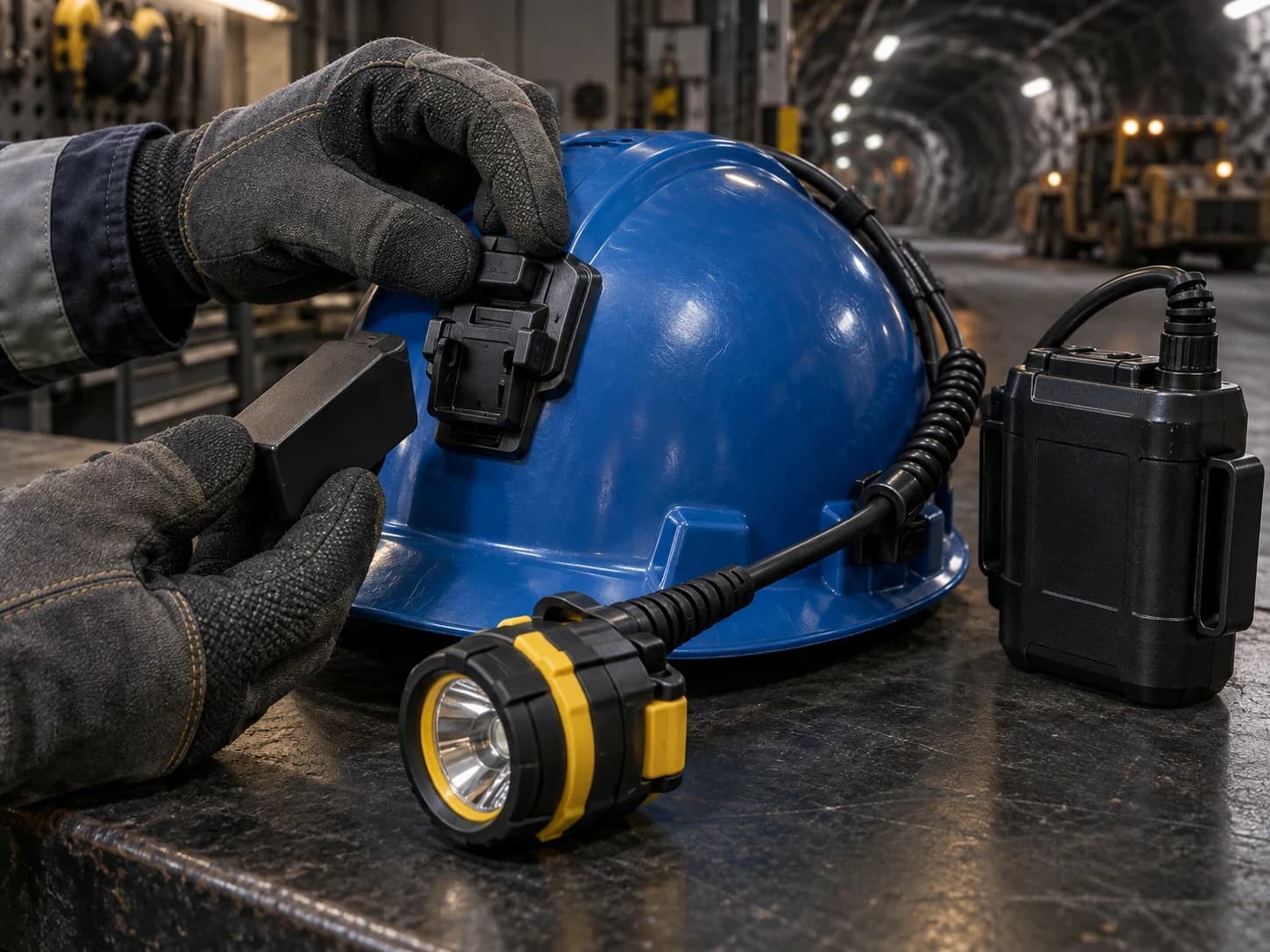
The buyer should identify and test:
- the exact helmet model and lamp model;
- bracket, clip, hook, slot, or carrier dimensions and material;
- whether mounting requires drilling, cutting, heating, adhesive, or another shell change;
- lamp mass and how it changes balance, retention, and worker posture;
- latch security during walking, climbing, bending, looking upward, and normal contact with clothing or equipment;
- beam alignment, foreground brightness, shadowing, and glare in the actual work area;
- operation with gloves, including switches and emergency removal;
- cable route, strain relief, snag points, and contact with the neck, ears, chin strap, or respirator straps;
- battery location, belt or harness interaction, connector protection, and charging control;
- cleaning and inspection of the lamp, bracket, cable, connector, and battery; and
- approval or permissibility documents for the complete lamp assembly where the mine requires them.
NIOSH mining illumination research shows why beam distribution, glare, floor-hazard visibility, and moving-hazard detection matter underground. That research does not validate an unspecified commercial lamp. Put visual-performance criteria into the site trial and verify the offered lamp's own documents.
For U.S. underground metal and nonmetal mines, 30 CFR 57.17010 requires individual electric lamps for persons underground. The mine still has to address broader illumination and the conditions that apply to the selected equipment.
A supplier may describe a helmet as having a headlamp-mount provision even when the listing does not include the helmet report, lamp approval, or combined-system evidence. Treat that description only as an interface feature. Request and review the exact helmet evidence, proposed lamp, and assembled sample before specifying any offered model for a mine.
Check Fit and Retention With Every Accessory Installed
Fit should be checked on the fully assembled configuration. A bare helmet trial can miss pressure, movement, interference, or loss of stability introduced by the lamp and other PPE.
Build a representative trial group that includes different head sizes and shapes, workers who wear prescription eyewear, and workers using the real hearing, respiratory, communication, and weather equipment. Do not use caps, hoods, liners, or other items under the suspension unless the helmet manufacturer and site procedure allow them.
Check the following:
- suspension range, crown clearance, harness contact, and even pressure;
- forward, backward, and side movement during controlled head motions;
- stability while walking, climbing, crouching, looking upward, and entering a cab or cage;
- retention with the exact chin strap, including adjustment, release, and compatibility with other straps;
- pressure points after a meaningful wear period, not only during first fitting;
- lamp balance and whether the worker repeatedly overtightens the suspension to control it;
- unobstructed vision in bright, shaded, dusty, and low-light transitions;
- access to the lamp switch, radio, eyewear, earmuffs, and respirator without dislodging the helmet; and
- secure fit after normal sweat, dust, moisture, and clothing changes expected during the shift.
A chin strap should be treated as a model-specific retention component. Confirm that it is approved or allowed for the helmet, fits the worker, meets the required retention performance, and does not interfere with respirator straps or emergency equipment. Do not drill a shell or install an improvised strap to satisfy the RFQ after purchase.
Build a Helmet and PPE Compatibility Matrix
Ask the supplier to complete a proposed compatibility matrix, then verify it with samples.
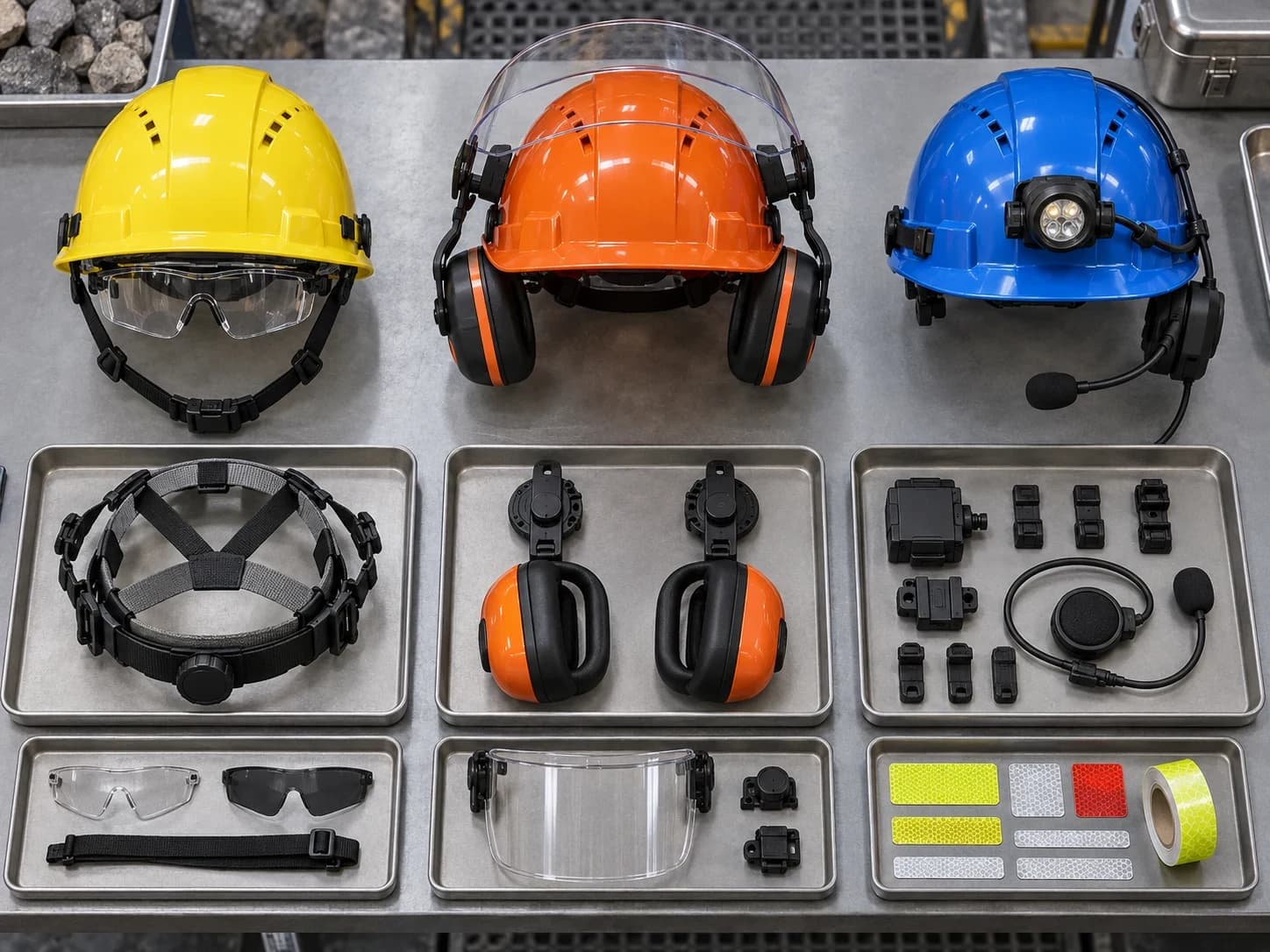
| Interface | What to verify on the exact combination | Typical approval failure |
|---|---|---|
| Helmet and suspension | Correct suspension model, attachment points, orientation, size range, crown clearance, and replacement instructions | Using a similar-looking suspension from another model or supplier |
| Helmet and chin strap | Listed attachment method, adjustment range, release or retention requirement, and interaction with other straps | Adding an improvised strap or assuming any four-point strap fits |
| Helmet and cap lamp | Bracket dimensions, secure engagement, balance, beam position, cable route, and lamp approval where required | Treating “lamp mount available” as approval of the lamp or complete system |
| Helmet and earmuffs | Correct helmet slots or carrier, cup seal, arm pressure, parking position, warning-signal needs, and communication | Choosing cups by attenuation rating without testing the helmet-mounted seal and position |
| Helmet and eyewear | Temple-arm or headband routing, lens position, side coverage, fogging, lamp glare, and retention | Allowing suspension or earmuffs to push eyewear away from its intended position |
| Helmet and face shield | Approved carrier, visor coverage, clearance, locking positions, lamp conflict, and task suitability | Attaching an unlisted carrier or using a face shield without required primary eye protection |
| Helmet and respirator | Strap path, face-seal integrity, donning order, head movement, and fit-test configuration | Moving or twisting respirator straps to make room for the suspension or lamp cable |
| Helmet and communication | Headset or radio position, hearing-protection interaction, cables, controls, and intelligibility | Covering the ear, breaking an earmuff seal, or introducing unmanaged snag points |
| Helmet and reflective markings | Manufacturer-permitted material and placement, visibility, inspection access, and label clearance | Using paint, adhesive, or placement that damages the shell or hides required markings |
The matrix is a change-control record. If the helmet, suspension, lamp, bracket, earmuff adapter, visor carrier, strap, or supplier changes, repeat the affected evidence and fit checks instead of treating the substitute as automatically equivalent.
Run a Controlled Sample Approval Before Bulk Ordering
Use an approval process that can be repeated and audited:
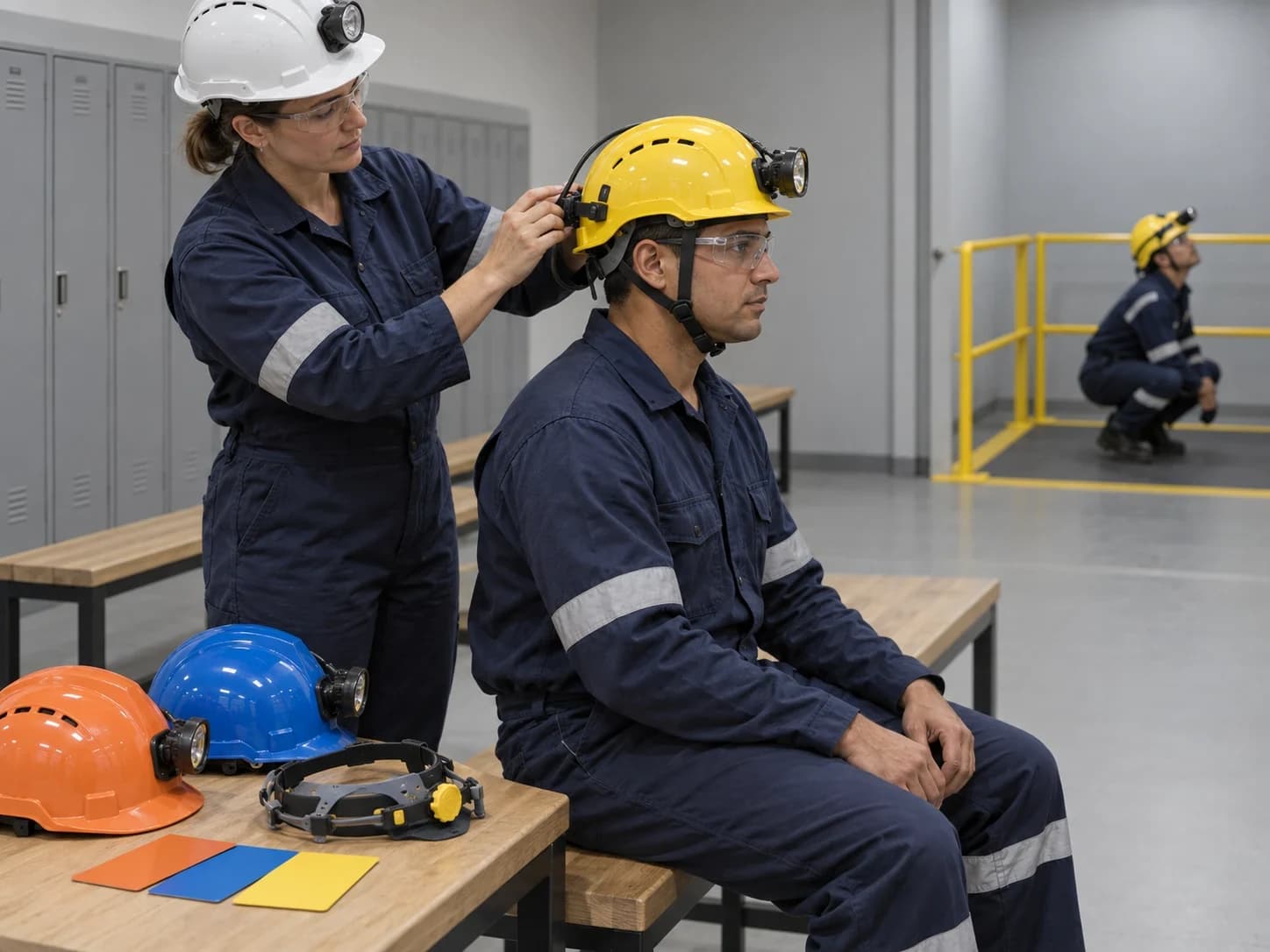
- Receive the evidence pack first. Review model identity, standard edition, labels, reports or certificates, instructions, accessory list, and lamp approvals before distributing samples.
- Inspect sample identity. Confirm the sample, packaging, labels, suspension, strap, bracket, and accessories match the quotation.
- Assemble only listed parts. Follow manufacturer instructions and record the exact part numbers used.
- Complete the bare-helmet fit check. Establish suspension adjustment, clearance, pressure, and retention before adding accessories.
- Add the cap-lamp system. Check mounting, balance, cable, battery, switch access, beam position, and charging process.
- Add the remaining PPE. Test eyewear, face protection, hearing protection, respirator, communication, hood, and other required items in the intended donning order.
- Use controlled task movements. Walk, climb, crouch, look up, inspect, communicate, and enter representative access points without exposing workers to uncontrolled hazards.
- Record worker and supervisor findings. Use consistent pass, conditional-pass, and fail criteria instead of informal preference alone.
- Retain an approved reference sample. Keep the final assembled system, evidence pack, photographs, and signed scorecard for production comparison.
- Define reapproval triggers. Reassess after a model, material, factory, accessory, lamp, label, standard, instructions, or site condition changes.
Sample approval confirms only the reviewed configuration and observations. It does not create a certification or replace the mine operator's hazard assessment, equipment approval obligations, or competent safety review.
Review Documents Before Approving the Model
Request a traceable document set for the exact offered products:
| Document or record | Buyer check |
|---|---|
| Helmet data sheet | Manufacturer, exact model, materials, dimensions or size range, intended use, limitations, and accessory interfaces |
| Helmet markings | Standard and edition, type or class where applicable, manufacturer, model, production or traceability mark, and optional claims |
| Test, declaration, or certificate evidence | Exact model, standard edition, test scope, issuer or laboratory, date, result, covered construction, and validity where relevant |
| Manufacturer instructions | Assembly, adjustment, allowed accessories, cleaning, storage, inspection, replacement, prohibited modifications, and service-life guidance |
| Cap-lamp documentation | Exact complete lamp model, approval number or permissibility evidence where required, components, battery, charger, instructions, and conditions of use |
| Compatibility statement | Helmet, suspension, chin strap, bracket, visor carrier, earmuff adapter, and other approved part numbers |
| Sample approval record | Tested combination, participants, conditions, findings, photographs, approval owner, date, and reapproval triggers |
| Production and shipment controls | Approved reference sample, lot or batch traceability, inspection plan, packaging, labels, spare parts, and change notification |
Do not accept a component test, a certificate for a similar helmet, a lamp approval belonging to another model, or a marketing image as evidence for the complete offered system.
Inspect, Clean, Store, and Replace by Condition and Instructions
Give workers a short pre-use check and supervisors a clear removal process. Inspect:
- shell cracks, dents, punctures, deformation, deep abrasion, heat or chemical damage, fading, chalking, or brittleness;
- brim, slots, accessory points, and cap-lamp bracket for cracks, looseness, distortion, or sharp edges;
- suspension webbing, stitching, clips, adjustment, sweatband, crown clearance, and contamination;
- chin strap, buckles, anchors, adjustment, and damage;
- lamp retention, switch, lens, cable, connector, strain relief, battery housing, and charge status;
- earmuff adapters, visor carriers, eyewear, reflective markings, and communication attachments; and
- label legibility, model identity, unauthorized holes, paint, adhesive, repairs, or substituted components.
OSHA's safety-helmet bulletin provides a useful general inspection framework: inspect the shell, suspension, labels, approved attachments, and fit; follow manufacturer lifespan guidance; and discard head protection after impact or signs of damage or degradation. Mine operators must still apply MSHA rules and the exact manufacturer's instructions that govern their equipment.
Do not publish one universal replacement interval for every mining helmet. Storage, UV exposure, chemicals, heat, impacts, cleaning, and use severity can shorten service life. Record issue date where useful, follow the model's instructions, remove impacted or doubtful equipment, and stock the exact approved suspension, strap, bracket, and other replacement parts.
Write a Quote-Ready Mining Safety Helmet RFQ
| RFQ field | What to provide or request |
|---|---|
| Site and jurisdiction | Country, mine type, surface or underground area, applicable rules, operator standards, and delivery locations |
| Role and task | Worker role, work area, routine and maintenance tasks, access, shift conditions, and operating state |
| Hazard basis | Falling objects, impact direction, penetration, electrical exposure, low clearance, weather, visibility, retention, and accessory needs |
| Helmet requirement | Exact product standard and edition, type or class where applicable, size range, suspension, chin strap, brim or profile, color, and permitted marking |
| Cap-lamp system | Lamp manufacturer and model, approval requirement and evidence, bracket interface, cable, battery, charger, beam or glare trial, and spare components |
| PPE interfaces | Required earmuffs, eyewear, visor, respirator, communication, hood, reflective marking, and approved adapters or carriers |
| Documents | Data sheet, labels, instructions, test or certificate evidence, declaration where applicable, approval records, compatibility list, and traceability |
| Sample approval | Exact assembled samples, representative users, test configuration, scorecard, retained sample, approval owner, and reapproval triggers |
| Order control | Quantities by configuration and color, spare suspensions and straps, packaging, unit identification, branding proof, and prohibited substitutions |
| Commercial response | MOQ, price basis, sample cost, production time, delivery schedule, warranty, defect handling, reorder availability, and change-notification process |
Use the PPE Quantity Calculator to plan issue and replacement stock. When the configuration and evidence requirements are ready, send them through the quote request. Keep the mine's final approval separate from the supplier's quotation.
Common Mining Helmet Buying Mistakes
- Buying by product name. “Mining helmet,” “hard hat,” or “helmet with lamp” is not a complete specification.
- Transferring lamp approval to the helmet. A permissible lamp approval applies to the identified lamp design and conditions, not automatically to the shell or every combination.
- Approving the shell without the system. The lamp, cable, battery, earmuffs, eyewear, respirator, and radio can change fit and usability.
- Assuming any bracket fits. Similar-looking hooks and slots can differ in dimensions, retention, material, and allowed use.
- Mixing replacement parts. A suspension, strap, adapter, or carrier from another model may not be approved or perform as intended.
- Adding holes or improvised attachments. Unapproved drilling, cutting, heating, paint, adhesives, or hardware can damage the helmet or invalidate its evidence.
- Using one configuration for every mine area. Surface, underground, crusher, processing, electrical, and maintenance tasks can require different systems.
- Ignoring workers who wear other PPE. A sample that fits without eyewear, earmuffs, a respirator, or a hood does not validate the required combination.
- Accepting an incomplete document pack. A marketing title, generic certificate, or photograph is not model-specific evidence.
- Omitting spare parts. A bulk order without compatible suspensions, straps, brackets, and controlled replacement stock can fail during use.
Buyer Approval Checklist
- [ ] Jurisdiction, mine type, work areas, roles, and tasks are recorded.
- [ ] Falling-object, impact, penetration, electrical, retention, visibility, and environmental hazards are separated.
- [ ] Controls outside PPE are assigned to the mine's operating and safety systems.
- [ ] The helmet standard, edition, classification, markings, and document requirements are explicit.
- [ ] The cap lamp has an exact model and approval requirement separate from the helmet.
- [ ] Bracket, lamp, cable, battery, charger, and spare-component identities are controlled.
- [ ] Suspension, chin strap, eyewear, visor, earmuffs, respirator, radio, hood, and markings have been checked together.
- [ ] Representative workers completed a controlled fit and compatibility trial.
- [ ] The retained reference sample matches the approved documents and quotation.
- [ ] No unapproved drilling, paint, adhesive, accessory, or component substitution is permitted.
- [ ] Inspection, cleaning, storage, impact removal, replacement, and quarantine rules are documented.
- [ ] Quantities include the correct configurations, workforce fit range, and compatible replacement parts.
- [ ] MOQ, pricing, branding, packaging, delivery, defects, reorders, and change notification are confirmed in writing.
Frequently Asked Questions
Are mining safety helmets approved by MSHA?
MSHA rules require suitable head protection in covered mine conditions, while MSHA separately approves or evaluates certain mine equipment under specific parts of 30 CFR. Electric cap lamps are addressed under Part 19. Do not describe a helmet as “MSHA approved” unless the exact product has an applicable, verifiable MSHA approval and the claim accurately reflects its scope.
Is a mining helmet with a light the same as a permissible cap-lamp system?
No. A picture of a helmet with a light or a statement that a lamp mount is available does not establish MSHA permissibility. Verify the complete lamp model, components, approval documentation, conditions of use, and its physical interface with the helmet.
Can any headlamp be fitted to a mining helmet bracket?
No such assumption is safe for procurement. Match the exact lamp and bracket dimensions, retention method, mass, cable or battery arrangement, allowed accessories, instructions, and approval requirements. Trial the assembled system before bulk approval.
Does every underground mining helmet need a chin strap?
Retention needs depend on the applicable rule, helmet standard, mine procedure, task, posture, clearance, and foreseeable movement. If a chin strap is required, specify a compatible model and verify fit, retention, release, and interaction with respirator and communication straps.
Is EN 397 enough for a mining helmet order?
An EN 397 claim can support an order only when the exact offered model, standard edition, marking, conformity route, documents, and limitations have been reviewed. It does not prove cap-lamp approval, intrinsic safety, accessory compatibility, or suitability for every mine.
How often should a mining safety helmet be replaced?
There is no universal interval for every helmet. Follow the exact manufacturer's instructions and site policy, inspect before use, remove the helmet after a significant impact or unacceptable damage, and shorten service life where exposure or condition requires it.
Can a supplier add a logo or reflective strip?
Only after the helmet manufacturer and buyer approve the material, adhesive or marking method, location, and sample. The change must not damage the shell, hide labels, block inspection, interfere with a lamp or accessory, or imply an unsupported approval.
Should the helmet order include replacement suspensions and lamp brackets?
Yes, when those components are replaceable and approved for the selected model. Request exact part numbers, quantities, packaging, availability, replacement instructions, and substitution controls with the first order.
Build the Helmet System Into the Mining PPE Plan
Use this guide to approve the head-protection system, then connect it to the wider Mining and Quarrying PPE solution, Mining PPE Checklist by Task, Open-Pit vs Underground Mining PPE guide, and Mining Hearing Protection Guide.
For procurement, compare available helmet and accessory options in the Safety Helmets category, then request a quote with the work-area matrix, required evidence, sample process, and controlled configuration list.
Primary Sources
- 30 CFR 56.15002 — Hard hats
- 30 CFR Part 57, Subpart N — Personal Protection
- 30 CFR 57.17010 — Electric lamps
- 30 CFR Part 19 — Electric Cap Lamps
- NIOSH Mining — Illumination
- NIOSH Technology News 556 — LED Cap Lamp Illumination
- ISEA — Industrial Head Protection
- OSHA Safety and Health Information Bulletin — Safety Helmets in the Workplace
These sources support the regulatory and selection framework. They do not certify or approve a LAIFAPPE product, lamp, accessory, or combined helmet system.
Related PPE
Source the PPE covered in this guide
Move from research to a buyer shortlist with the matching solution page, category paths, selected PPE options, and RFQ next steps.