Buyer next step
Turn this guide into a sourced PPE shortlist with standards, quantities, and role-based kit notes.
Planning tools
Use these tools before moving from this guide into quantities, sizing, labels, or RFQ planning.
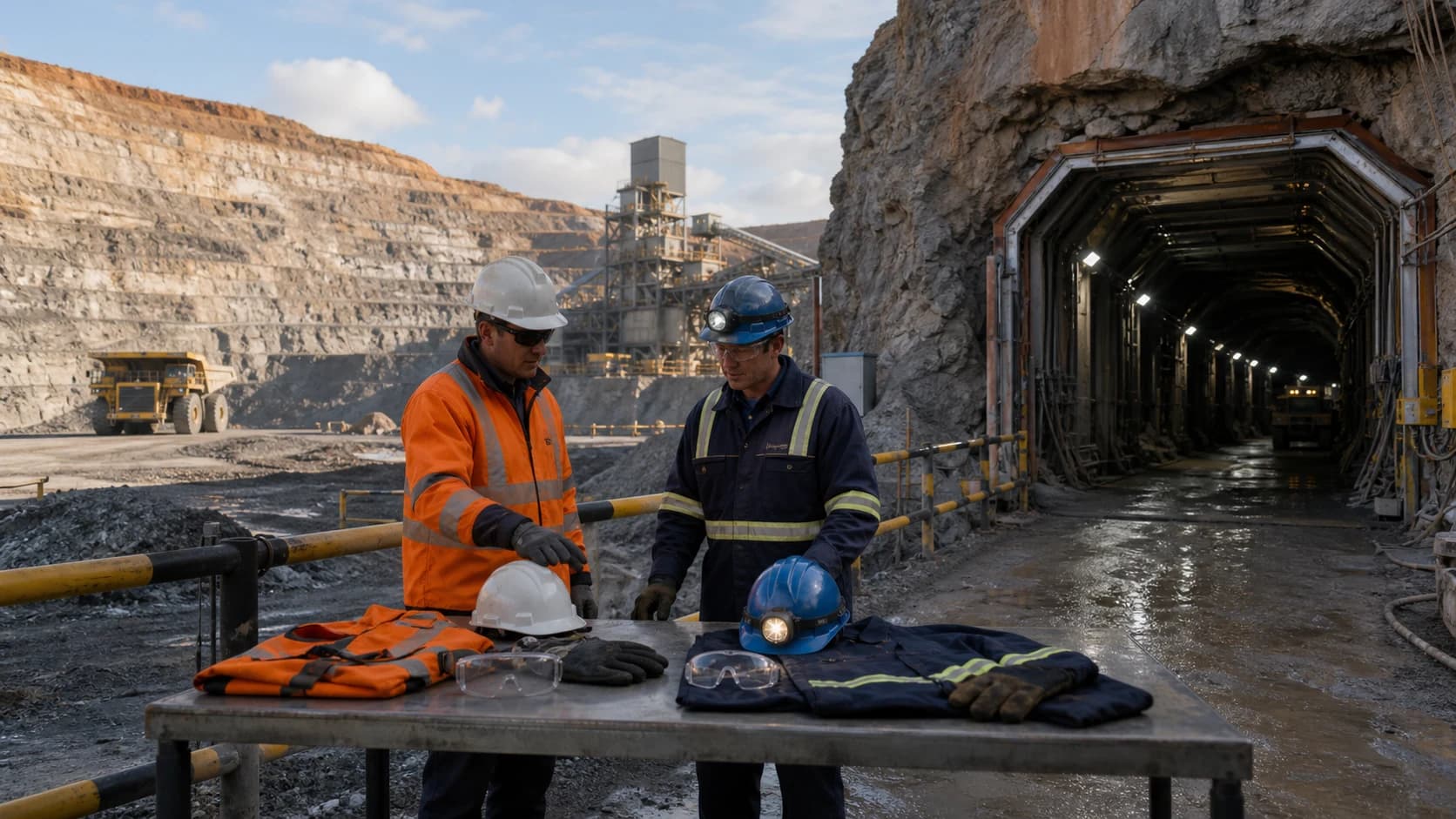
Open-pit and underground miners may use the same PPE categories, but the equipment is rarely interchangeable without review. Open pits add weather, glare, wind, long travel distances, and interaction with very large mobile equipment. Underground mines add low clearance, restricted visibility, ventilation limits, confined travelways, ground-control conditions, and mine-specific escape equipment. Quarries concentrate drilling, blasting, mobile equipment, and crushing around a compact surface footprint, while processing areas add fixed machinery, platforms, reagents, sampling, cleanup, and maintenance states.
This guide helps mine safety managers, supervisors, contractors, and procurement teams compare those environments before writing a PPE specification. It does not replace the mine's hazard assessment, exposure monitoring, traffic plan, ground-control program, ventilation plan, emergency plan, training, equipment instructions, or applicable law.
Use the Mining Safety Equipment and PPE for Quarry Operations solution for the full category and bulk-procurement framework. Use the Mining PPE Checklist by Task when the immediate need is a drilling, blasting, crushing, haul-road, processing, or maintenance pre-task check. Use the Silica Dust Controls and Respirator Selection guide for exposure monitoring, engineering controls, APF, fit testing, and respiratory-program decisions.
Quick Comparison: Open-Pit, Underground, Quarry, and Processing PPE
The area name is a starting point, not a PPE prescription. Confirm the exact task, work state, exposure, controls, and site rules before issue.
| Work area | Conditions that change the decision | PPE differences to specify | Controls or equipment that PPE does not replace |
|---|---|---|---|
| Open-pit mine | Large haul trucks, blind areas, long routes, highwalls, windblown dust, sun, rain, heat, cold, glare, and night work | Outer-layer visibility, weather-compatible eye and body protection, terrain footwear, sun and cold-weather planning, and outside-cab hearing or respiratory PPE based on exposure | Traffic separation, berms, communication, proximity controls, cab filtration, road maintenance, drainage, lighting, and highwall management |
| Underground mine | Low clearance, roof and rib conditions, limited ambient light, restricted travelways, ventilation, diesel or process contaminants, wet conditions, and emergency egress | Helmet-lamp-retention compatibility, reflective visibility under mine lighting, low-profile compatible accessories, communication-compatible hearing protection, wet-ground footwear, and separately specified self-rescue equipment | Ground support, scaling, ventilation, gas monitoring, equipment permissibility, proximity controls, illumination, refuge and evacuation systems, and emergency training |
| Quarry | Benches and faces, drilling and blasting, mobile plant, public or contractor interfaces, wet or dry crushing, silica-bearing rock, and changing weather | Impact and dust eye protection, measured-noise hearing protection, task-selected respiratory protection, visibility around plant and mobile equipment, and slip/ankle/sole features for broken or wet ground | Blast-area control, face and bench inspection, wet suppression, local exhaust, guards, exclusion zones, traffic plans, and safe access |
| Processing area | Conveyors, crushers, screens, mills, transfer points, fixed noise, stairs and platforms, reagents, sampling, cleanup, and maintenance entry | PPE changes by operating state: routine observation, sampling, cleanup, chemical handling, isolation, liner change, hot work, or electrical work | Guards, interlocks, local exhaust, enclosure, spill control, isolation and lockout, platforms, access control, and permit systems |
Two people in the same area may still need different equipment. An open-pit haul-truck operator inside a verified filtered cab does not have the same exposure as a spotter outside the cab. An underground equipment operator, a scaling crew, and an electrician may share a travelway but not a complete PPE kit.
What Stays the Same Across All Mining Areas
The selection method should stay consistent even when the equipment changes:
- Define the task, area, and operating state. Record whether equipment is running, stopped, isolated, under maintenance, being cleaned, or in emergency response.
- Verify the controls. Check traffic separation, ground support, guards, ventilation, enclosure, wet suppression, lighting, access, isolation, and communication before relying on PPE.
- Use exposure evidence. Respiratory and hearing decisions require representative information for the worker's position, duration, controls, and material - not the area name alone.
- Select complete compatible systems. Helmet, lamp, eyewear, hearing protection, respirator, face shield, garment, radio, harness, and emergency equipment must work together.
- Fit and trial the exact products. Check size range, movement, visibility, communication, seal, retention, fogging, weight, and access before a bulk order.
- Inspect and control replacement. Define rejection criteria, cleaning, contamination control, service parts, shelf life, battery management, and reorder points.
- Set change triggers. Reassess after a new bench or heading, different material, ventilation change, failed spray, damaged cab seal, new route, night shift, reagent change, maintenance entry, incident learning, product substitution, or legal update.
For U.S. metal and nonmetal mines, 30 CFR Part 56 covers surface operations and 30 CFR Part 57 covers underground operations. Coal mines use different provisions, including Part 75 for underground coal. Operations outside the United States must apply their own current rules.
Open-Pit Mining PPE: Visibility, Weather, Traffic, and Travel Distance
For the clothing order, use the High-Visibility Workwear for Mining and Quarry Crews guide. It covers garment evidence, surface and underground selection boundaries, seasonal fit and replacement planning.
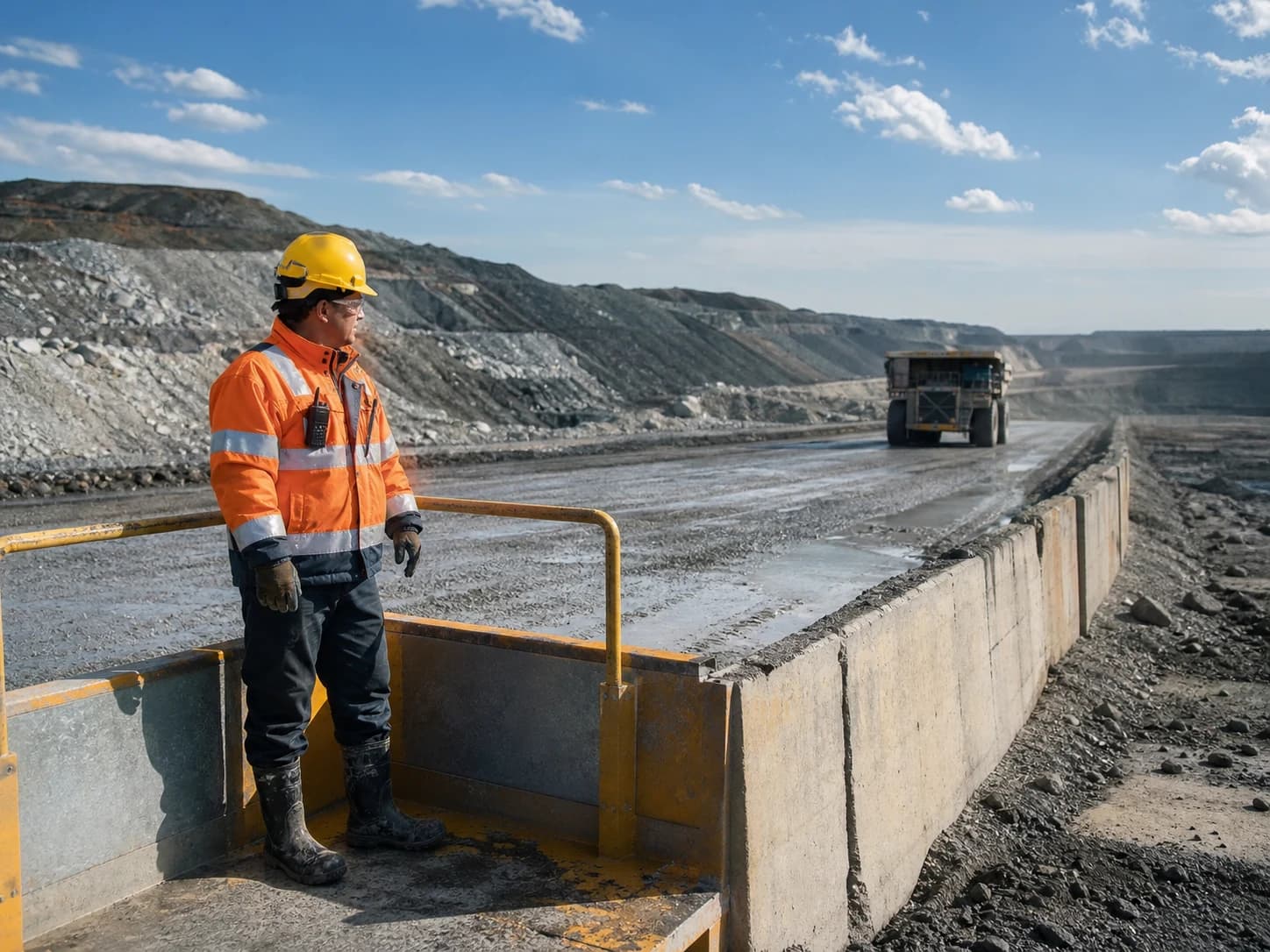
Open-pit work is dominated by scale. A haul truck may have blind areas much larger than a pedestrian work zone, and a worker can move from a clean cab to a dusty inspection point, fuel area, pump station, drill pattern, or wet haul road during one shift. PPE must support the traffic plan and environmental conditions without creating false confidence.
Head, eyes, and face
- Select safety helmets for falling-object, impact, retention, accessory, electrical, and weather needs identified by the site. Do not assume one brim style or chin strap is automatically correct for every open-pit task.
- Evaluate clear, tinted, sealed, anti-fog, or face-protection options against glare, UV exposure, windblown dust, fragments, chemical splash, and the transition between bright exterior light and shaded cabs or workshops.
- Confirm eyewear does not interfere with hearing protection, respirator seals, helmet suspension, or radio headsets.
Visibility and traffic interaction
Visibility clothing is useful only when workers are positioned and illuminated where operators can see them. Select the garment color, reflective layout, class or performance standard, coverage, and outer-layer configuration from the mine's traffic assessment and applicable rules. Rainwear, cold-weather jackets, harnesses, backpacks, and tool belts must not hide the intended visible material.
MSHA's powered-haulage guidance recommends high-visibility clothing around powered haulage equipment, but a garment does not replace communication, exclusion zones, eye or radio contact, safe parking, lighting, and pedestrian separation. The NIOSH mining machinery research also distinguishes surface blind-area hazards from underground confined-space interactions.
Weather, hearing, respiratory, and footwear decisions
- Build hot, cold, wet, and windy versions of the outer layer without changing the approved visibility configuration.
- Select hearing protection from measured exposure and communication needs. Vehicle radios, warning signals, and situational awareness must remain workable.
- Treat the cab and outside-cab positions as separate exposure scenarios. A filtered, pressurized cab is an engineering control only while filters, seals, pressure, doors, and operating practices remain effective.
- Select safety boots for broken ground, mud, water, slopes, climbing, sole grip, ankle support, toe, puncture, metatarsal, chemical, and temperature hazards actually present.
- Plan sunscreen, shade, hydration, work-rest, heated or cooled refuges, and weather scheduling as program controls rather than treating clothing as the complete heat- or cold-stress solution.
For the footwear-specific workflow - from toe, metatarsal, and puncture protection to wet-work, fit, model evidence, and bulk RFQ planning - use the Mining & Quarry Safety Boots Buyer Guide.
Underground Mining PPE: Clearance, Lighting, Ventilation, and Escape
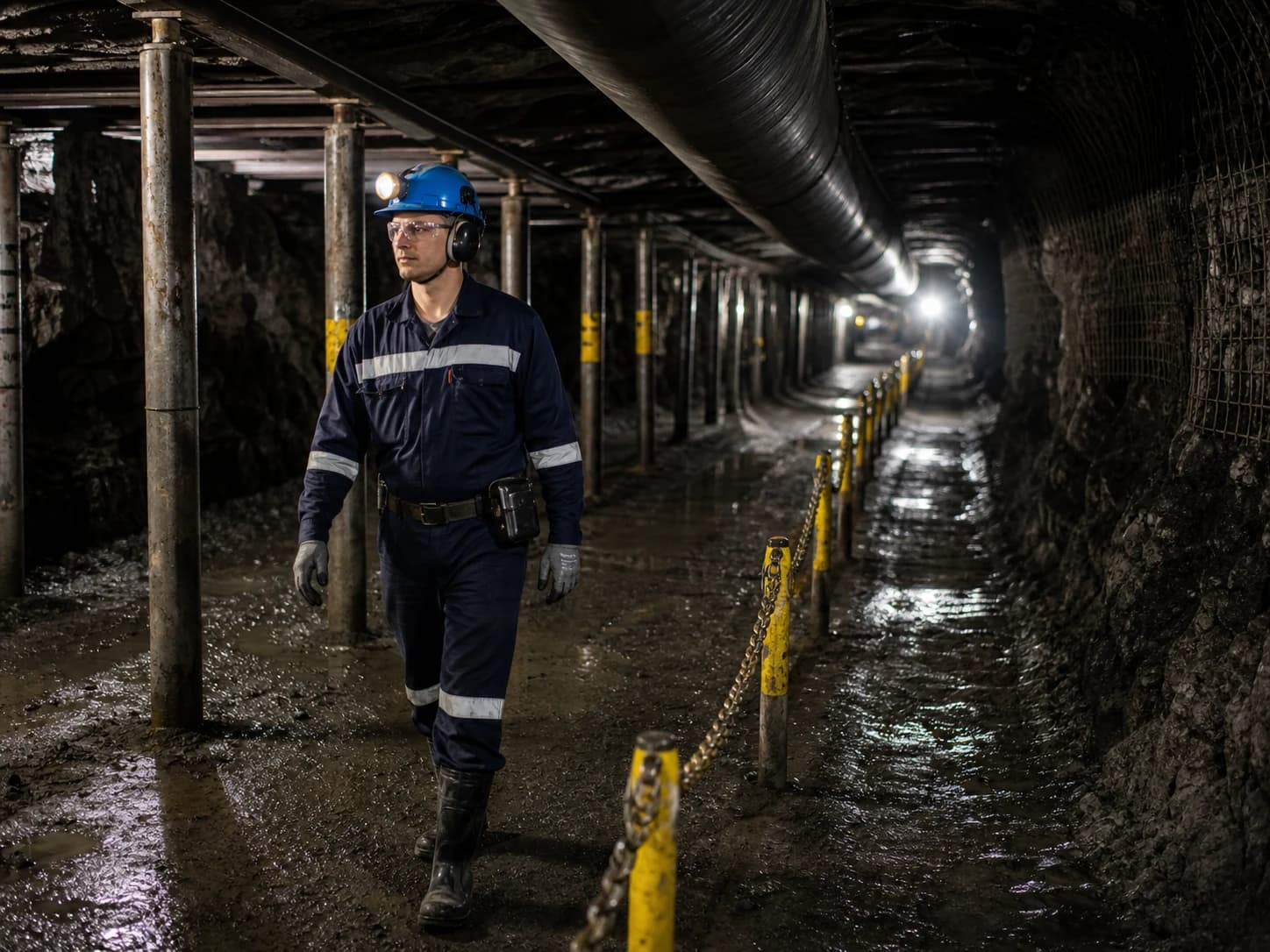
Underground PPE must work in a low-light, restricted environment where roof or rib conditions, equipment clearances, wet ground, ventilation, contaminants, communication, and emergency egress influence the specification. Small compatibility failures - a lamp bracket that loosens retention, earmuffs that block a radio, eyewear that fogs, or a self-rescuer that cannot be reached - can matter more underground than product appearance.
For the wider equipment list, use the underground mining safety equipment checklist to separate worn PPE from lighting, gas detection, escape equipment and other mine systems.
Head protection, lamps, and visibility
- Specify the helmet, suspension, retention, cap-lamp bracket, cable routing, battery location, hearing protection, eyewear, and communication equipment as one wearable system.
- Check profile and snag points for the heading, vehicle, cage, ladder, and maintenance access. Low clearance does not remove the need to assess falling-object, impact, penetration, electrical, and retention hazards.
- Confirm reflective material remains visible under cap lamps and machine lighting without creating excessive glare or being covered by outer garments and equipment.
- For U.S. underground metal and nonmetal mines, 30 CFR 57.17010 requires individual electric lamps for persons underground. The site must still provide and maintain the broader illumination needed for safe work.
For the dedicated helmet workflow—including model evidence, retention, cap-lamp mounts, cable and battery routing, accessory interfaces, sample approval, spare parts, and RFQ change control—use the Mining Safety Helmet Buyer Guide.
Ventilation, contaminants, hearing, and garments
- Do not choose a respirator because the work is underground. Use ventilation status, contaminant identification, oxygen conditions, personal exposure data, the complete approved configuration, and the written program.
- A particulate respirator does not protect against every gas, vapor, diesel contaminant, oxygen-deficient atmosphere, or emergency condition. Define stop-work and evacuation triggers separately.
- Select hearing protection against measured exposure while preserving necessary communication and warning recognition. Engineering noise control remains the priority.
- Wet, abrasive travelways may require different boot compounds, drainage, ankle support, gaiter or garment interfaces, and inspection frequency than a dry surface road.
- Flame-resistant, arc-rated, antistatic, chemical, or specialty garments are not universal merely because work is underground. Select them from the actual fire, thermal, electrical, chemical, explosive-atmosphere, equipment-permissibility, and local-rule assessment.
Quarry PPE: Bench Work, Drilling, Blasting, and Crusher Proximity
A quarry is usually a surface operation, but it is not simply a smaller open pit. Drilling, blasting, loading, mobile crushing, fixed processing, stockpiles, contractors, and public-road interfaces can be concentrated in a short travel distance. Workers may cross several hazard zones during one inspection.
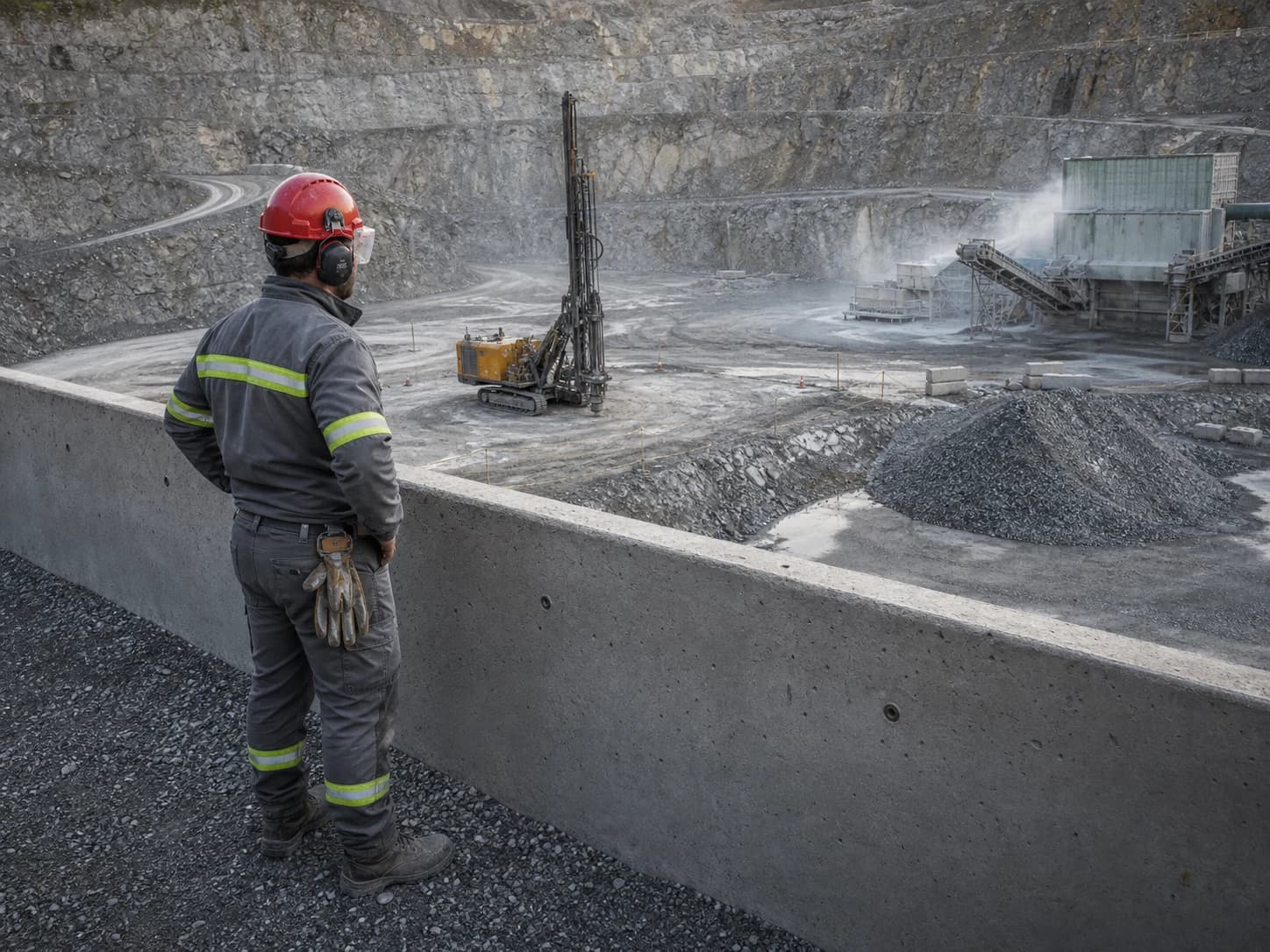
- Face and bench work: Select head, eye, foot, and visibility equipment after the face, highwall, scaling, loose material, edge, access, and falling-object controls are established.
- Drilling: Match eye, hearing, respiratory, hand, foot, and body protection to the rig, helper position, controls, rock, weather, noise, and exposure data. Keep loose equipment away from rotating components.
- Blasting: Authorization, blast-area control, warnings, evacuation, guarding, post-blast inspection, and release for re-entry come before PPE. Do not turn a blasting kit into permission to enter a controlled area.
- Crushing and screening: Separate the control-room operator, outside inspector, sample taker, cleanup crew, contractor, and isolated maintenance roles. Each can face different dust, noise, access, fragment, and stored-energy conditions.
- Wet areas: Water suppression can reduce airborne dust while creating slippery surfaces, wet gloves, reduced visibility, and contaminated clothing. Specify grip and drying or replacement controls without weakening the dust-control system.
For respirable crystalline silica decisions, use the dedicated mining and quarrying silica-control guide. It explains why visible dust, task name, or filter efficiency alone cannot determine respiratory protection.
Processing-Area PPE: Machinery, Noise, Dust, Reagents, and Maintenance
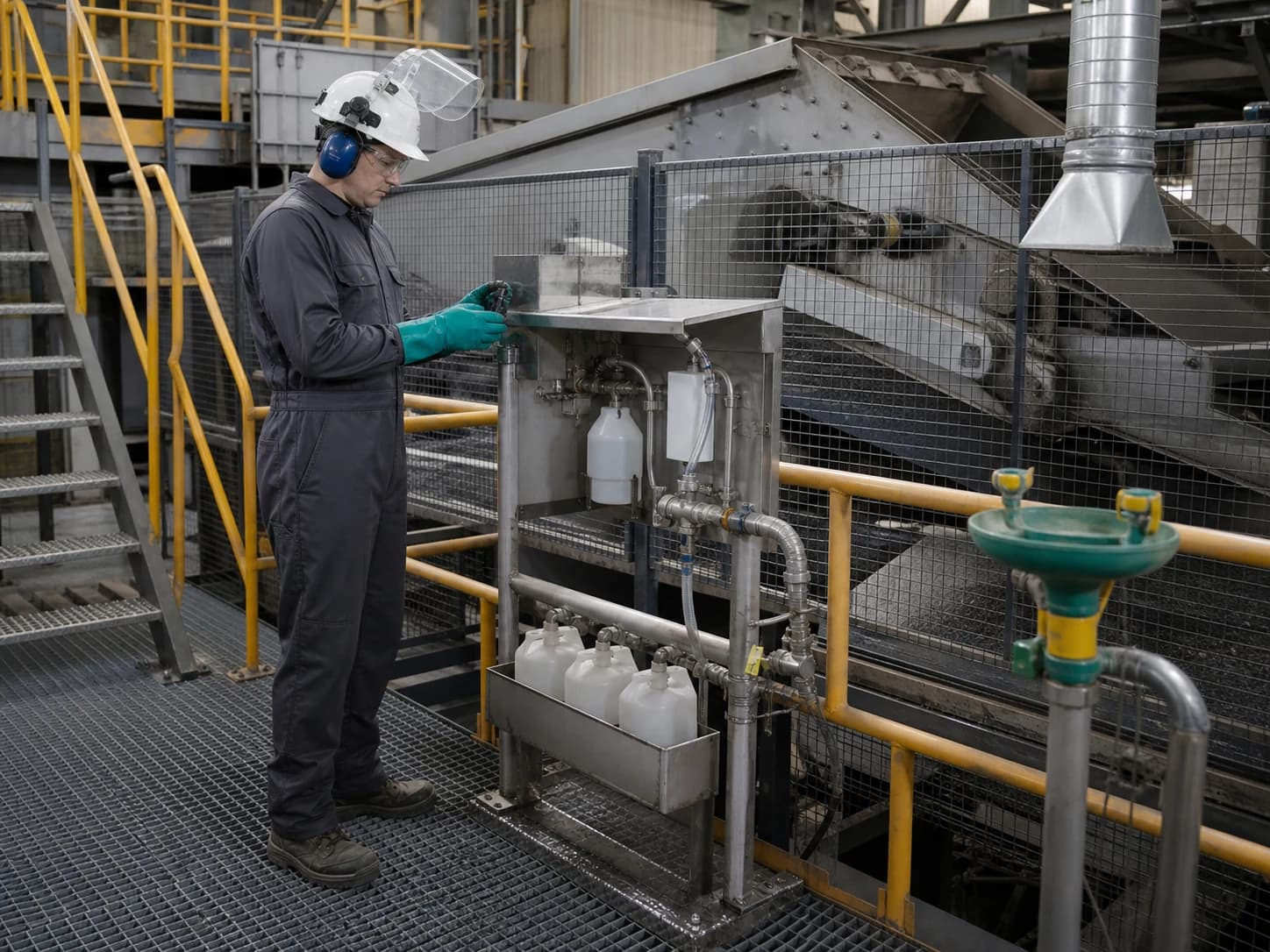
Processing areas should be divided by work state. Routine observation from a control room, floor inspection, sampling, spillage cleanup, screen or crusher access, reagent handling, filter change, hot work, and electrical maintenance are not one PPE scenario.
| Work state | Control questions | PPE specification questions |
|---|---|---|
| Control-room operation | Is the enclosure sealed, filtered, pressurized if designed, and kept clean? Are doors and filters controlled? | What baseline PPE is required when seated, and what outside-room module is carried or staged? |
| Walk-through inspection | Are guards, walkways, lighting, dust extraction, spray systems, and safe observation points effective? | Which eye, hearing, head, visibility, respiratory, hand, and footwear items apply to the route and exposure? |
| Sampling | Is the sample point designed to avoid reach-in, hot material, splash, dust release, and moving equipment? | Are goggles or face protection, gloves, sleeves, apron, hearing, or respiratory equipment needed for the material and method? |
| Cleanup | Is the process stopped or isolated as required? Can vacuum, wet cleanup, or remote methods avoid dust and contact? | What dust, splash, cut, impact, wet-grip, boot, and garment controls are needed, and how is contamination contained? |
| Reagent handling | Are the safety data, transfer system, eyewash, shower, spill kit, ventilation, and emergency steps suitable? | Specify chemical compatibility and breakthrough or permeation evidence for gloves, clothing, eye/face protection, and respiratory equipment where required. |
| Maintenance entry | Are all energy sources identified, isolated, verified, blocked, and controlled by permit where applicable? | Add only the task-specific welding, electrical, chemical, respiratory, fall, or confined-space equipment supported by the work plan. |
Do not use gloves, coveralls, or a face shield to compensate for an exposed moving part. Guards, isolation, blocking, access, and verification control the machine hazard; PPE addresses the residual hazards after those steps.
PPE Category Differences by Work Area
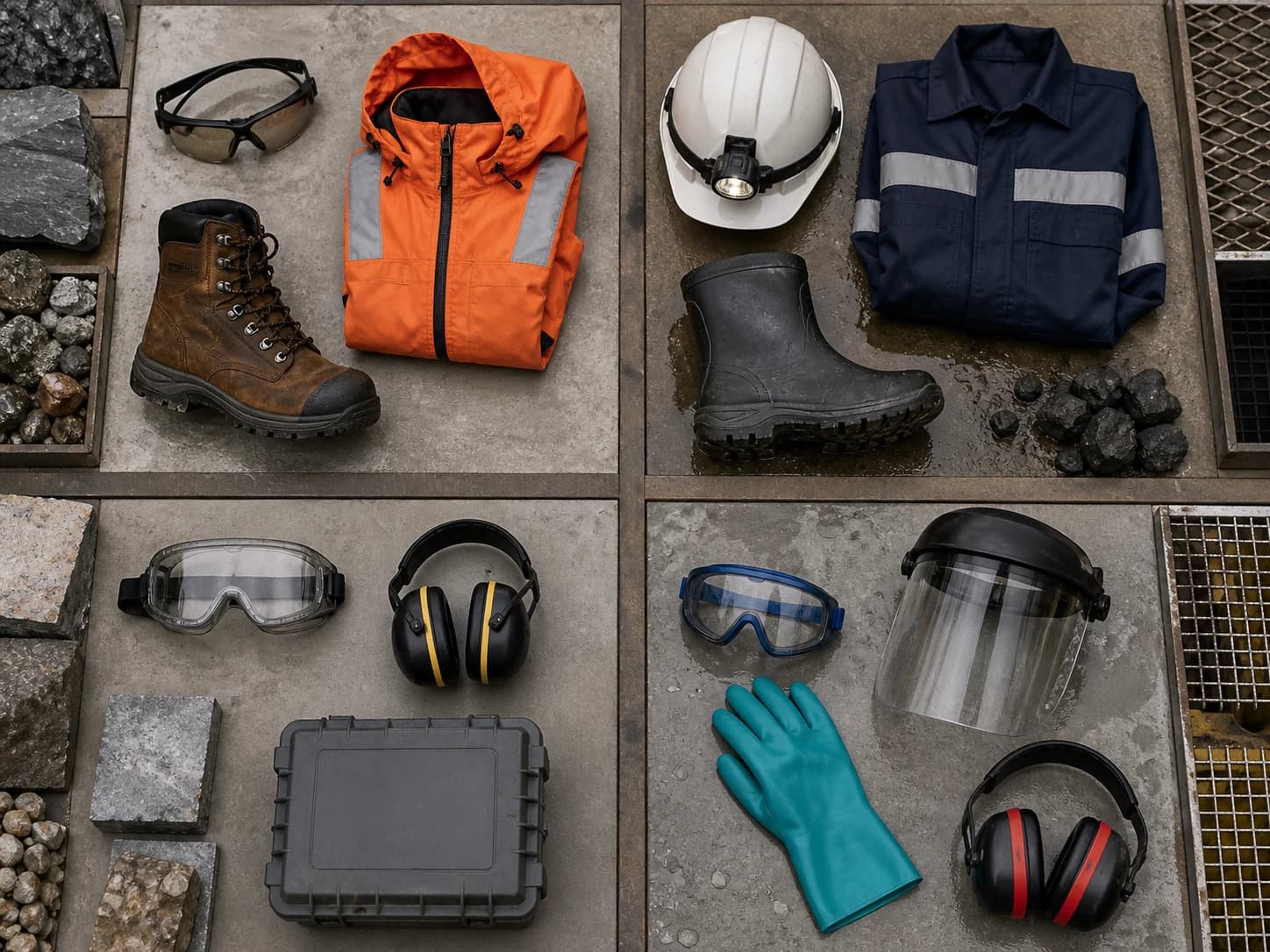
| PPE category | Open pit | Underground | Quarry | Processing area |
|---|---|---|---|---|
| Head | Weather, vehicle access, falling objects, retention and accessories | Low clearance, roof/rib exposure, lamp and retention compatibility, cable routing | Face/bench conditions, drilling and crusher access, weather | Overhead work, plant access, electrical or maintenance task needs |
| Eye and face | Glare, UV, wind, dust, weather transitions | Low light, fogging, dust, splash, lamp glare, tight equipment compatibility | Dust, fragments, wind, wet suppression, blasting preparation and re-entry conditions | Dust, chips, grinding, samples, reagents, washdown and hot work |
| Hearing | Haulage, drills, outside-cab exposure and radio communication | Confined machinery noise, communication and warning recognition | Drills, crushers, screens, mobile plant | Fixed noise zones, maintenance tools, alarms and communication |
| Respiratory | Outside-cab exposure, drilling, maintenance and failed-control scenarios | Ventilation-dependent contaminants and task exposures; not an escape device | Silica-bearing rock, drilling, crushing, cleanup and cab condition | Transfer points, bagging, cleanup, filter work, reagents and maintenance |
| Hands | Weather, inspections, rigging, fueling and repair | Wet grip, cables, scaling, equipment and repair tasks | Abrasion, cut, impact, wet rock, samples and maintenance | Samples, sharp edges, chemicals, heat, cleanup and isolated maintenance |
| Footwear | Terrain, mud, slopes, climbing, temperature and vehicle access | Wet uneven travelways, ladders, low-clearance movement and drainage | Broken rock, wet benches, slopes and crusher access | Stairs, grating, wet floors, chemical splash and maintenance access |
| Body and visibility | Outer-layer traffic visibility plus weather and sun protection | Reflective visibility under mine lighting plus snag, fire, thermal or specialty assessment | Traffic visibility, weather, dust and wet work | Garment fit near machinery plus dust, chemical, welding or specialist modules |
This table should generate questions for the site assessment. It is not a universal minimum-PPE matrix.
Workers Who Cross Between Areas Need a Controlled Changeover
A contractor, supervisor, electrician, sampler, or maintenance technician may enter all four areas. Issuing every possible item at the start of the shift creates an oversized kit and increases incompatibility, contamination, and inspection failures. Use a controlled baseline plus area and task modules.
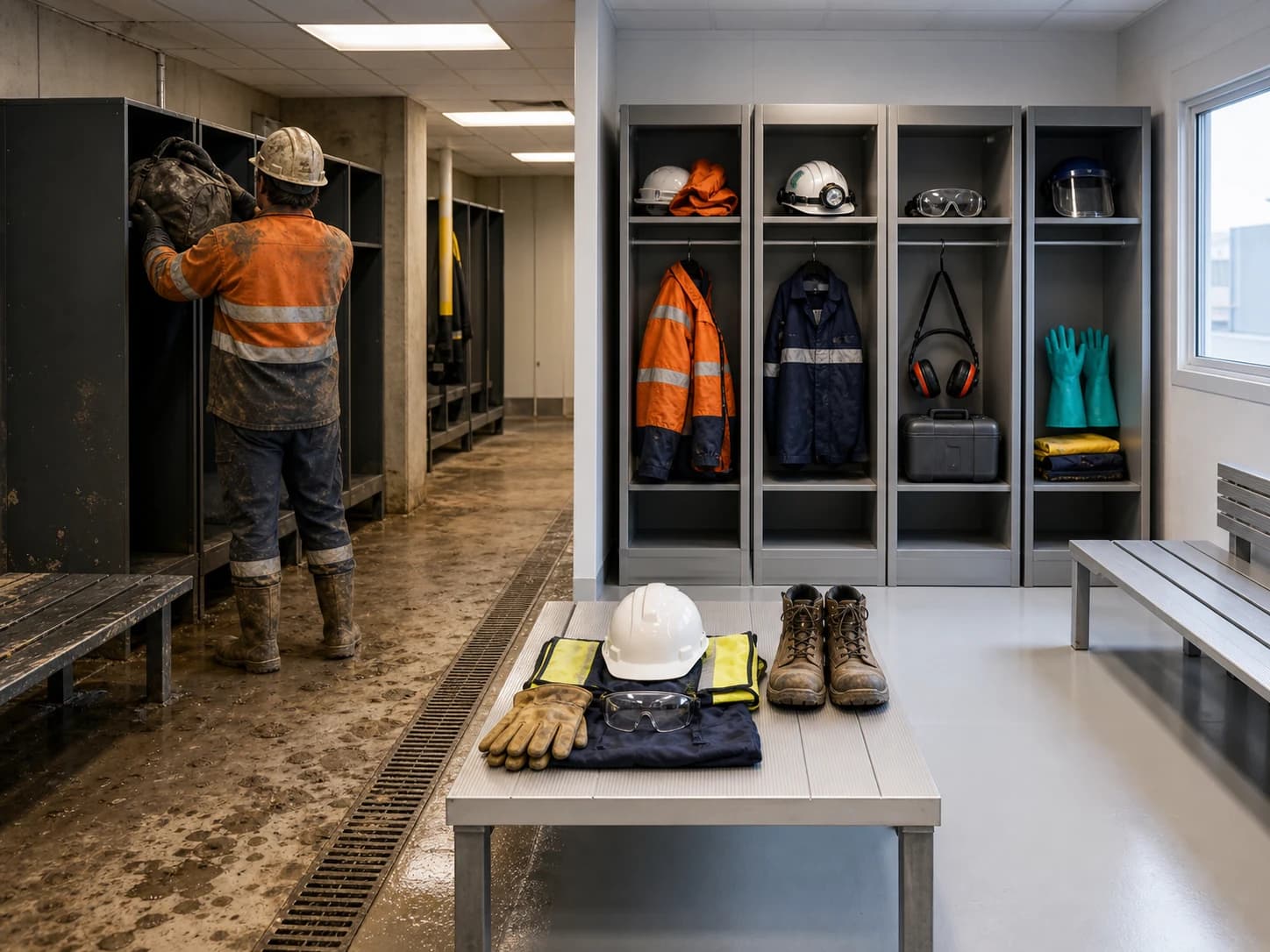
- Define the common baseline. Limit it to items approved for the person's normal routes and site rules.
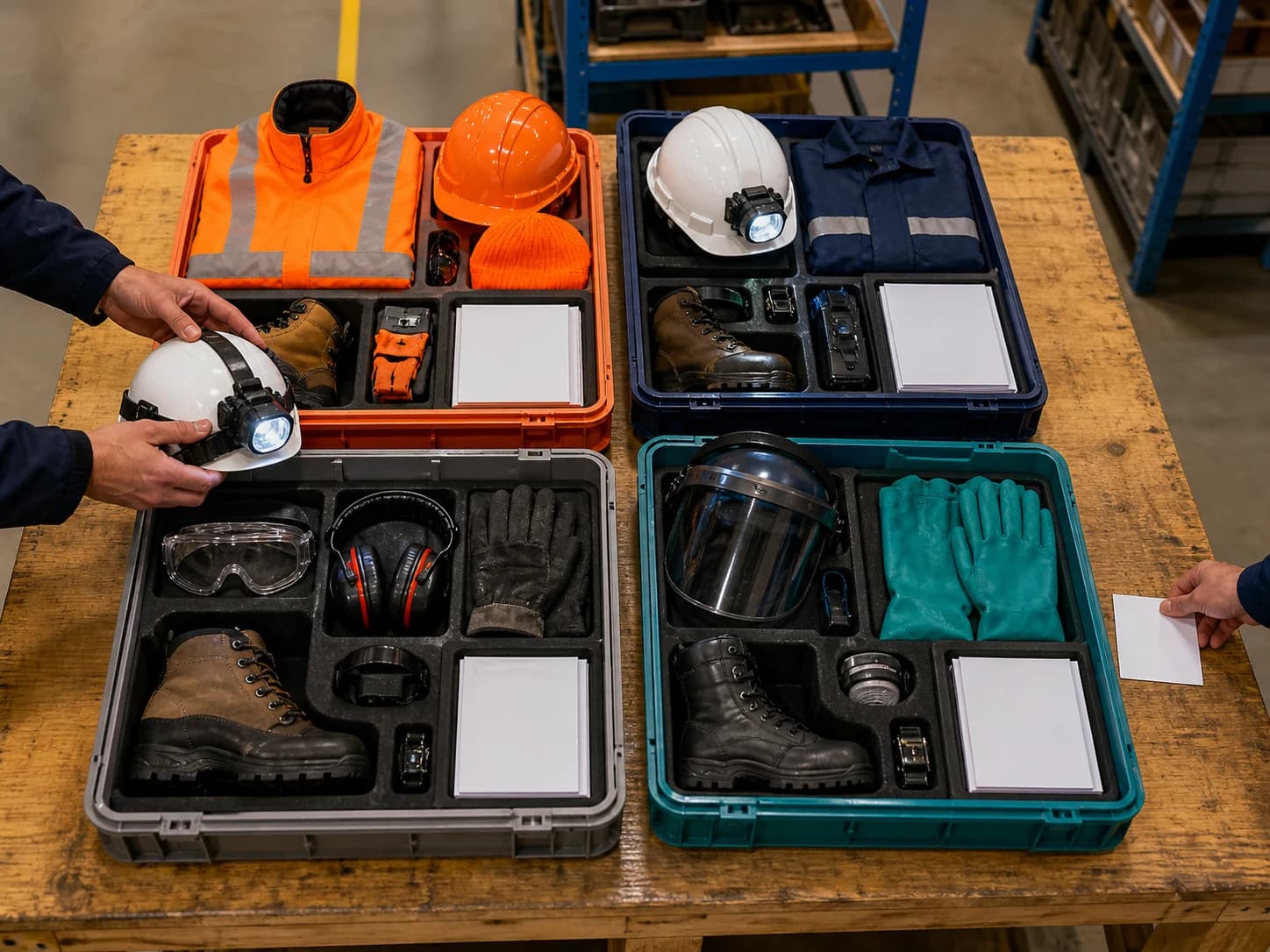
- Stage clean modules by zone. Examples include an outside-cab open-pit module, underground lamp and escape-equipment module, quarry dust/noise module, processing splash module, and controlled maintenance module.
- Use an entry check. Confirm authorization, route, controls, exposure status, module, fit, compatibility, and emergency equipment before crossing the boundary.
- Prevent contamination transfer. Keep dusty respirators, filters, garments, gloves, and footwear away from clean cabs, eating areas, offices, and clean storage. Define bagging, cleaning, laundry, disposal, and replacement.
- Record substitutions. A similar-looking helmet, filter, lamp bracket, visor, earmuff, or cartridge may not be compatible or approved in the existing system.
- Repeat the check when conditions change. A route change, dry process, ventilation fault, damaged cab seal, reagent spill, maintenance release, or emergency can invalidate the issued module.
Use the PPE Quantity Calculator after the modules and replacement assumptions are approved. Calculate quantities by area, task, size, issue frequency, contamination loss, shelf life, and lead time instead of multiplying one universal kit by headcount.
Emergency and Self-Rescue Equipment Is Not Routine Work PPE
A routine air-purifying respirator is selected for a characterized workplace exposure within its approval and program limits. A mine self-rescue device is emergency escape equipment with a different approval, service life, storage, inspection, location, training, and use case. They are not substitutes for each other.
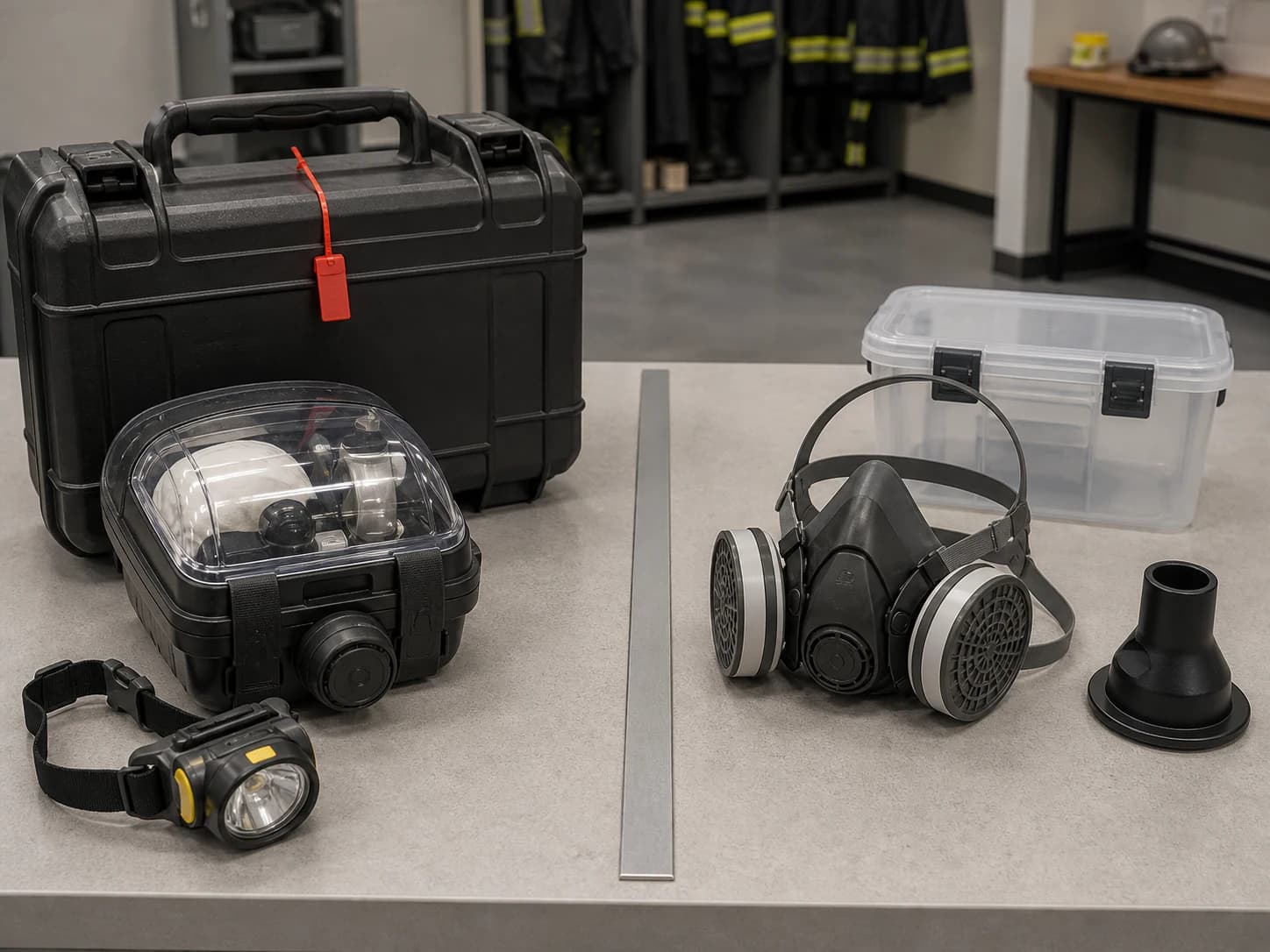
For U.S. underground metal and nonmetal mines, 30 CFR 57.15030 and 57.15031 address provision, maintenance, wearing, carrying, and location of self-rescue devices. Underground coal requirements are different. The mine must identify the applicable rule, approved equipment, emergency scenario, escape duration, location, inspection system, and training - not copy a product description from another commodity or jurisdiction.
Keep emergency equipment on a separate procurement line from working respirators. Require approval evidence, manufacturing and service-life records, inspection criteria, authorized parts, storage and carrying method, training materials, and a site acceptance review. Never infer emergency capability from the appearance of a respirator or filter.
How to Write the Differences Into a Mining PPE RFQ
Organize the RFQ by zone, role, task, and operating state. Avoid a single line labeled "mining PPE kit."
| RFQ field | What the buyer should provide | What the supplier should return |
|---|---|---|
| Work zone | Open pit, underground level or heading, quarry bench or plant, processing building, workshop, laboratory, or clean cab | Product and configuration proposed for that named zone only |
| Role and task | Operator, spotter, driller, sampler, cleanup, electrician, mechanic, contractor, visitor, or emergency role | Exact item, size range, accessories, limitations, and permitted tasks |
| Hazard and control basis | Traffic, ground, dust, noise, fragment, chemical, thermal, electrical, fall, weather, and control status | Relevant standard or approval evidence without adding unsupported claims |
| Exposure information | Contaminant, concentration, duration, work position, noise result, ventilation or cab status, and change triggers | Respirator or hearing option only when enough information exists; otherwise a documented information request |
| Compatibility | Helmet, lamp, eyewear, earmuff, respirator, visor, radio, garment, harness, and emergency equipment interfaces | Complete compatibility list, approved accessories, trial samples, and substitution limits |
| Environment | Temperature, rain, mud, water, UV, low light, confined travelways, chemical contact, and cleaning method | Material, fit, coating, lens, sole, garment, battery, storage, and care details relevant to those conditions |
| Lifecycle | Crew by size, issue frequency, contamination, inspection, replacement trigger, shelf life, and lead time | Packaging, spare parts, consumables, manufacturing or expiry information, reorder quantities, and warranty |
| Documentation | Jurisdiction, mine standard, language, acceptance process, and records required | Declaration, test report, approval number, instructions, data sheets, traceability, and sample documents for buyer review |
Use the AI Quote Generator to structure a draft request from the approved area matrix, then have the mine's safety, industrial hygiene, operations, and procurement owners review it before issue. A supplier should not be asked to invent the site's hazard assessment.
Common Surface and Underground PPE Selection Mistakes
- Buying one kit for every area. A common baseline may work, but zone and task modules prevent unnecessary equipment and missed hazards.
- Treating visibility clothing as traffic control. Clothing supports recognition; it does not create separation, communication, safe parking, or operator visibility.
- Assuming underground always means flame-resistant clothing. Confirm the actual fire, thermal, electrical, explosive-atmosphere, equipment, and legal requirements.
- Using a cap lamp as the full illumination plan. Personal lamps and area or machine lighting solve different visibility problems.
- Using a work respirator as an escape device. Routine exposure control and emergency escape require separate selections and programs.
- Specifying the same respirator for the pit, crusher, and underground heading. Contaminants, concentrations, oxygen, controls, duration, and emergency conditions can differ.
- Ignoring cab transitions. Exposure and PPE can change when an operator opens a door, exits for inspection, or enters a dirty cab.
- Letting wet suppression create unmanaged slip or contamination problems. Preserve the dust control and address drainage, grip, cleaning, and garment replacement.
- Leaving lamps, radios, eyewear, and earmuffs out of helmet trials. Accessory incompatibility often appears only after delivery.
- Combining routine and maintenance states. Isolation, electrical, hot-work, chemical, fall, and confined-space tasks need separate authorization and modules.
Buyer and Supervisor Approval Checklist
Before approving the area-based PPE package, confirm:
- [ ] Open-pit, underground, quarry, and processing zones are separated in the assessment.
- [ ] Roles, tasks, routes, and normal versus maintenance states are defined.
- [ ] Ground, traffic, ventilation, guarding, dust, noise, lighting, weather, chemical, and emergency controls are verified.
- [ ] Exposure information supports respiratory and hearing decisions.
- [ ] The underground helmet, lamp, retention, eyewear, hearing, radio, and escape-equipment interfaces were trialed together.
- [ ] Outer-layer visibility works with rainwear, cold-weather clothing, harnesses, and carried equipment.
- [ ] Cab and outside-cab requirements are separate.
- [ ] Routine respirators and emergency self-rescue devices are separate procurement lines.
- [ ] Sizes, trial samples, cleaning, contamination control, inspection, spares, replacement triggers, shelf life, and lead times are documented.
- [ ] Product standards, approvals, test reports, instructions, and substitutions will be reviewed before acceptance.
- [ ] Contractors and visitors have an entry and changeover process.
- [ ] The matrix will be reviewed after operational, exposure, product, incident, or regulatory changes.
Frequently Asked Questions
Can one PPE kit cover open-pit and underground work?
A controlled baseline may cover approved common items, but underground lighting and escape equipment, open-pit weather and traffic exposure, different contaminants, and accessory compatibility normally require area modules. Validate each item in the exact route and task.
Are underground mining helmets different from open-pit helmets?
The protective requirements still come from the hazard assessment and applicable standard, but underground selection often adds lamp mounting, cable routing, retention, low-clearance profile, reflective visibility, and compatibility with hearing and communication equipment. Do not assume a helmet is suitable because a lamp bracket can be attached.
Does every underground miner need flame-resistant clothing?
There is no single global answer. Commodity, mine type, fire and explosion hazards, electrical work, equipment, local law, and site policy determine the requirement. Specify performance from the documented hazard rather than the word "underground."
Is quarry PPE the same as open-pit PPE?
They share surface weather and mobile-equipment issues, but quarry workers may move more frequently between drilling, blasting boundaries, crushing, screening, stockpiles, contractors, and public interfaces. The compact site can increase transitions and requires task modules.
Can the same respirator be used in every mining area?
Only if the complete approved configuration is suitable for each identified contaminant, concentration, oxygen condition, duration, control status, task, fit, and program. Area names alone cannot answer this. A routine respirator is never automatically an emergency escape device.
Is high-visibility clothing mandatory everywhere in a mine?
Requirements depend on jurisdiction, site rules, traffic assessment, task, and work area. Around powered haulage it is a strong visibility control, but the mine must specify the garment and keep it visible as the outer layer while maintaining traffic separation and communication.
What changes when a worker moves from a cab to ground level?
The worker enters a different exposure and traffic position. Recheck communication, safe parking, pedestrian route, visibility, head, eye, hearing, respiratory, hand, foot, and weather needs before exit. Keep dirty PPE from contaminating a clean cab.
Should emergency self-rescuers be included in a standard respirator RFQ?
No. Put them in a separate emergency-equipment specification with the applicable mine rule, approval, service life, inspection, storage or carrying method, training, and site acceptance requirements.
Related Mining PPE Guides and Primary Sources
- Mining Safety Equipment and PPE for Quarry Operations
- Mining PPE Checklist by Task
- Mining Hearing Protection Guide: MSHA Part 62, Earplugs, Earmuffs & Dual Protection
- Silica Dust Controls and Respirator Selection for Mining and Quarrying
- Mining & Quarry Safety Boots Buyer Guide
- 30 CFR Part 56 - Surface Metal and Nonmetal Mines
- 30 CFR Part 57 - Underground Metal and Nonmetal Mines
- NIOSH Mining and Machinery Struck-by Injuries
- NIOSH Mining Illumination Research
- MSHA Powered Haulage Equipment Safety Guidance
Need an area-based mine PPE comparison for an RFQ? Send the mine type, work zones, roles, tasks, routes, exposure information, current controls, required approvals, size range, compatibility requirements, emergency-equipment scope, and replacement assumptions. LAIFAPPE can organize available product and document options into a buyer review list; the mine operator remains responsible for hazard assessment, final selection, training, fit, use, and emergency planning.
Related PPE
Source the PPE covered in this guide
Move from research to a buyer shortlist with the matching solution page, category paths, selected PPE options, and RFQ next steps.