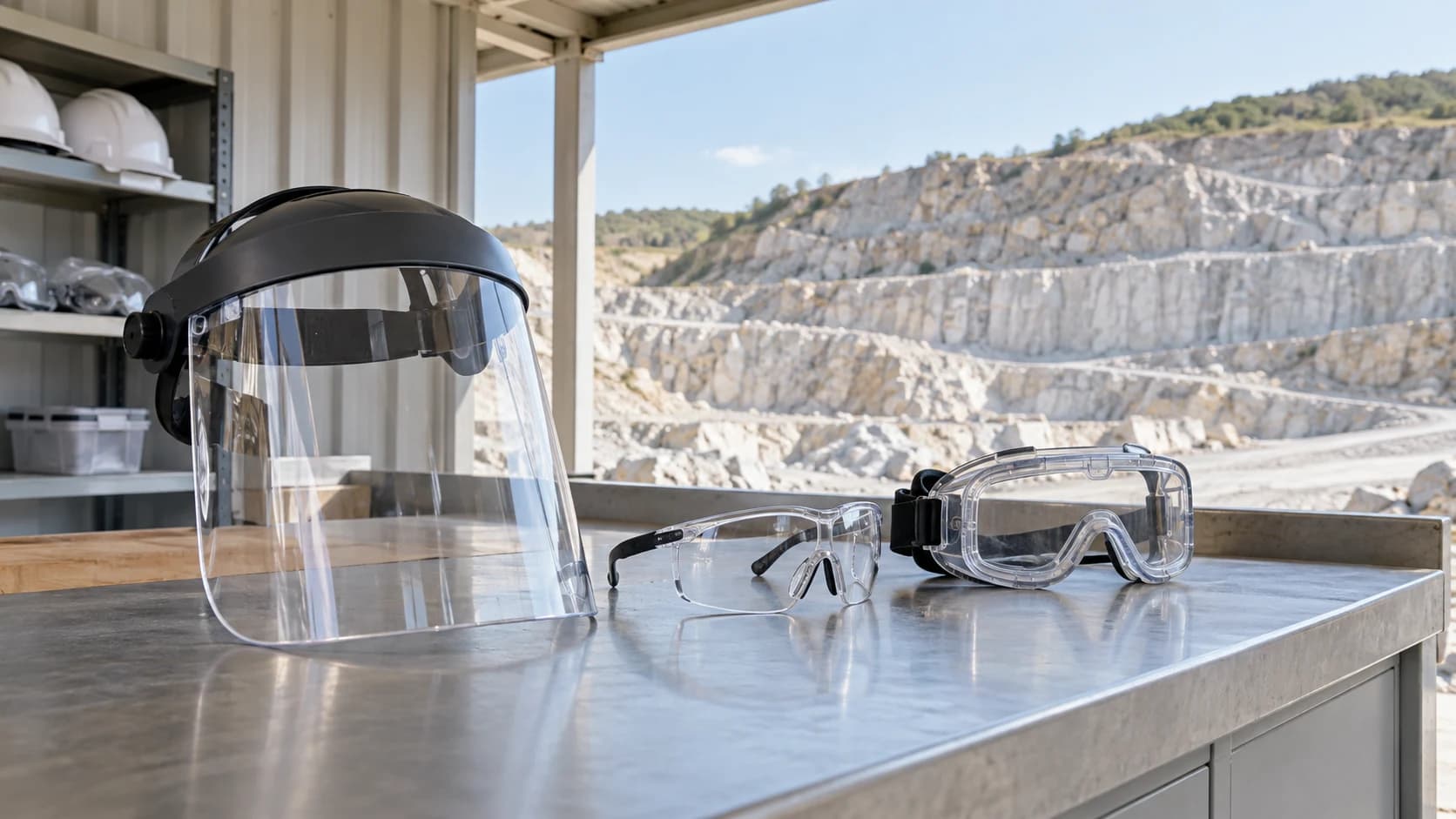
Eye and face protection for quarry and crusher work should follow the exposure, not a single site-wide product preference. Airborne dust, flying fragments, maintenance grinding and liquid splash present different purchasing questions. The right choice may be safety spectacles, goggles, or suitable primary eye protection combined with a face shield.
This guide is for quarry managers, crusher and screening supervisors, maintenance teams and PPE buyers comparing models for site issue. It covers selection, markings, compatibility, sample trials and supplier requirements. Use the Mining and Quarrying PPE hub when the eye-protection order forms part of a wider crew equipment plan.
Quick Answer: Choose Protection for the Exposure and the Wearer
Use a short approval sequence before requesting prices:
- Define the task, work area, access conditions and applicable site procedure.
- Identify eye hazards and wider face hazards separately: particles, dust, splash, heat or optical radiation.
- Specify the required product standard and performance features for that exposure.
- Select the primary eye protector; add a suitable face shield where wider face coverage is needed.
- Check the chosen model with the worker's prescription needs, helmet, hearing protection and respiratory equipment.
- Approve a controlled sample trial and document model identity, replacement parts and substitution rules.
A visor does not authorize access to operating machinery or protect against uncontrolled ejected rock. Guarding, exclusion zones, dust controls and approved access arrangements remain part of the job. Move to a safe area if vision or fit becomes unacceptable rather than continuing with protection lifted off the face.
Match Eye and Face Protection to Quarry Tasks
Write the task first, then identify the evidence and fit checks needed for the shortlist. The following table organizes a buyer brief; it does not prescribe one model for every quarry.
| Task or exposure | Questions for the assessment | Selection direction | What to verify |
|---|---|---|---|
| Authorized inspection along designated plant routes | Flying-particle sources, dust, wind direction and access restrictions | Impact-rated spectacles with appropriate side coverage where the assessment supports them; goggles if dust entry requires it | Model performance, coverage, stability and usable vision |
| Dust-prone transfer, screening or crushing areas | Airborne particulate, gaps around the eyes, task duration and functioning dust controls | Goggles with documented performance appropriate to the dust exposure | Dust or fine-dust claim as applicable, facial fit, fogging and compatibility |
| Grinding or chipping during controlled maintenance | Flying fragments, tool condition, guards and exposure of the wider face | Suitable impact-rated primary eye protection plus a compatible face shield where assessed face exposure requires it | Exact eyewear and shield performance, coverage and assembled fit |
| Handling cleaners or lubricants with splash potential | Substance, concentration, temperature, splash direction and face exposure | Splash-rated goggles; add a suitable shield for wider face splash where needed | Splash marking, material compatibility and cleaning or replacement limits |
| Planned washdown | Pressure, rebound, contaminants, visibility and safe work method | Eye and face protection specified for the actual splash/debris exposure | Coverage and material suitability; PPE does not authorize exposure to a pressure jet |
| Welding or thermal cutting | Process, optical radiation, sparks, bystanders and hot-work controls | Specialist eye and face equipment with the correct process-specific filter protection | Applicable standard, shade and configuration; clear general-purpose lenses are insufficient |
Use the Mining PPE Checklist by Task to coordinate these choices with the rest of the role kit. A checklist should identify who resolves an uncertain exposure or compatibility issue before equipment is issued.
Control Dust, Ejected Material and Maintenance Access First
A face shield is a personal protective device, not a machine guard or a barrier against all crusher ejecta. Keep people out of restricted operating areas and follow the equipment-specific maintenance procedure. Do not use a staged PPE photograph as evidence that standing close to a live crusher is acceptable.
HSE's mobile jaw crusher guidance addresses hazards including guarding, blocked equipment, access and maintenance. Its guidance is specific to the operation and equipment; eye protection must be selected within that wider control plan.
For dust, HSE's quarry silica guidance separates crushing, screening and other processes and describes engineering controls such as extraction or water suppression. Eye protection does not establish that respirable exposure is controlled. Use the Mining Silica Dust Controls and Respirator Selection guide for the separate exposure and respiratory-protection decisions.
In the RFQ, state whether the model will be used for route inspection, controlled maintenance, or another assessed activity. “Suitable for crusher work” without those conditions is too vague for a supplier comparison.
Compare Safety Glasses, Goggles and Face Shields
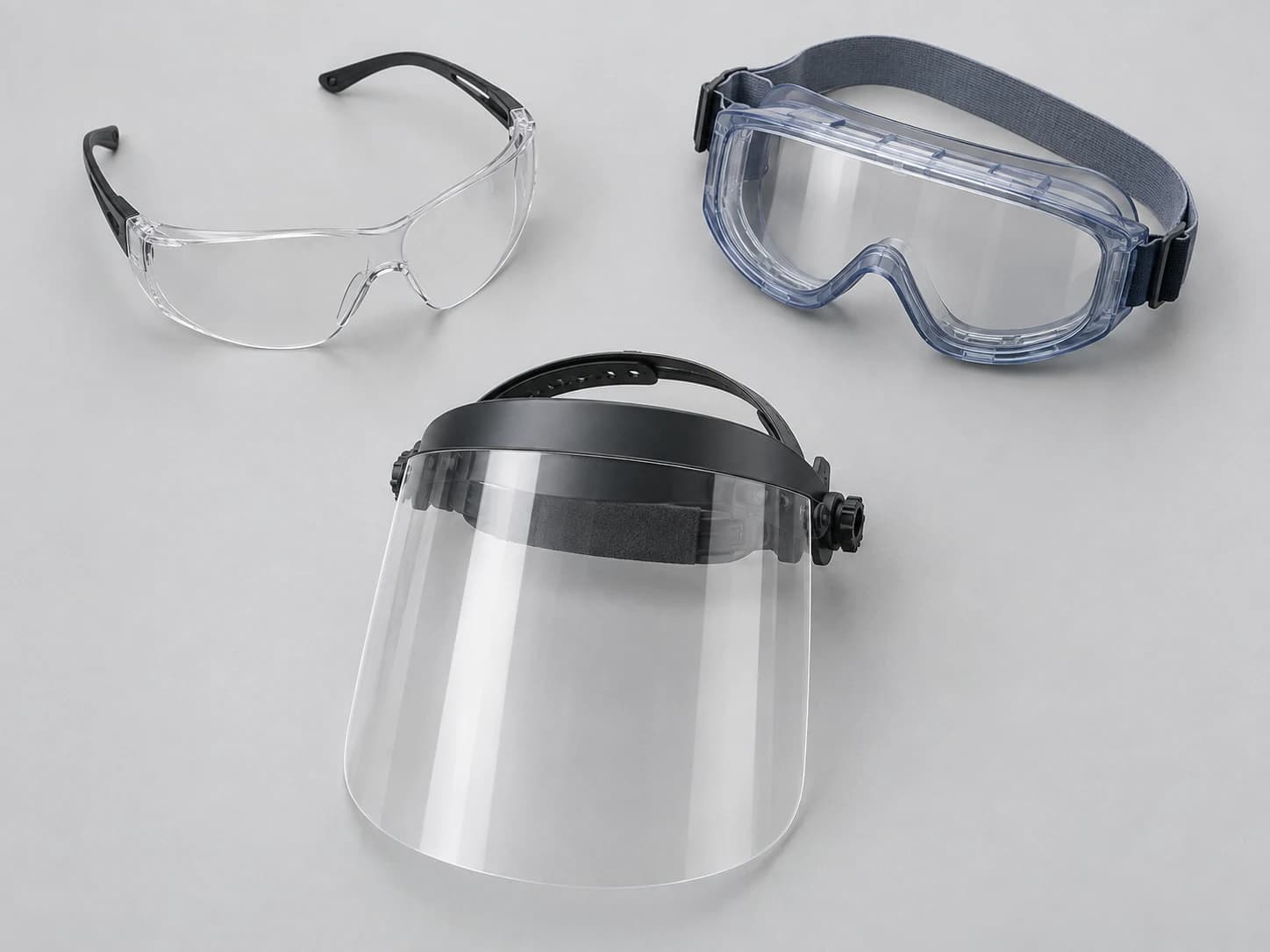
Compare the function and documented performance of each component before comparing its price. Products with similar lens shapes can have different approvals and limitations.
| Equipment | Useful role | Important limit | Sample approval question |
|---|---|---|---|
| Safety spectacles with side coverage | Primary protection for assessed particle hazards with suitable performance | Open gaps may not provide the dust or liquid-splash protection needed for another task | Does the frame stay correctly positioned with the user's other PPE? |
| Protective goggles | Primary eye protection when the documented dust, splash or other performance is required | A close-fitting appearance or a vent design alone does not prove the needed rating | Does this model fit the wearer without gaps or interference? |
| Face shield with approved carrier | Additional coverage for assessed face exposure, used with appropriate primary eye protection | An open shield does not form a dust seal around the eyes | Does the assembly cover the required area and remain in the working position? |
| Full-facepiece respiratory equipment | Respiratory protection and eye coverage within the specific assembly's documented scope | A respirator lens is not automatically rated for every impact or splash exposure | Do the program approval, lens performance and prescription arrangement match the task? |
| Welding eye/face equipment | Protection specified for the welding or cutting process | Dark appearance is not a verified filter shade or process approval | Are the exact lens, carrier and required primary protection documented? |
NIOSH's eye-safety guidance for emergency response treats face shields as additional protection and advises wearing appropriate safety glasses or goggles underneath. Although that guidance addresses another work setting, the equipment distinction is useful for quarry buyers. Do not turn a shield-only photograph into a grinding specification.
For purchasing options, start with the eye-protection category. Confirm the actual model's documents before treating any product listing as an approved site option.
Read Impact, Dust and Splash Markings Separately
For U.S. surface metal and nonmetal mines, 30 CFR 56.15004 requires suitable eye-protective equipment where an eye-injury hazard exists. It does not select one universal eyewear model. Other mine types and jurisdictions have their own applicable rules.
ISEA currently lists ANSI/ISEA Z87.1-2025 for occupational and educational eye and face protection. A current consensus edition is not automatically the edition incorporated into every regulation or contract. Record the edition required for your purchase.
The ANSI explanation of Z87.1-2025 markings identifies these distinctions:
| Marking or evidence item | What to check | What not to infer |
|---|---|---|
| Z87 and impact marking such as Z87+ | Confirm the complete device's applicable impact classification and required component markings | A generic “Z87” claim does not prove every task-specific property |
| D3 | Splash/droplet use designation | Chemical resistance to every substance or protection from a pressure jet |
| D4 | Dust use designation | Fine-dust performance or respiratory protection |
| D5 | Fine-dust use designation | Control of inhalation exposure or suitability without proper fit |
| X | Anti-fog marking within the stated standard | Permanent freedom from fogging in all temperatures and work conditions |
These properties are separate selection checks, not a universal ranking from “low” to “high.” Verify the complete marking set and report for the offered assembly. Do not request a splash rating as a substitute for impact performance, or assume an anti-fog coating establishes dust protection.
For international sourcing, ISO 16321-1:2021 covers general requirements for occupational eye and face protectors, with a 2024 amendment. If a supplier offers EN 166 or EN ISO 16321 documentation, verify the exact regional standard, edition and current conformity route applicable to the market. The presence of an ISO publication does not by itself establish a product's certification or a universal withdrawal date for older approvals.
Separate Fine Dust, Liquid Splash and Fogging
The fact that two jobs need goggles does not make their specifications identical. Record whether the exposure is dust, fine airborne material or liquid splash, and whether the eye hazard occurs together with impact or a wider face hazard.
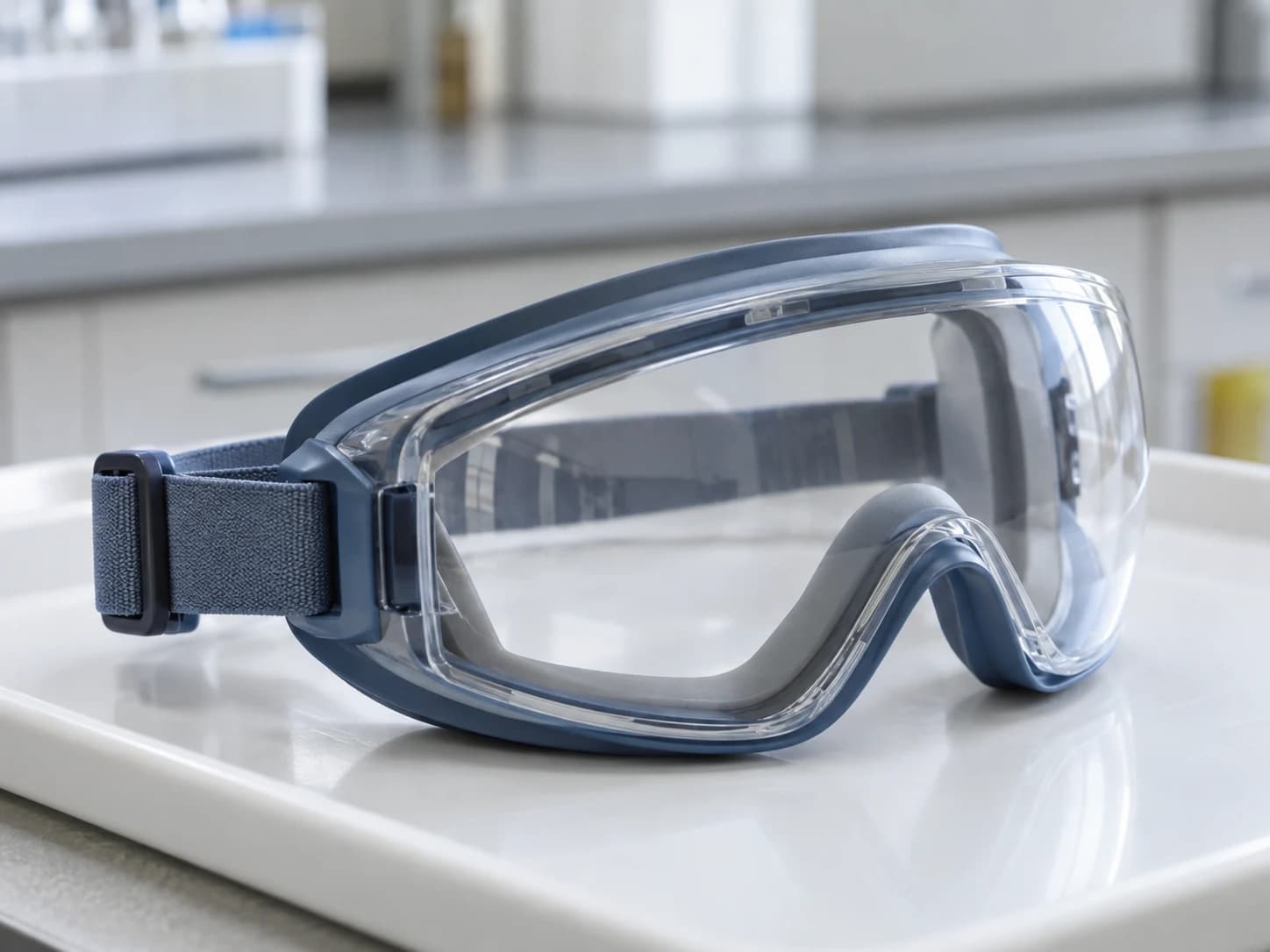
HSE's PPE guidance notes that some ventilated goggles may be unsuitable for gases and fine dusts. Select from documented performance for the complete product instead of using direct vents, indirect vents or a foam surround as a shortcut to approval. Do not block vents or modify a frame to claim a different rating.
Treat fogging as a usability issue to resolve during the trial. Record temperature changes, work duration, cleaning method and interaction with a respirator. If a worker needs to lift the goggles repeatedly to see, reject that setup or revise the equipment choice and work arrangements before issue. A coating claim alone does not close the problem.
For cleaners, lubricants or process liquids, obtain the product identity and safety data sheet and ask for lens, frame, seal and carrier compatibility information. The exposure and expected decontamination method should be documented together. Do not assume a droplet-use marking means universal chemical compatibility.
Check the Complete Helmet, Hearing and Respirator Setup
Trial the actual combination, not the eye protector alone. Record the helmet, visor carrier, eyewear, earmuffs, respiratory equipment and prescription arrangement as a configuration that can be reordered.
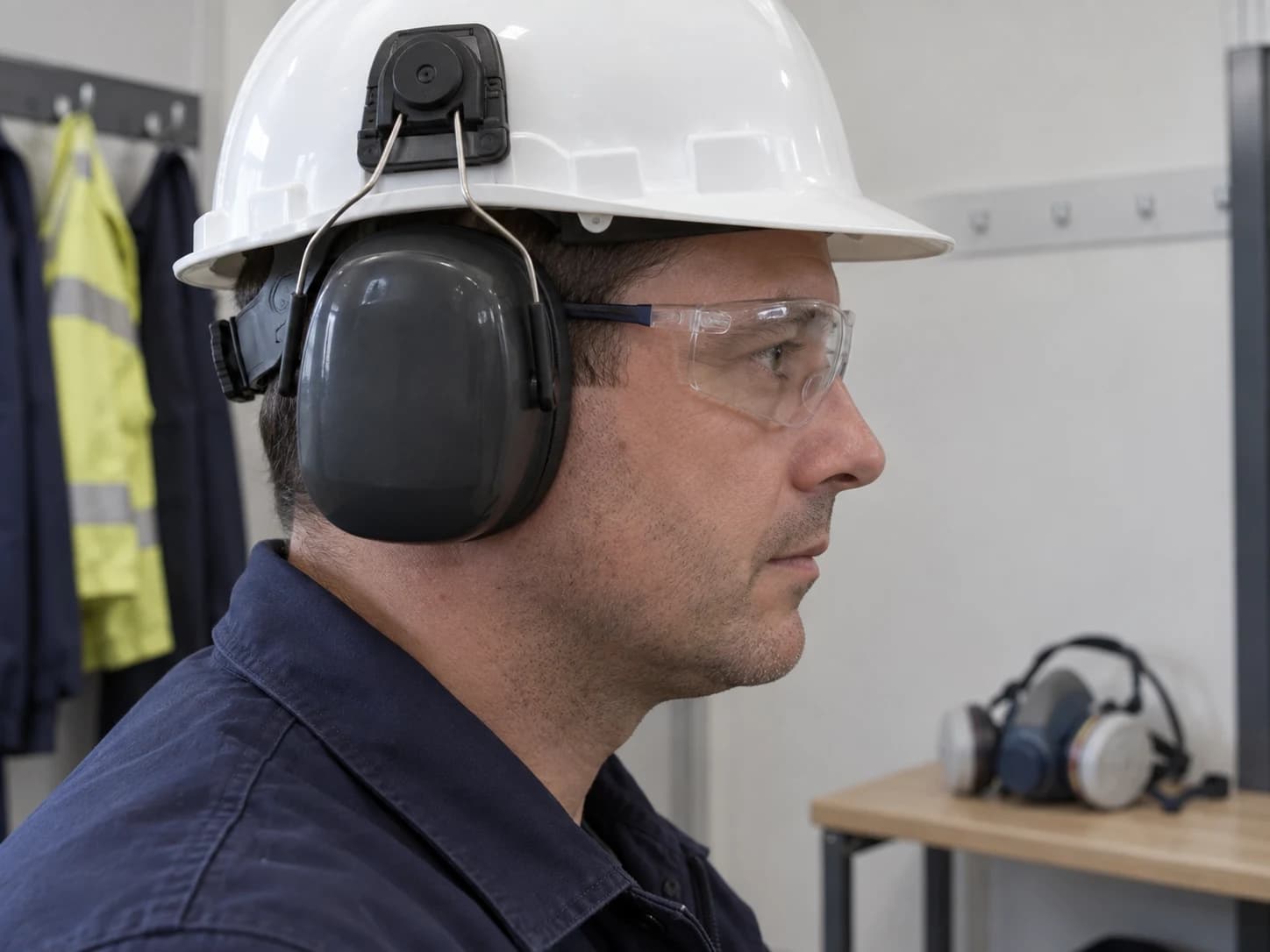
NIOSH's respirator fit-testing guidance explains the importance of a properly fitting tight-fitting facepiece. An eyewear comfort trial does not replace required respirator fit testing. Resolve any interference through the respiratory-protection program and the equipment instructions.
Use this combination check:
| Interface | Controlled fit check | Reason to hold approval |
|---|---|---|
| Goggle and half-mask respirator | Both sit as intended during normal head movement | One pushes the other out of position or affects the required seal |
| Eyewear temples and earmuffs | Temple position does not prevent the cushions seating as intended | Interference cannot be resolved using an approved combination |
| Shield carrier and helmet | Correct listed adapter, secure mounting and stable working position | Improvised brackets, drilled shell or unapproved parts |
| Prescription needs | Approved prescription safety eyewear, compatible over-glasses or listed insert as appropriate | Ordinary spectacles are treated as the protective device or distort the fit |
| Field of view and movement | Worker can look down, turn the head and identify controls in a clean trial area | The worker must lift protection to perform the assessed observation |
The Mining Hearing Protection guide covers the separate attenuation and communication decisions. Approving a comfortable eyewear fit does not verify the hearing protection's field performance.
Do not assume that adding more items always improves protection. A configuration that displaces another device may need a different frame, carrier or PPE system rather than more straps or tighter adjustment.
Run a Controlled Sample Trial and Inspect the Lenses
Use a clean fitting room or controlled training area, with representative workers and their normal PPE. Include users who need prescription correction. Establish the acceptance criteria before comparing models so that feedback is not reduced to a vote on appearance.
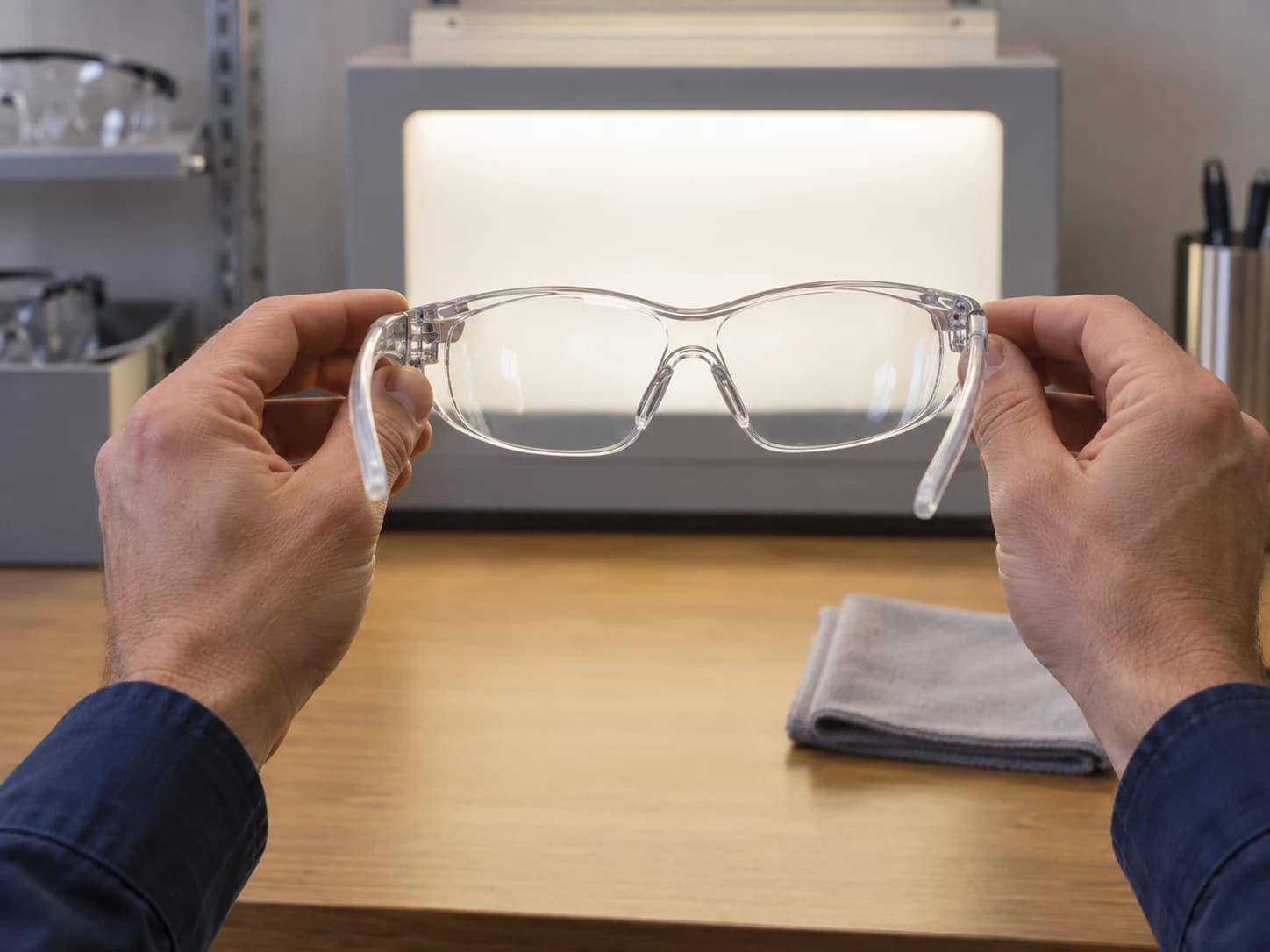
Check stability, required coverage, peripheral vision, clarity and comfort. Observe normal head turns and looking down at a clean workbench or training controls. Record any need to adjust or remove equipment. Include an appropriate supervised wear period to identify discomfort, without deliberately exposing the wearer to dust, splashes, flying fragments or impact tests.
Inspect each sample for visible damage and confirm the supplied markings and model identity. Check lens seating, strap adjustment, hinges, carrier locks and replaceable parts against the instructions. Keep a photograph of the accepted combination and a record of the sizes or frame variants approved for each user group.
A successful trial supports usability. It does not establish a protection rating that the model has not been tested for. Hold the order when essential documents are missing even if everyone likes the sample.
Clean, Store and Replace Without Losing Visibility
Make lens care and replacement part of the issue plan. Provide the cleaning method permitted by the manufacturer, a clean place to store the device and access to replacement lenses or complete units as appropriate. Avoid improvised solvents or abrasive wiping that may damage coatings or clarity.
Remove damaged or unsuitable equipment from service according to its instructions and the site process. Relevant checks include cracks, scratched or hazy viewing areas, loose lenses, degraded seals, damaged straps and unstable carriers. Follow the specified retirement process after significant impact or chemical exposure rather than relying only on appearance.
Keep replacement components tied to the approved model. A visor that fits a carrier physically is not necessarily an approved replacement. Store clean and contaminated equipment separately, and do not circulate shared goggles without the required hygiene process.
Track why items are replaced: wear, contamination, optical damage, poor fit, incorrect cleaning or component failure. These records help buyers compare lifecycle cost without inventing a universal lens-replacement interval.
Write a Comparable Quarry Eyewear RFQ
Use a separate line for each approved task configuration. Ask every supplier to respond to the same performance, documentation and sample requirements.
| RFQ field | What the buyer should provide or request |
|---|---|
| Site and task | Country, mine/quarry type, work area, task and permitted operating conditions |
| Exposure | Impact, dust/fine dust, splash, substance details, thermal or optical hazards as applicable |
| Primary eye protection | Exact spectacles or goggle model, standard edition and required performance markings |
| Face protection | Required shield, visor material, carrier, helmet adapter and documented assembly |
| Other PPE | Helmet, earmuff and respirator models to be used in the compatibility trial |
| User needs | Frame or size range, prescription arrangements and quantities by approved configuration |
| Documents | Marking photographs, instructions, reports and applicable conformity evidence for the offered model |
| Sample acceptance | Trial users, criteria, approved sample record and review owner |
| Care and spares | Permitted cleaning, storage, lens/strap/carrier references and replacement availability |
| Commercial comparison | Currency, unit basis, pack quantities, minimum order, lead time, delivery terms and sample charges |
| Change control | Written buyer approval before substituting lenses, frames, seals, carriers or accessories |
Suggested supplier request:
Please quote the attached quarry eye and face protection schedule by task configuration. Identify every model and component, provide evidence for the requested properties, and state limitations or missing information. Confirm the samples and documents available for our fit and compatibility review. Do not substitute an approved component without written agreement.
For maintenance crews, coordinate the eyewear brief with the Mining Work Gloves guide. When the task and model requirements are ready, request a quarry PPE quotation with the configuration and quantity schedule.
Buyer Approval Checklist
- Eye hazards and wider face hazards are recorded separately.
- The safe work method addresses dust, ejected material and machinery access.
- The exact model has evidence for every required property.
- Face-shield configurations include the required primary eye protection.
- Prescription needs and the complete worn PPE combination have been reviewed.
- Representative users have completed a controlled trial with acceptable vision and fit.
- Care instructions, replacement parts and rejected-equipment handling are defined.
- Quantities, pricing basis, lead times and substitution controls are written into the order.
Frequently Asked Questions
Can a face shield replace safety glasses during crusher maintenance?
For flying-fragment work such as grinding or chipping, specify a suitable shield with appropriate primary eye protection where face coverage is required. An open shield is not a substitute for the assessed eye protector. Separately confirm the maintenance access and machinery controls.
Are indirectly vented goggles always suitable for fine quarry dust?
No. Vent design is not a complete performance specification. Check the offered model's relevant dust or fine-dust designation, fit and instructions. Do not create a new rating by modifying the vents.
Does a D5 marking protect against breathing silica dust?
No. The designation concerns eye-protector fine-dust performance. Inhalation exposure still needs its own control and respiratory-protection assessment.
Can workers wear prescription glasses under goggles?
Use an approved arrangement that fits without disturbing the protective equipment. A controlled trial should include the actual prescription eyewear or insert. Ordinary glasses alone should not be treated as protective eyewear.
Is anti-fog performance enough to approve a quarry goggle?
No. Fogging is one part of the decision. Required impact, dust or splash performance, optical suitability, fit and the complete PPE combination must also be acceptable.
How many spare lenses should be included in a bulk order?
Use approved model counts, issue quantities, actual replacement reasons and supplier lead times to set the initial stock and review it after use. Avoid imposing an unsupported percentage on every quarry or crew.
Sources and Further Reading
Sources checked September 13, 2026. Apply rules for the actual jurisdiction and mine type; technical reference material does not approve a particular product or quarry task.
- eCFR: 30 CFR 56.15004, eye protection.
- ISEA: current standards catalog.
- ANSI: ANSI/ISEA Z87.1-2025 and markings.
- ISO: ISO 16321-1:2021 and Amendment 1:2024.
- HSE: safe operation and use of mobile jaw crushers.
- HSE: silica controls for quarry processes.
- HSE: personal protective equipment at work, L25.
- NIOSH: eye-safety guidance for emergency response and disaster recovery, archived technical guidance.
- NIOSH: respirator fit testing.
Related Tools
Turn this guide into a faster PPE shortlist
Use the matching tools to check footwear sizing, decode certification labels, or estimate order quantities before you move from research to purchasing.
Safety Footwear Label Decoder
Decode ASTM F2413 and EN ISO 20345 markings such as S3, SRC, HRO, EH, and PR in seconds.
Decode labelsSafety Boot Size Guide
Convert US, EU, UK, CN, and JP sizing and check width fittings before you lock in footwear specs.
Check sizingPPE Quantity Calculator
Estimate monthly usage, replacement cycles, and budget needs before you place a bulk PPE order.
Plan quantities