Buyer next step
Turn this guide into a sourced PPE shortlist with standards, quantities, and role-based kit notes.
Planning tools
Use these tools before moving from this guide into quantities, sizing, labels, or RFQ planning.
Silica control in mining and quarrying starts with exposure data and source control—not with choosing a mask from a catalog. Drilling, crushing, screening, transfer points, bagging, cleanup, mobile equipment, and maintenance can create very different respirable crystalline silica exposures even at the same operation.
This guide gives mine operators, industrial hygienists, safety managers, contractors, and procurement teams a practical sequence: characterize the exposure, improve engineering controls, verify the remaining concentration, calculate the protection required, select an approved respirator class, fit test the exact model, and manage it through a written respiratory protection program.
Use the Mining Safety Equipment and PPE for Quarry Operations solution for the wider mine PPE and bulk RFQ framework. Use the Mining PPE Checklist by Task for drilling, blasting, crushing, haul-road, processing, and maintenance pre-task checks. This article stays focused on respirable crystalline silica control and respiratory protection decisions.
Quick Decision Flow: Measure, Control, Verify, Then Select
Use this sequence for every silica-producing task or similar exposure group:
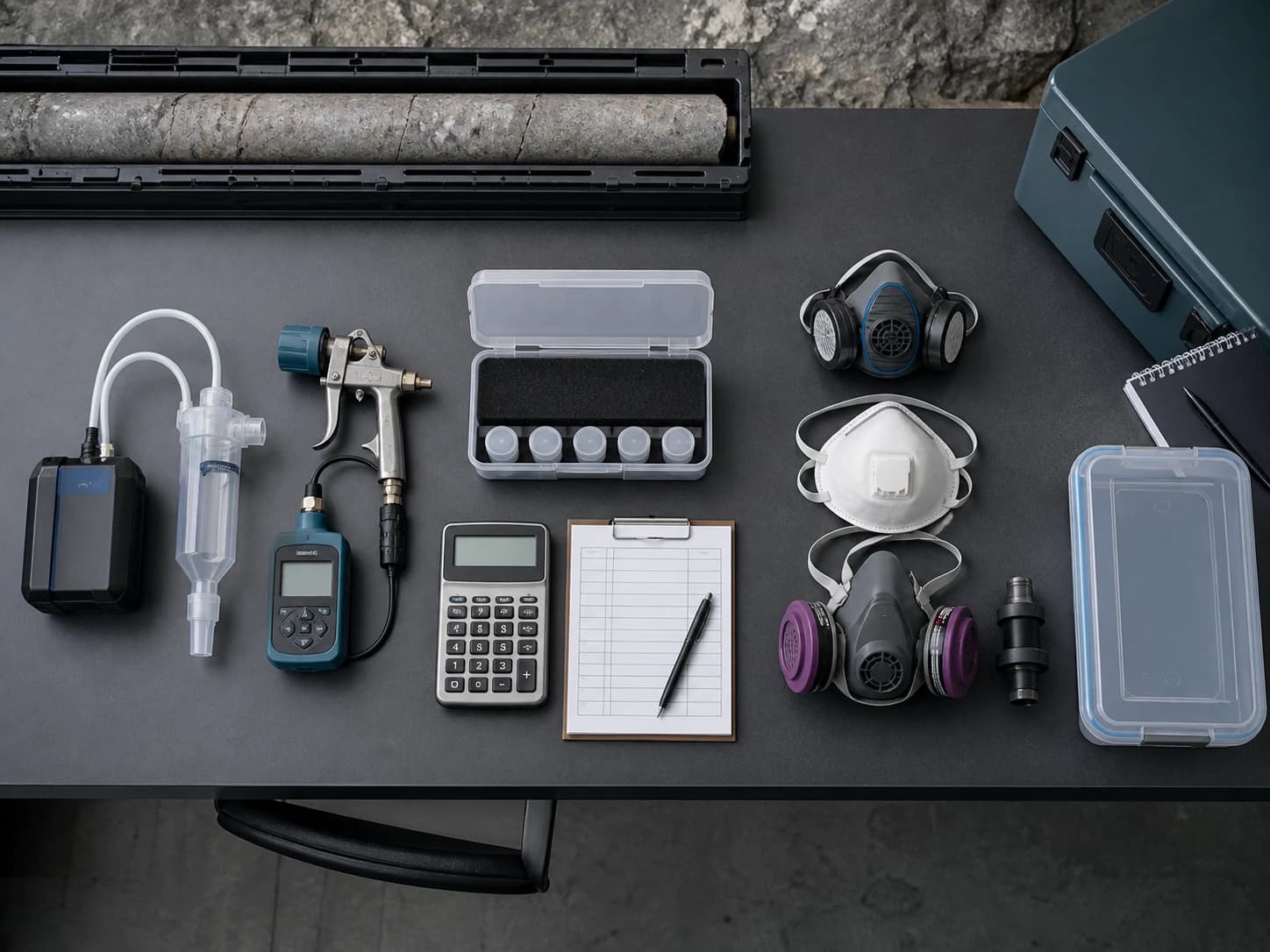
- Define the work. Record the material, silica content if known, task, tools, work area, worker position, shift length, production rate, weather or ventilation, and current controls.
- Measure representative exposure. Use personal breathing-zone sampling that represents the full shift and the conditions that can reasonably create the highest exposure.
- Control the source. Prioritize wet methods, local exhaust ventilation, enclosure, isolation, enclosed-cab filtration and pressurization, process changes, and maintenance.
- Verify control performance. Re-sample after changes and check the operating indicators that show the control is actually working.
- Determine the remaining respiratory hazard. Use the post-control concentration, the applicable exposure limit or program target, other contaminants, oxygen status, and foreseeable upset conditions.
- Calculate the required protection. Required protection factor = measured concentration ÷ applicable exposure limit or program target. Select a respirator class with an assigned protection factor (APF) that meets or exceeds the result and stays within its maximum use concentration and approval limitations.
- Select the complete approved configuration. Facepiece, filter or cartridge, adapter, blower, hose, battery, and accessories must match the NIOSH approval and manufacturer instructions. A filter rating alone does not define the APF.
- Clear, fit test, train, and issue. Complete the required medical evaluation, fit test the exact make/model/style/size for tight-fitting devices, train the wearer, and document inspection, cleaning, storage, and replacement.
- Reassess when work changes. New rock, higher production, dry operation, failed sprays, damaged cab seals, new equipment, longer shifts, maintenance entry, or a new respirator model can invalidate the previous decision.
If steps 1–5 are missing, purchasing a higher-rated filter does not close the exposure-control gap.
Current U.S. Regulatory Status: Check the Stay Before Using a Compliance Date
MSHA published the 2024 rule titled Lowering Miners' Exposure to Respirable Crystalline Silica and Improving Respiratory Protection. The published Part 60 framework set a respirable crystalline silica permissible exposure limit (PEL) of 50 micrograms per cubic meter (µg/m³) for a full-shift exposure calculated as an 8-hour time-weighted average and an action level of 25 µg/m³. It also set monitoring, corrective-action, control, medical-surveillance, and respiratory-program requirements.
However, the regulatory status changed. The April 6, 2026 Federal Register notice states that a judicial stay of the 2024 Silica Rule's compliance deadlines remains in effect. For metal and nonmetal mines, the conforming amendments to Parts 56 and 57 are delayed indefinitely pending judicial review, and MSHA continues to enforce the existing sections 56.5001, 56.5005, 57.5001, and 57.5005.
For that reason:
- Do not use the original April 8, 2026 date as an active metal/nonmetal compliance deadline without checking for a newer MSHA or Federal Register action.
- Confirm the rules that apply to the mine, commodity, work area, and date before writing a legal compliance statement into a procedure or RFQ.
- Continue reducing exposure through feasible controls and a documented respiratory program; the court stay is not evidence that silica exposure is acceptable.
- Treat the 50/25 µg/m³ values, 100-series or HE filter provisions, and ASTM F3387-19 program elements below as the published Part 60 framework and a readiness benchmark unless current counsel or MSHA guidance confirms their enforceability for the operation.
The current 30 CFR 56.5005 and 30 CFR 57.5005 still require feasible prevention, exhaust ventilation, or dilution controls and a suitable NIOSH-approved respirator program when respiratory protection is used. Operations outside the United States must apply their own current exposure limits and respiratory protection rules.
Exposure Monitoring: Sample the Work That Actually Happens
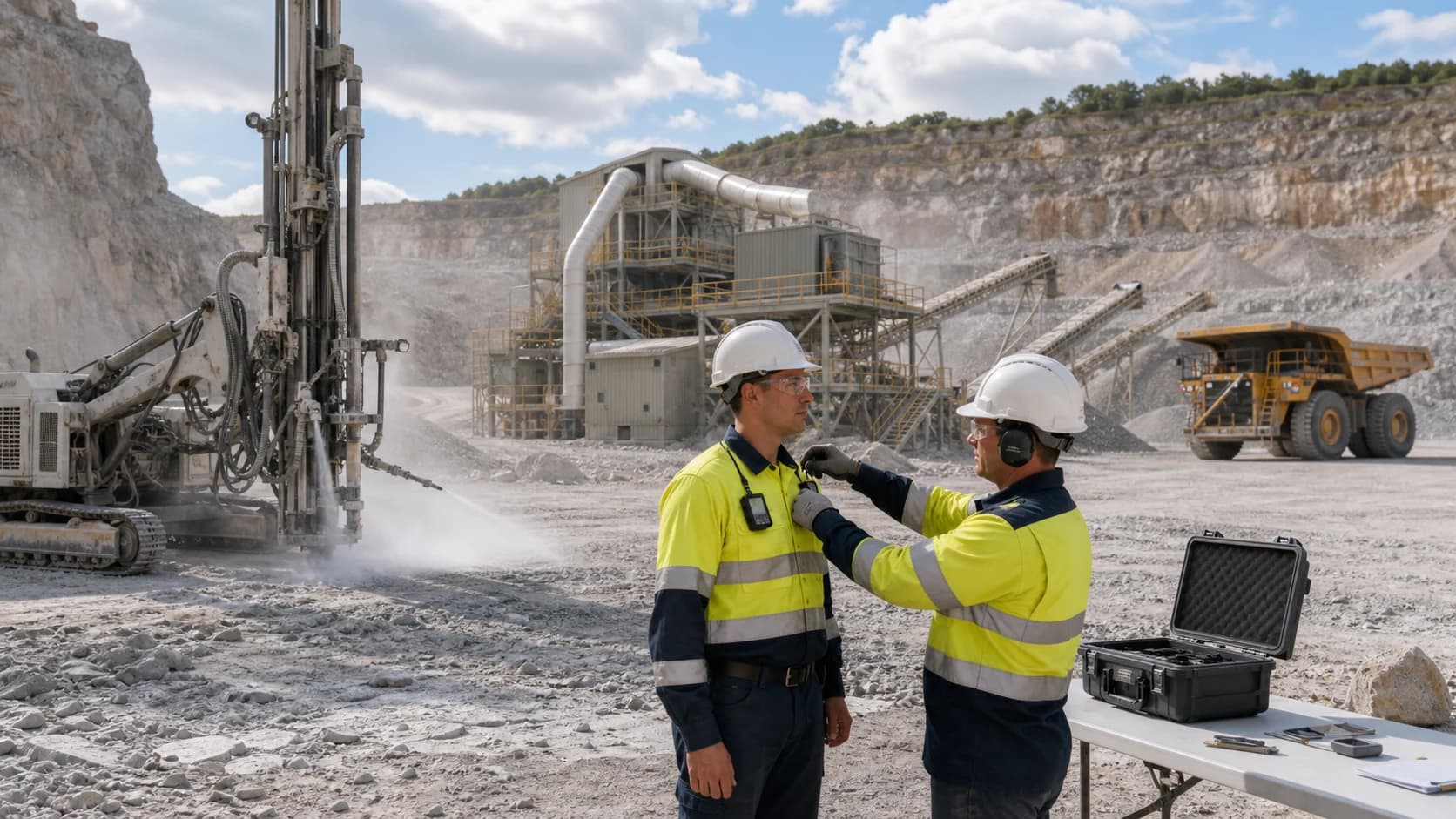
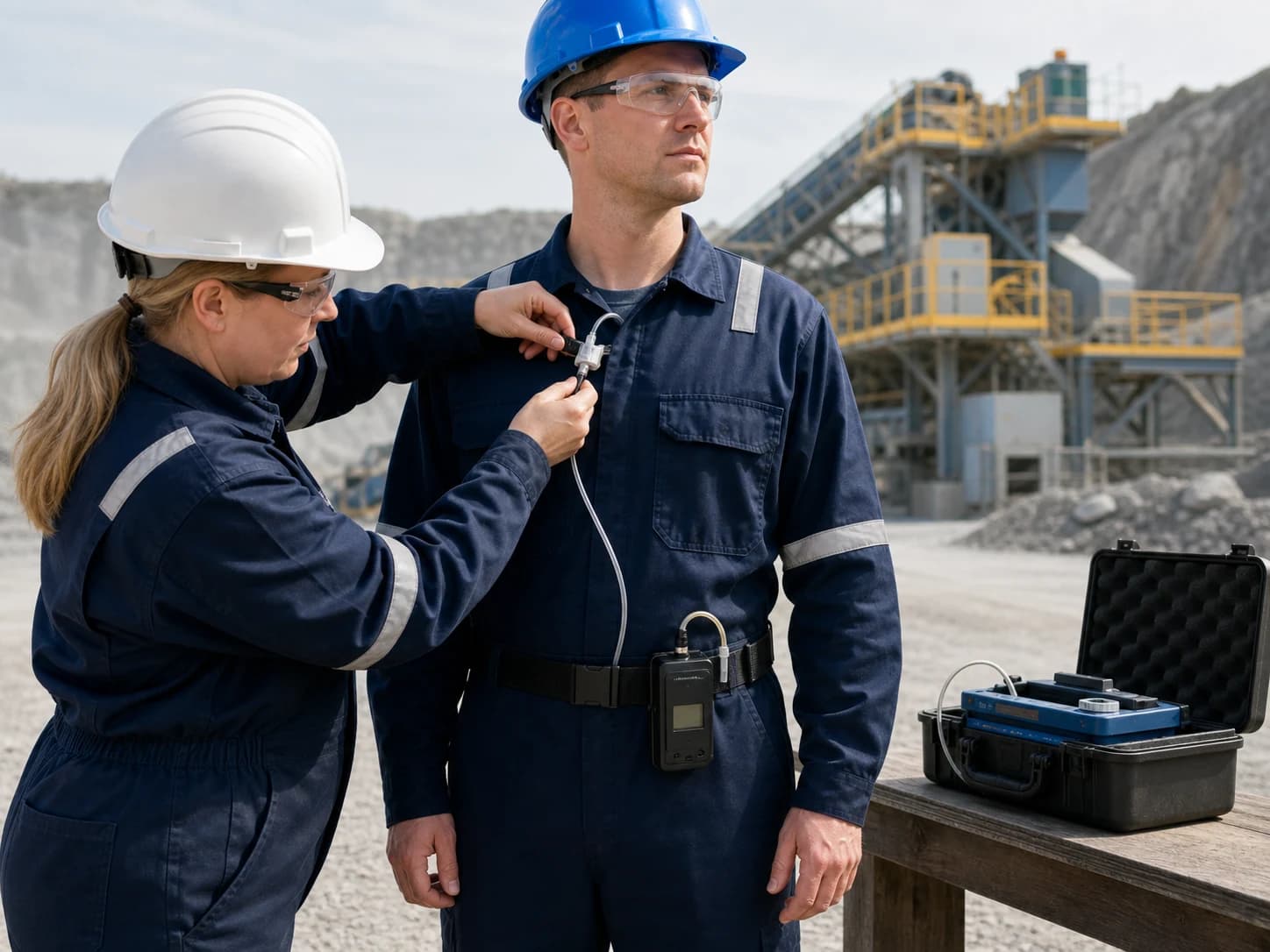
Silica monitoring should represent people, not just locations. A fixed monitor near a crusher can support control diagnostics, but it does not replace a personal breathing-zone sample for the worker who leaves the control room, takes samples, cleans spillage, or enters the transfer tower.
Build similar exposure groups around tasks
Group workers only when their exposure conditions are genuinely similar. Record at least:
- Mine, pit, bench, plant, level, and work area
- Occupation and exact task sequence during the shift
- Material or geology and known quartz or crystalline silica information
- Production rate, equipment, tool, and process state
- Time inside and outside enclosed cabs or control rooms
- Wet or dry operation, water flow, spray condition, and dust collector status
- Ventilation direction, local exhaust status, enclosure condition, and open doors or windows
- Cleanup, maintenance, upset, and non-routine activities
- Shift duration, breaks, overtime, weather, and seasonal conditions
- Other airborne contaminants that can change respirator selection
Do not average a low-exposure control-room shift with a high-exposure cleanup shift and call the result representative. Sample the worker and task combination that can reasonably produce the greatest exposure, then add routine samples to understand normal variation.
Use a monitoring plan that can support decisions
The published Part 60 framework calls for representative sampling, full-shift exposure evaluation, accredited laboratory analysis, miner notification, and records. The MSHA laboratory selection sheet identifies ISO/IEC 17025-accredited laboratory analysis as part of that framework. Because compliance dates are stayed, confirm the current mandatory method and records for your mine before relying on a sampling specification.
A defensible monitoring plan should define:
| Plan element | Decision it must support |
|---|---|
| Who is sampled | Which worker or similar exposure group the result represents |
| What work is captured | Normal production, expected high-exposure conditions, and non-routine tasks |
| Sampling duration | Whether the result represents the full shift and how extended shifts are handled |
| Method and laboratory | Whether collection, analysis, detection limits, and accreditation match the applicable rule or program |
| Field documentation | Pumps, calibration, media, flow, times, task log, controls, weather, production, and deviations |
| Trigger for new sampling | Process, material, control, equipment, production, task, shift, or work-practice change |
| Result response | Notification, immediate corrective action, control investigation, re-sampling, and respirator review |
Direct-reading respirable dust instruments can help find peaks, compare tasks, and verify control changes, but silica percentage normally requires laboratory analysis. Use direct-reading trends as diagnostic evidence—not as a substitute for the required silica measurement method.
Engineering Controls by Mining and Quarrying Process
The NIOSH Dust Control Handbook for Industrial Minerals Mining and Processing covers drilling, crushing, screening, conveying, bagging, loadout, and transport. Its core lesson is practical: capture, suppress, isolate, or exclude dust before it reaches the worker's breathing zone.
| Process or task | Primary controls to evaluate | Verification points |
|---|---|---|
| Surface drilling | Water injection or wet drilling; shrouds and dry collectors where designed; enclosed filtered cab; remote position; exclusion zone | Water flow and nozzle condition; shroud-to-ground contact; collector pressure or airflow; hose leaks; cab pressure, seals, and filter condition |
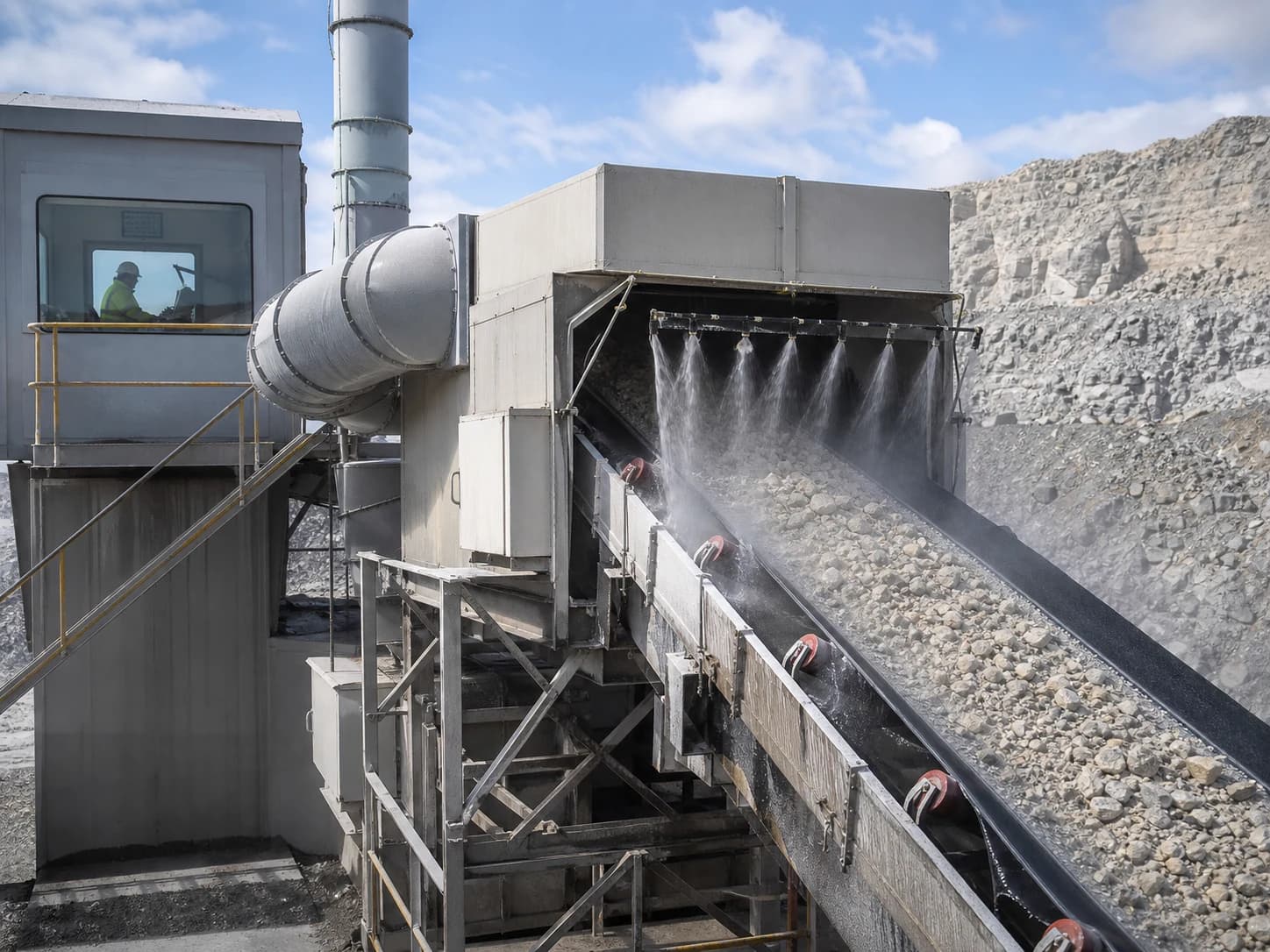
| Crushing and dumping | Enclose the crusher and dump; local exhaust; water sprays sized and located for the material; isolate the facility; keep workers out of the plume | Spray pattern; adequate water without process damage; hood capture; duct and fan condition; enclosure gaps; dust at doors and walkways |
| Screens and transfer points | Enclose transfer paths; minimize drop height; use skirts and belt sealing; local exhaust or wet suppression; maintain belt alignment | Negative pressure or capture; skirt wear; transfer-point leaks; plugged nozzles; damaged enclosure panels; spillage trend |
| Conveying and loadout | Covered conveyors; enclosed loading; telescoping or controlled loading chutes; local exhaust; vehicle separation | Material fall distance; wind effect; enclosure position; exhaust flow; visible escape points; worker position during loading |
| Enclosed cabs and control rooms | High-efficiency intake filtration; positive pressurization; sealed doors and windows; clean interior; suitable HVAC and recirculation filtration | Pressure differential; filter restriction; door and window seals; floor and cable penetrations; clean/dirty zoning; housekeeping method |
| Haul roads and stockpiles | Water or suitable surface treatment; speed and route control; road maintenance; minimize drop and wind exposure; keep pedestrians away | Application rate and coverage; road moisture; traffic speed; wind; visible dust across occupied areas; cab integrity |
| Cleanup and maintenance | Wet cleanup or suitable filtered vacuum; isolate dusty equipment; pre-clean before opening; local extraction for repair; planned access | No dry sweeping or compressed-air dust dispersal; isolation; filter and bag condition; containment; post-work cleanup and re-entry criteria |
Control combinations are usually stronger than one device. A spray can suppress generation, an enclosure can contain what remains, local exhaust can capture the cloud, and separation can keep people away. The correct combination depends on material behavior, climate, water availability, process quality, freezing conditions, equipment design, and secondary hazards.
Verify Controls Before Selecting Respiratory Protection
Engineering controls fail gradually as well as suddenly. A cab can look intact while a worn door seal destroys positive pressure. A spray header can have water pressure while several nozzles are plugged. A dust collector fan can run while the shroud leaks at the ground.
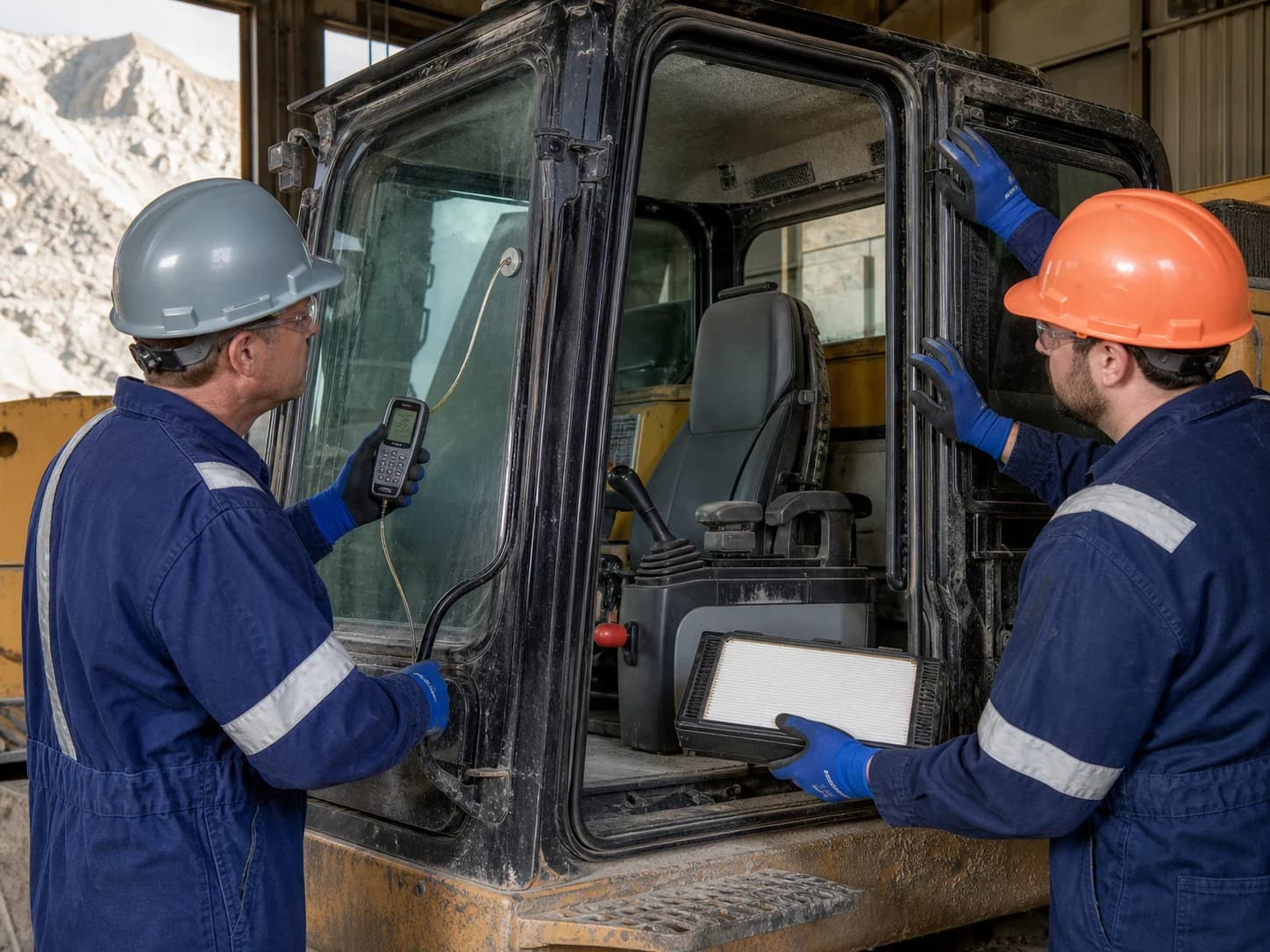
Create an operating verification sheet for each critical control:
- Performance indicator: airflow, pressure differential, water flow, fan status, filter restriction, nozzle pattern, enclosure position, or another measurable indicator.
- Acceptable range: use the equipment design, manufacturer instruction, commissioning result, or validated site value.
- Check frequency: pre-start, each shift, weekly, after maintenance, or continuously, based on failure risk.
- Responsible role: operator, maintenance, ventilation, industrial hygiene, or supervisor.
- Failure response: stop, restrict access, repair, use temporary protection if permitted, or move the worker.
- Verification evidence: inspection record, instrument reading, photo where appropriate, maintenance ticket, and follow-up exposure result.
After a material control change, repeat representative exposure monitoring under comparable production conditions. Do not calculate a respirator APF from a pre-control result if the intended workflow assumes the new controls are functioning; verify the residual exposure first.
Respirators remain important for temporary conditions, tasks where controls cannot fully protect the worker, control development, maintenance entry, or other situations allowed by the applicable standard. They are not a substitute for feasible engineering controls.
Calculate Required Protection and Choose an APF
An assigned protection factor is the workplace protection expected from a respirator class when the device is correctly selected, fitted, maintained, and used inside an effective program. It is not the filter efficiency printed on a package.
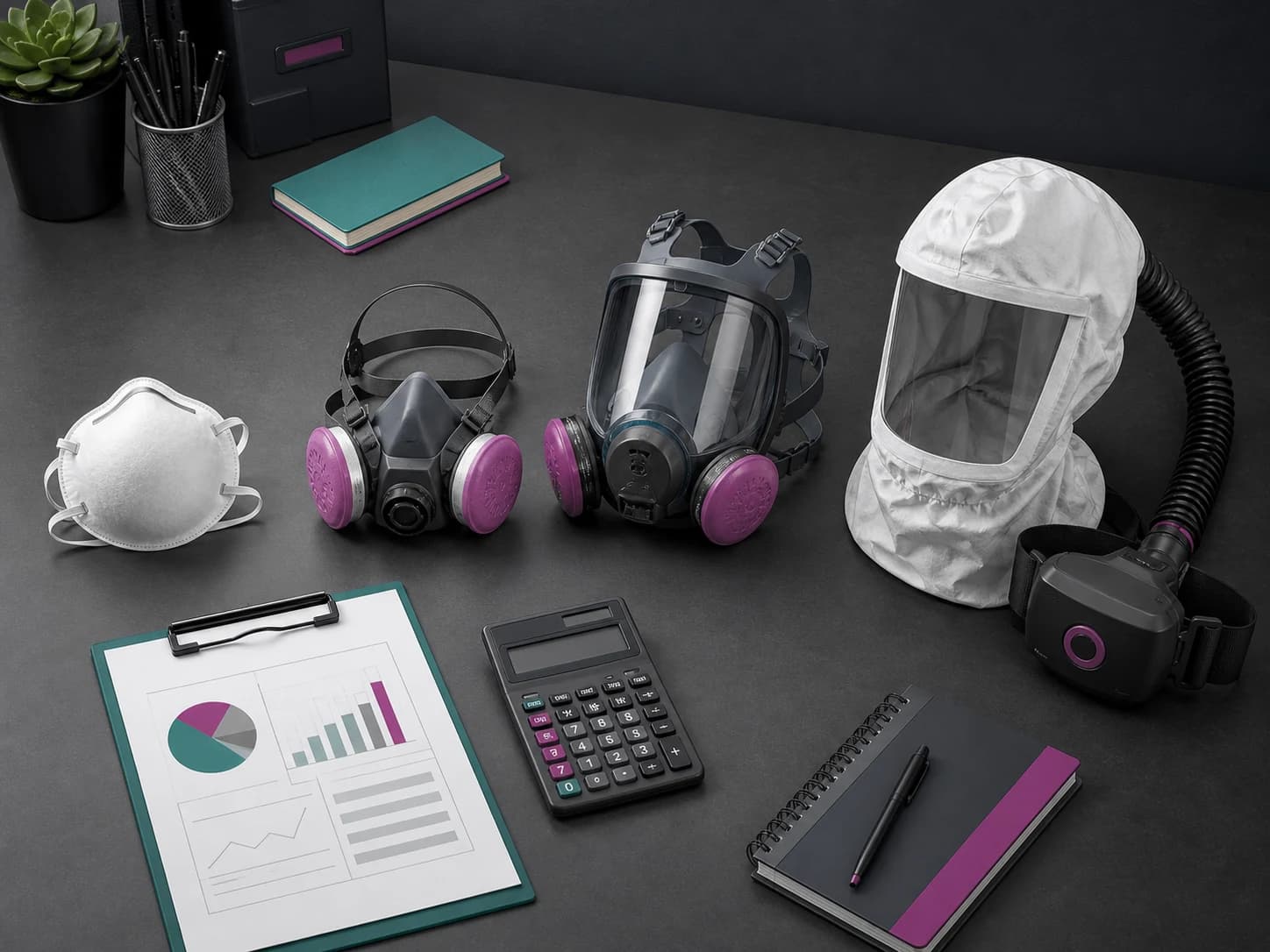
Use this calculation only after the hazard and post-control exposure are known:
Required protection factor = measured workplace concentration ÷ applicable exposure limit or program target
Example: if a representative post-control result is 180 µg/m³ and the program target used for the calculation is 50 µg/m³, the required protection factor is 3.6. The program must choose a respirator class with an APF at or above 3.6—normally the next available class, such as APF 10—then verify all approval, use, fit, and maximum-use limits. This is a calculation example, not a site-specific recommendation or a statement of the currently enforceable MNM limit.
The following APFs are the common reference values in OSHA 29 CFR 1910.134 Table 1. Mine operators must confirm the current MSHA rule and respiratory-program standard that applies before adopting them as the legal selection table.
| Respirator class | Common OSHA APF | Selection cautions |
|---|---|---|
| Tight-fitting half-mask air-purifying respirator, including filtering facepiece | 10 | Requires a successful fit test; filter or cartridge must be approved for the contaminant; facial hair cannot interfere with the seal |
| Tight-fitting full-face air-purifying respirator | 50 | APF depends on the required quantitative fit and complete program; eye protection benefit does not make the device suitable for every task |
| Loose-fitting PAPR hood or facepiece | 25 | Loose-fitting designs generally do not require fit testing, but the selected hood, blower, filter, battery, airflow, and use conditions must match the approval |
| Tight-fitting half-mask PAPR | 50 | Requires fit testing and seal checks; battery and airflow management are critical |
| Full-face PAPR or supplied-air configuration | Depends on design, mode, and manufacturer evidence | Do not assume APF 1,000; some configurations are limited to APF 25 without the required performance evidence |
Also calculate and respect the maximum use concentration (MUC), respirator approval limits, and any substance-specific ceiling. OSHA defines the MUC generally as APF × applicable exposure limit, but the lowest applicable limitation controls. Do not use that multiplication for an immediately dangerous to life or health (IDLH) atmosphere.
If the contaminant concentration is unknown, the atmosphere is oxygen deficient, or an IDLH condition is possible, do not select an ordinary air-purifying respirator from this table. The respiratory program must evaluate an appropriate atmosphere-supplying configuration, rescue capability, and entry procedure.
100-Series, HE, P100, Facepieces, and PAPRs
Filter class and respirator APF answer different questions:
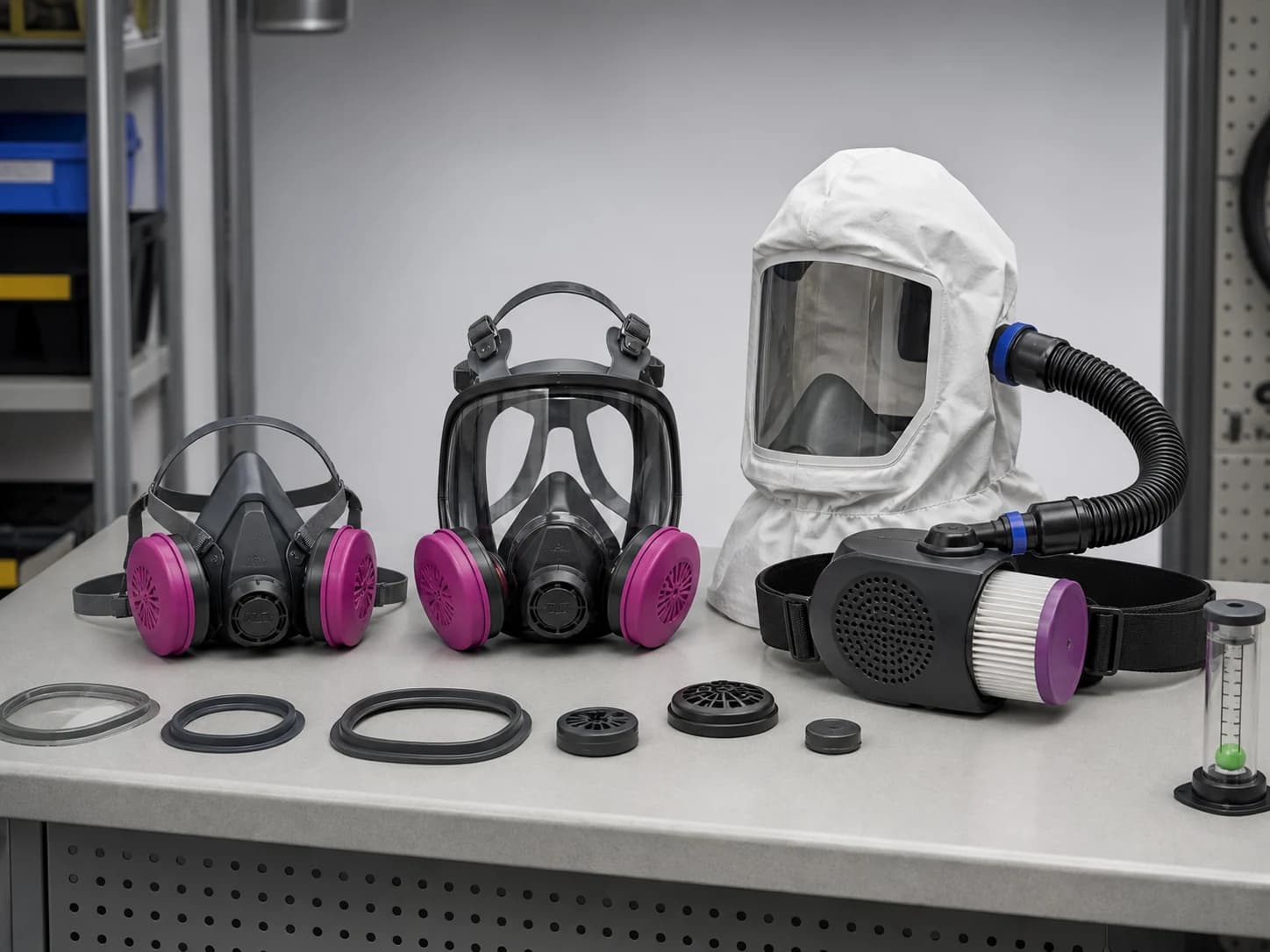
- 100-series or HE describes the particulate filtration element required by a specific approval or rule framework.
- P100 is one type of 100-series particulate filter and indicates a minimum filtration efficiency and oil-resistance category under the NIOSH classification.
- APF describes the expected protection of the complete respirator class within a functioning program.
- Fit factor is the numerical result from a fit test; it is not interchangeable with APF.
A half-mask fitted with P100 filters does not automatically become APF 50. Under the common OSHA table, a tight-fitting half-mask APR remains APF 10. A full-facepiece, PAPR, or supplied-air respirator may provide a higher APF only when the exact design, operating mode, fit test, manufacturer evidence, approval, and program conditions support it.
The published 30 CFR 60.14 text specifies a NIOSH-approved atmosphere-supplying respirator or an air-purifying respirator equipped with 100-series or HE particulate protection, plus a written program conforming to ASTM F3387-19 when respirators are used. Because the compliance deadlines are under judicial stay, confirm current applicability before stating that this is the enforceable MNM filter rule.
If an operation uses the Part 60 framework as its readiness specification, an N95 does not satisfy the stated 100-series or HE filter provision. That does not mean “buy P100” is a complete selection decision. The administrator must still confirm:
- The exact NIOSH approval and approved component combination
- Required APF and MUC
- Other contaminants such as diesel particulate, welding fume, gases, vapors, or oxygen deficiency
- Tight-fitting versus loose-fitting design
- Fit-test outcome and worker acceptance
- Work rate, temperature, communication, eyewear, helmet, and hearing-protection compatibility
- Cleaning, storage, filter replacement, battery, airflow, and spare-parts plan
For crushing and screening crews, check goggles and face shields against the selected respirator as a worn combination. The Quarry Eye and Face Protection guide covers fragment, dust and splash exposure, fit, and fogging checks.
Use the respiratory protection category and half-face respirator category only to build an initial supplier shortlist. Require approval documents and program review before accepting any model for mine use.
Fit Testing, Seal Checks, and Facial Hair
A fit test confirms whether a specific tight-fitting respirator make, model, style, and size can achieve an acceptable seal on a specific worker. It is not a generic certificate that transfers to a different facepiece.
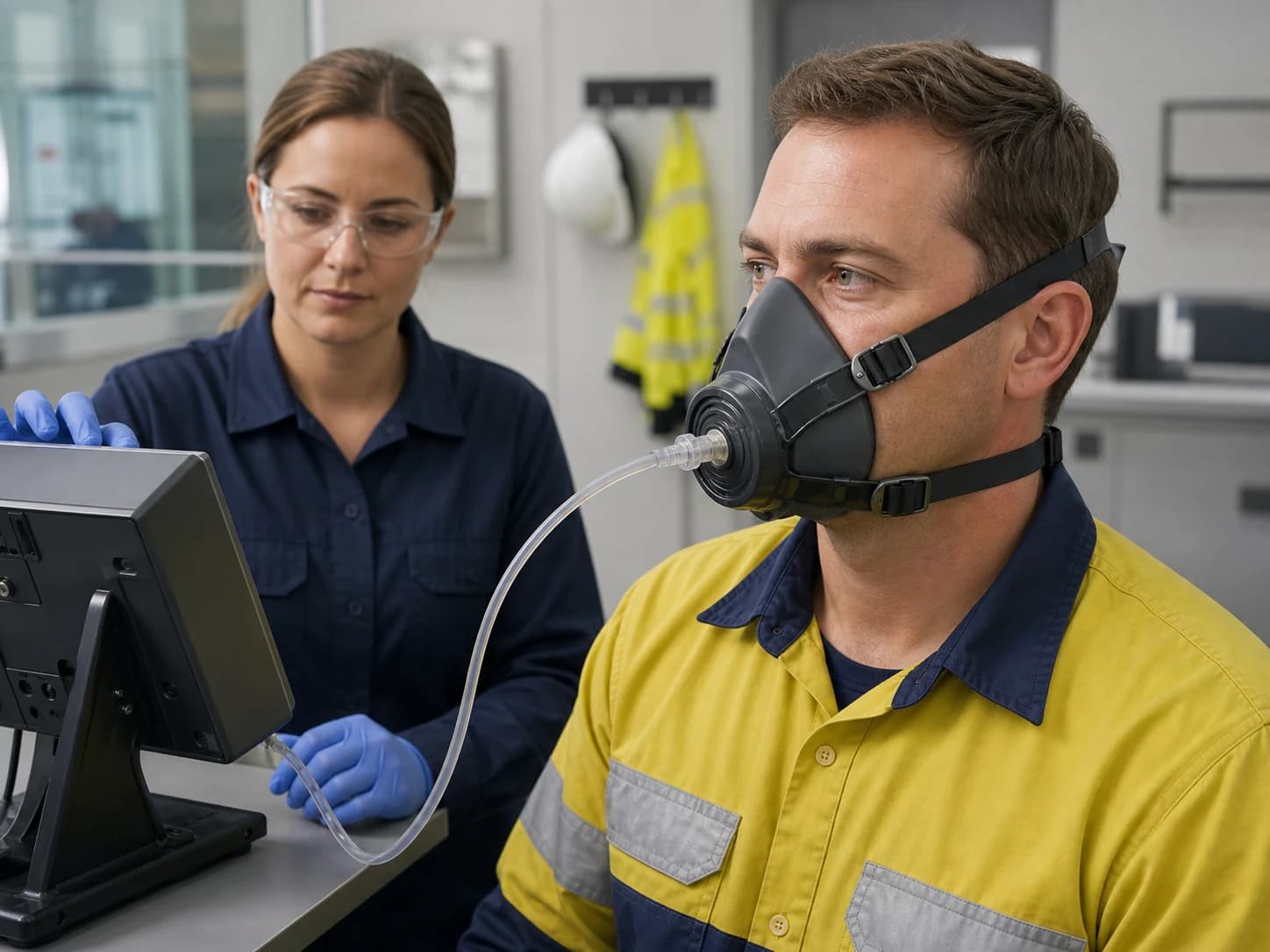
NIOSH fit-testing guidance distinguishes:
- Qualitative fit testing: a pass/fail test using the wearer's response to a test agent; use only where the program and required respirator protection permit it.
- Quantitative fit testing: an instrument measures leakage and produces a numerical fit factor; use it where the respirator class, required APF, or program requires quantitative testing.
For a tight-fitting respirator, build the issue process around these controls:
- Complete the required medical evaluation before fit testing and use.
- Give the worker a reasonable choice of suitable models and sizes.
- Fit test the exact make, model, style, and size that will be issued.
- Repeat testing at the frequency required by the applicable program and when the model, style, or size changes or facial/dental changes could affect fit. NIOSH and OSHA use annual testing as the general workplace benchmark.
- Keep facial hair, head coverings, eyewear, or straps out of the sealing surface and valve function.
- Perform a user seal check every time a tight-fitting respirator is donned, following the manufacturer instruction.
- Stop use and reassess when the worker cannot achieve a seal, experiences warning signs, or the respirator is damaged, contaminated, difficult to breathe through, or otherwise unsuitable.
A user seal check is not a fit test. It is a quick donning check performed by the wearer each time the respirator is put on. Passing a seal check does not replace periodic fit testing.
Loose-fitting hoods and helmets do not rely on a face seal and generally do not require fit testing. They can be an important option when a tight-fitting seal cannot be achieved, but the program must still address medical suitability, approval, airflow, battery duration, filter or cartridge, cleaning, storage, and the APF of the exact configuration.
Build the Written Respiratory Protection Program
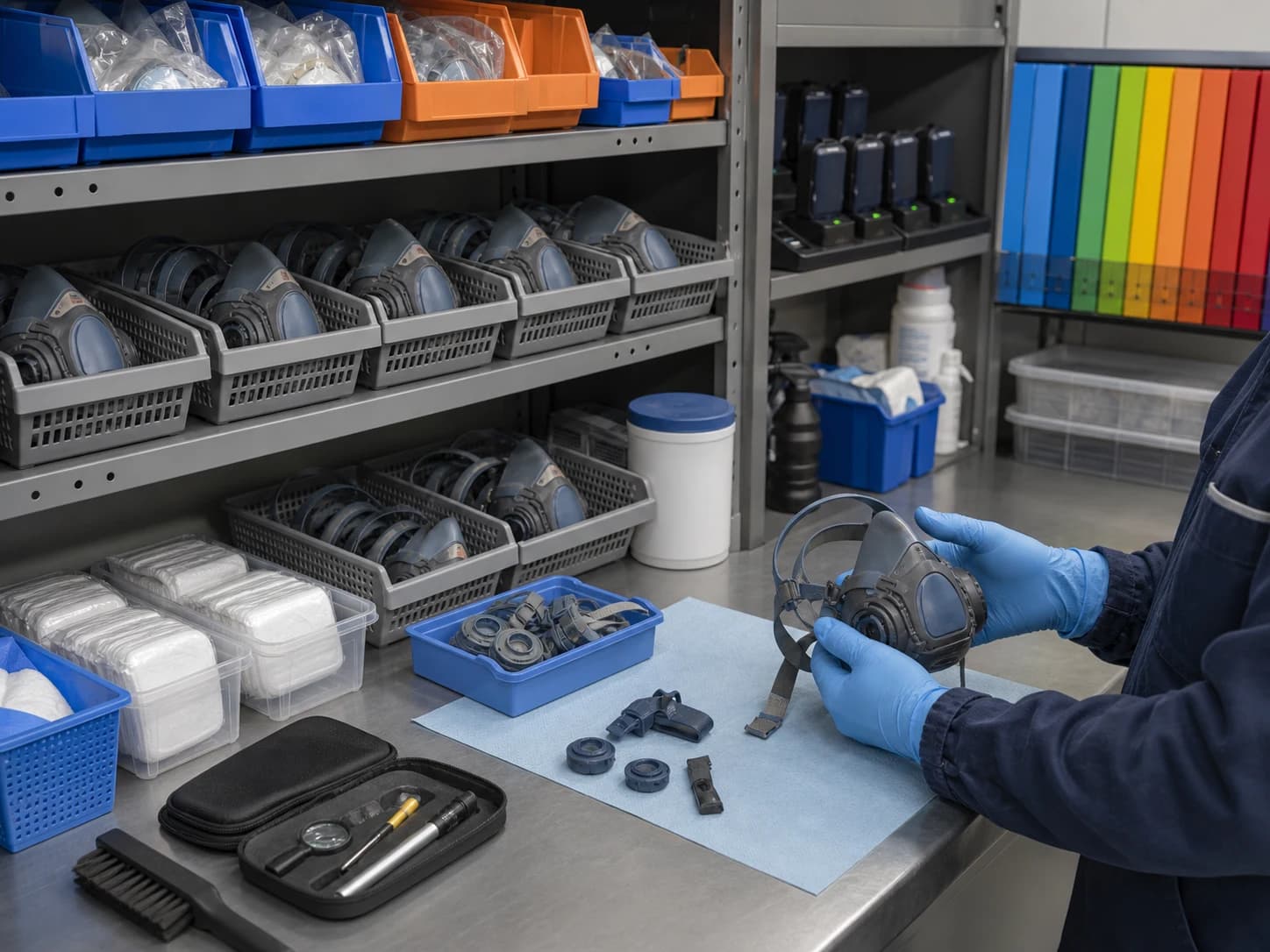
The published Part 60 framework identifies program administration, written standard operating procedures, medical evaluation, respirator selection, training, fit testing, maintenance, inspection, and storage. Turn those headings into a site-owned system with records and named responsibilities.
| Program element | Minimum operational question |
|---|---|
| Program administrator | Who has authority, competence, time, and records control to run the program? |
| Hazard evaluation | Which contaminants, concentrations, tasks, atmospheres, and foreseeable emergencies drive selection? |
| Selection basis | Which exposure result, limit, APF, MUC, NIOSH approval, manufacturer instruction, and compatibility review support the model? |
| Medical evaluation | Who provides the evaluation, how is confidentiality protected, and what restrictions or follow-up apply? |
| Fit testing | Which protocol, tester, equipment, pass criteria, model/size record, and retest trigger are used? |
| Training and use | Can the wearer explain limitations, donning, doffing, seal checks, warning signs, change-out, cleaning, and emergency actions? |
| Inspection and maintenance | What is checked before use, by whom, with what rejection criteria, repair parts, and service interval? |
| Cleaning and storage | How are reusable devices cleaned, dried, protected from contamination and deformation, and assigned to workers? |
| Filter, cartridge, and battery plan | What drives replacement or change-out, and how are adequate charged batteries and spares assured? |
| Program evaluation | How are worker feedback, observations, fit failures, control failures, exposure results, and model substitutions reviewed? |
Do not allow procurement substitutions by appearance alone. A different facepiece size, model, filter adapter, cartridge, blower, hose, or hood can change the approval, APF, fit-test status, compatibility, and spare-parts inventory.
Respirator procurement and change-control record
For each approved configuration, record:
- Manufacturer and exact model identifiers
- NIOSH approval number and the complete approved component configuration
- Respirator type, operating mode, APF, MUC basis, and contaminant limitations
- Filter or cartridge series, service-life or change-out basis, and storage limits
- Sizes and fit-test results by worker—not just a single “standard size”
- Compatible eyewear, head protection, hearing protection, communication, and other PPE
- Cleaning agent, replacement valves, straps, gaskets, batteries, chargers, flow indicators, and storage containers
- Inspection criteria, rejection rules, repair authorization, and record owner
- Approved substitutions and the event that requires new review or fit testing
Use the AI Quote Generator to structure a supplier request, then have the respiratory program administrator review the result before issue. Use the PPE Quantity Calculator only for quantities and replacement stock; it does not select the respirator.
Common Silica and Respirator Selection Mistakes
- Starting with a mask model instead of exposure data. The task name does not provide the concentration, other contaminants, or required APF.
- Treating visible dust as the exposure measurement. Respirable crystalline silica can remain hazardous when the cloud is not obvious.
- Using a pre-control sample as the final selection basis. Verify the residual exposure after the control is operating as intended.
- Confusing P100 efficiency with APF. The facepiece and complete respirator class determine APF; the filter class alone does not.
- Assuming a full-facepiece always has APF 50. The required quantitative fit and program conditions must be met.
- Using a PAPR APF without checking the exact configuration. Hood, facepiece, operating mode, and manufacturer performance evidence matter.
- Letting workers share tight-fitting facepieces without controlled cleaning and assignment. Hygiene, fit, component condition, and records suffer.
- Buying one size for the crew. Face shape and model design vary; a suitable choice of models and sizes supports fit.
- Replacing fit tests with seal checks. Both are needed for tight-fitting devices, but they serve different purposes.
- Ignoring other PPE. Eyewear temples, helmet straps, hoods, facial hair, and communication equipment can disrupt the seal.
- Writing the original 2026 date into procedures without checking the stay. Regulatory status must be verified at the time of use.
Supervisor and Buyer Review Checklist
Before approving a silica-control and respirator package, confirm:
- [ ] The task, material, work area, worker position, and shift are defined.
- [ ] Representative personal exposure data and the applicable limit or target are recorded.
- [ ] Engineering controls were selected, commissioned, maintained, and verified.
- [ ] Post-control exposure supports the required protection-factor calculation.
- [ ] APF and MUC calculations are documented and independently reviewed.
- [ ] Oxygen deficiency, IDLH conditions, other particulates, gases, and vapors were considered.
- [ ] The complete respirator configuration is NIOSH approved for the intended use.
- [ ] Current MSHA, Federal Register, state, and site requirements were checked.
- [ ] Medical evaluation, fit testing, training, seal checks, and facial-hair rules are addressed.
- [ ] Filters, cartridges, batteries, spares, cleaning, inspection, storage, and replacement are planned.
- [ ] Product substitutions trigger approval review and, where needed, a new fit test.
- [ ] A new sample or review is triggered by changes in process, material, production, controls, task, or shift.
Frequently Asked Questions
Is an N95 enough for silica dust in a mine or quarry?
Do not answer from the filter name alone. Selection depends on the current applicable rule, measured post-control exposure, required APF, other contaminants, fit, and the written program. The published Part 60 framework specifies 100-series or HE particulate protection, so an N95 does not meet that specific provision. Because the compliance deadlines are stayed, confirm current enforceability for the operation rather than treating the 2024 text as a universal active requirement.
Does a P100 filter give a half-mask an APF of 50?
No. P100 describes particulate filter performance and oil resistance. Under the common OSHA APF table, a tight-fitting half-mask APR has APF 10, while a properly qualified full-face APR has APF 50. The mine's applicable program and standard must control the final decision.
Can a respirator replace water sprays, ventilation, or enclosure?
Respiratory protection is not a substitute for feasible engineering controls. Use it only for conditions allowed by the applicable rule and program, such as temporary work during control development, necessary maintenance entry, or residual exposure that cannot be adequately controlled by other means.
Is fit testing required for every respirator?
Tight-fitting respirators require fit testing under modern respiratory programs. The worker must be tested on the exact make, model, style, and size issued. Loose-fitting PAPR hoods do not rely on a face seal and generally do not require fit testing, but the rest of the respiratory program still applies.
Is a user seal check the same as a fit test?
No. A fit test is a formal protocol performed initially and at required intervals or change triggers. A user seal check is performed every time a tight-fitting respirator is donned.
How often should silica exposure be sampled?
There is no useful one-frequency answer for every mine. Follow the current applicable rule and sample often enough to represent exposure, respond to results, verify controls, and reassess after changes in material, process, equipment, production, work practice, shift, or control performance.
Can a worker with facial hair use a respirator?
Facial hair must not cross or interfere with a tight-fitting face seal or valve. Where a tight-fitting device cannot be used, the administrator may evaluate a suitable loose-fitting configuration within the complete program and approval limitations.
Related Mining and Respiratory Protection Guides
- Mining Safety Equipment and PPE for Quarry Operations
- Mining PPE Checklist by Task
- Open-Pit vs Underground Mining PPE: Key Differences
- Mining & Quarry Safety Boots Buyer Guide
- Respiratory protection product categories
- Half-face respirator category
- Construction Respiratory Protection Guide for OSHA-regulated construction work rather than mine operations
Primary sources reviewed: MSHA's 2024 final silica rule and Part 60 text; the April 6, 2026 Federal Register notice delaying the metal/nonmetal conforming amendments indefinitely pending judicial review; current 30 CFR 56.5001, 56.5005, 57.5001, and 57.5005; the NIOSH Dust Control Handbook for Industrial Minerals Mining and Processing; NIOSH respirator selection, fit-testing, and user-seal-check guidance; and OSHA 29 CFR 1910.134 APF and MUC definitions. Verify current jurisdiction-specific requirements before use.
Related PPE
Source the PPE covered in this guide
Move from research to a buyer shortlist with the matching solution page, category paths, selected PPE options, and RFQ next steps.