Buyer next step
Turn this guide into a sourced PPE shortlist with standards, quantities, and role-based kit notes.
Planning tools
Use these tools before moving from this guide into quantities, sizing, labels, or RFQ planning.
Demolition and concrete cutting create a different PPE problem from ordinary general construction work. A crew may start the day cutting slab openings, move into jackhammering, handle sharp rubble, work around loaders, and finish with dusty cleanup. Each step can change the respiratory, eye, hearing, hand, footwear, visibility, and fall-protection requirements.
This checklist is written for supervisors, safety managers, procurement teams, and distributors who need a practical field routine. It does not replace a competent-person review, engineering controls, a silica exposure control plan, or a demolition method statement. It helps turn those controls into the PPE that workers actually wear before the task starts.
For the full buying and system design page, use PPE for Demolition and Concrete Cutting Work. For the broader site framework, use the complete PPE solution for construction sites.
Buyer Quick Answer For Demolition And Concrete Cutting
For RFQs, do not ask for a generic demolition PPE kit. Ask for a kit that names the task, dust control method, respirator type, eye and face protection, hearing protection, glove type, footwear rating, and replacement stock.
| Exposure | Minimum buyer question | PPE shortlist direction |
|---|---|---|
| Silica dust | Is the task cutting, grinding, drilling, jackhammering, sweeping, or debris handling concrete or masonry? | Use wet methods or dust collection first, then match NIOSH-approved respirators and replacement filters to the exposure plan. |
| Respirator fit | Are tight-fitting respirators required, and has fit testing been planned? | Do not bulk-buy one facepiece size. Include size range, fit-test schedule, cartridges or filters, storage bags, and training notes. |
| Eye and face impact | Will workers face flying chips, dust clouds, slurry, sparks, or splash? | Pair sealed goggles or wraparound glasses with face shields where impact or splash exposure goes beyond basic eyewear. |
| Hearing | Are saws, breakers, chippers, crushers, or loaders operating near the crew? | Specify earplugs or earmuffs by noise exposure, helmet compatibility, communication needs, and replacement stock. |
This buyer shortcut links the checklist to the respiratory protection guide, eye and face protection guide, hearing protection guide, and the bulk construction PPE procurement guide.
Quick PPE Checklist Before Demolition Starts
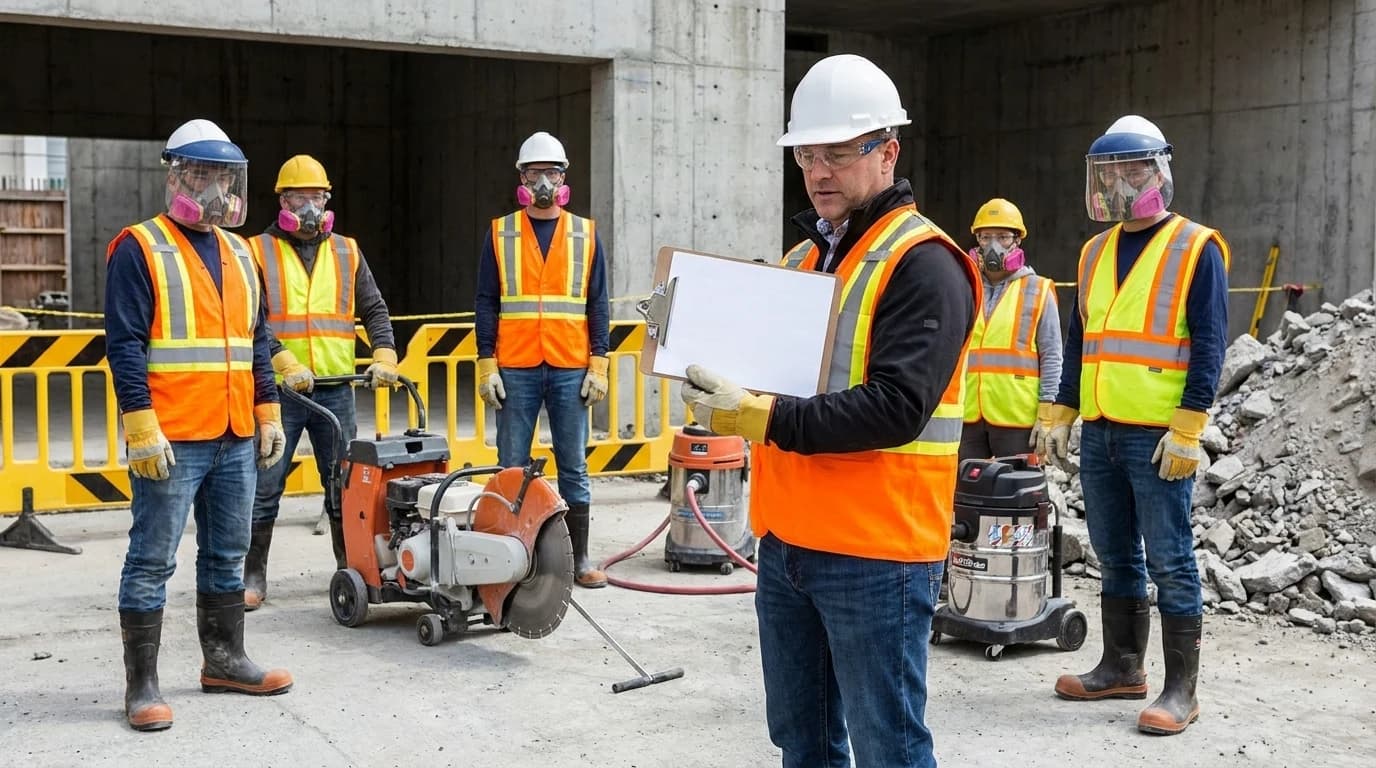
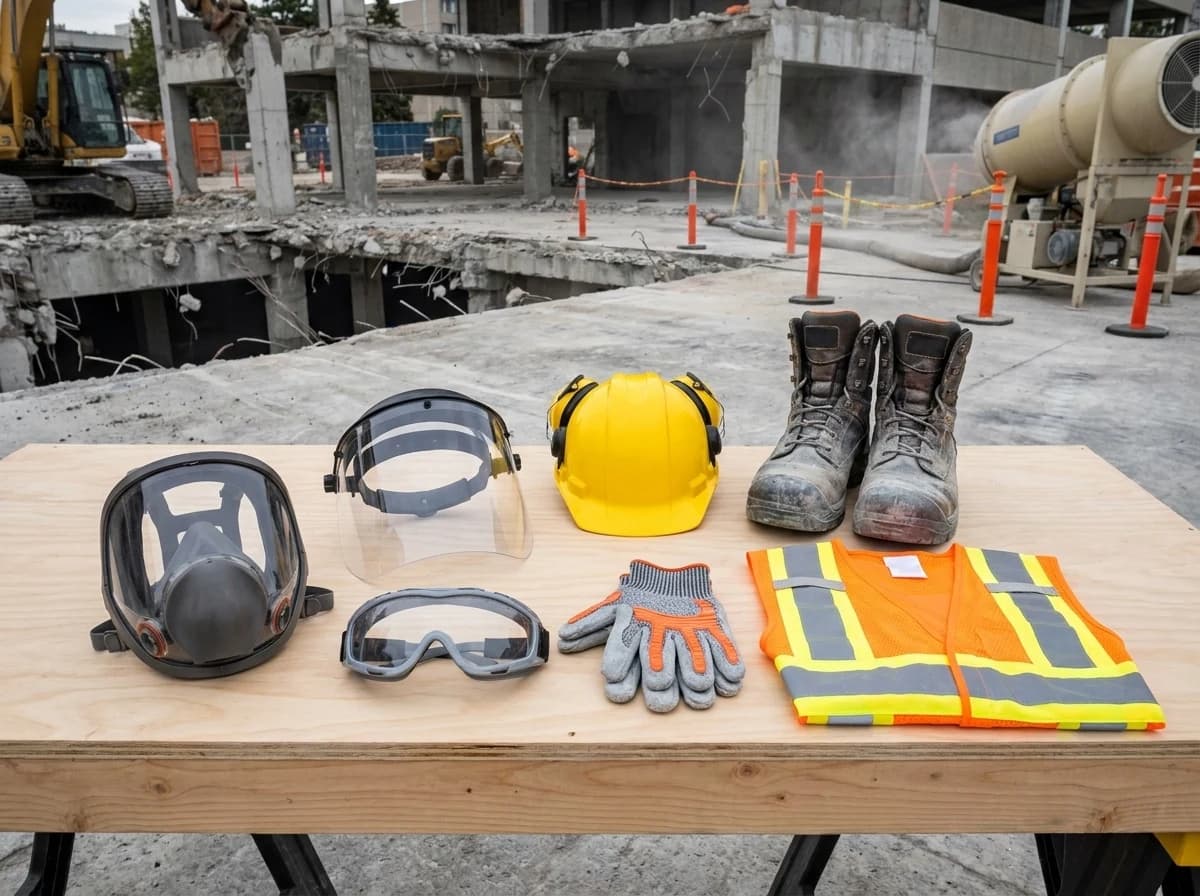
Use this short version before the crew enters the work area:
- Has the demolition area been surveyed for structural, electrical, asbestos, lead, silica, and other legacy hazards?
- Is the task covered by a written method statement, silica control plan, or exposure assessment?
- Are water delivery, dust collection, vacuum extraction, ventilation, or isolation controls in place before respirators are issued?
- Is respiratory protection selected for the task, duration, control method, and wearer fit?
- Are goggles, safety glasses, and face shields selected for flying fragments, dust, slurry, splash, and cutting sparks?
- Is hearing protection available and compatible with hard hats, helmets, respirators, goggles, and face shields?
- Are gloves selected by task: cutting, breaking, rebar handling, wet slurry, debris sorting, vibration, or chemical contact?
- Are boots selected for toe impact, puncture, slip, wet ground, ankle support, and metatarsal exposure?
- Is head protection suitable for overhead impact, lateral impact, retention, and accessory compatibility?
- Is high-visibility clothing appropriate for loaders, dumpers, spotters, traffic routes, dust clouds, and low light?
- Are fall protection, edge protection, hole covers, scaffold controls, or tool tethering required?
- Is damaged PPE removed from service before work starts?
- Are spare respirator filters, eye protection, gloves, earplugs, and disposable items available at the point of use?
- Does the supervisor know who is responsible for stopping work when dust, noise, visibility, or structural conditions change?
If the answer to any item is unclear, the task is not ready for PPE issue. The hazard control plan needs to be clarified first.
Why Demolition PPE Needs Its Own Checklist
General construction PPE checklists usually start with hard hat, boots, gloves, glasses, and hi-vis clothing. That is useful, but it is not enough for demolition and concrete cutting.
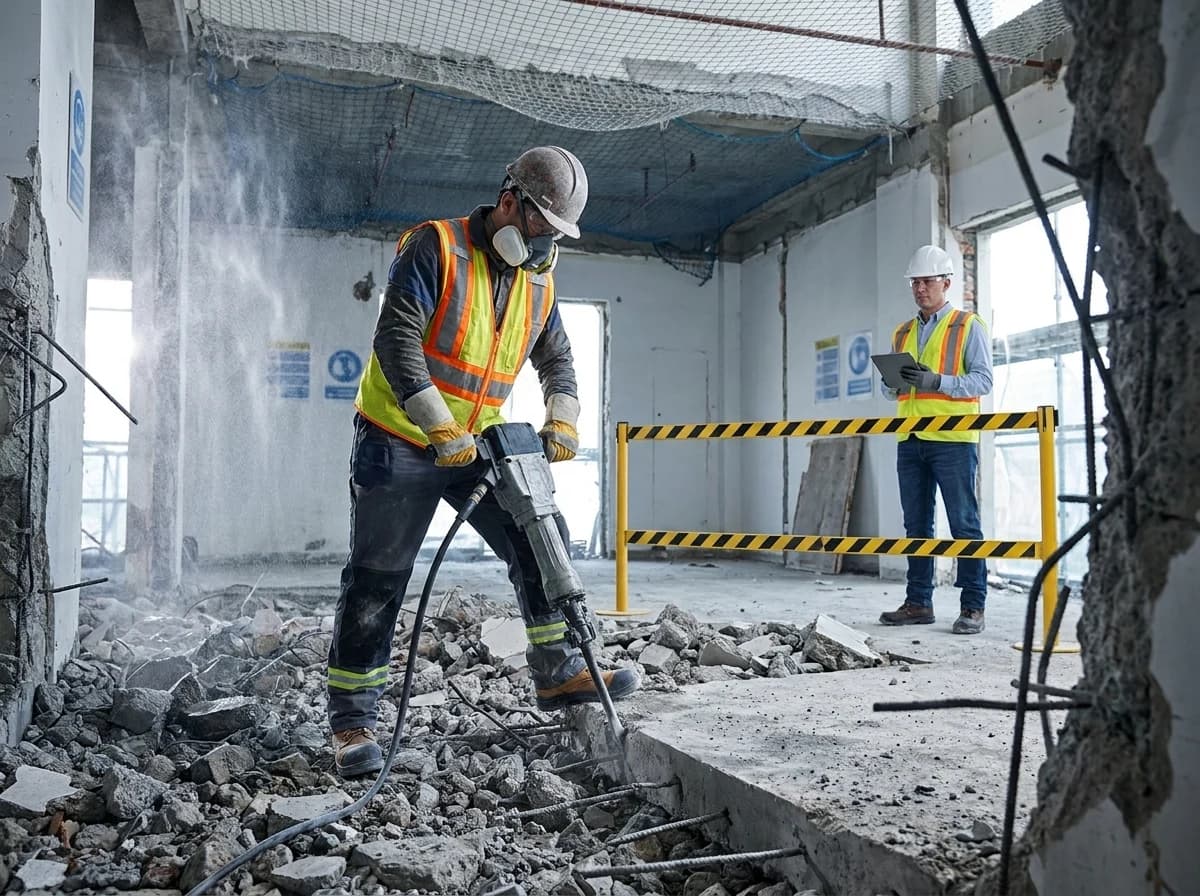
Demolition changes the jobsite while people are working inside it. A stable wall becomes loose material. A clean floor becomes sharp debris. A visible work zone becomes a dust cloud. A quiet preparation task becomes a high-noise cutting task. A basic glove or safety glass that is acceptable for general labor may become the wrong PPE once the task shifts to concrete cutting, chipping, grinding, or debris loading.
Concrete cutting adds its own problem: respirable crystalline silica. Silica control is not only a respirator decision. OSHA's construction silica standard is built around exposure limits, engineering controls, work practices, respiratory protection, medical surveillance, and written exposure control planning. PPE has to fit into that system.
That is why this page separates the checklist by hazard and task rather than giving one generic "demolition kit."
Section 1: Pre-Demolition Hazard Review
Before PPE is issued, the work area has to be understood. PPE cannot fix a missing demolition survey, unknown asbestos, uncontrolled power, or an unstable structure.
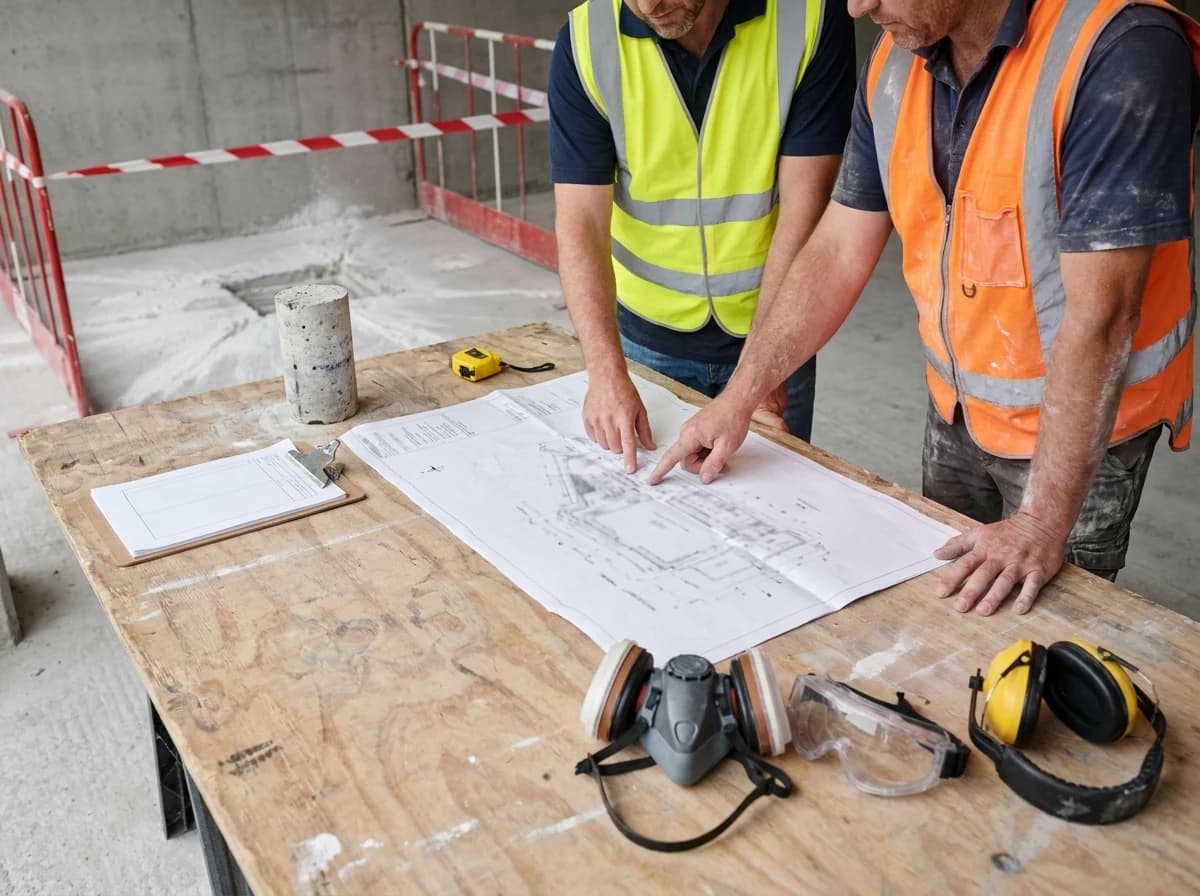
Check these items before demolition starts:
- Has an engineering survey or equivalent review identified the condition of framing, floors, walls, roofs, utilities, and adjacent structures?
- Are energized electrical systems isolated, locked out, or otherwise controlled?
- Has the work area been checked for asbestos-containing materials, lead paint, chemical residues, mold, or contaminated dust?
- Are silica-generating tasks identified: cutting, grinding, drilling, chipping, breaking, sweeping, or debris handling?
- Are water, dust collection, HEPA vacuuming, local exhaust, or isolation controls available and working?
- Are work zones, exclusion zones, drop zones, and equipment routes marked?
- Are rescue routes, emergency lighting, first aid access, and communication methods clear?
The PPE checklist should be built after this review. If the hazards are unknown, the PPE list is guessing.
Section 2: Respiratory Protection Checklist
Respiratory protection is one of the highest-risk parts of demolition PPE because it is easy to under-specify and easy to wear incorrectly.
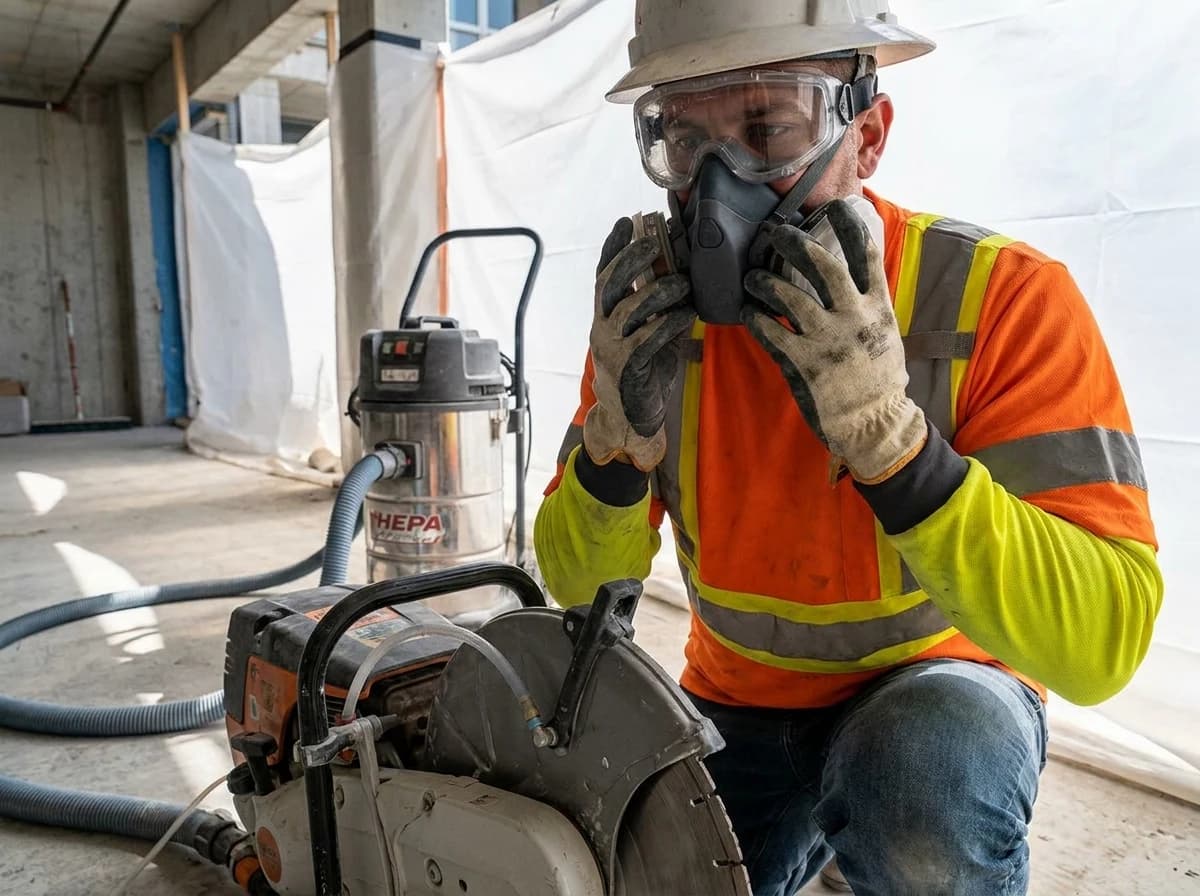
Use the construction respiratory protection guide for detailed respirator selection. For demolition and concrete cutting, check:
- Is the airborne hazard known: silica dust, nuisance dust, asbestos, lead, coating dust, fumes, mold, or mixed contaminants?
- Does the task follow OSHA 1926.1153 Table 1 controls, or does the employer need exposure assessment data?
- Are wet methods, dust collection, HEPA vacuuming, ventilation, or isolation controls operating before work starts?
- Is the respirator type appropriate: disposable filtering facepiece, reusable half-face, full-face, or PAPR?
- Are filters or cartridges appropriate for the hazard?
- Are tight-fitting respirators fit tested?
- Are workers medically cleared where required by the respiratory protection program?
- Are respirators clean, stored correctly, and assigned or sanitized properly?
- Are spare filters, cartridges, wipes, bags, and replacement masks available?
- Does the respirator work with goggles, face shields, hard hats, helmets, hearing protection, and facial hair policy?
Do not rely on "dust mask available" as a respiratory protection plan. Concrete cutting and demolition dust can require a controlled program, not a loose box of masks.
Section 3: Eye and Face Protection Checklist
Eye injuries in demolition come from flying concrete, steel fragments, nails, dust, slurry, splash, grinding sparks, and overhead debris. Safety glasses alone may not be enough.
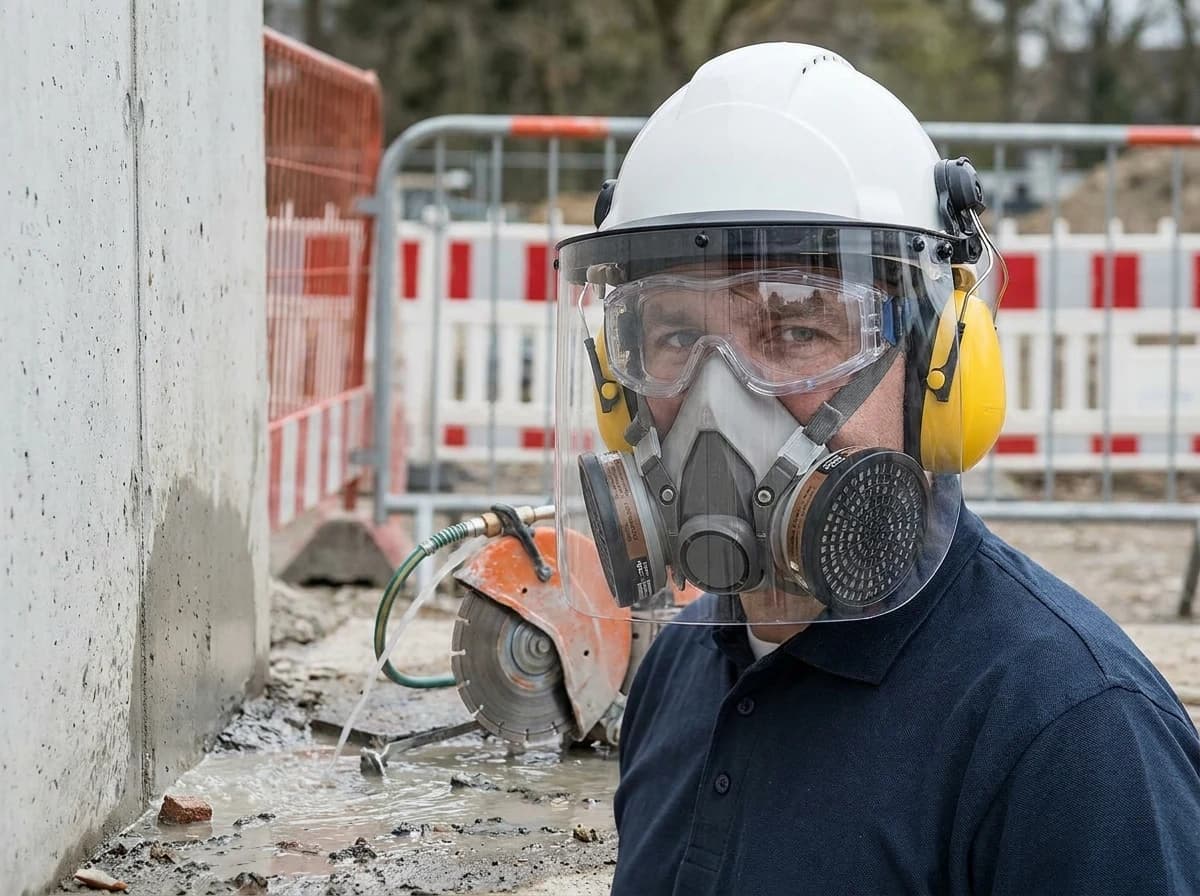
Use the construction eye and face protection guide for detailed selection. Before work starts, check:
- Are safety glasses impact-rated and fitted with side protection?
- Are sealed goggles needed for dust, slurry, or fine particles?
- Is a face shield needed over glasses or goggles for chipping, grinding, breaking, or concrete cutting?
- Is welding or hot-work face protection needed for cutting rebar, metal brackets, or embedded steel?
- Does the eye/face protection stay in place with the selected respirator?
- Does the face shield mount correctly to the helmet or hard hat?
- Are lenses scratched, fogged, cracked, loose, or contaminated?
- Are anti-fog options needed for wet cutting, respirator use, humid work, or enclosed spaces?
- Is replacement eyewear available when lenses become scratched by dust?
Face shields should not be treated as a universal replacement for goggles or safety glasses. In many impact tasks, a shield is an added layer over primary eye protection.
Section 4: Hearing Protection Checklist
Demolition and concrete cutting often involve saws, breakers, hammer drills, grinders, loaders, excavator attachments, compressors, and impact tools. Noise exposure can change quickly as equipment starts and stops.
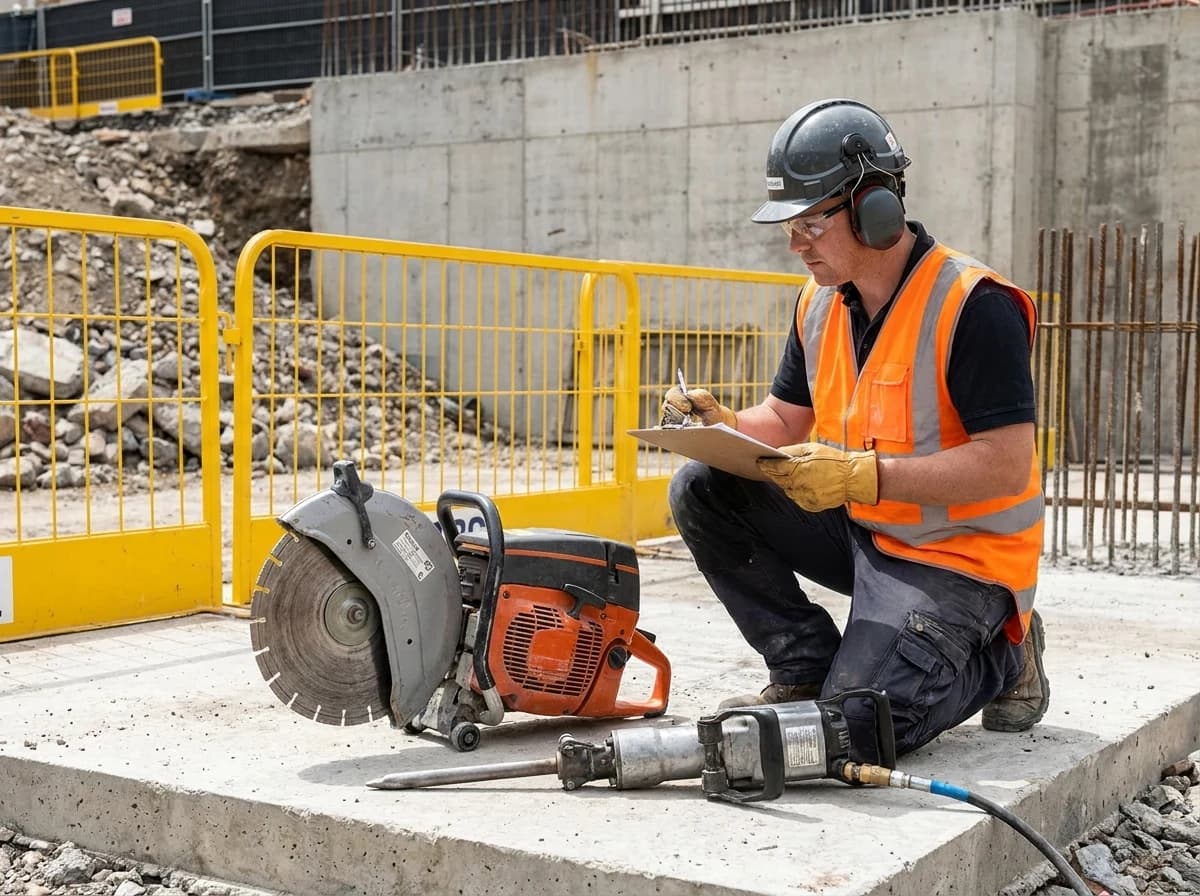
Use the hearing protection for construction workers guide for deeper selection. Check:
- Which tools or equipment create the highest noise exposure?
- Are workers exposed for short bursts or long continuous periods?
- Are earplugs, earmuffs, helmet-mounted muffs, or dual protection needed?
- Does the selected protector fit with helmets, safety glasses, respirators, and face shields?
- Can workers still hear spotters, alarms, vehicles, and instructions?
- Are disposable earplugs available at the work zone, not only in the office?
- Are earmuff cushions clean, soft, and sealing correctly?
- Are workers trained to insert plugs correctly?
- Is there a replacement plan for dirty plugs and damaged muffs?
The most common mistake is buying a high-rated hearing protector that workers remove because it interferes with the rest of their PPE or with communication.
Section 5: Hand Protection Checklist
Demolition gloves are not one category. The glove for wet cutting is not the glove for rebar handling. The glove for a breaker operator is not automatically the glove for a cleanup worker.
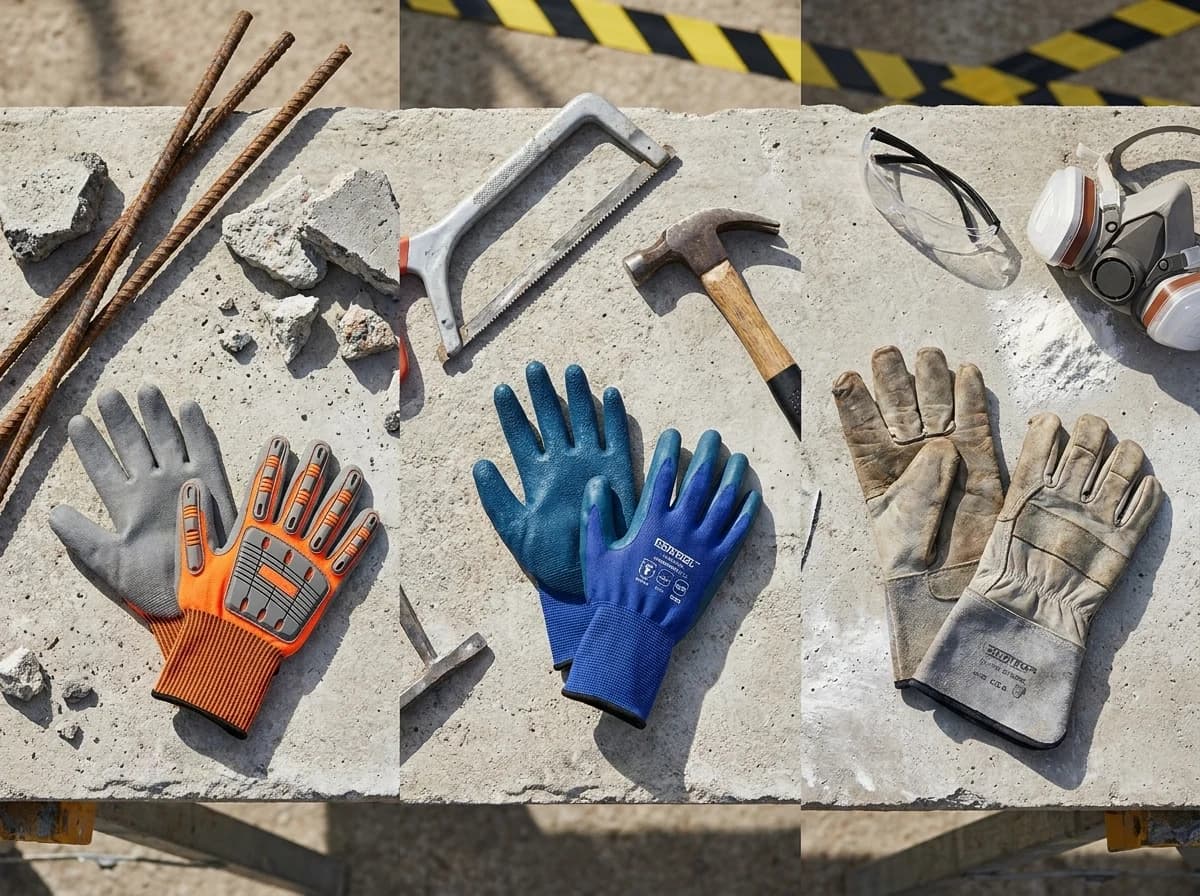
Use the construction gloves selection guide for detailed glove comparison. Check:
- Is the task mainly cutting, breaking, grinding, pulling, sorting, loading, or cleanup?
- Is cut resistance needed for rebar, wire, sheet metal, glass, tile, or sharp concrete edges?
- Is wet grip needed for slurry, water-fed saws, or washdown?
- Is vibration exposure present from breakers, jackhammers, compactors, or saws?
- Is impact protection needed for back-of-hand strikes and pinch points?
- Is chemical resistance needed for coatings, sealants, cleaners, wet cement, or contaminated materials?
- Does the glove allow enough dexterity for saw controls, connectors, fasteners, and tool handling?
- Are gloves removed from service when cut, soaked, chemically contaminated, or worn through?
If a crew is doing several demolition tasks in one shift, they may need several glove types available, not one "demolition glove."
Section 6: Foot Protection Checklist
Demolition floors are hostile to footwear. Workers step on nails, rebar, screws, glass, concrete chunks, wet slurry, uneven slabs, and unstable debris. Dropped material can strike the top of the foot, not only the toe.
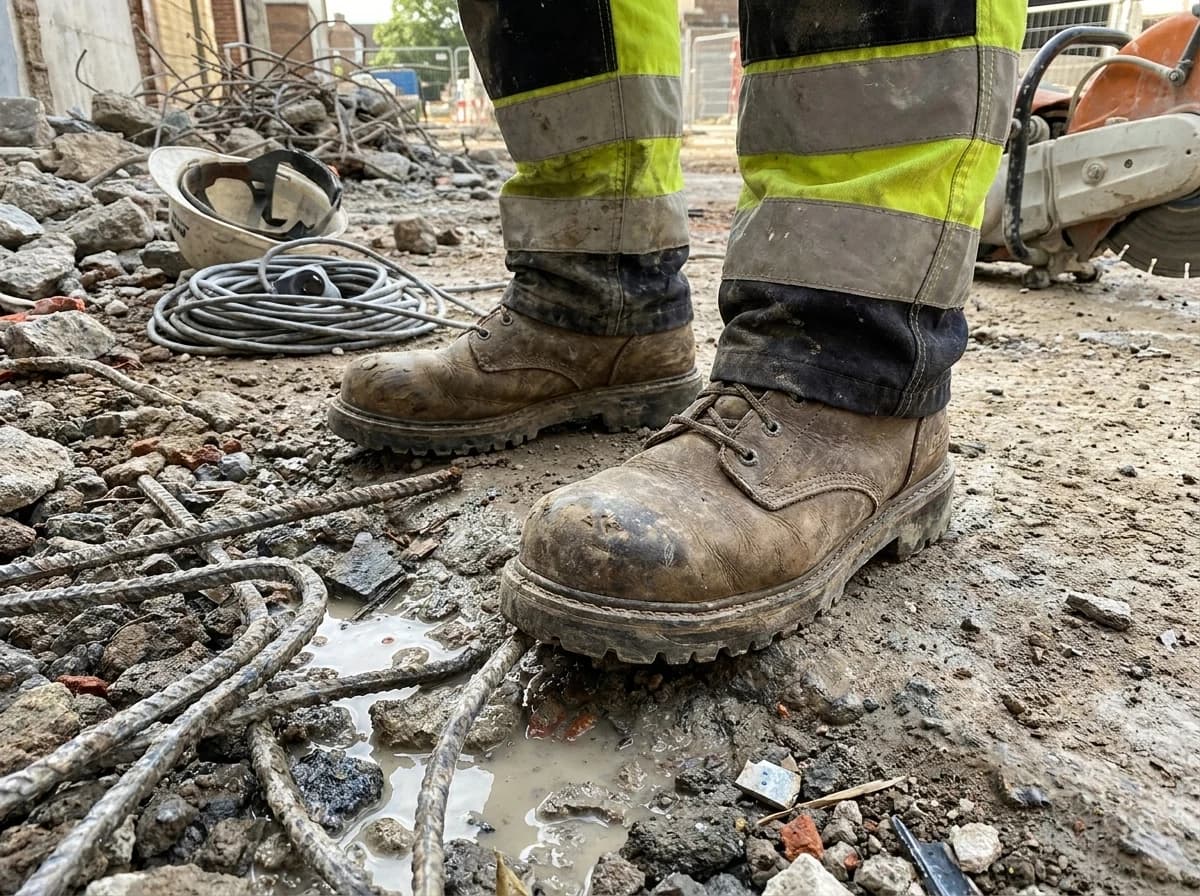
Use the construction safety footwear guide for ASTM and EN marking details. Check:
- Is toe protection required for falling concrete, tools, blocks, and equipment parts?
- Is puncture resistance needed for nails, rebar, screws, wire, or sharp debris?
- Is slip resistance needed for wet cutting, slurry, mud, dust, or smooth slab work?
- Is metatarsal protection needed for dropped chunks or heavy debris?
- Is ankle support needed for unstable rubble, uneven floors, and debris piles?
- Is waterproofing needed for wet saw work or washdown?
- Is electrical hazard protection relevant near temporary power or damaged electrical systems?
- Are soles worn smooth or damaged by embedded sharp objects?
- Are boots properly fitted for all workers, including smaller and wider sizes?
Footwear is a major compliance and productivity issue. A heavy boot that workers cannot wear comfortably for a full shift is not a good specification.
Section 7: Head Protection, Hi-Vis and Body Protection Checklist
Demolition exposes workers to overhead impact, side impact, falling debris, dust clouds, equipment movement, and reduced visibility.
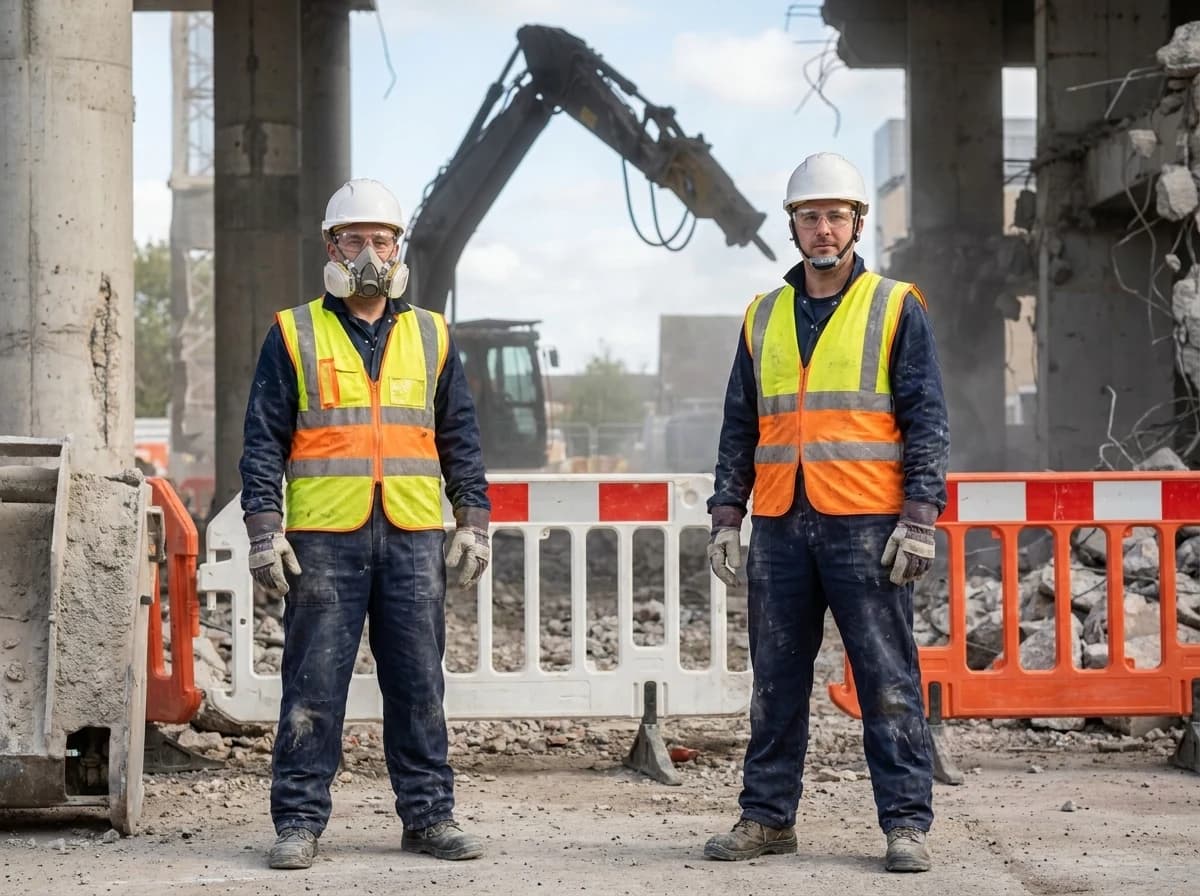
Check these items:
- Is a hard hat or safety helmet required for overhead hazards?
- Is Type II or helmet-style head protection worth considering for lateral impact, climbing, or unstable structures?
- Is chin-strap retention needed for elevated demolition, wind, leaning, or awkward access?
- Does head protection work with face shields, earmuffs, goggles, respirators, lamps, and communication gear?
- Is high-visibility clothing needed for loaders, trucks, excavators, spotters, road interfaces, or low light?
- Does dust or slurry reduce garment visibility?
- Does rainwear, disposable clothing, or harness equipment cover reflective material?
- Are coveralls, disposable suits, or washable clothing needed to control dust transfer?
- Is FR or hot-work clothing needed for cutting embedded steel or hot work?
Use the safety helmet vs hard hat guide and high-visibility clothing guide when head protection or visibility is a major exposure.
Section 8: Fall Protection and Access Checklist
Demolition creates openings. A worker may cut a slab, remove guardrails, expose a roof edge, work from a scaffold, or stand on a partly demolished structure.
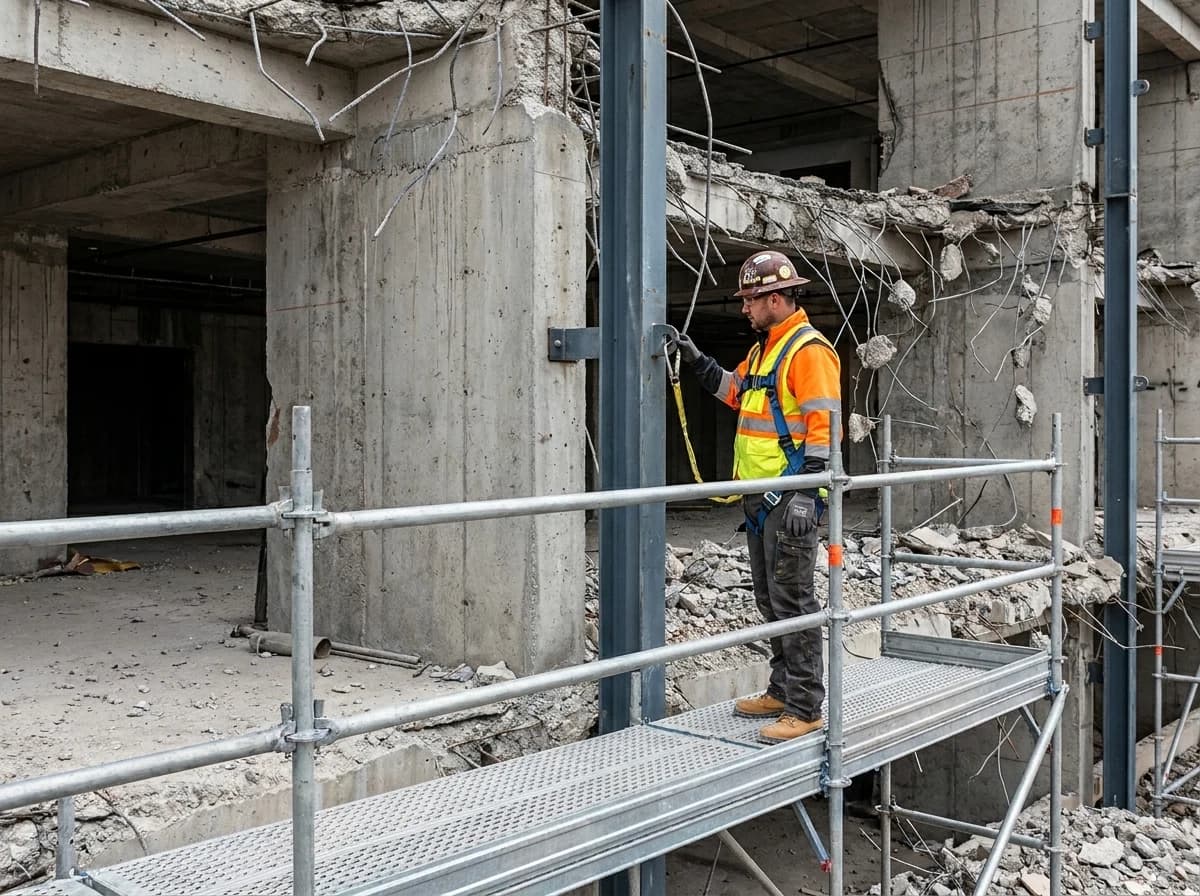
Use fall protection PPE for construction sites when height exposure is present. Check:
- Are floor openings, roof edges, wall openings, shafts, and unprotected sides identified?
- Are covers, guardrails, warning lines, or other controls in place?
- Is a harness, lanyard, SRL, anchor, or lifeline required?
- Is the anchor point suitable for the demolition task and movement path?
- Is the rescue plan realistic after a fall?
- Do gloves allow workers to operate connectors safely?
- Does the helmet stay in place during climbing, leaning, or fall exposure?
- Are tools tethered where dropped tools can injure workers below?
- Does dust, slurry, or debris make access surfaces slippery?
Fall protection should not be added at the end of the PPE conversation. It changes footwear, helmet, glove, tool, and rescue decisions.
Task-Based Demolition PPE Matrix
| Task | Respiratory | Eye and face | Hearing | Gloves | Footwear | Other PPE |
|---|---|---|---|---|---|---|
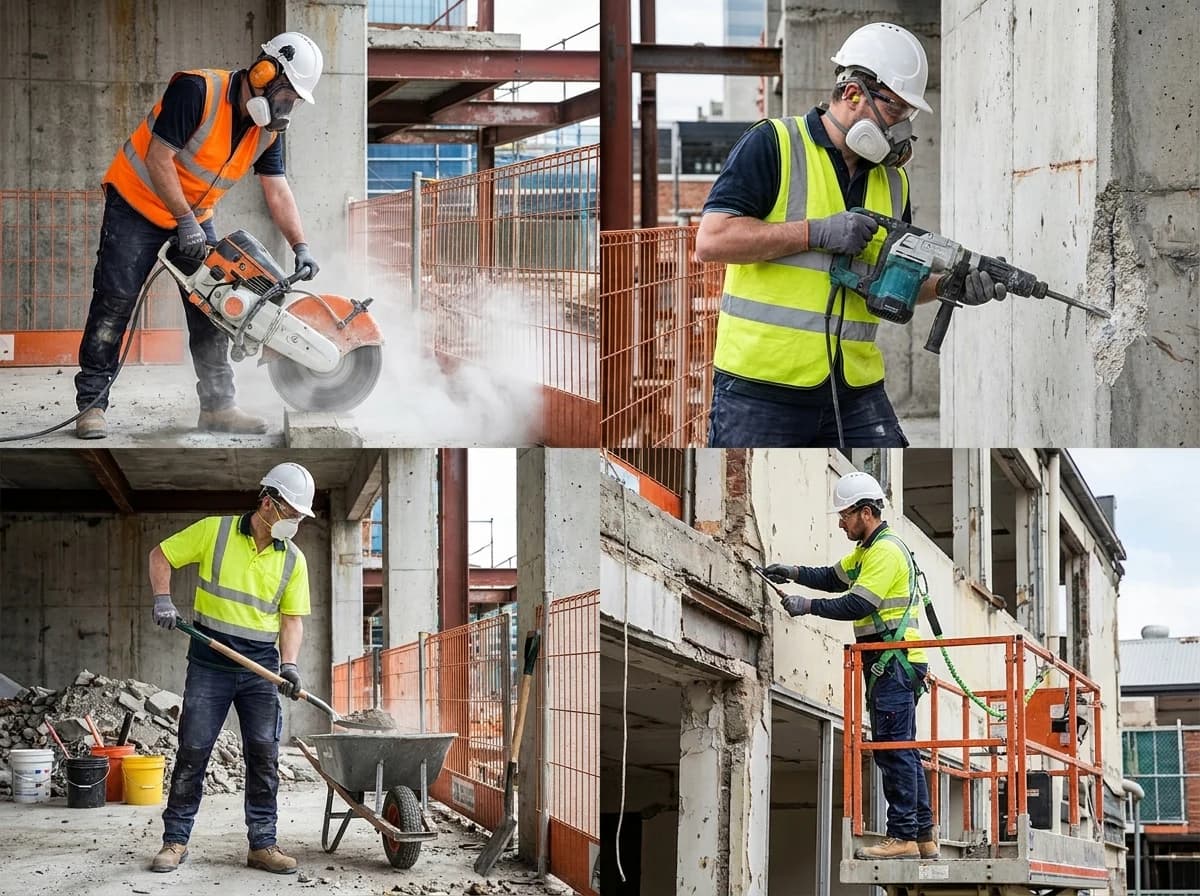
| Handheld concrete saw cutting | Selected by silica control method and exposure | Sealed goggles plus face shield where fragments or slurry are present | Earplugs, earmuffs, or dual protection by exposure | Wet-grip cut-resistant gloves | Slip-resistant toe and puncture protection | Hi-vis or waterproof layer where needed |
| Jackhammering or chipping | Respirator selected for dust and duration | Impact goggles plus face shield | High-level hearing protection | Anti-vibration or grip gloves | Metatarsal or heavy-duty boots where chunks can drop | Helmet, exclusion zone, tool inspection |
| Interior strip-out | Respirator based on dust and legacy-material survey | Safety glasses or goggles | Task-based | Cut-resistant gloves | Puncture-resistant boots | Lighting, head protection, dust-control clothing |
| Debris sorting and loading | Respirator where residual dust remains | Safety glasses or goggles | Equipment-dependent | Cut and puncture-resistant gloves | Puncture, toe, slip, and ankle support | Hi-vis for loader and truck interface |
| Mechanical demolition spotter | Dust protection by zone and exposure | Safety glasses or goggles | Equipment-dependent | General handling gloves | Safety boots | Hi-vis, hard hat or helmet, communication |
| Elevated demolition | Task-based | Task-based | Task-based | Connector-compatible gloves | Anti-slip boots | Fall protection, helmet retention, tool tethering |
This matrix is a starting point. The actual checklist should follow the site method statement and competent-person review.
Procurement Checklist for Demolition PPE
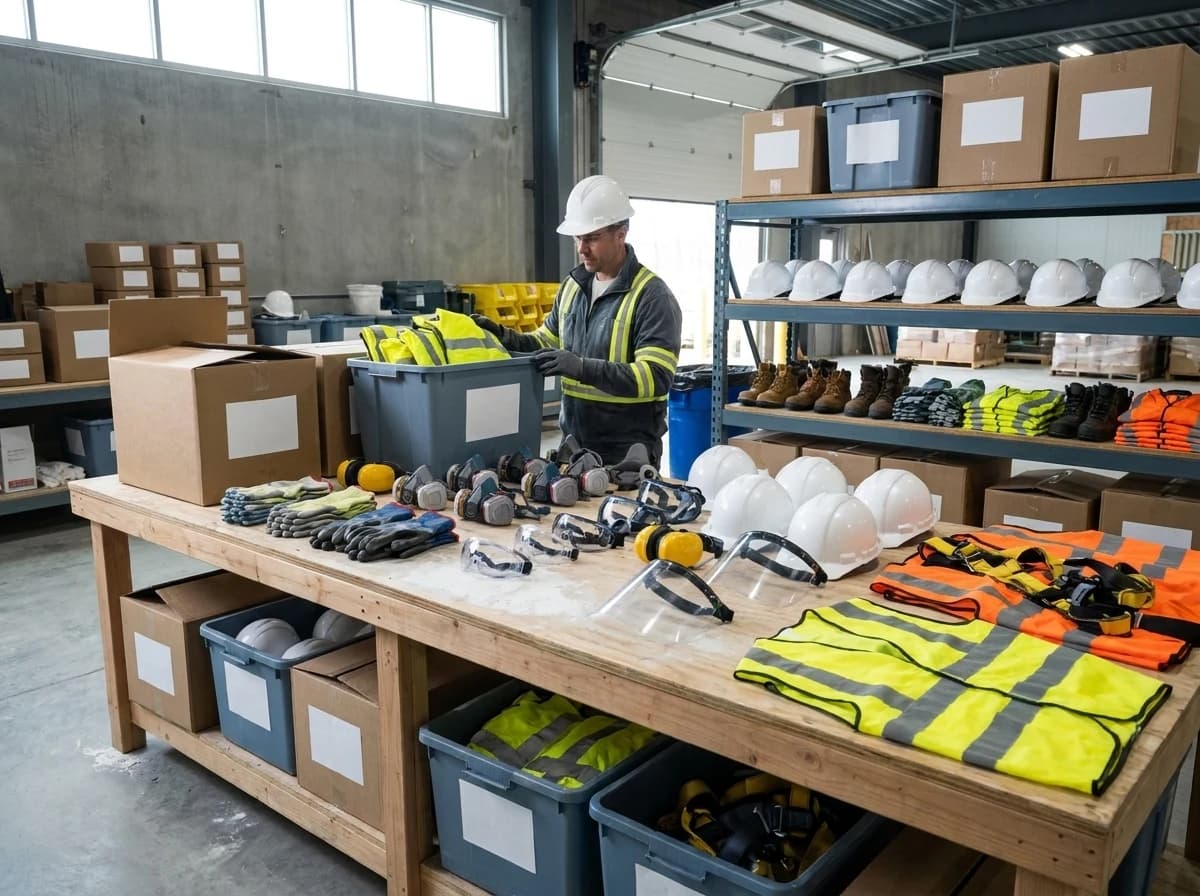
For procurement teams, the biggest risk is buying PPE by product name instead of by use case. Before requesting quotes, define:
- demolition method: cutting, breaking, strip-out, mechanical, debris handling, or elevated work
- material: concrete, masonry, tile, metal, mixed debris, coating, or unknown legacy material
- silica control method and whether Table 1 applies
- respirator type, filter type, fit-testing requirements, and replacement filters
- eye/face combinations by task: glasses, goggles, face shield, welding/cutting protection
- hearing protection type and compatibility with helmets and respirators
- glove types by task, not by job title
- footwear markings and whether metatarsal protection is needed
- hi-vis class and garment style where equipment or traffic is present
- helmet/hard hat type, retention, face shield mounting, and earmuff compatibility
- size range, spare stock, packaging by role, and reorder timing
- certification documents, test reports, user instructions, and inspection records
For RFQ structure, use How to Buy Construction PPE in Bulk.
Common Demolition PPE Mistakes
Treating respirators as the first control. Respirators are important, but silica, dust, and legacy hazards should be controlled by engineering and work-practice controls first where required.
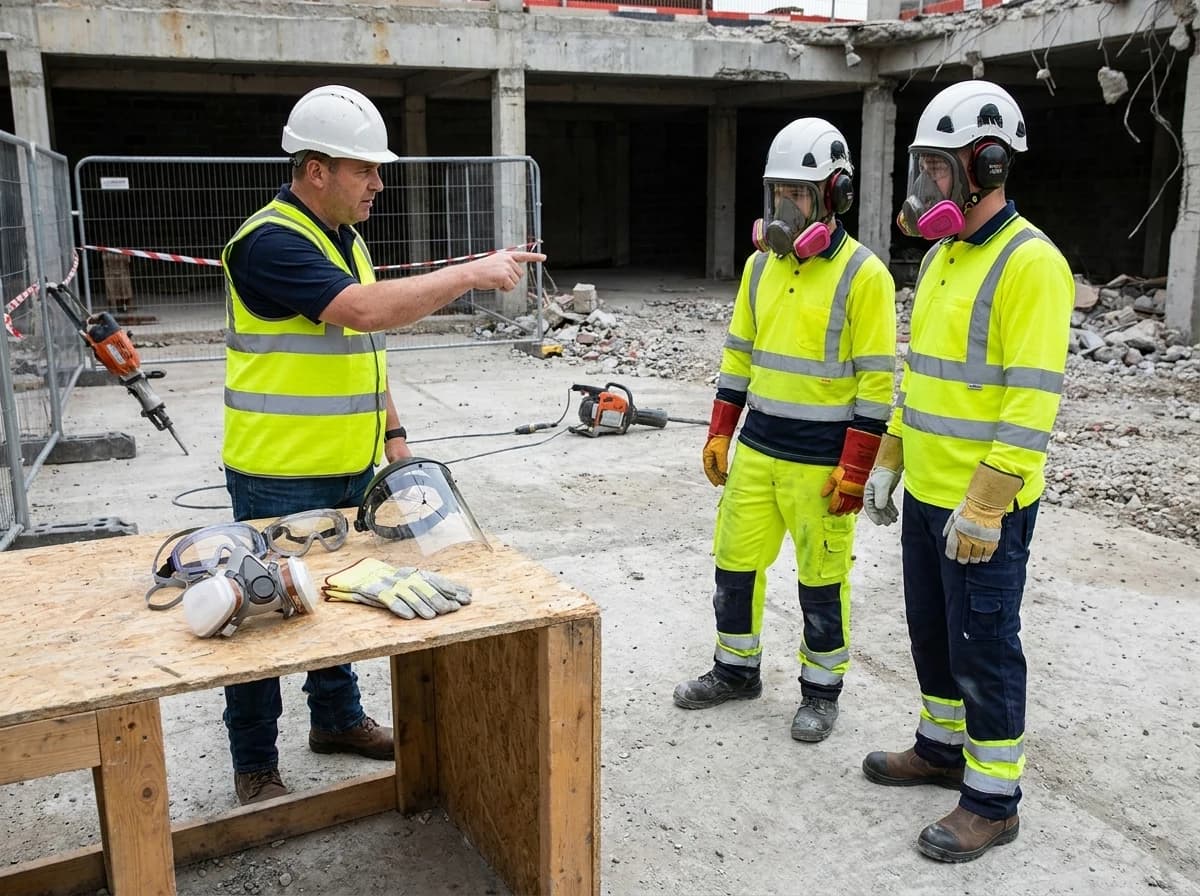
Using safety glasses for everything. Flying concrete, slurry, dust, and grinding exposure often require goggles, face shields, or both.
Buying one glove for all demolition tasks. Cut resistance, wet grip, vibration damping, impact protection, and chemical resistance are different requirements.
Ignoring hearing protection compatibility. Earmuffs may fail when they do not seal around eyewear, respirator straps, helmet shells, or face-shield mounts.
Under-specifying footwear. Toe caps alone do not solve nails, rebar, slurry, unstable rubble, or metatarsal impact.
Forgetting replacement stock. Demolition destroys PPE faster than clean construction work. Scratched goggles, clogged filters, dirty earplugs, soaked gloves, and worn boot soles need fast replacement.
FAQ
What PPE is required for concrete cutting?
Concrete cutting usually requires respiratory protection planning, eye and face protection, hearing protection, gloves, safety footwear, head protection, and often hi-vis clothing. The exact PPE depends on wet cutting, dust collection, task duration, location, and silica exposure controls.
Is an N95 enough for concrete dust?
Sometimes, but not always. OSHA's silica standard and Table 1 should be checked by task and duration. Some tasks may require a higher level of respiratory protection depending on controls, exposure assessment, and work conditions.
Do workers need both goggles and a face shield?
Often yes. Goggles or safety glasses protect the eyes; a face shield adds face coverage. A face shield alone may not protect the eyes from impact or fine particles entering around the shield.
What gloves are best for demolition?
There is no single best demolition glove. Rebar handling may need cut resistance, breaker work may need grip and vibration control, wet cutting may need wet grip, and cleanup may need puncture and abrasion resistance.
Do demolition workers need metatarsal boots?
They are strongly worth considering where concrete chunks, tools, or debris can strike the top of the foot. Toe protection alone does not cover the metatarsal area.
Should demolition PPE be issued as a kit?
Yes, but the kit should be role-based. Saw operators, breaker operators, debris handlers, spotters, and elevated demolition crews need different PPE combinations.
Related Guides on Laifappe.com
- PPE for Demolition and Concrete Cutting Work
- Complete PPE Solution for Construction Sites
- Construction PPE Checklist
- Respiratory Protection for Construction Dust and Fumes
- Eye and Face Protection for Construction Sites
- Construction Gloves: How to Choose the Right Hand Protection
- Hearing Protection for Construction Workers
- Safety Footwear Guide for Construction Workers
- Safety Helmet vs Hard Hat for Construction
- High-Visibility Clothing for Construction Workers
- How to Buy Construction PPE in Bulk
Sources: OSHA 29 CFR 1926.1153 respirable crystalline silica, OSHA 29 CFR 1926 Subpart T demolition, OSHA 29 CFR 1926.103 respiratory protection, OSHA 29 CFR 1926.52 occupational noise exposure, OSHA 29 CFR 1926.102 eye and face protection, OSHA 29 CFR 1926.95 and 1926.96 PPE and safety footwear, OSHA 29 CFR 1926.1101 asbestos in construction, and NIOSH construction noise, respirator, and silica guidance.
Related PPE
Source the PPE covered in this guide
Move from research to a buyer shortlist with the matching solution page, category paths, selected PPE options, and RFQ next steps.