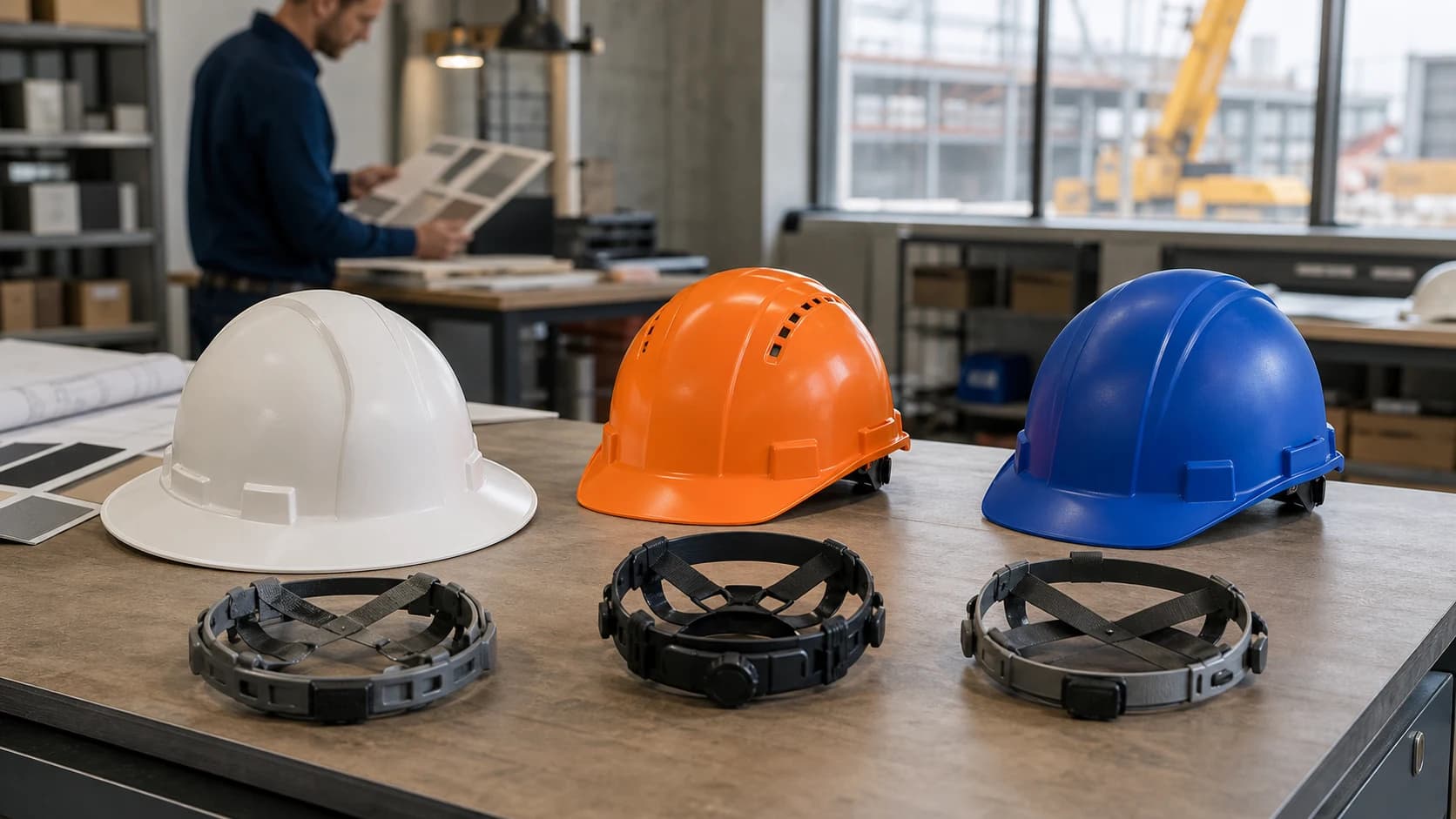
Buyer next step
Turn this guide into a sourced PPE shortlist with standards, quantities, and role-based kit notes.
Fiberglass, ABS, and HDPE are used in industrial helmet shells, but material alone does not establish suitability. Start with the required impact Type, electrical Class, temperature and optional tests, then compare complete models on fit, accessories, documents, supply, and cost.
This guide gives construction safety managers, contractors, and distributors an evidence-based comparison to use after the hazard assessment and alongside our construction hard hat types guide.
Quick Answer: Which Safety Helmet Material Is Best?
There is no universally best material. Start with the hazard, required impact Type and electrical Class, then compare documented helmet models.
| Buyer situation | Practical starting shortlist | Approval evidence |
|---|---|---|
| General construction or contractor issue | Compare HDPE and ABS models that meet the required Type/Class; include FRP when a documented project condition justifies it | Markings, complete weight, fit, venting, accessories, spares, price, and lead time |
| Electrical installation or utility-adjacent work | Properly marked, usually non-vented models in the required electrical Class; material is secondary | Exact shell and suspension configuration, electrical marking, instructions, and compatible accessories |
| Foundry, hot maintenance, or other temperature exposure | Only models with a documented temperature range and applicable optional tests; some reinforced-composite models may qualify | Exact model datasheet, test scope, complete-system limits, and replacement instructions |
| Hot-weather outdoor construction | Approved models that balance required protection with fit, sweat management, and permitted ventilation | Electrical decision first, then worker trial, airflow, color, accessories, and site heat controls |
| Multi-country or distributor inventory | Separate variants for each destination rather than one vague global SKU | Destination standard, marking language, model code, documents, accessories, and packaging |
For a fast standards decision, use the Hard Hat Class Decoder. Then request the exact model datasheet, marking photographs, applicable declaration or certificate, user instructions, and a production-representative sample.
Fiberglass vs ABS vs HDPE: What The Material Label Means
The three labels describe different shell constructions, but buyers should treat them as the start of the specification rather than the end.
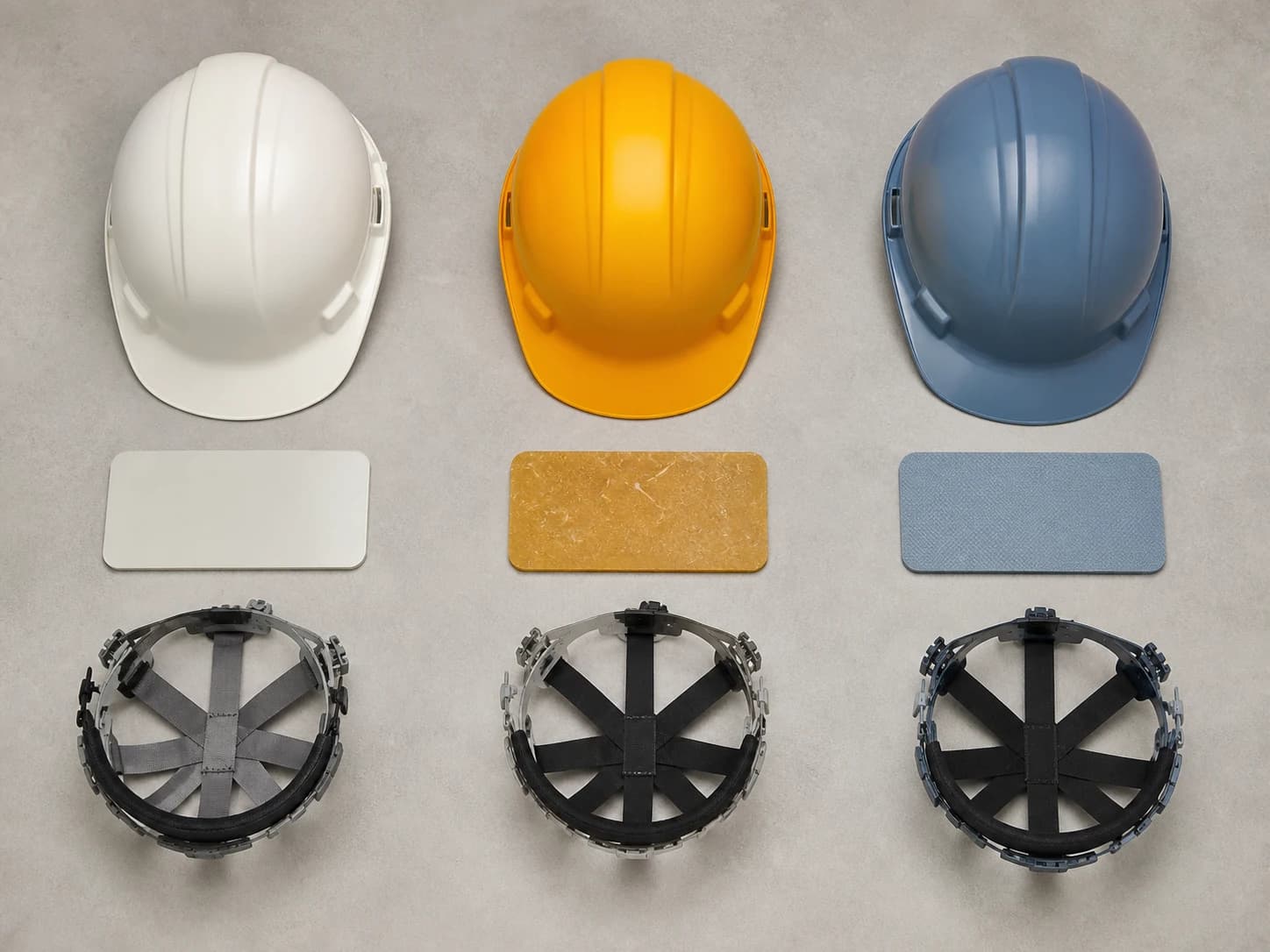
| Material label | What it normally describes | Useful buyer questions | Do not assume |
|---|---|---|---|
| HDPE | A high-density polyethylene thermoplastic shell | What are the exact Type, Class, standard edition, temperature limits, shell weight, suspension, venting, and compatible accessories? | That every HDPE helmet has the same electrical class, impact type, service life, or temperature range |
| ABS | An acrylonitrile butadiene styrene thermoplastic shell | Is the shell vented or non-vented? What optional tests and operating limits apply? Is the quoted suspension included in the approval? | That ABS is always lighter, stronger, hotter, colder, or more durable than every HDPE model |
| Fiberglass / FRP | A reinforced composite; the resin or base polymer and reinforcement system can vary by product | What is the full material construction? Which temperature, impact, electrical, molten-metal, or other tests apply to this exact model? | That every FRP helmet is a high-heat helmet, an electrical helmet, or equivalent to a firefighter helmet |
The term FRP is broader than one material recipe. Ask the supplier to state the base polymer or resin, reinforcement, and complete model-specific evidence. Compare the helmet as supplied because the shell, suspension, sweatband, retention system, and approved accessories work as one configuration.
ABS vs HDPE: Practical Shortlist
ABS and HDPE are both common industrial helmet shell materials. When two models meet the same required standard, Type, Class, and optional tests, use the following commercial and jobsite checks to choose between them:
| Decision | Compare on the actual ABS and HDPE models |
|---|---|
| Wearability | Complete helmet weight, balance, adjustment range, pressure points, sweatband, and worker trial feedback |
| Venting | Whether vents are permitted by the electrical decision and whether the exact vented/non-vented model is documented |
| Accessories | Approved face shields, earmuffs, chin straps, lamps, adapters, and replacement parts |
| Supply | MOQ, lead time, color consistency, customization, spare suspensions, repeat-order availability, and landed cost |
| Evidence | Matching labels, datasheet, instructions, applicable declaration/certificate, and sample configuration |
Do not choose ABS because of a general claim that it is always lighter or choose HDPE because of a general claim that it is always cheaper or electrically protective. Request two or three comparable models and decide from the complete configurations.
Compare Safety Helmet Materials By Evidence, Not Assumptions
Build an evidence matrix for actual models. Manufacturer documents show why material-only rankings can mislead:
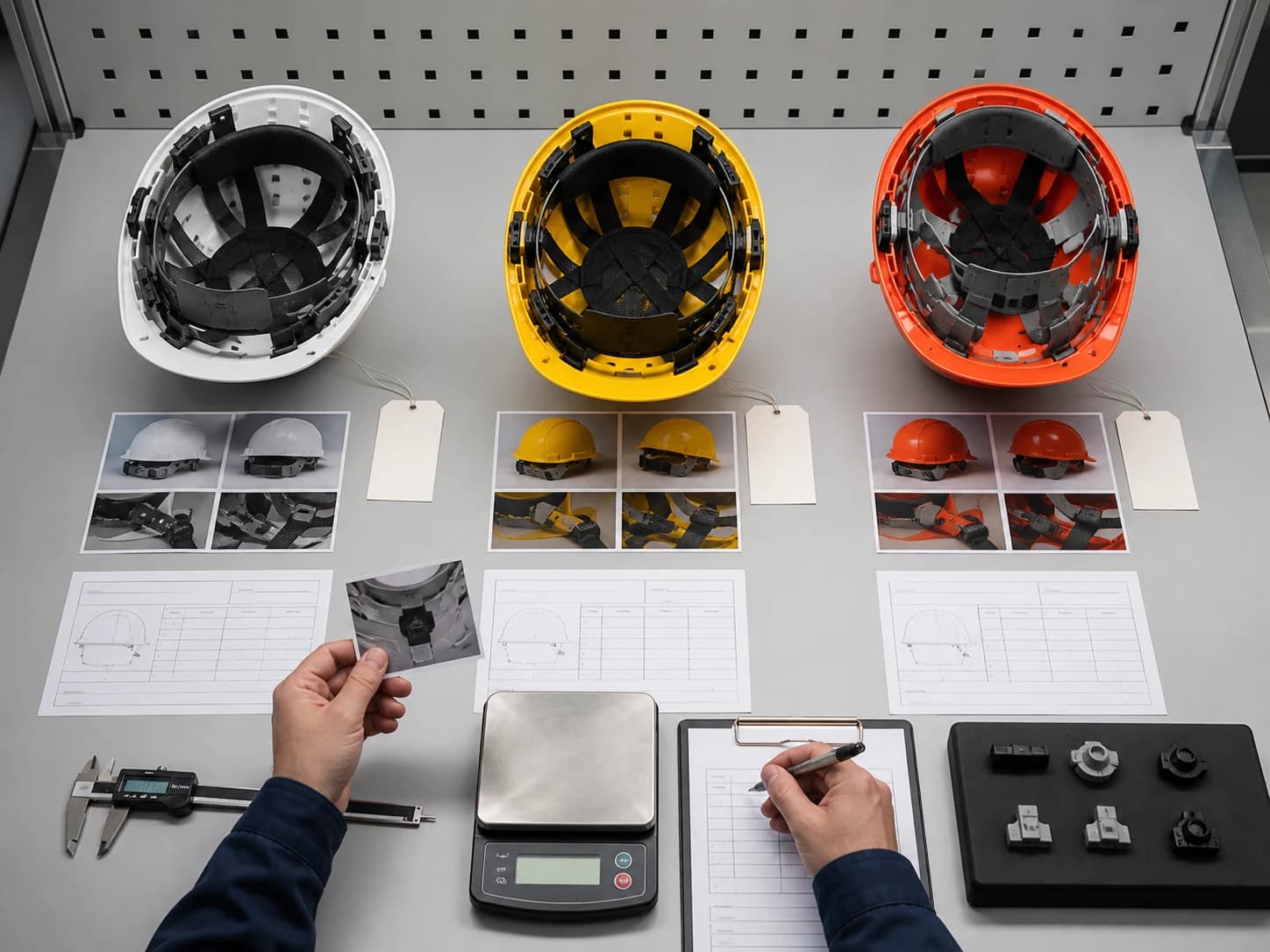
- The 3M SecureFit H-Series specification lists HDPE-shell configurations with different venting, electrical classes, temperature ranges, and weights, plus a glass-reinforced-nylon high-heat configuration with different limits.
- The 3M G3000/G3001 datasheet identifies a UV-stabilized ABS shell, while ventilation and electrical properties depend on the model configuration.
- The MSA Thermalgard technical sheet identifies a fiberglass-charged polyamide shell and publishes model-specific temperature test information. Those results apply only to the named model.
Use a comparison table like this for shortlisted samples:
| Evidence field | Model A | Model B | Model C |
|---|---|---|---|
| Manufacturer, exact model, and shell construction | Record | Record | Record |
| Standard, edition, impact Type, or equivalent classification | Verify documents and marking | Verify documents and marking | Verify documents and marking |
| Electrical Class/test and vented or non-vented shell | Verify marking and instructions | Verify marking and instructions | Verify marking and instructions |
| Temperature range and relevant optional tests | Record only documented results | Record only documented results | Record only documented results |
| Complete weight, suspension, fit, and retention | Test quoted configuration | Test quoted configuration | Test quoted configuration |
| Approved accessories and replacement parts | Confirm compatibility | Confirm compatibility | Confirm compatibility |
| Traceability, manufacturing date, and replacement instructions | Record | Record | Record |
Two helmets made from the same material can therefore receive different decisions because their tested configuration, fit, documentation, or accessory system differs.
Standards And Markings Come Before Material Preference
For US construction work, OSHA 29 CFR 1926.100 requires protective helmets where workers may face impact, falling or flying objects, or electrical shock and burns. OSHA also identifies the incorporated ANSI Z89.1 editions and adds an electrical-insulation requirement for workers exposed to high-voltage electrical shock and burns.
That means the buyer should specify performance in this order:
- Identify the task and head hazards.
- Select the required impact Type or equivalent performance classification.
- Select the required electrical Class or applicable electrical test.
- Add site-specific temperature, molten-metal, low-temperature, lateral-deformation, retention, visibility, or accessory requirements where supported by the applicable standard and hazard assessment.
- Compare material, weight, comfort, finish, price, customization, and supply terms among models that already satisfy the required performance evidence.
For a focused explanation of electrical ratings, see Class E vs Class G vs Class C hard hats. For impact direction and helmet form, compare Type I vs Type II hard hats and safety helmets vs traditional hard hats.
How Heat And Electrical Requirements Change The Decision
Heat and electrical exposure are where material shortcuts create the most procurement risk.

Heat and hot-work environments
Do not approve a helmet for high heat because the quotation says fiberglass, FRP, ABS, or HDPE. Ask for:
- the stated operating-temperature range
- the exact high-temperature or radiant-heat test, when applicable
- optional molten-metal or flame-related performance, when applicable
- limits for the suspension, chin strap, face shield, earmuffs, lamp bracket, stickers, and other accessories
- storage restrictions and replacement instructions after heat exposure
A reinforced-composite or thermoplastic model may publish a specific high-temperature option. Approve only the complete documented system and its stated limits.
Electrical work and exposed conductors
Electrical selection must follow the helmet's marking and instructions. Models made from the same material may have different classes or venting, and a fiberglass label is not a substitute for a Class E, Class G, EN 50365, or other applicable model-specific marking.
Also verify the full accessory combination. A compatible face shield, earmuff adapter, lamp bracket, or chin strap should be documented for the helmet system. Unapproved drilling, painting, adhesives, or aftermarket attachments can affect the shell and may conflict with the manufacturer's instructions.
Run A Jobsite Sample Approval Before Bulk Ordering
A datasheet can narrow the shortlist, but it cannot prove workforce fit. Trial the exact shell, suspension, chin strap, and accessories that will appear in the bulk order.

Include representative workers from the roles that will receive the helmet. Check:
- head-size range, stable adjustment, pressure points, and balance during realistic work movement
- retention when required by the hazard assessment
- compatibility with eye, face, hearing, respiratory, hood, and lamp systems
- comfort and venting without changing the required electrical Class
- visibility, cleaning, storage, identification, and issue procedures
Link the material decision to the construction-site PPE solution. Changing shell material does not replace falling-object controls, electrical safe-work practices, exclusion zones, or training.
Record the approved sample, shell and suspension markings, document revision, model code, color, size range, accessories, and approval date. Require a new review before any material, vent, suspension, accessory, or documentation substitution.
Need directly comparable samples? Request a helmet material quote with the worksite, required standard, Type, Class, temperature conditions, accessories, colors, quantities, and destination. Ask the supplier to quote the same evidence fields for each model so procurement can compare them line by line.
Write A Quote-Ready Safety Helmet RFQ
A quote-ready RFQ should make unsupported substitutions difficult. Include:
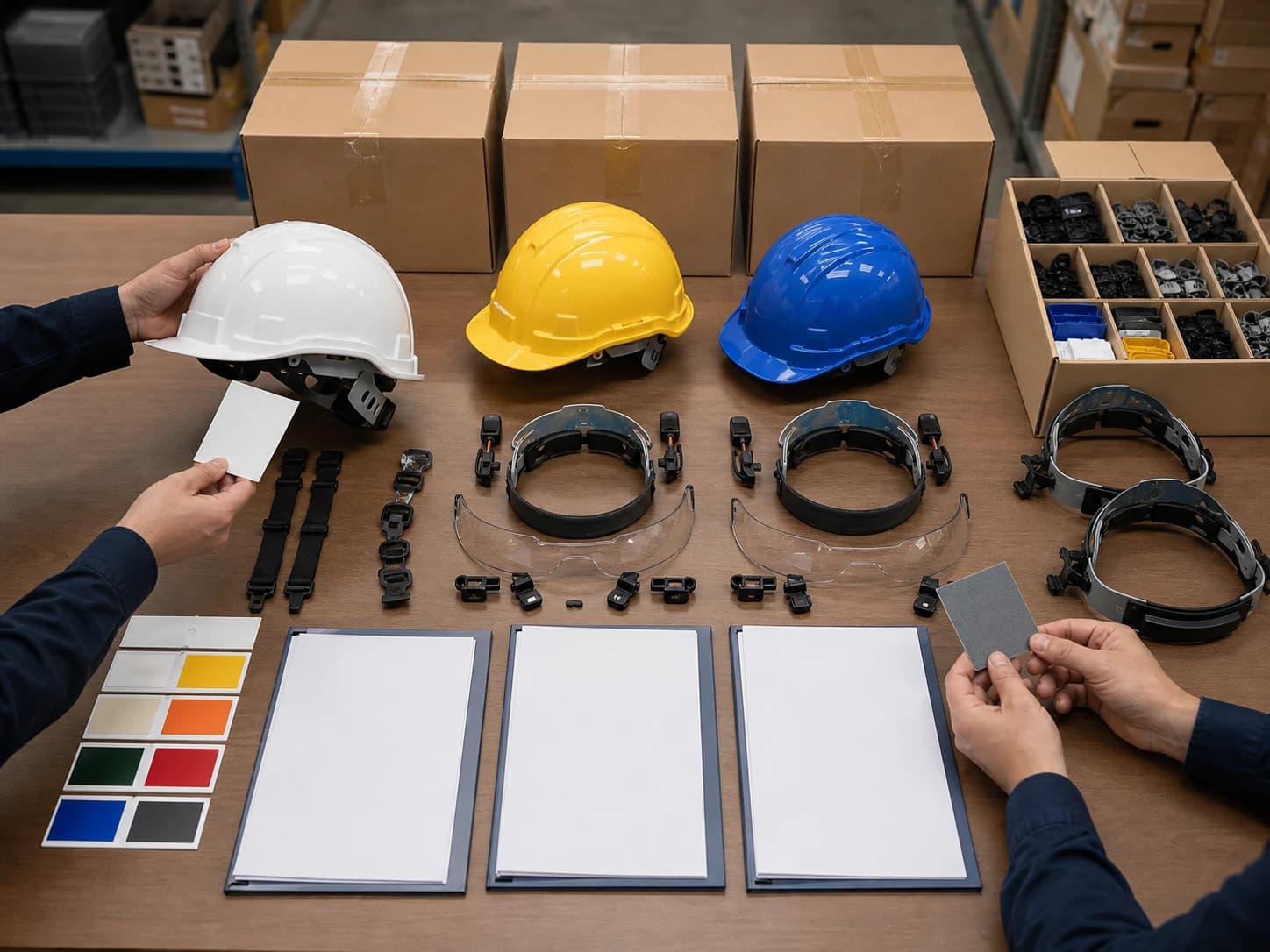
| RFQ field | What to specify |
|---|---|
| Worksite and tasks | Construction phase, trades, indoor/outdoor conditions, electrical or heat exposure, and other head hazards |
| Standard and performance | Required standard/edition, impact Type, electrical Class, and any applicable optional tests |
| Shell | Exact material construction, vented/non-vented configuration, brim or helmet style, color, and finish |
| Fit system | Suspension type, number of points, head-size range, sweatband, chin strap, and retention requirements |
| Accessories | Exact compatible face shield, earmuff, eye-protection, lamp, rain-gutter, or identification components |
| Evidence | Datasheet, user instructions, declaration/certificate where applicable, test-report reference, label photographs, and traceability |
| Sample approval | Production-representative sample, fit trial, accessory trial, approval record, and no-substitution rule |
| Quantity | Color/role breakdown, size or suspension variants, spare shells, suspensions, sweatbands, chin straps, and replacement stock |
| Commercial terms | MOQ, lead time, packaging, customization, Incoterm, warranty, spare-part availability, and repeat-order consistency |
Use the construction PPE RFQ template to structure the wider project request. Buyers can review current safety helmet options and request a head-protection quote, but product titles should be treated as navigation labels until the exact configuration and evidence are confirmed.
The catalog includes fiberglass/FRP, ABS, and HDPE examples. Use them to start a comparison, then confirm the quoted configuration and documents:
- Industrial white fiberglass/FRP safety helmet
- EN 397 ABS safety helmet with 6-point suspension
- HDPE safety helmet with chin strap
Inspect, Store, And Replace Helmets By Product Instructions
Material does not create a universal replacement interval. Follow the exact product instructions and account for impact, UV, chemicals, temperature, storage, cleaning, and accessories.
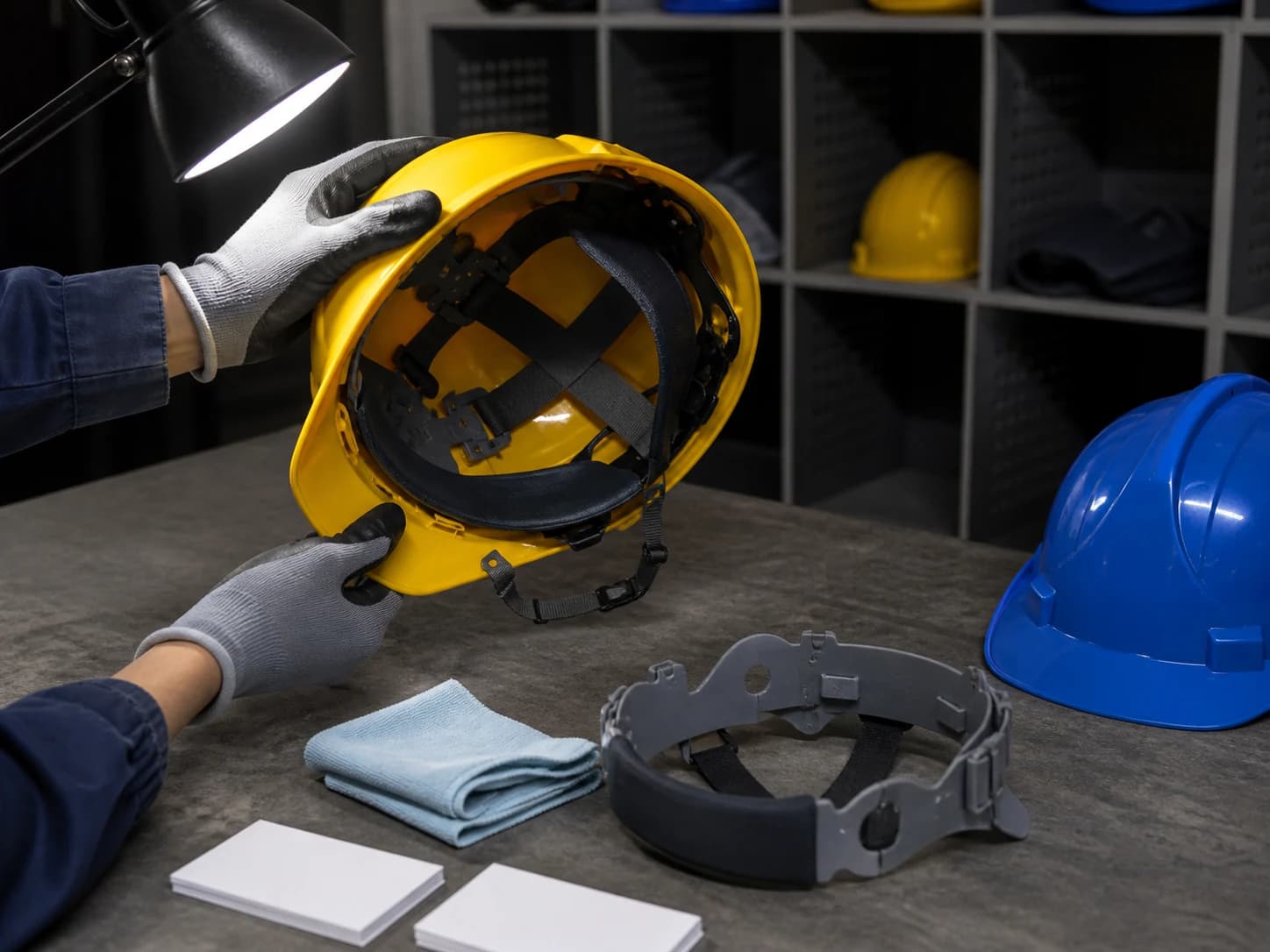
Before each use, follow the manufacturer program and inspect the complete helmet for issues such as:
- shell cracking, dents, cuts, deformation, brittleness, chalking, or unusual discoloration
- damaged, contaminated, or incorrectly installed suspension and retention parts
- missing or unreadable required markings
- paint, solvents, drilling, incompatible labels, or unauthorized attachments
- damaged accessory interfaces or evidence of impact or significant force
OSHA's safety helmet bulletin recommends retiring head protection after an impact or significant force even when damage is not visible, keeping inspection records, and following manufacturer cleaning and storage guidance. Record the issue date, manufacturing information, inspections, incidents, replacement action, and responsible person.
Order compatible wear parts and store replacements away from sunlight, extreme temperatures, chemicals, and uncontrolled vehicle storage. Review a changed shell, suspension, or approval as a new configuration.
Common Safety Helmet Material Buying Mistakes
| Mistake | Better control |
|---|---|
| Ranking materials from generic strength, weight, heat, or price claims | Compare complete tested models, use limits, fit, accessories, and supply terms |
| Treating fiberglass as automatic high-heat approval | Require the exact model's published temperature or optional-test evidence |
| Treating a plastic shell as automatic electrical insulation | Match the required Class or applicable electrical marking and configuration |
| Comparing shell weight only | Weigh the quoted helmet with suspension, chin strap, and required accessories |
| Accepting a certificate for a related family | Match the model code, configuration, standard edition, document status, and product marking |
| Skipping sample or substitution control | Make the approved sample part of the order and require written approval for any change |
Safety Helmet Material Buyer Checklist
- Complete the site and task hazard assessment, then define the required Type, electrical Class, temperature range, and optional tests.
- Record the exact material construction; expand vague
FRPdescriptions. - Compare complete helmet weight and fit, not shell material alone.
- Verify suspension, chin strap, eye/face/hearing protection, lamp, and other accessories as a system.
- Match every datasheet, certificate, instruction, and marking photograph to the quoted model.
- Run a representative worker and accessory trial.
- Lock the approved sample and no-substitution rule into the purchase order.
- Order compatible spares and document inspection, impact retirement, storage, and replacement.
FAQ
Is fiberglass better than ABS for safety helmets?
Not automatically. Compare the exact models' tested performance, weight, fit, accessories, documents, and application limits.
Is HDPE better than ABS for hard hats?
Neither wins every application. Use the required Type, Class, venting, temperature range, fit, accessories, documents, and sample trial to decide.
Are fiberglass safety helmets heat resistant?
Only when the exact model documents suitable temperature or optional-test performance. Fiberglass or FRP is not a heat rating.
Are ABS or HDPE helmets electrically insulated?
Check the exact helmet's electrical Class or applicable test marking, configuration, vents, accessories, and instructions; do not infer protection from the polymer.
Which material is lightest?
Compare published and measured complete-helmet weights. Geometry, reinforcement, suspension, chin strap, and accessories can outweigh material trends.
What documents and substitution controls should a bulk buyer request?
Request the datasheet, instructions, applicable declaration/certificate, test reference, marking photographs, traceability, accessory list, replacement guidance, and production-representative sample. Put the approved configuration and a written no-substitution rule in the RFQ and purchase order.
Sources
- OSHA 29 CFR 1926.100: Head Protection
- OSHA Safety and Health Information Bulletin: Head Protection - Safety Helmets in the Workplace
- 3M Head Protection: Hard Hats 101 Technical Bulletin
- 3M SecureFit H-Series Hard Hat Specifications
- 3M Industrial Safety Helmet G3000/G3001 Technical Datasheet
- MSA Thermalgard High-Temperature Safety Helmet Technical Data
Next Step For Construction Buyers
Shortlist documented models and approve the exact helmet system through a fit and accessory trial. To compare fiberglass/FRP, ABS, and HDPE samples, request a quote with the required standard, Type, Class, temperature conditions, accessories, quantity, colors, destination, and evidence package.
Related PPE
Source the PPE covered in this guide
Move from research to a buyer shortlist with the matching solution page, category paths, selected PPE options, and RFQ next steps.
Related Tools
Turn this guide into a faster PPE shortlist
Use the matching tools to check footwear sizing, decode certification labels, or estimate order quantities before you move from research to purchasing.
Hard Hat Class Decoder
Decode Type I vs Type II and Class G, Class E, and Class C before writing head protection into an RFQ.
Decode hard hatsAI Quote Generator
Turn site conditions, hazards, and worker roles into a shortlist of PPE SKUs and a fast quote request.
Build a quotePPE Quantity Calculator
Estimate monthly usage, replacement cycles, and budget needs before you place a bulk PPE order.
Plan quantities