
A delivery of 120 pairs of safety gloves can contain the right total and still leave a crew short of the sizes it needs. For warehouse and procurement teams, receiving inspection is the point to catch that mismatch before stock is put away or issued.
At receiving, match the goods to the approved order, check their identity and visible condition, and record exactly what can be released. Set aside damaged, unidentified, or disputed stock until the responsible reviewer makes a decision.
1. Match the delivery to the approved order
Have the current purchase order, packing list, and approved model and size schedule ready before opening cartons. Use the approved sample reference, agreed substitutions, and any required product documents to resolve differences. If your team still needs to establish that baseline, start with the PPE sample approval and pre-shipment verification checklist.
At handover, count the pallets or cartons and photograph visible damage, wet packaging, or broken seals. Record exceptions on the carrier paperwork according to your receiving procedure. Treat the carrier acknowledgment and the internal stock release as separate records.
2. Count and inspect by order line
Reconcile each PO line against the quantity due in this delivery. Use the purchase unit throughout, such as pairs, pieces, or kits. Record carton counts separately. If a carton contains mixed sizes, verify the size split against the order and record the quantities by size.
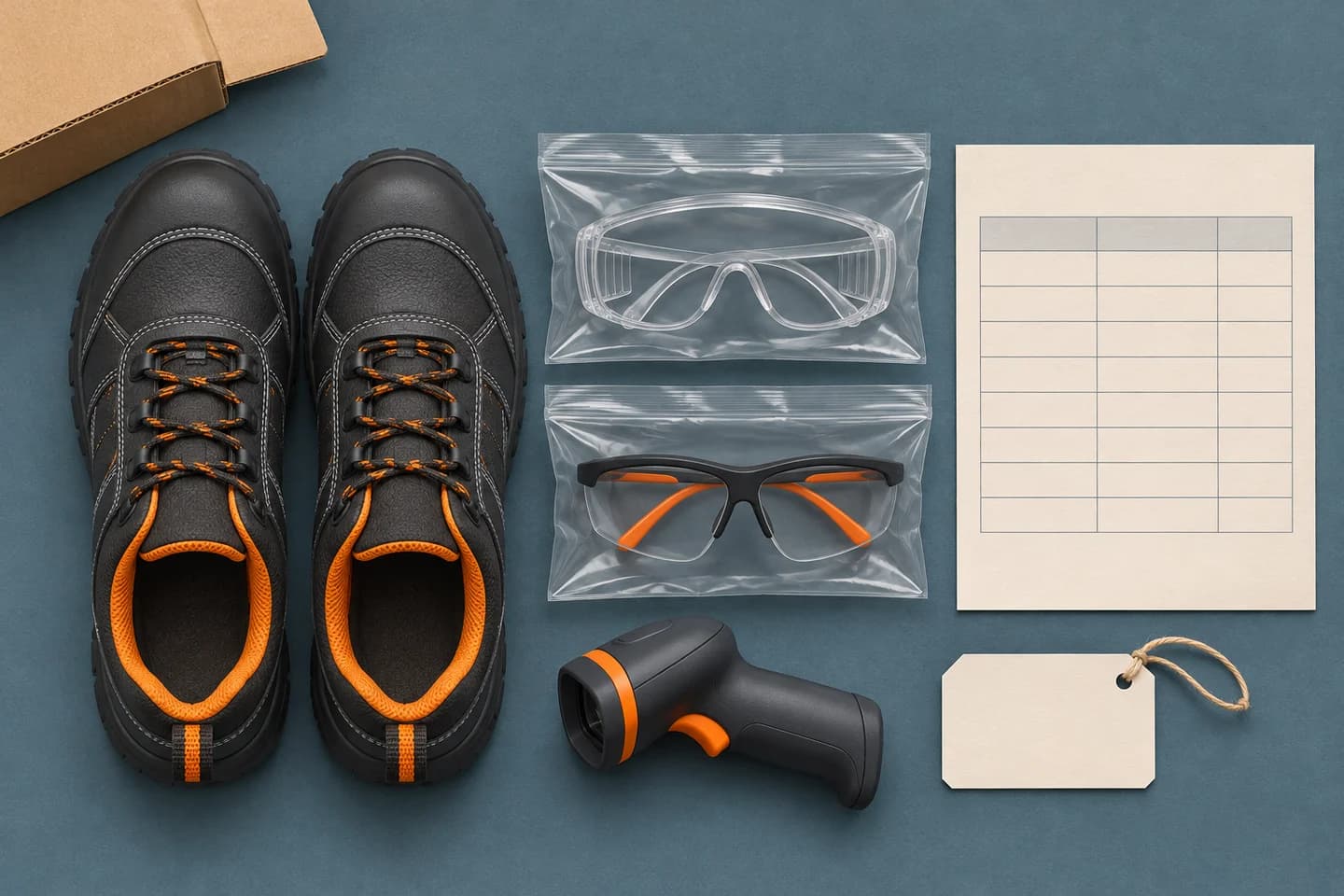
Model and configuration. Match the SKU or manufacturer model, size, color, and required accessories to the approved order. Record unexpected items separately.
Labels and traceability. Compare carton and item labels. Record the lot, batch, or serial number and expiry date where applicable. Match required documents to the model or batch they cover.
Visible condition. Look for moisture, contamination, broken seals, or damage. Check the items relevant to the order, such as cracked helmet shells, torn glove coatings, or missing kit components.
Inspection scope. Record how many units you checked and which cartons or lots they came from. Use the sampling plan and acceptance criteria agreed for the order.
Receiving checks establish identity, count, traceability, and observable condition within the inspection scope. Product performance, certification, and suitability for the intended work require their own evidence and review.
3. Hold exceptions and release cleared stock
Assign each discrepancy an ID and record the affected model, lot or carton, quantity, and photo reference. Label and segregate held stock, block it from issue in the inventory system, and give the discrepancy an owner and a decision date.
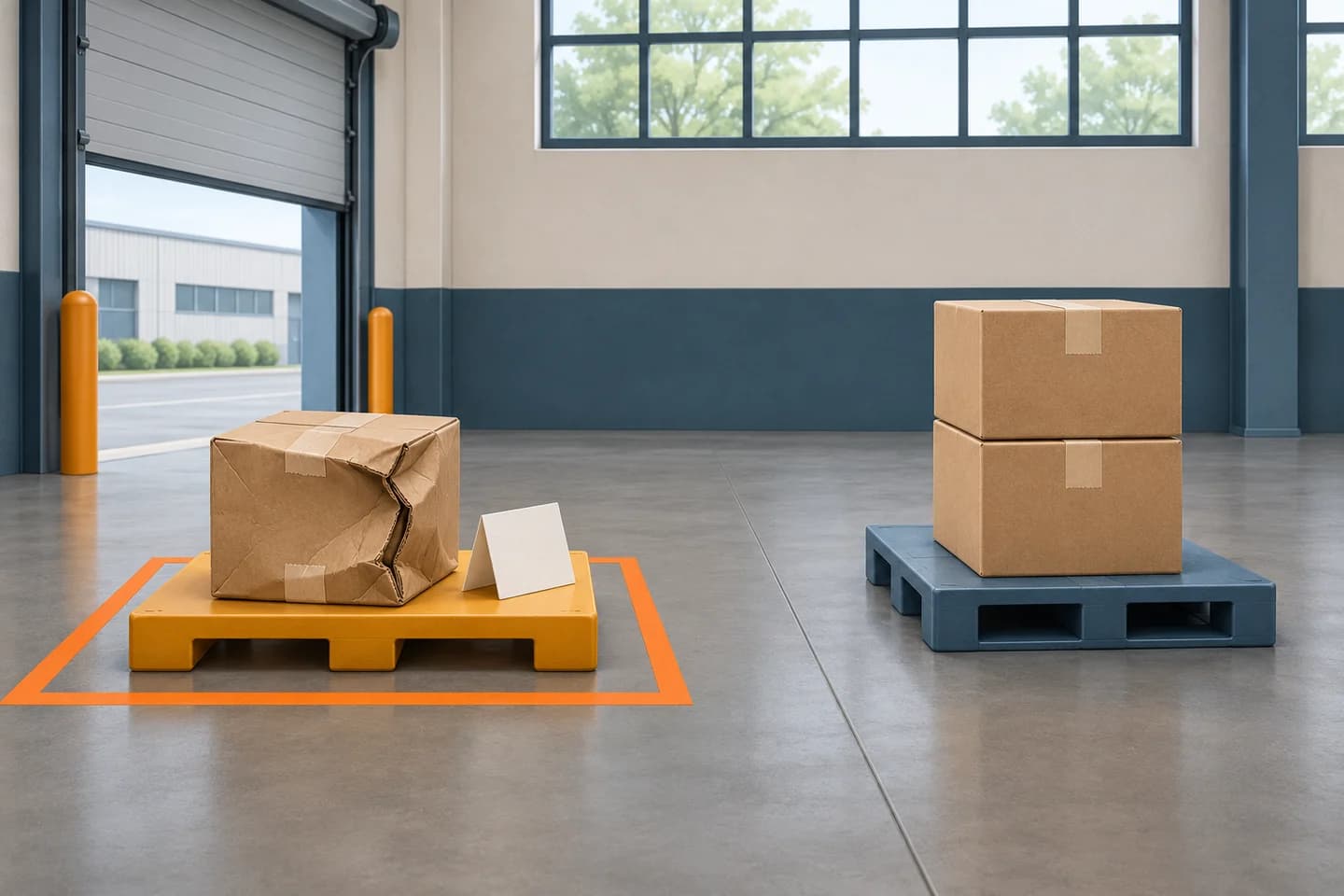
If the order allows partial release, approve only the cleared quantity your team can physically separate and trace. For example, if 120 pairs were due and 116 arrived, you might record 110 released, 6 held, and 4 short. The six held pairs are part of the received count. The four missing pairs are a separate shortage.
Once stock is released, stage it by approved model and size. If your team issues PPE as role-based kits, use the task and size allocations in your issue plan. See the warehouse PPE selection and bulk buying guide for an example of organizing those kits by task.
Copyable PPE receiving inspection form
Download the PPE receiving inspection form (TSV) and open it in Excel or Google Sheets. Keep the shipment details and release approval with the same receipt record.
Shipment details
Receipt ID: ______
Supplier: ______
PO number / revision: ______
Packing list / delivery note: ______
Delivery date / receiving site: ______
Cartons expected / received: ______
Approved model or sample reference: ______
Inspection plan / acceptance criteria: ______
Inspector / inspection date: ______
Receiving record
PO line | Model / SKU | Size / color | Lot / carton ID | Expiry if applicable | Unit | Due this delivery | Received | Checked | Released | On hold | Rejected | Short | Over | Issue ID
Discrepancy log
Issue ID | PO line / lot / carton | Affected quantity / unit | Finding | Photo or document reference | Hold location | Owner | Due date | Final decision / date
Release approval
Decision (Full release / Partial release / Hold / Reject): ______
Approved PO lines, lots and quantities: ______
Open issues or release conditions: ______
Authorized by: ______
Decision date / time: ______
Inventory transaction or record reference: ______
Before signing, reconcile received = released + on hold + rejected at the time of the decision, before any return movement. Keep checked as a separate count. If one order line spans several lots and the order gives no quantity by lot, enter the quantity due once at the order-line and size level, then record the lot-level dispositions separately.
Related Tools
Turn this guide into a faster PPE shortlist
Use the matching tools to check footwear sizing, decode certification labels, or estimate order quantities before you move from research to purchasing.
- ComplianceSafety Footwear Label DecoderDecode ASTM F2413 and EN ISO 20345 markings such as S3, SRC, HRO, EH, and PR in seconds.Decode labels
- PlanningPPE Quantity CalculatorEstimate monthly usage, replacement cycles, and budget needs before you place a bulk PPE order.Plan quantities
- ProcurementAI Quote GeneratorTurn site conditions, hazards, and worker roles into a shortlist of PPE SKUs and a fast quote request.Build a quote